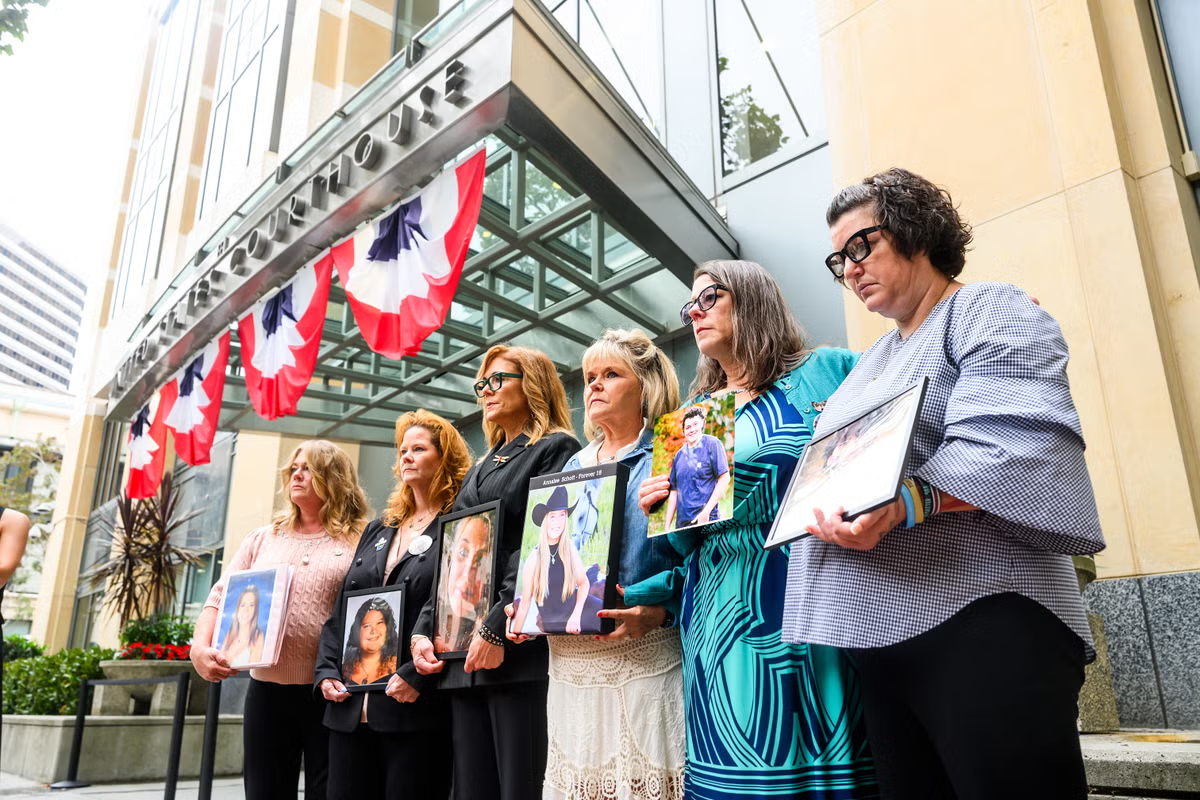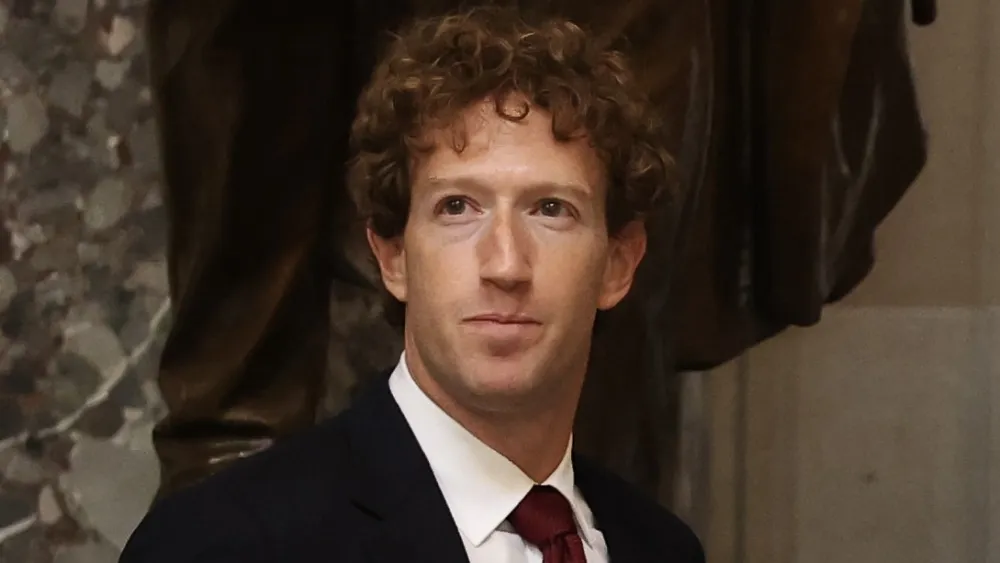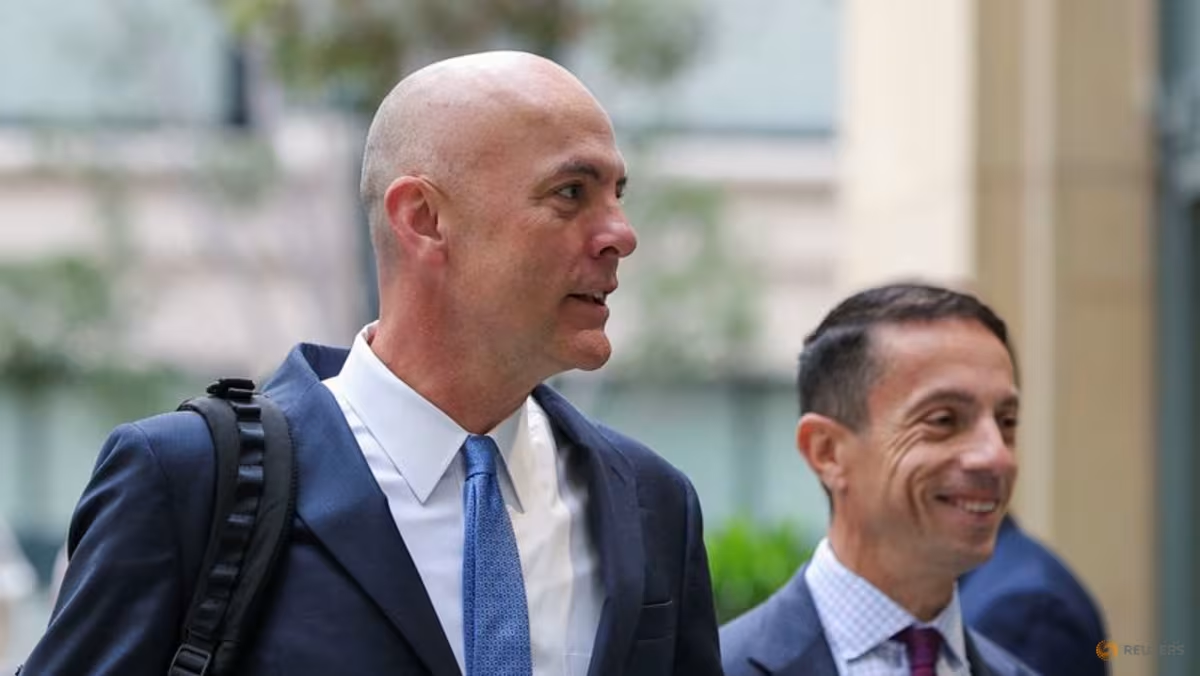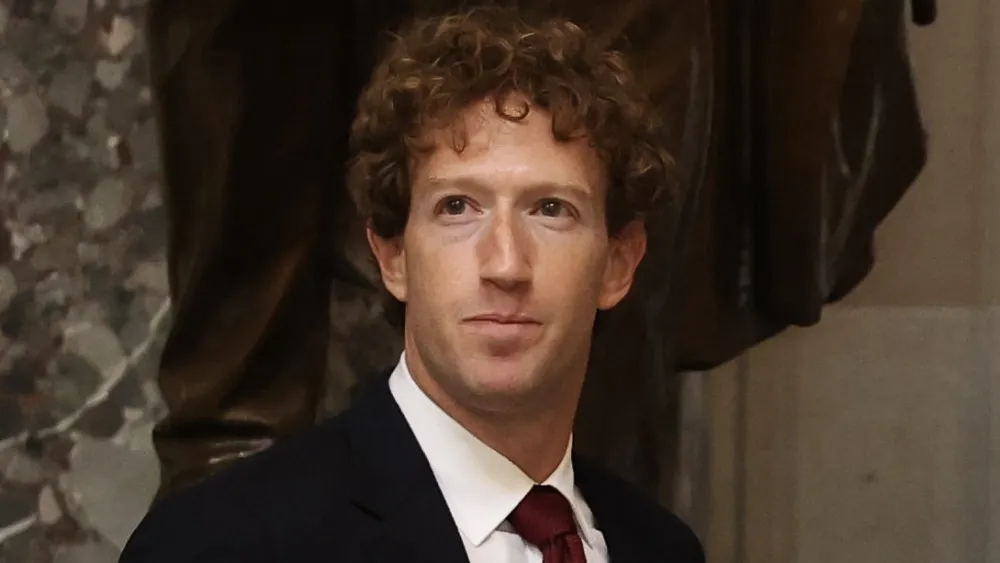
Meta has agreed to pay up to $17.1 billion in a settlement with 48 states, the District of Columbia, Puerto Rico, American Samoa, and Northern Mariana Islands, for the harm that its social media platforms have done to kids and teenagers. Under the terms of the settlement, the company will agree to put a cumulative two-hour limit for users of Facebook and Instagram under 18, which will require a parent’s permission to override. Meta will also hide likes on minors’ posts by default and block “extreme makeup filters.” The only states that weren’t a part of the settlement were New Mexico, which won its own lawsuit against Meta earlier this year, and Florida. Meta only has to pay 70 percent of the total sum unless TikTok, owned by Paramount Skydance, and YouTube, owned by Google parent Alphabet, also agree to pay states $5.3 billion between them and implement default time limits on their apps and services. If they don’t, Meta doesn’t have to pay the remaining 30 percent, which is also $5.3 billion. Meta is still facing thousands of lawsuits from individuals, organizations, and school districts. New Mexico’s lawsuit resulted in the company having to pay $375 million in civil penalties, create a $567 million fund to address harms to children in the state, and put limits on how minors interact with the app. The settlement is a rare agreement across political lines, with Democratic as well as Republican state and territorial attorneys general all seeking to hold Meta accountable. CEO Mark Zuckerberg seemingly sought to avoid accountability by cozying up to President Trump after the 2024 election, donating $1 million to Trump’s inauguration fund and changing Meta’s content moderation policies after meeting with the president. But Meta is now on the record agreeing that restitution needs to be made due to the harms of its social media platforms, even if it isn’t outright admitting guilt. It remains to be seen if other social media platforms like TikTok and YouTube follow suit. The settlement still needs approval from a federal judge. This story has been updated.Editor’s Pick:Army chief of staff General Randy George insisted on conducting a probe into whether the Pentagon violated protocol after the military performed a flyby around MAGA musician Kid Rock’s Tennessee estate—and a No Kings protest. Days later, he was fired. George was reportedly advised by the Army’s No. 2 officer, General Chris LaNeve, to drop the probe at the behest of Defense Secretary Pete Hegseth.This new information, reported by The Washington Post, offers a potential catalyst for George’s abrupt firing, as the Pentagon gave no specific reason when he was booted out in April. The flyby occurred on March 28, and saw two AH-64 Apache helicopters hover over a No Kings protest in Nashville, Tennessee, before performing maneuvers next to Kid Rock’s mansion nearby. The Army briefly suspended the helicopter crews involved before Hegseth personally intervened and announced the soldiers would not be punished. “No punishment. No investigation. Carry on, patriots,” Hegseth wrote on X at the time. Weeks later, he and musician Kid Rock went on a taxpayer-funded helicopter joyride. This is a level of respect that shit for brains Governor of California will never know. God Bless America and all those who have made the ultimate sacrifice to defend her. 🇺🇸 🙏 pic.twitter.com/iD5mmkaXv1— KidRock (@KidRock) March 28, 2026 While Hegseth and the Pentagon still decline to say why exactly George was fired, his refusal to ignore possible violations may certainly have played a role. George is one of numerous high-ranking military officials who have been unceremoniously fired by Hegseth during his tenure. Editor’s Pick:An increasing number of American service members are becoming uncomfortable with their orders under President Trump, and are trying to leave the military.MS NOW reports that the number of conscientious objectors in the military is growing, with many citing violations of international law. The GI Rights Hotline at the Quaker House has seen a spike in interest from service members who see their orders as immoral. The Center on Conscience and War, which helps service members file applications as objectors, has also seen applications go up by six times since the Iran war began in February, higher than any other time in the last 25 years.Normally, the organization has about 50 objectors in a year, said Mike Prysner, who runs a hotline at the CCW, but since February, Prysner said the organization has assisted about 140 applicants.“The Iran war was really the breaking point for them when they realized that they had to take action to make sure that they did not participate in something that they were going to regret for the rest of their lives,” Prysner said.MS NOW spoke to one military member anonymously, who said that they believed their superiors were targeting civilian infrastructure in Iran, which violates the Geneva Conventions.“I realized there’s no way that you could interpret the international laws as saying that you’re allowed to strike civilian bridges, but in reality, if the president wants to blow up bridges, the lawyers will find a way to say that it is OK to do it, and nobody anywhere up or down the chain of command ever stops and says no,” the service member said.It’s not just the Iran war that has service members questioning their morals. Some military personnel are troubled by U.S. airstrikes on so-called “drug boats” in the Southern hemisphere under Operation Southern Spear, believing they violate international law.Another anonymous service member told MS NOW that they weren’t sure if the weapons they loaded onto planes on an aircraft carrier in the Caribbean Sea would be used against civilians, and they began to believe they were causing harm in their duties. Those concerns are not unfounded, as the Department of Defense has admitted that it does not know who is aboard the boats it is bombing.In all, MS NOW spoke to five anonymous members of the military who object to their orders under this administration, and they want no part of it. Editor’s Pick:Defense Secretary Pete Hegseth’s decision to fire numerous top generals has put America’s military between a rock and a hard place in its war against Iran.The Army has been without a chief of staff since Hegseth fired General Randy George in April; he has forced out at least three senior officers who were believed to be in the running to be George’s replacement, according to current and former officials that spoke with The New York Times.All in all, Hegseth has forced out at least half a dozen senior officers, according to inside sources that spoke with the Times, who say this purge has damaged the service’s expertise and has eroded its top ranks.Those affected include General James Mingus, the Army vice chief of staff whom Hegseth forced out last year with little explanation, and General David Hodne, whom Hegseth hired and then fired just eight months later. Other axed officers include Major General William Green, General Christopher Donahue, and General James Slife, the Air Force vice chief of staff.General CQ Brown Jr. was also fired from his position as the chairman of the Joint Chiefs in the early weeks of Donald Trump’s second term, and General David Allvin retired early last fall.Army Secretary Daniel P. Driscoll, the Army’s top civilian leader, is also believed to be on his way out in the coming months, according to the Times, which reported that Driscoll has already moved out of the large family house he was renting outside Washington.“Hollowing out the most battle-tested and most lethal, proven leaders in a time of war means troops are less safe and we’re less likely to win,” Representative Pat Ryan, Democrat of New York and a former Army intelligence officer, told the daily newspaper. “We’re doing generational damage to the sense that the military is an apolitical trusted organization that swears an oath to the Constitution, not to a president.”Hegseth’s decision to undermine top military leadership has left a definitive vacuum in the highest echelons of the Army. At the time of Hegseth’s confirmation, there were 10 four-star generals on active duty. Now there are just five—the smallest number to lead the service in years.Meanwhile, the Army’s Middle East bases have been battered by Iran’s seemingly endless supply of cheap drones since late February. The conflict has so far killed at least 18 U.S. service members and wounded more than 776 others. It has also taken an enormous toll on daily life in the U.S., inflaming the cost of practically everything as shipping companies contend with rising oil costs.Editor’s PickThe Financial Times reported Tuesday that farmers in America’s Corn Belt region are facing their toughest economic crisis in 40 years. Last month, the American Farm Bureau Federation, an industry group, projected that without government intervention, farmers growing nine principal crops will face $32 billion in losses in 2027, after losing an estimated $31 billion in 2026. “This is the worst financial downturn in the sector since the 1980s,” John Hansen, president of Nebraska Farmers Union, told FT.Matt Bailey, who grows corn and soybeans in eastern Nebraska, told FT the strain was a result of rising input costs. Bailey said that 10 years ago, phosphorus-rich fertilizer used at planting time cost $470 per ton; the same product now costs more than $900. “Where do you start with that? How do you budget for that?” Bailey said. The alarm bells have been blaring for months. Trump’s war with Iran halted trade through the Strait of Hormuz just as farmers in the Northern Hemisphere would typically order fertilizer for the upcoming planting season. The American Farm Bureau Federation has warned that the shock to the fertilizer supply chain would drive prices even higher and threaten food security and national security. That’s not the only reason farmers may not be happy with Trump. Last week, the American Farm Bureau Federation voiced concerns that Trump’s plan to import tariff-free beef would create long-term damage to the already struggling American beef industry. On Monday, the group urged the Trump administration to resume trade talks with Canada after Trump detonated negotiations. Trump has historically relied on the support of Corn Belt voters, where farming-dependent counties backed him by an average of 78 percent in 2024. Now, with Trump’s approval rating reaching record lows and midterm elections just around the corner, the president may need to act quickly if he hopes to hold onto their support—and his Republican congressional majorities.Editor’s Pick
Meta Caves With $17 Billion Settlement in Social Media Addiction Case
Meta has agreed to a massive settlement in a lawsuit over how it intentionally designed Instagram and Facebook to addict children.
1,738 words~8 min read