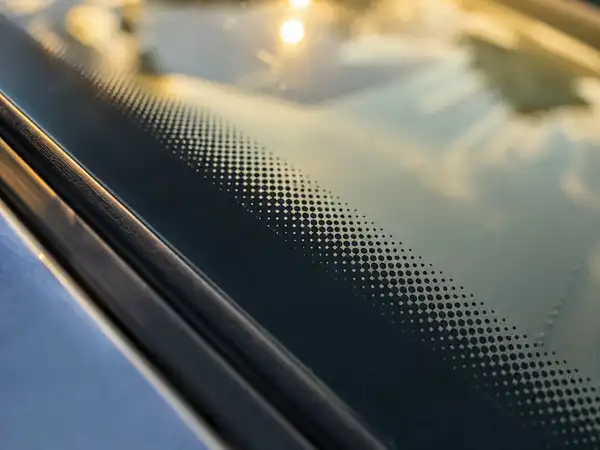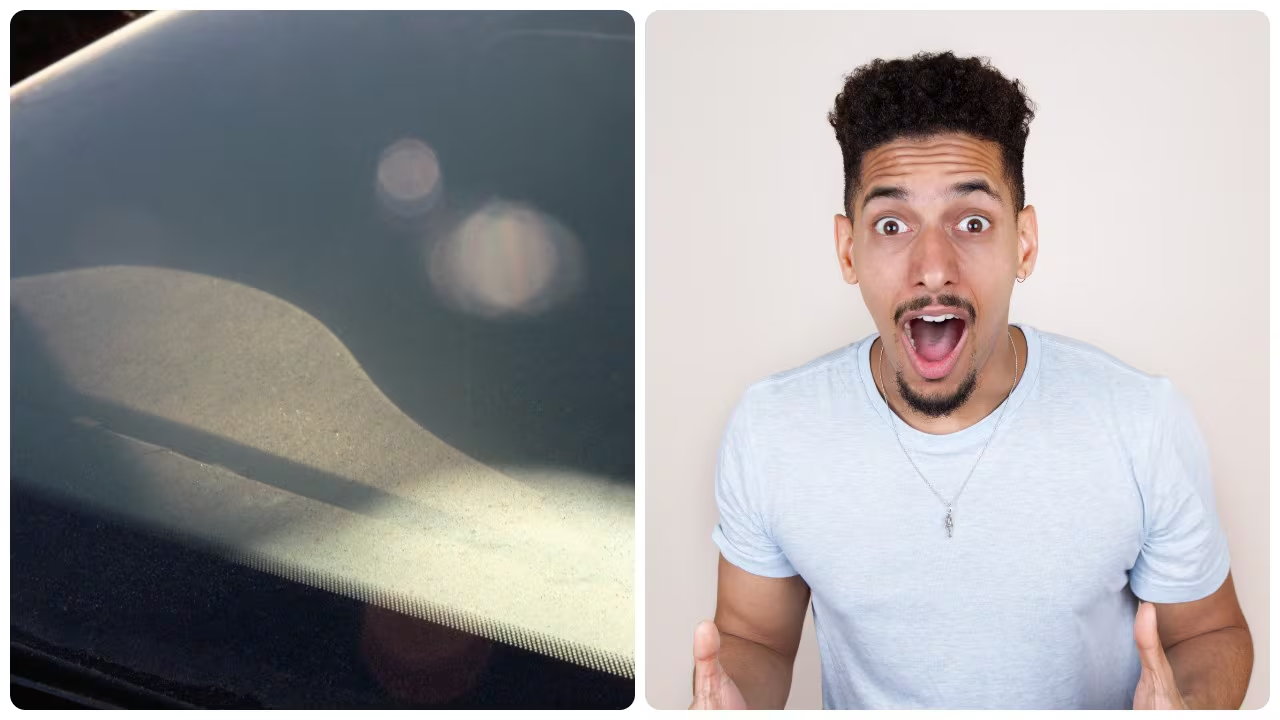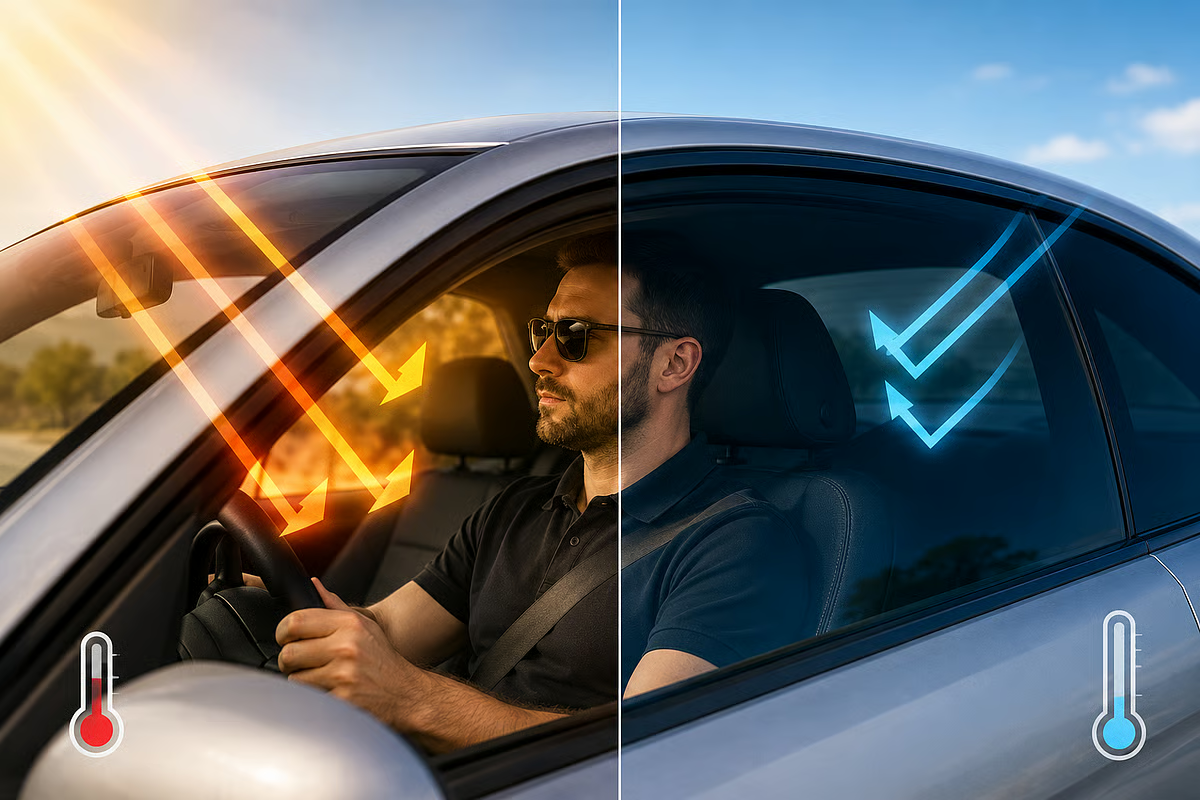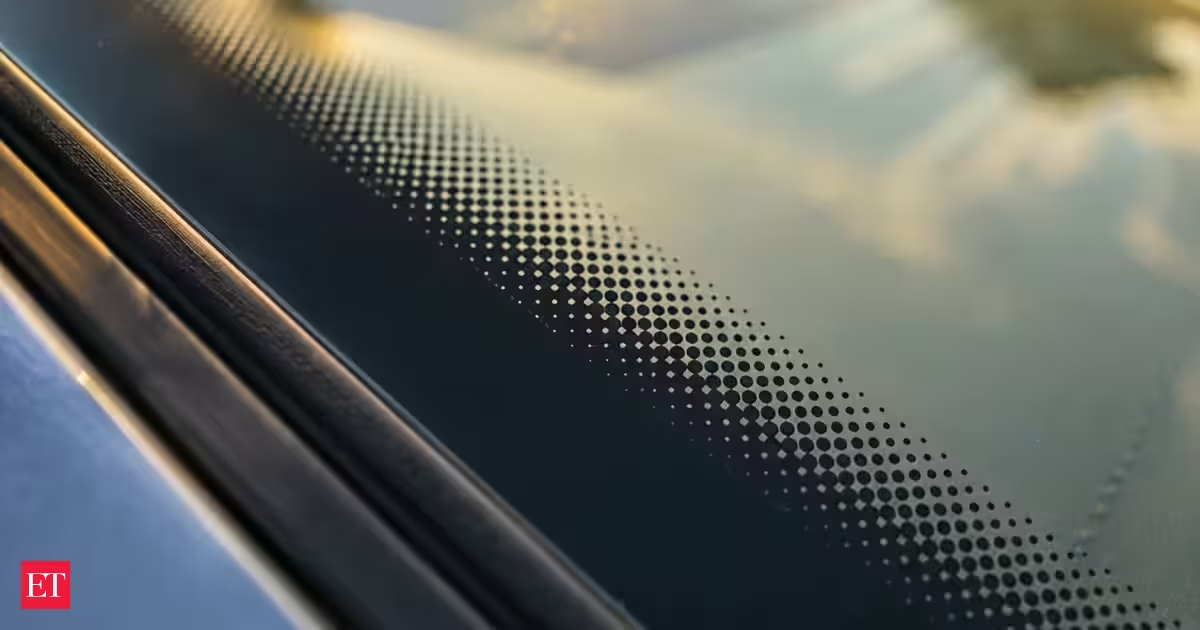
Have you ever stared at them countless times and still not realized what they were? Yes, we are talking about those little black specks forming a somewhat fuzzy outline on the edge of your windshield, right at the seam where the windshield meets the car body. Perhaps you thought it was factory grime, a strange tint overspray, or simply something that doesn’t need an explanation. But that's not it. They are little pieces of materials engineering that have been quietly guarding your windshield for years. A recent Motor1 article explains exactly what these black dots are and why almost every car made since the middle of the last century has them. And indeed, you will ask yourself why they didn't tell you about this at driving lesson classes.A rain-drenched windshield. Image credits: Wikimedia CommonsMeet the frit, the ceramic "tattoo" baked into your glassThe darkened strip on the edges of your car’s windshield has a special name; it is called “frit.” Frit isn’t paint nor tint; it is actually ceramic enamel embedded within the glass through a heating process at very high temperatures during its manufacture. Unlike regular stickers, the frit will never peel, wear away, or fade because of the extremely durable nature of the material. Until the 1950s and 60s, windshields were mounted using rubber and metal gaskets; once manufacturers started using adhesives, the frit became necessary.Not only does the frit protect the adhesive from ultraviolet radiation, but it also aids in creating an even greater grip between the glass and the adhesive. As stated in automotive glass manufacturing sources, the ceramic enamel creates a surface that is more rugged microscopically than the surrounding clear glass, thus creating more surface area for the adhesive to stick to than what smooth glass could provide. In essence, the frit makes for a better seal between the windshield and the automobile chassis throughout its lifespan. The fact that the frit acts both as a shield against UV rays and as a bonding agent explains why it is described as both chemically and mechanically functional rather than merely decorative.Why UV is the actual villain hereThe entire purpose of having a frit in your car’s windshield is to provide protection from sunlight. Contemporary windshields are attached to cars using polyurethane adhesives, which have one well-known weakness: ultraviolet light. According to a 2026 peer-reviewed scientific paper titled “Study on UV Aging of Thermoplastic Polyurethane and Its Crosslinked Product,” published in the journal Polymers, thermoplastic polyurethane was subjected to accelerated UV irradiation.The authors observed a significant drop in tensile strength and elasticity with an increase in exposure time, caused by chain scission due to UV in the polymer backbone. This is basically science talk for sunlight damaging the chemical bonds that give the material its strength. Prolonged exposure may lead to the same effect in your car's windshield adhesive, which is exactly what the frit is meant to prevent.The dot matrix: a manufacturing headache turned into a design winIf the solid band of black frit blocks UV light, then why fade it out into tiny dots rather than just stopping them abruptly? The answer has to do with heat. While the black ceramic coating absorbs more heat than the adjacent clear glass, and during manufacture when the flat glass piece gets heated and molded to the curved surface, a sharp transition between hot ceramic and cooler glass results in thermal expansion differences leading to lensing, or a warping effect at the line.A close-up view of frit. Image credits: WikipediaThis problem was solved by fading the ceramic coating through progressively smaller dots to allow a gradual change of heat levels and eliminate the distortion. Quite an interesting use of glass science in disguise, which, incidentally, makes your windshield look cleaner by hiding the adhesive bead. Take a glance at your rear view mirror, and you’ll notice a concentrated dot pattern, also known as the "third visor frit." This is not an ornamental design feature either. The additional coverage helps minimize reflection from the sunlight coming through the gap between the two sun visors, while the new cars also shield cameras or dashcams mounted there.Why this actually mattersThis is the portion where one needs to stop and think about: the windshield of your car is not just a window that you peer through; the federal vehicle safety standards, such as FMVSS 212, 208, and 216, consider it an important structural element of the vehicle related to occupant retention, deployment of airbags, and the roof strength, as mentioned by NHTSA in their regulatory documents. These dots were never really there for aesthetic reasons; they help keep the windshield in shape and working for years.
Those black dots around your car’s windshield aren’t decoration; the ceramic frit helps protect the adhesive from UV light and reduces heat-related distortion
Discover the important role of the black dots around your car's windshield. Learn how they protect the adhesive from sunlight and prevent windshield distortion.
775 words~4 min read