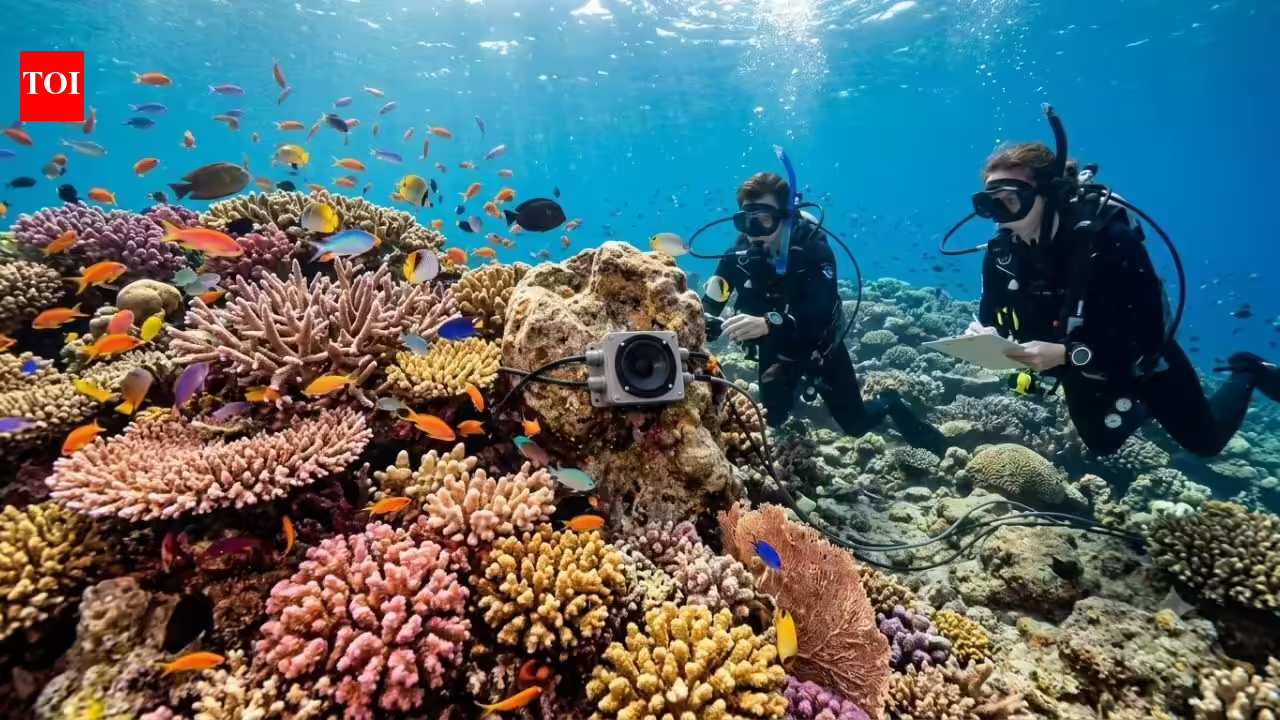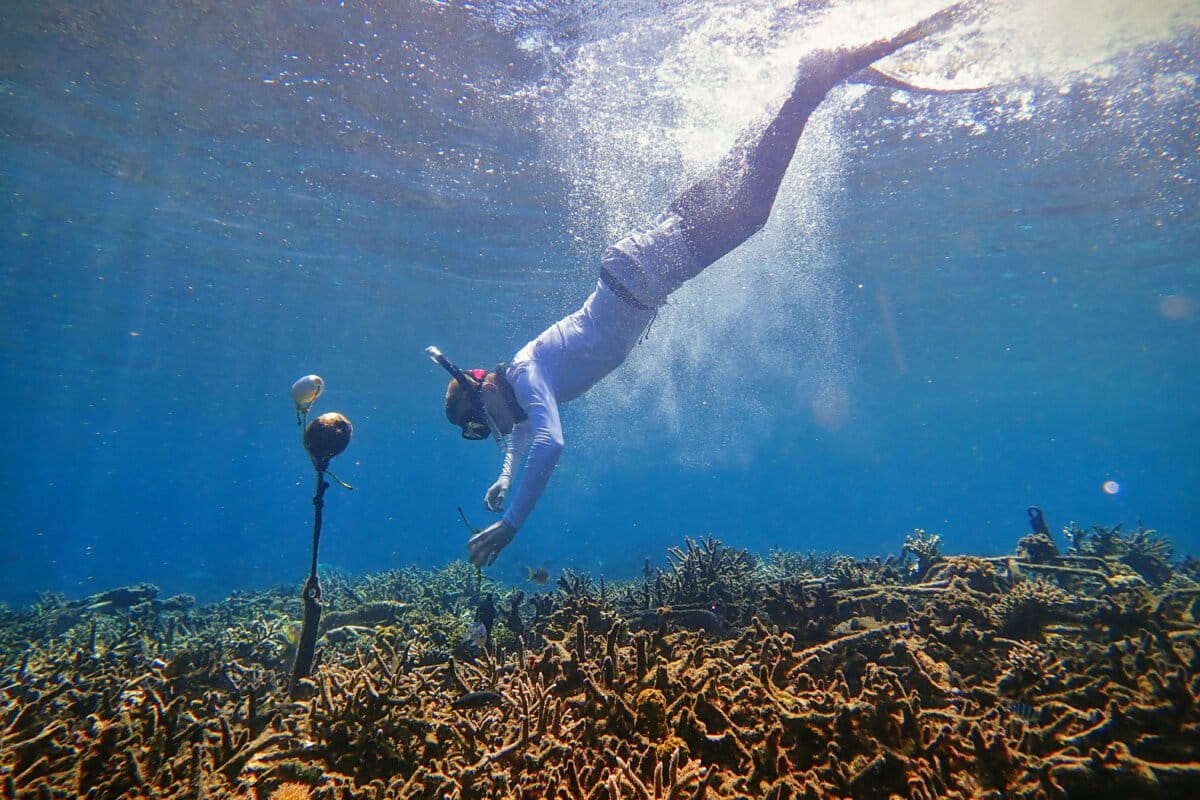
Once home to a pristine and vibrant network of coral reefs, the Spermonde Archipelago off the coast of South Sulawesi in Indonesia has had its coral decimated by the illegal practice of blast fishing, in which improvised explosives are tossed into the sea to kill and stun fish en masse.A new study harnesses acoustic data to produce what is likely the first rigorous estimate of the frequency and intensity of bomb fishing in the archipelago.Using low-cost microphones and an easy-to-run algorithm, the researchers detected more than 3,500 so-called fish bombs going off in their study area within the archipelago — an average of 23 blasts a day, or almost one every hour.The scientists believe their approach could help communities and NGOs around the world design targeted interventions to combat the practice, which can devastate not only reefs but the broader marine ecosystems.
When he went for a dive between the tiny islands off the coast of South Sulawesi, Indonesia, marine biologist and AI researcher Ben Williams could often hear as many as three fish bombs detonate. “But the thing is, because sounds travel so far underwater, the bombing is often happening quite far away,” he said. “So you could hear one that feels like a kick in the chest, then you look up [above the water], and you can’t even see a boat on the horizon.”