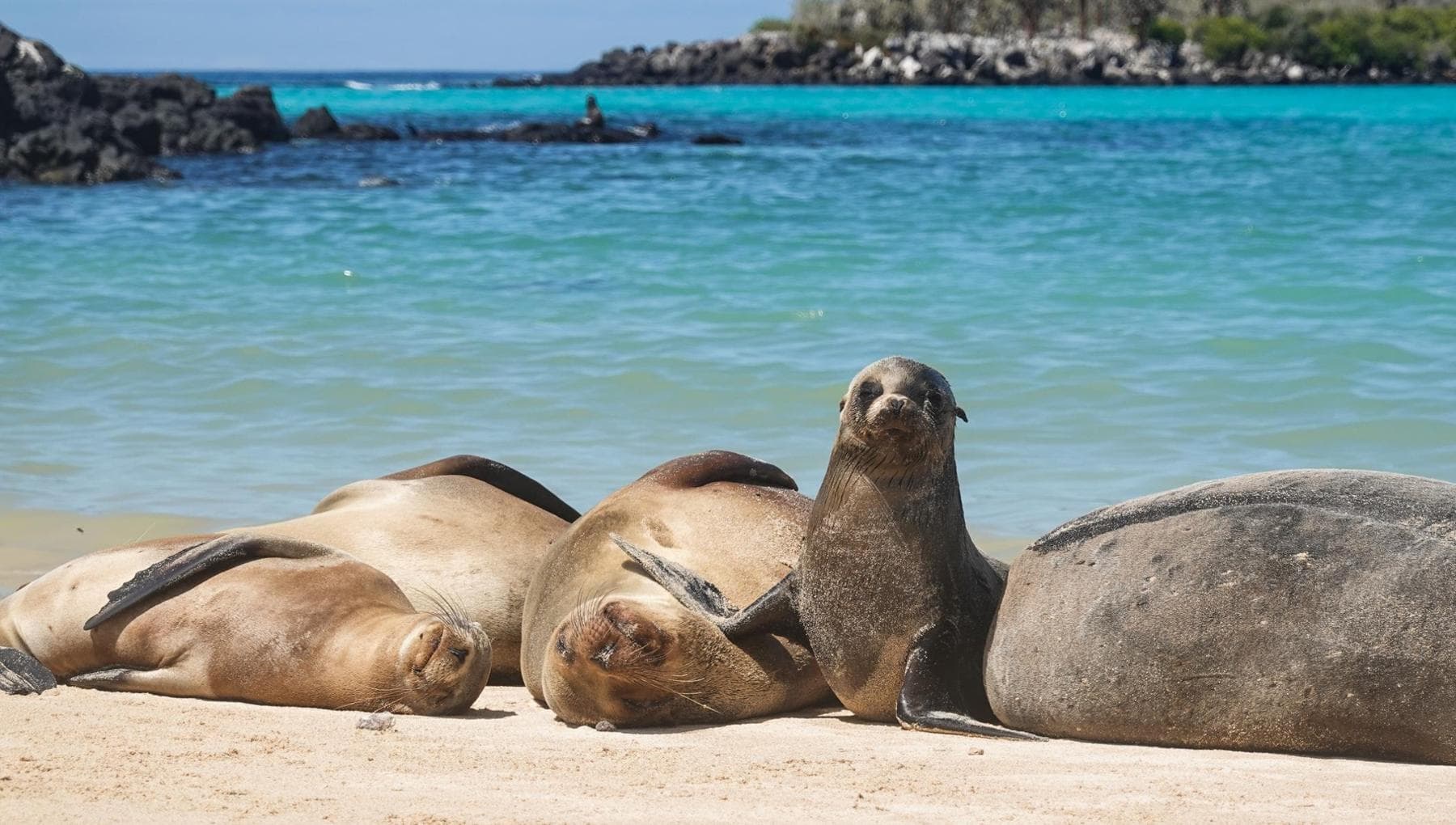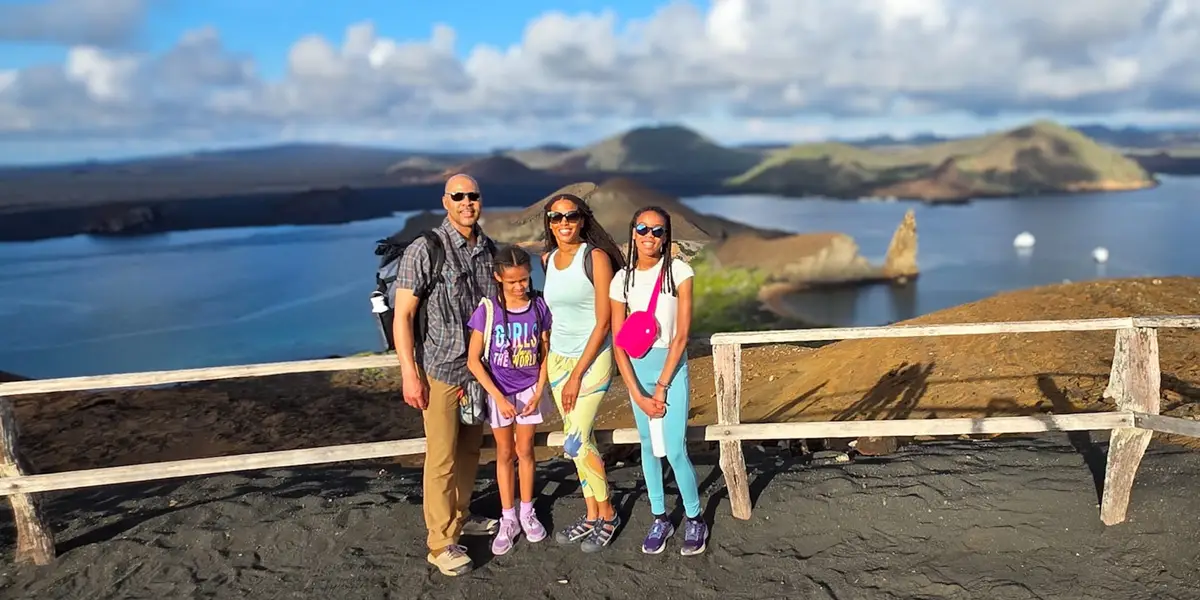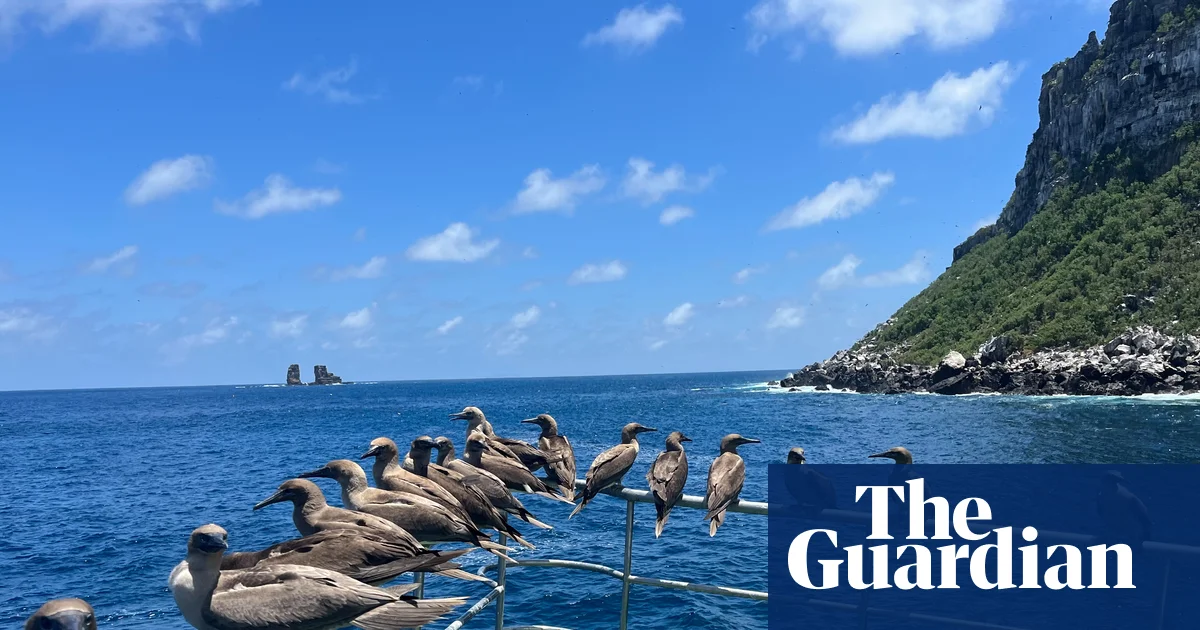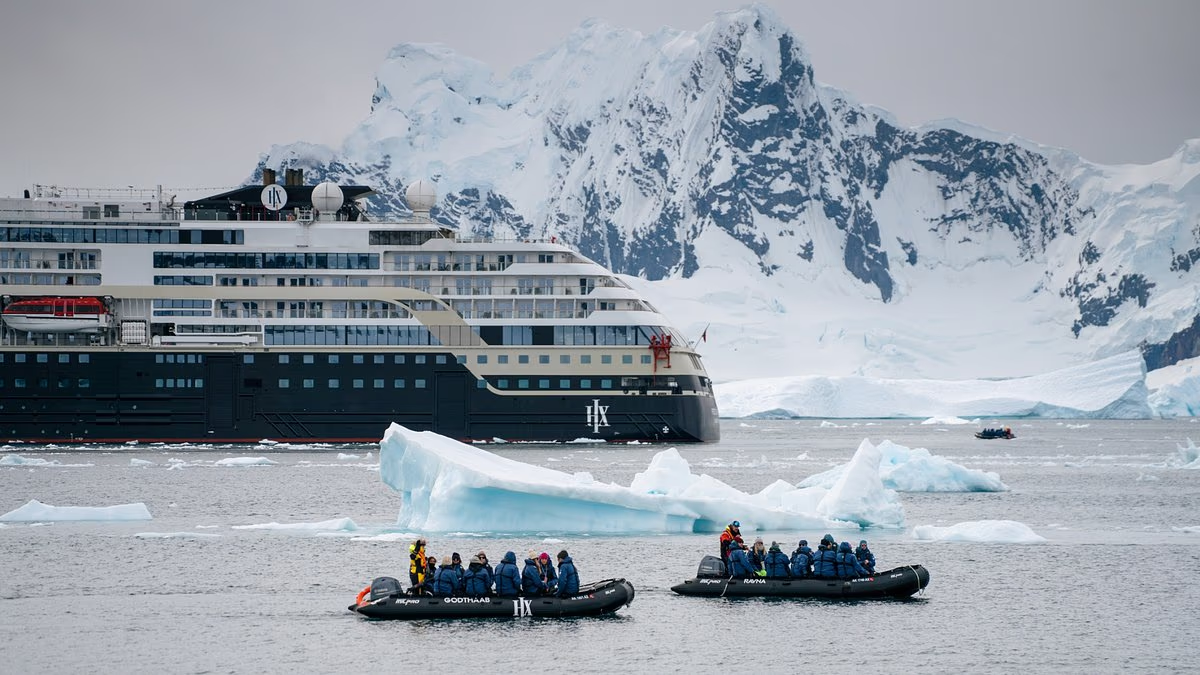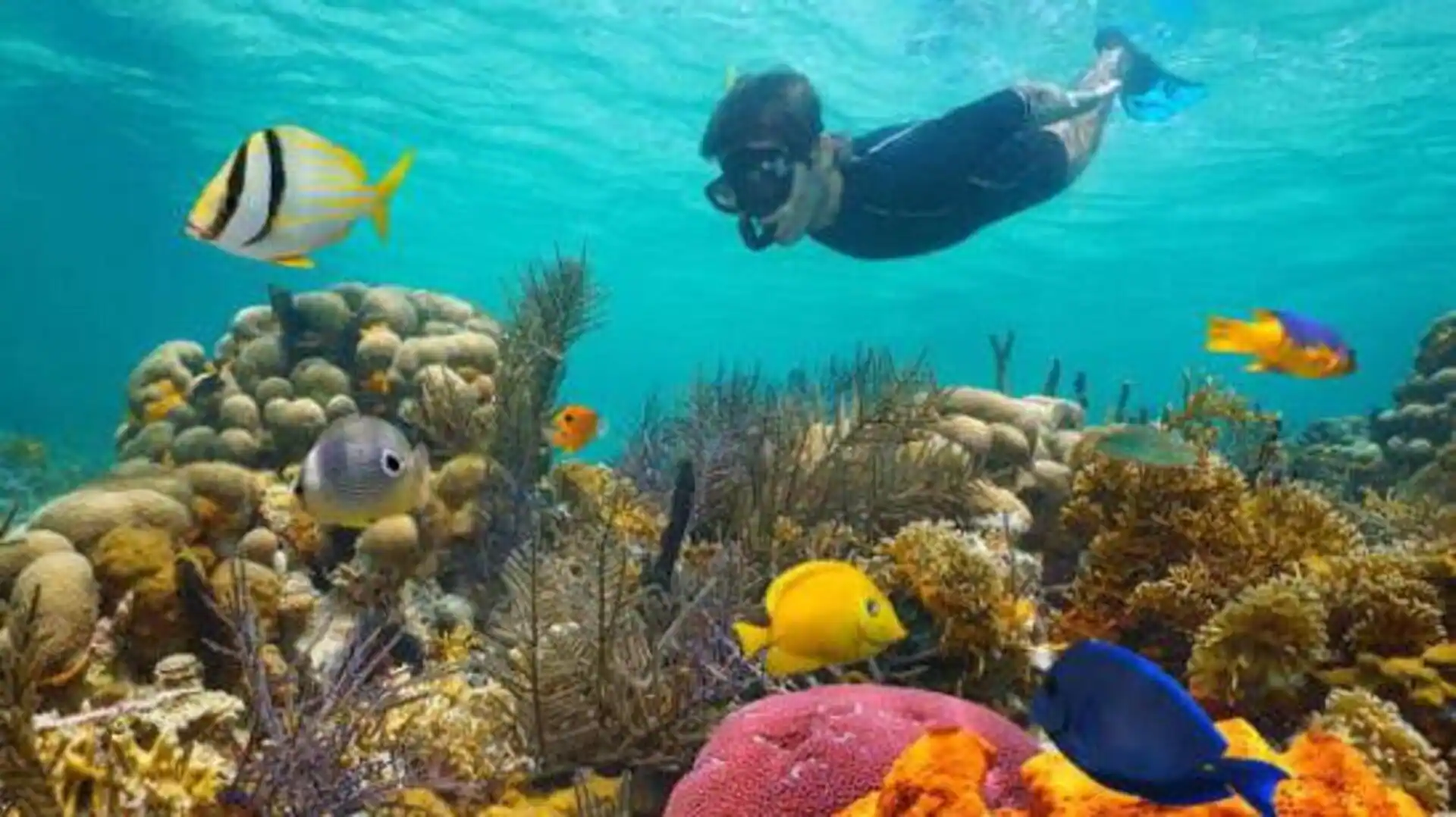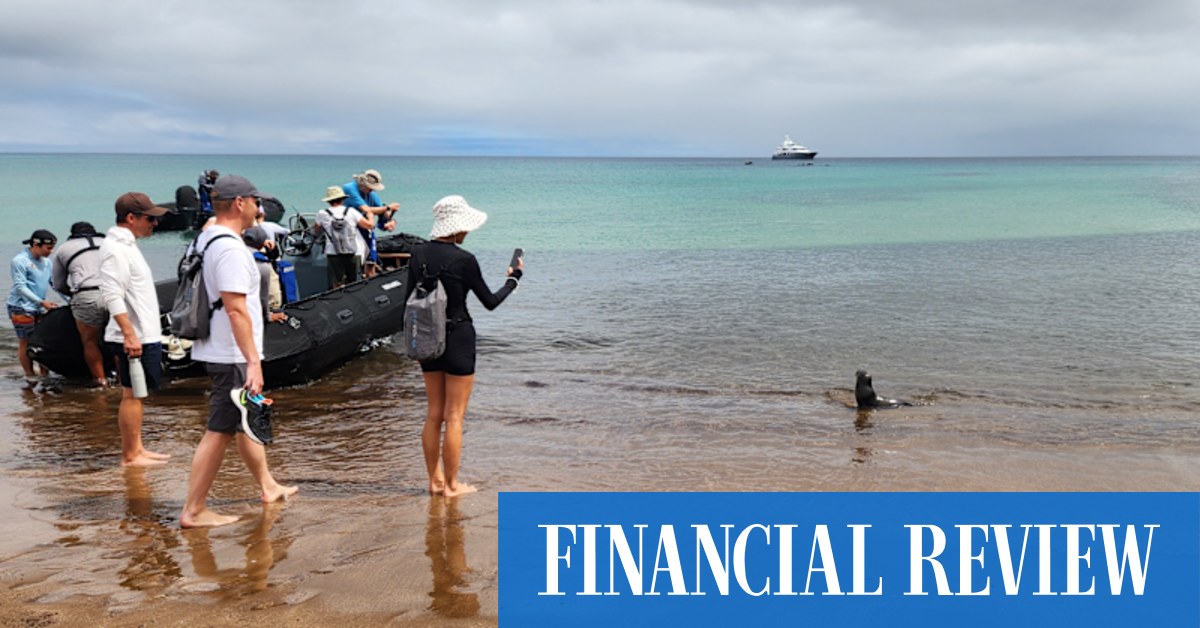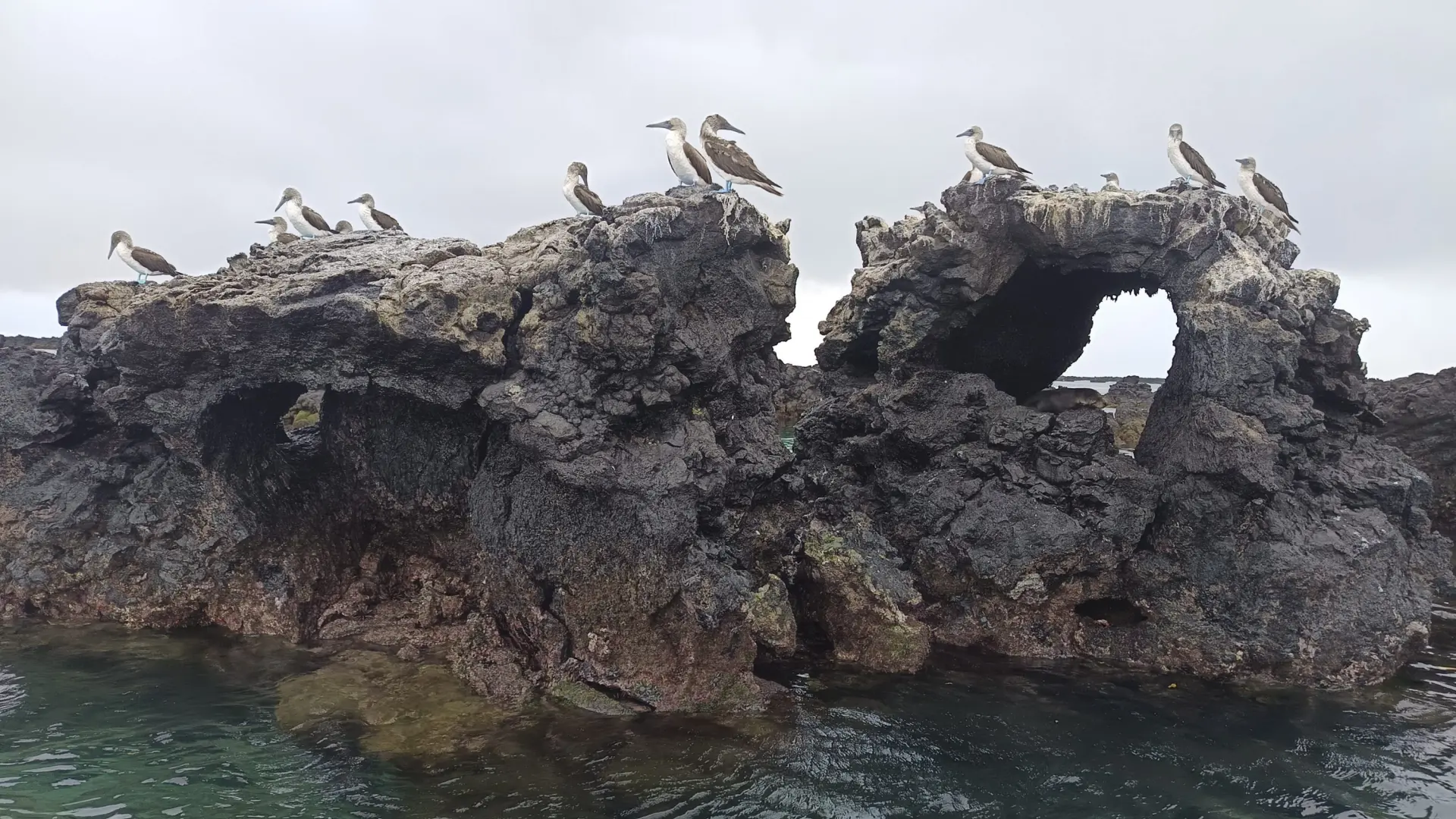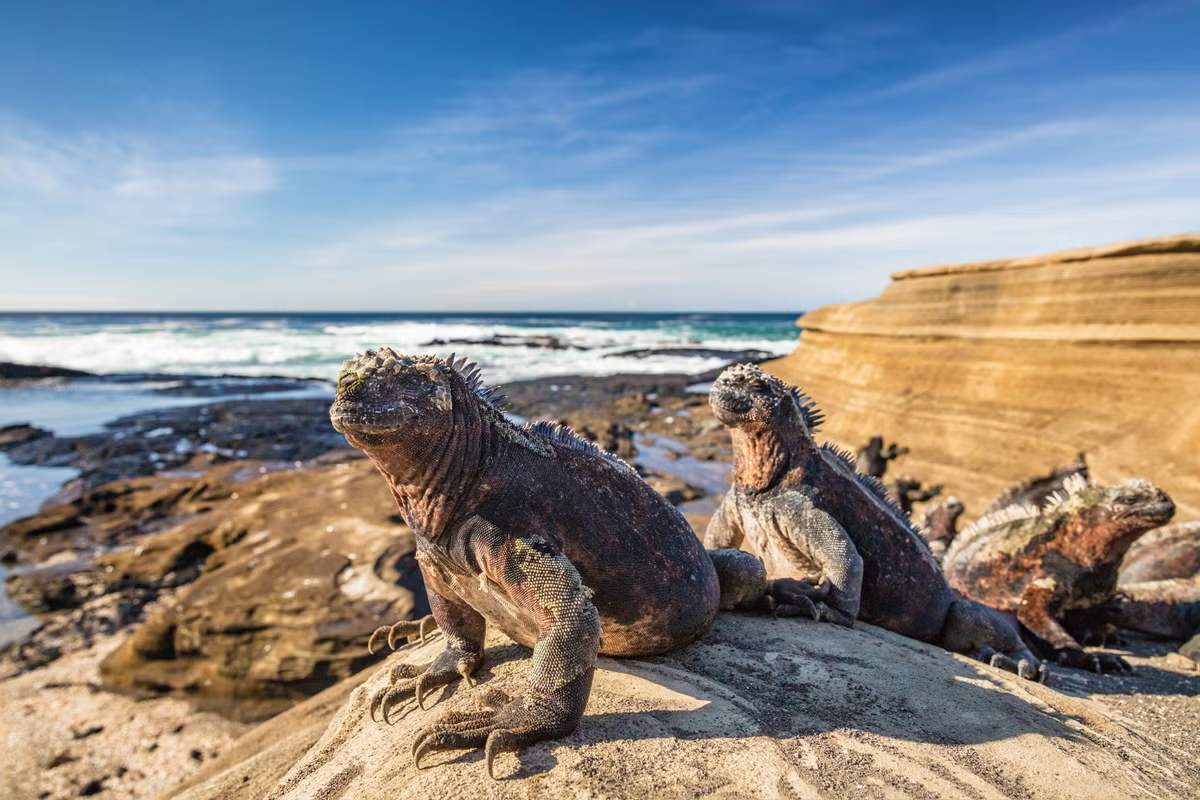
It’s a warm Ecuadorian morning and my kayak is rapidly hurtling towards a pair of penguins sitting on some rocks. Only the length of my paddle stops me from crashing into the seabirds and as I worry that the scraping of plastic on the rocks might startle them – but they barely flinch. Welcome to the Galapagos Islands.Such a close encounter would usually frighten an animal at home in Britain, but a four-night Galapagos Islands cruise with National Geographic Lindblad Expeditions quickly made me understand what naturalist Charles Darwin meant when he described this beautiful part of the globe as “a little world within itself.”And the experience is extremely different to the contemporary cruises that we are used to. There was no no big terminal to welcome us, just an early morning flight from Quito, Ecuador’s capital to Baltra Island, in the centre of the archipelago, before we boarded a zodiac to transport us to National Geographic Islander II.National Geographic Islander II rests in the calm Galapagos waters (Marc Shoffman)The first surprise was that there are no room keys. You can lock your door from the inside to enjoy the spacious suites – but with just 48 guests on board, this is more like sailing with trusted family (plus there is CCTV in the public areas and hallways). Everyone received a name badge, helping us to quickly get to know our fellow passengers, who were mainly from the United States.There were no waterslides, ice cream shops or LED screens promoting evening shows but my 11 and 13-year-old daughters were fully engaged, happily kayaking or snorkelling among the turtles, parrot fish and manta rays in the unseasonably warm waters. These were activities they would have approached nervously back home. Here, though, my eldest Isabelle enjoyed jumping off the side of the ship during swim stops, while her younger sister Amelie learned how to pilot a zodiac herself.The headliner here, however, was the nature and wildlife. You need to get up early for it though.A key feature of our trip was 5.45am wake up calls to avoid the heat and capture the wildlife at its calmest. We quickly learned that this wasn’t the type of cruise where you lie in or pack your fancy shoes or best clothes. Everything will get wet or sandy, or sandy and wet. Guests travel from the ship to each destination on a zodiac – known as Galapagos Ubers – for either a wet landing as you disembark from the water onto a beach or a dry one onto rocks.The Galapagos penguin is the only penguin found north of the equator (Getty Images/iStockphoto)Our first early start was worth it as we visited South Plaza Island to be greeted by sleepy sea lions and the region’s unique swallow-tailed gulls – the world’s only nocturnal gulls – who had recovered from a night of hunting to avoid the scavenger frigate birds who try to steal their food by daylight.There are a few rules in the Galapagos Islands. Guests must be accompanied by a guide, with limits of 16 per naturalist to keep crowds down. You can’t take anything from the islands even if the shells look really pretty and you must always stand six feet or two metres from the wildlife.As days passed, it was hard not to go right up to a sea lion and rub their bellies. But the reward for keeping our distance was that the wildlife seemed unbothered by our presence. Sea lions seem to pose for pictures with you in the Galapagos Islands (Marc Shoffman)Galapagos penguins perched proudly on the rocks of the Bainbridge Islets and sea lions laid down calmly as we passed, ready to be photographed. Even the Galapagos land iguana looked as if they were content next to their own piece of cactus. Just days before the trip, our daughters were worried about small lizards they encountered in Miami before we headed to Quito. Now they were obsessively taking photos of giant ones. Every stop was a photo opportunity. On Las Bachas island, rare birds such as the red-footed booby and shiny white Nazca boobies simply waddled by or nodded as they sat on eggs while we passed on strictly-followed tracks. My favourite was seeing the famous giant tortoises as they calmly ate grass at the Rancho El Manzanillo, unfazed by our gawping. A Galapagos land iguana poses by cactus (Marc Shoffman)Read more: The best expedition cruisesThe main interaction between humans and wildlife comes in the form of conservation efforts, such as tracking wildlife migrations and growing new cacti. Cruise ship capacity is capped at 100 passengers. None of the animals are trapped behind glass, there are no crowds waiting for a penguin show and no gift shop. It made me wonder if I can ever go to a zoo again.The landscape was also full of wonder. We hiked on a mix of beaches, rocky terrains and even volcanic scenery with hundred year-old black lava on Sullivan Bay.Back on the ship, there was plenty more to learn, with attentive staff serving serving up Ecuadorian delicacies such as ceviche in a unique sweet tomato-lime broth. The famous giant Galapagos tortoise are even bigger in real life (Marc Shoffman)Passengers mingled over dinner and drinks and during a karaoke evening where a shy lady from Missouri revealed her operatic talents while an older solo traveller surprised us all with a Japanese pop song.Evening talks reminded us of the nature we had encountered and prepared us for the next day of adventure. We also enjoyed helpful daytime lectures while sailing between destinations such as on smartphone camera skills – vital to get memorable snaps of the region – and, of course, there were chances to learn about Darwin. One of the most interesting facts we were told was that he was only actually in the Galapagos Islands for five weeks and never returned. I hope we do.How to do itPrices for a seven-day Galapagos Islands cruise with National Geographic Lindblad Expeditions start from £4,931 per person, with departures all year-round. All meals and tours are included. Internal flights from Quito or Guayaquil to Baltra Island are included.Book now
I took my family on a Galapagos Islands cruise – we may never go to a zoo again
Marc Shoffman and family swapped waterslides for natural wonder on a National Geographic Lindblad Expeditions vessel
1,023 words~5 min read