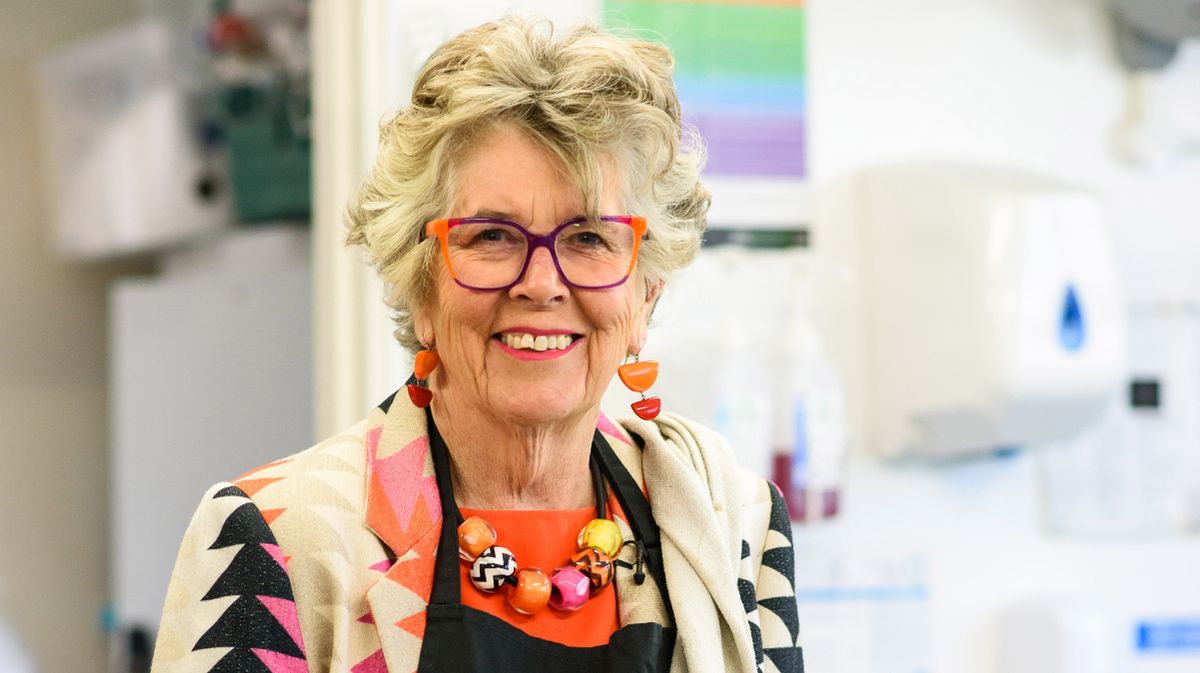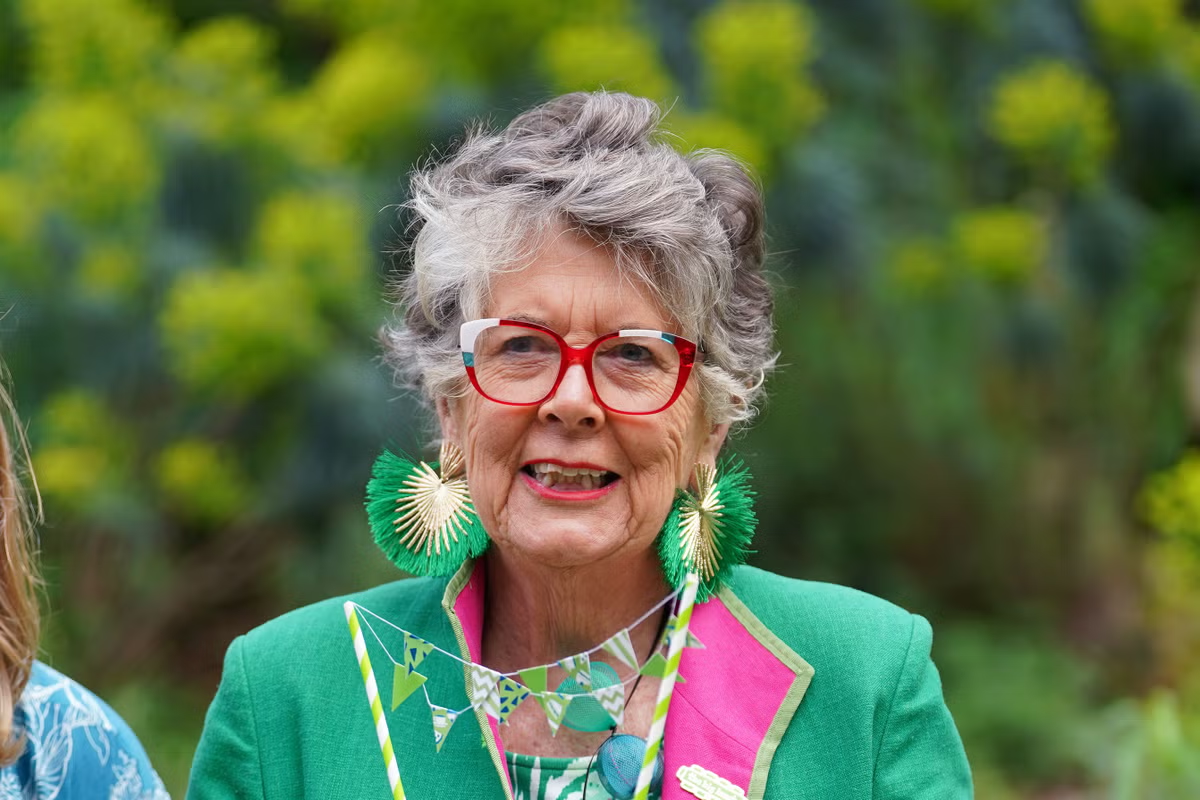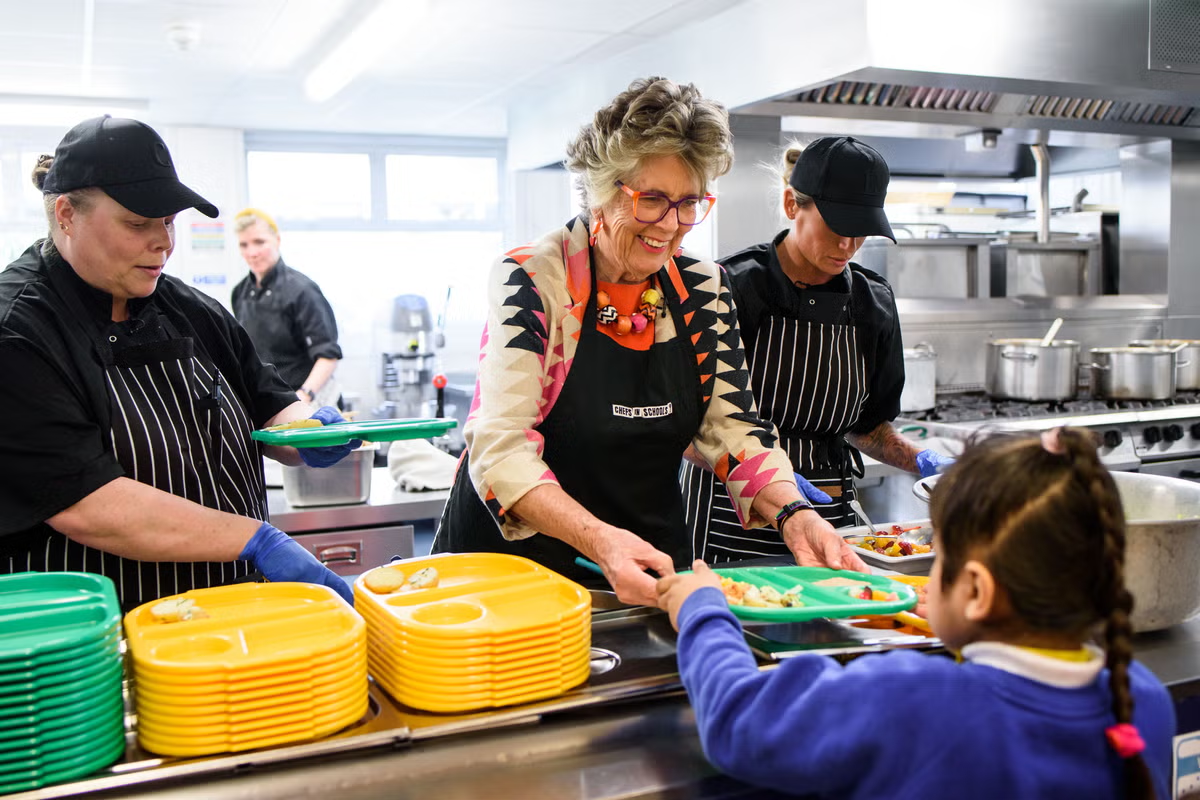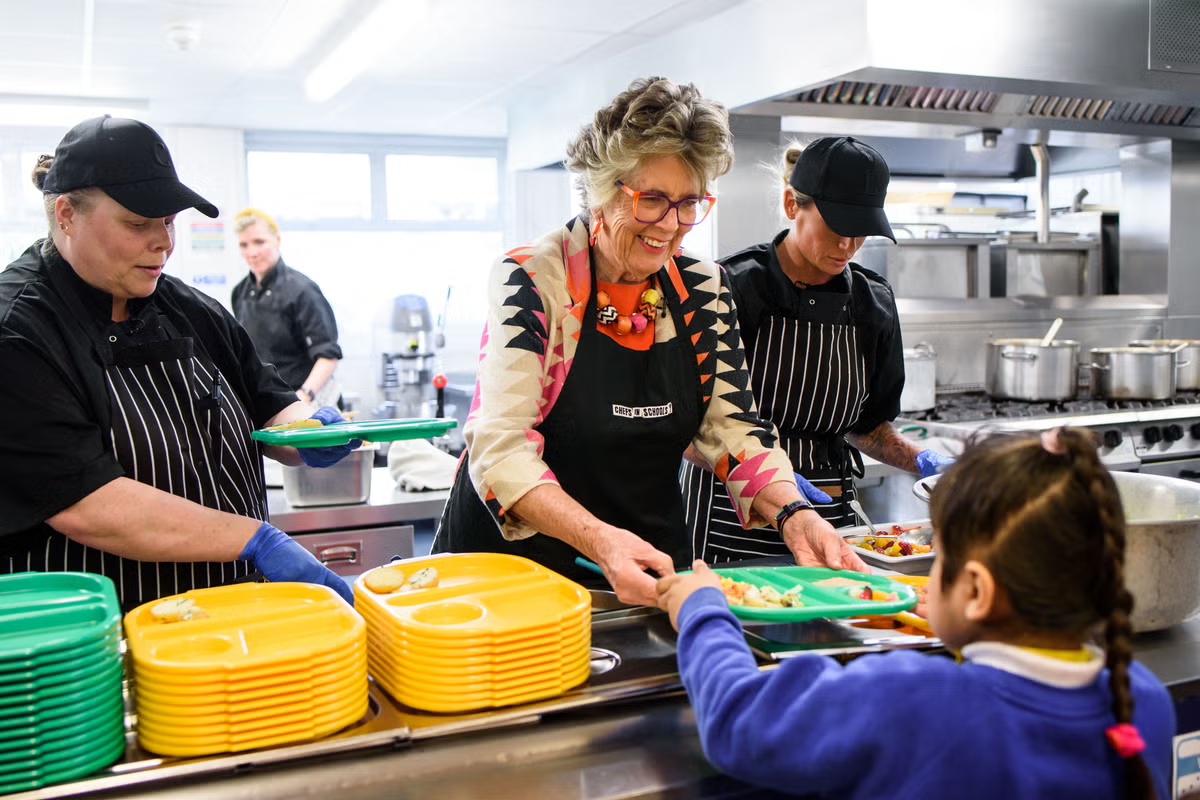
When I was at primary school, I kept a diary. There was really nothing of interest to note at that age, so the entries are universally dry, detailing the time at which I woke each morning (“5am! Read my book for two hours, yay!”), the games played at break-time, and what I ate for lunch each day.This last point is the main reason I can still recall the term I was put on school dinners – otherwise known as the term I did not eat – and is therefore why I know that TV personality Prue Leith’s recent insistence that lunchboxes should be completely scrapped for children is a sure-fire way to ensure that some of them will go hungry.“I think we should ban lunchboxes because you can’t police what parents put in,” said the former Bake Off judge, who is campaigning to revolutionise food in schools. “It’s very hard if you’re a mum walking around a supermarket with your child, and a child wants to have that chocolate bar and whatever in their lunchbox… It’s an easy way of sort of pleasing a child, and it’s an easy way of almost buying love.”While I support Dame Prue’s call for school meals to be free for every child, I cannot condone her demand that these meals be compulsory. She argues that it can improve children’s health if they’re nutritious and delicious – but I know from bitter experience that many kids will fall through the gap.My brief switch to school dinners was at my own request, mostly because my best friends ate them so I wanted them too. However, my simple child’s brain hadn’t really considered the implications of such a move as a lifelong extremely fussy eater who couldn’t stomach a single vegetable and was borderline phobic of a wide range of foods and textures. Dame Prue Leith is campaigning to revolutionise school dinners – but her recent comment takes the cake (PA)A small sample of the diary entries from that time: “Lunch today was tuna mayo baked potatoes – disgusting! Couldn’t eat the tuna or the soft potato so ate a bit of the crispy skin.”“Carrots, peas and sweetcorn today – bleurgh! Had to throw in the bin when no one was looking.”“Gravy had onions in – yuck! Had to pick them all out and then only had 2 minutes to eat. Jelly for pudding, gave to Nicola.”The only thing I seemed to reliably eat was one of the small, stale bread rolls that accompanied the hot lunch option each day. After my mum became aware of the situation (and was rightly incensed by the fact she had been forking out for food I wasn’t consuming), I switched back to packed lunches, a much improved state of affairs in terms of both my health and happiness.People who have never been a fussy eater themselves often assume it is some form of affectation or precociousness on the part of the child, solved by simply making them eat things against their will. It’s a real misunderstanding of the deep-rooted aversions we can have for certain tastes, textures and smells. At that age, being forced to consume any vegetables at all, plus a whole host of foods that felt slimy (eggs, mayo, jelly), felt, to me, tantamount to torture. As the film Inside Out brilliantly illustrated, “disgust” is one of our five core emotions, as fundamental a part of our makeup as joy, sadness, fear and anger.For these children, if accepted or ‘safe’ foods are not available, they simply won't eatLucy Upton, paediatric dieticianLucy Upton, a specialist paediatric dietician working in clinical practice with children who have a wide range of nutritional needs and feeding differences, says that a full ban on lunchboxes wouldn’t work “or consider the broader developmental, nutritional or medical needs of some children”. “The reality is that nutrition is inherently nuanced,” she says, identifying groups of children who may struggle: children with allergies or intolerances; children who have medical or swallowing differences which mean they need support with eating, adapted textures or different meal composition; and children with more restricted eating habits, such as Avoidant/Restrictive Food Intake Disorder (ARFID), Paediatric Feeding Disorder (PFD) or neurodivergent children who have avoidant eating habits tied to sensory differences. “For these children, if accepted or ‘safe’ foods are not available, they simply won't eat,” says Upton.Simply banning packed lunches is too simplistic, agrees registered child nutritionist Charlotte Stirling-Reed. “It’s much more complicated than just making every single child have school dinners,” she says. Aside from the more serious disorders, allergies or sensory issues that can restrict a child’s eating, even imposing school dinners on a “deeply ingrained fussy eater who would really struggle with an insistence on a set school meal” is impractical, she says. There is a push to make school meals healthier and, crucially, free (PA)“I don’t think it should be that every child has to have school dinners; forcing that on families who are already dealing with a difficult eater isn’t going to go down well,” Stirling-Reed adds.The good news is, a fussy eater can grow into someone with a varied and healthy diet. My poor mum may have despaired at the time, but despite not touching a vegetable until I was in my twenties, as an adult I’ve become an adventurous eater who counts broccoli and Brussels sprouts among her favourite foods. Some aversions persist – I feel exactly the same way about tuna mayonnaise now as I did at the tender age of eight – but, for the most part, I’ll happily try anything. I’m sure, in part, because I wasn’t traumatised during childhood, force-fed things I couldn’t abide in the name of a mandatory nutrition quota.Making school dinners healthier, more balanced and, crucially, tastier, is of course a good thing – as is making them free at a time when food poverty is a more pressing issue than ever. But imposing a one-size-fits-all approach? That’s a bitter pill I’ll never be able to swallow.
As a former fussy eater, I think Prue Leith is wrong about banning packed lunches
The celebrity chef is taking aim at lunchboxes as part of plans to revolutionise school dinners. But for kids who struggle with food, it’s not always the ‘healthy’ solution she thinks it is, writes Helen Coffey
999 words~5 min read