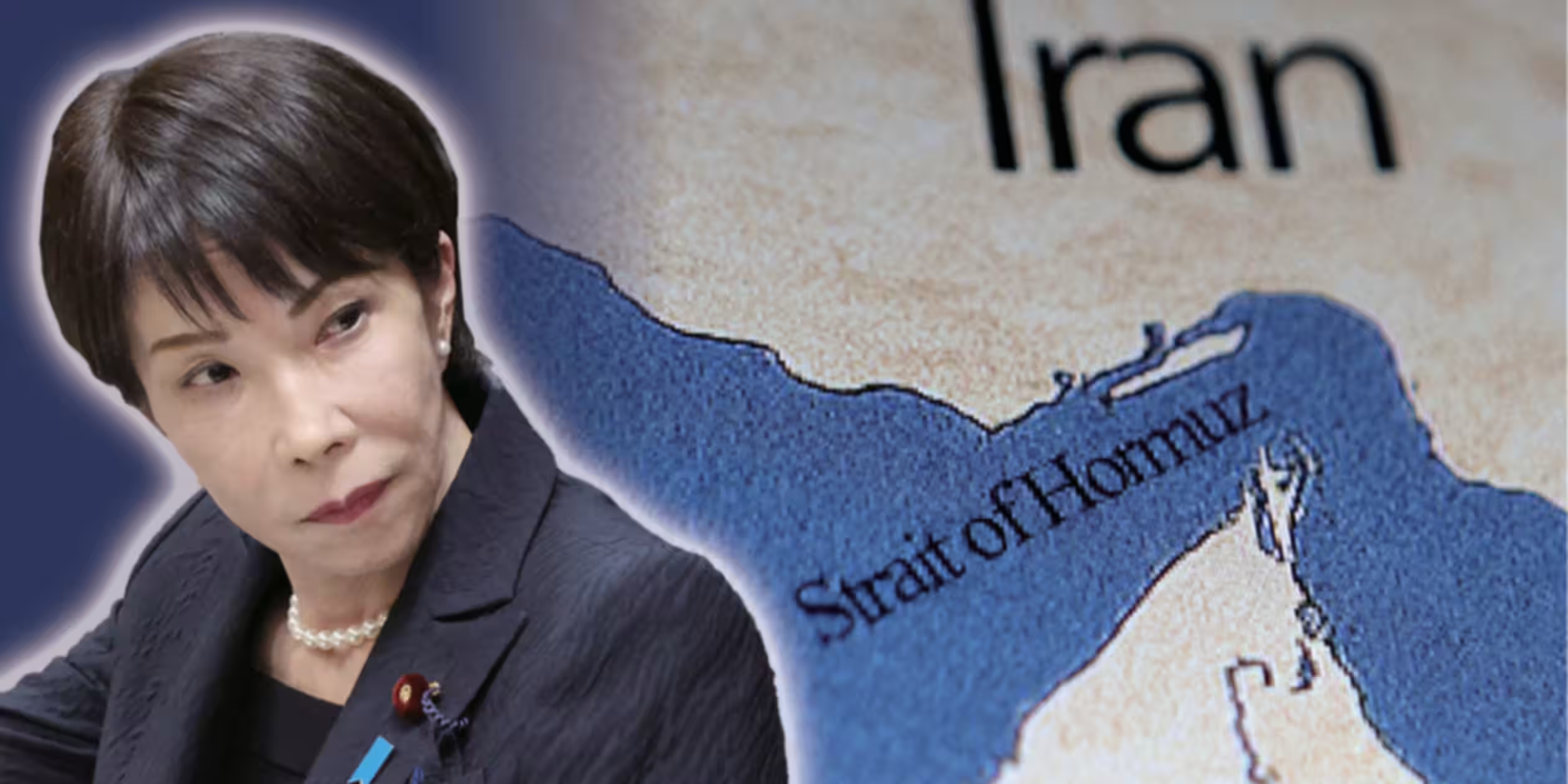
Tokyo, Aug. 26 (Jiji Press)--The Japanese government plans to diversify its crude oil suppliers beyond the Middle East amid ongoing instability in the region, Prime Minister Sanae Takaichi said Wednesday. Takaichi unveiled comprehensive measures to strengthen the country's energy security and support the construction of pipelines to bypass the Strait of Hormuz. To reduce reliance on fossil fuels, the government aims to accelerate its green transformation efforts by promoting the use of nuclear power and renewable energy sources. The measures were compiled as a comprehensive package to make the energy supply and demand structure more resilient. They were presented at a meeting of the GX Implementation Council held at the prime minister's office. "We will protect people's lives and economic activities by squarely facing global structural changes related to energy," Takaichi stressed at the meeting. Legislation to implement the measures will be submitted to an extraordinary session of the Diet, Japan's parliament, expected to be convened in autumn. The government plans to compile specific measures by the end of this year. The government will establish a support system to provide subsidies to oil wholesalers and other companies that procure crude oil via routes that do not pass through the Strait of Hormuz. The Japan Organization for Metals and Energy Security will offer financial support for pipelines being built by Middle Eastern countries as alternative routes. The government will also introduce a program to stockpile naphtha in the wake of recent supply concerns. Additionally, it will support insurance coverage for tankers and other ships operating in conflict-prone waters if overseas insurance companies do not provide reinsurance for such vessels. It aims to strengthen cooperation between oil-producing and consuming countries through the Partnership on Wide Energy and Resources Resilience, or POWERR Asia, a framework designed to support Asian countries in enhancing their energy supply networks. To improve energy self-sufficiency in Japan, up to five nuclear reactors will be replaced by the 2040s, and up to 14 by the 2050s. The government will also promote the introduction of perovskite solar cells, which are lightweight, thin and bendable. END [Copyright The Jiji Press, Ltd.]
Japan to Diversify Crude Oil Suppliers beyond Middle East
Tokyo, Aug. 26 (Jiji Press)--The Japanese government plans to diversify its crude oil suppliers beyond the Middle East amid ongoing instability in the region, Prime Minister Sanae Takaichi said Wednesday. Takaichi unveiled comprehensive measures to strengthen the country's
350 words~2 min read