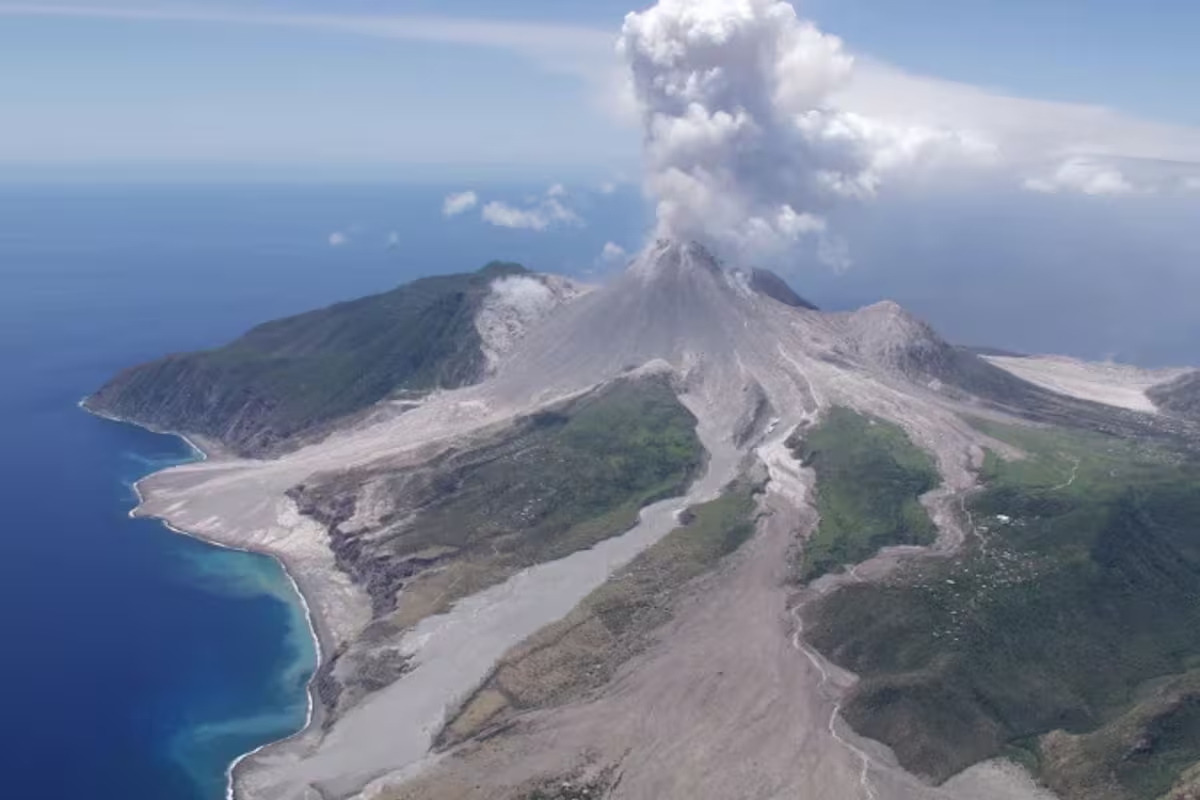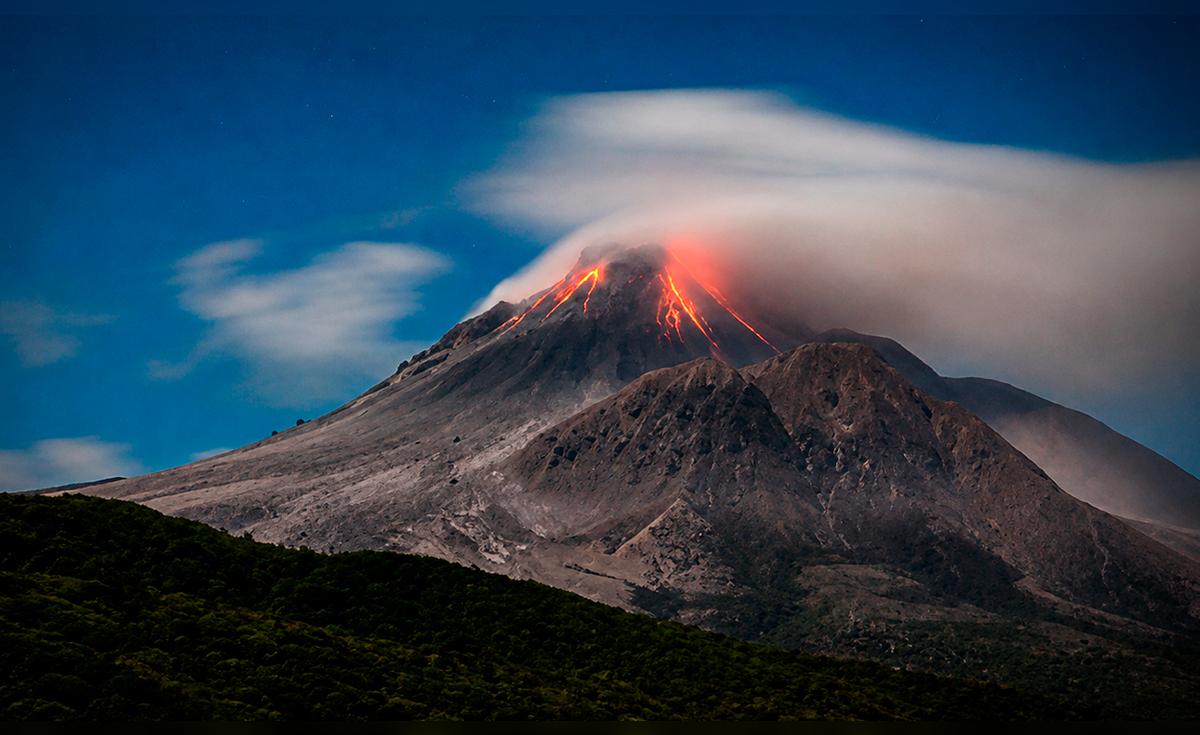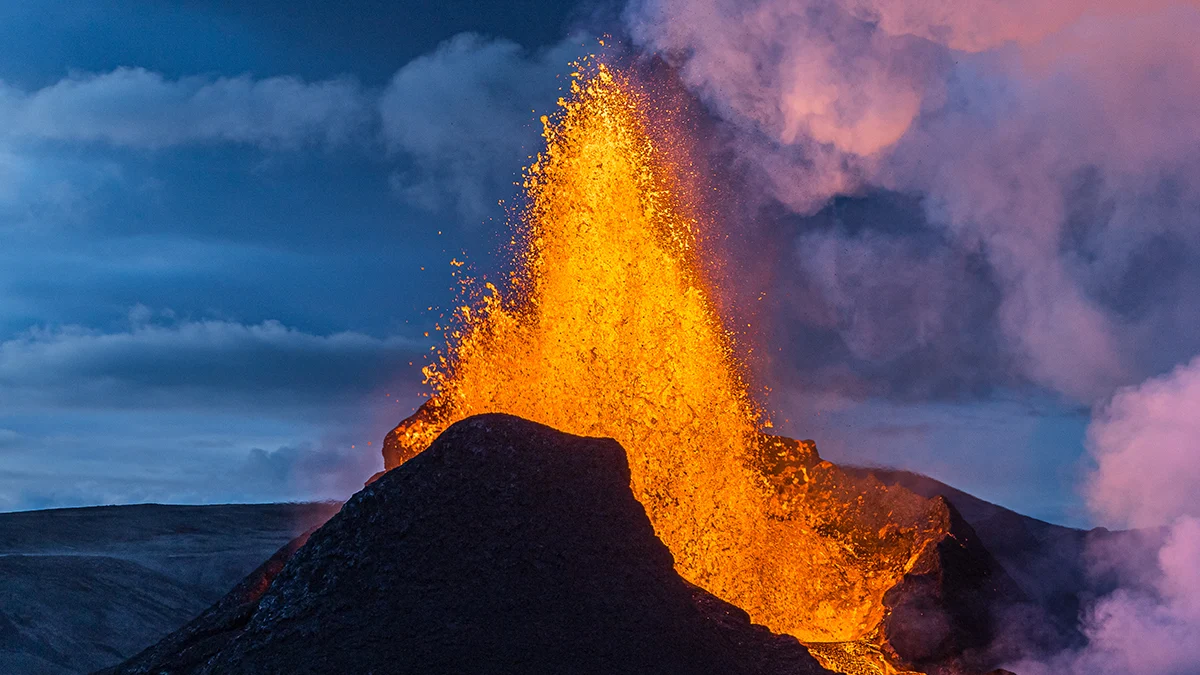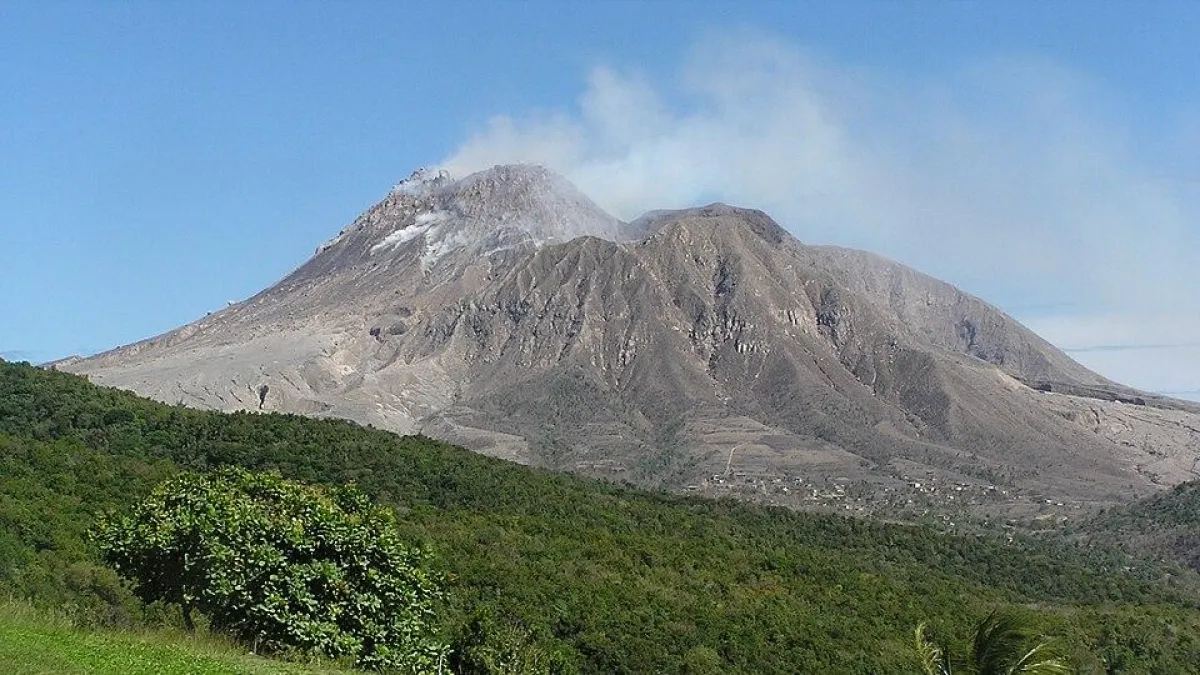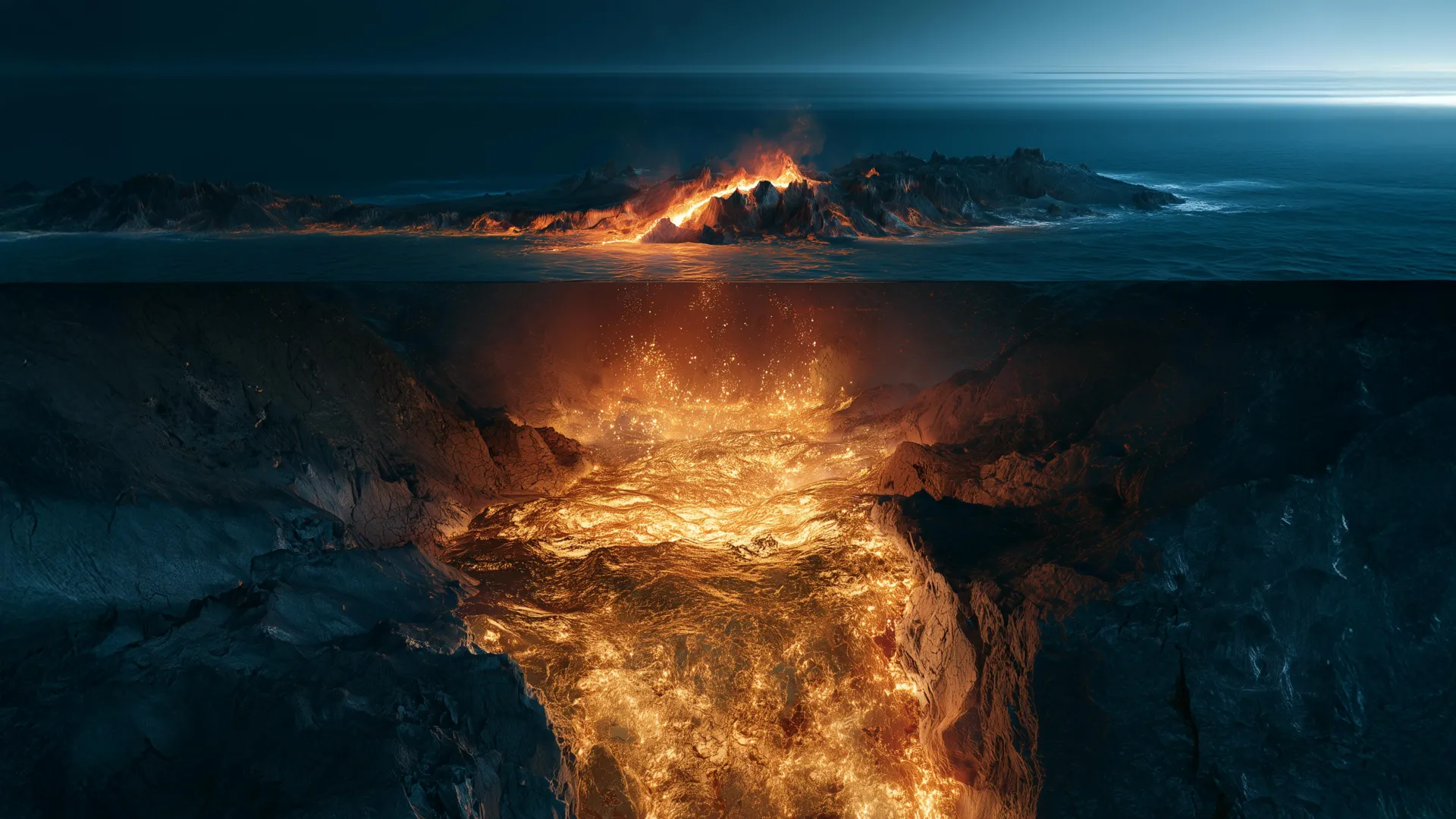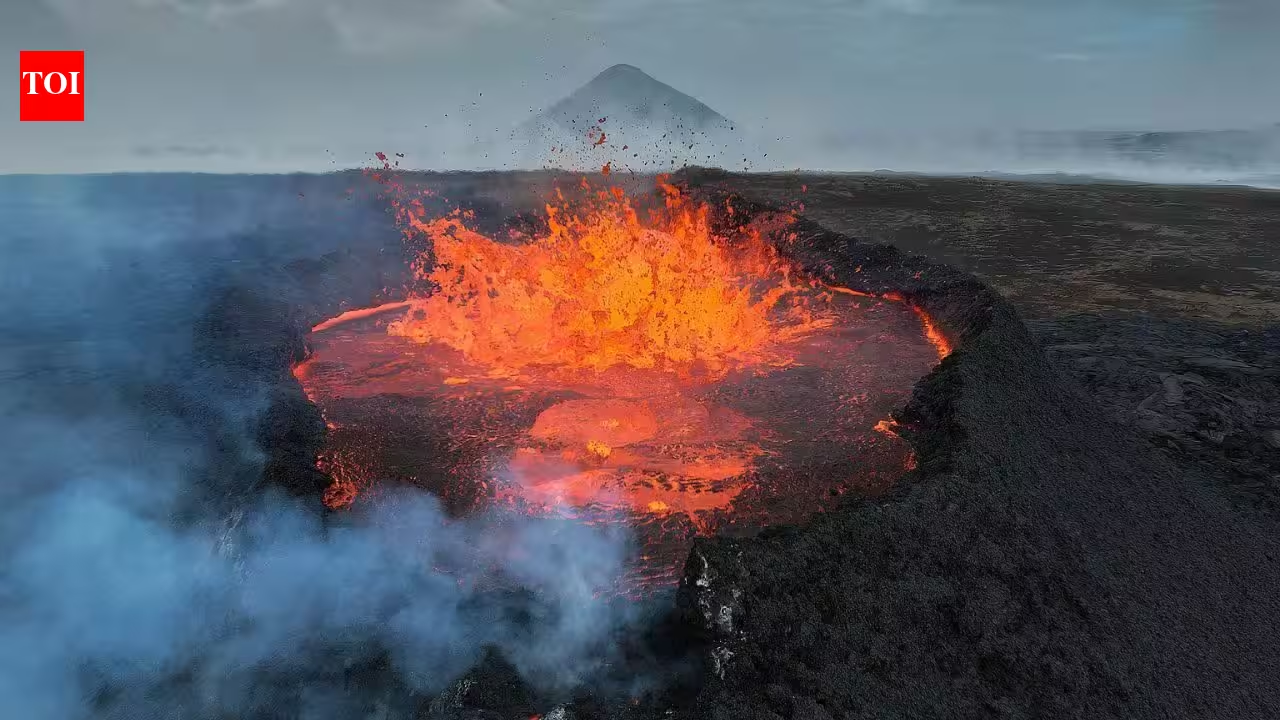
Soufrière Hills volcano on Caribbean Island Montserrat. Image Credit: WikipediaAn active volcano on the Caribbean island of Montserrat may be hiding a valuable metal-rich reservoir several kilometres beneath the surface. Scientists studying ‘Soufrière Hills Volcano’ have found evidence of a fluid-filled zone at roughly 2–3 kilometres depth that could contain a salty liquid carrying important metals. The finding does not mean that a new mine has been discovered, but it offers a rare look at how valuable metals can gather beneath a living volcanic system. In a study published in ‘Geophysical Research Letters,’ Petros Bogiatzis and colleagues used earthquake signals and seismic imaging to examine the hidden structure beneath the volcano. Their results point to a possible ‘magmatic brine lens,’ linking the volcano’s underground heat and fluids with the processes that can concentrate metals and supply resources for modern technologies and the energy transition today.Valuable metal discovered beneath an active volcano in the CaribbeanThe study identified evidence of a fluid-rich body beneath Soufrière Hills Volcano at a depth of around 2–3 kilometres. The researchers describe it as a likely magmatic brine lens, meaning a body of very salty fluid that has separated from magma. The discovery is significant because such fluids can carry metals as they move through volcanic systems. According to the study, metals are mainly introduced by fluids released from magma deep underground. As those hot fluids rise, they can separate into two parts of a dense, salty brine and a lighter steam-rich fluid. Most metals tend to move into the salty brine, while the steam is particularly effective at carrying heat towards shallower parts of the volcanic system. This creates an underground arrangement in which the same volcanic system can potentially contain both a source of geothermal energy and concentrated metals.Fresh lava from volcano eruption. Image Credit: Giles Laurent/WikipediaHow was the hidden reservoir detected without drillingRather than drilling directly into the volcano, the researchers used earthquakes as a way of looking underground. The study combined information from the arrival times of P-waves and S-waves generated by local earthquakes with earthquake locations. By examining how quickly these seismic waves travelled through different parts of the volcano, the researchers created a 3D-picture of its underground structure. They also examined the ratio between the speeds of the two types of seismic waves and the locations of earthquake sources. Together, these measurements helped distinguish different underground materials and identify areas affected by fluids. Their results provide evidence for a fluid-saturated zone beneath Soufrière Hills that is presumably rich in metals. The work also confirmed shallower geothermal systems that had already been identified in the area.Possibility of valuable metals inside the hot reservoirThe seismic results indicate the presence of fluid, but seismic measurements cannot directly determine the salinity or exact metal content of a water-filled reservoir. The study therefore describes the underground body as ‘presumably’ metal-rich rather than confirming a specific metal deposit. Other evidence makes the possibility interesting, however. The study notes that geothermal fluids at Soufrière Hills contain elevated levels of some elements, including arsenic and boron. Further chemical testing of fluids would be needed to determine how different underground sources are connected and whether the suspected reservoir is genuinely rich in economically useful metals.Why volcanic fluids contain so many metalsAs magma rises and cools, it can release extremely hot fluids containing water, carbon dioxide, sulphur compounds and salt, along with metals. As pressure changes during the fluids' journey towards the surface, the original fluid can split into a dense brine and a lower-density steam. The study explains that the brine contains a high concentration of chloride, which helps keep many metals dissolved in the liquid. Because the brine is dense, it can become trapped in porous rocks around the depth where the separation occurs. This provides a possible explanation for why a valuable metal-bearing reservoir can exist beneath an active volcano without being visible at the surface. The volcano may release gases and steam above ground while a much denser, metal-bearing liquid remains hidden deeper below.Future resource exploration through the volcanoesVolcanoes are usually viewed through the risks they pose, but their underground systems can also concentrate heat and materials that are valuable to society. The study notes that many metallic ore deposits are connected to volcanic and hydrothermal processes. Modern mining often targets the exposed and preserved volcanoes that became inactive millions of years ago. Active volcanoes provide an opportunity to study similar processes while they are still happening. That does not make active volcanoes simple or safe mining targets. That's why seismic and other geophysical techniques could help identify promising areas before drilling is considered. The study also notes that electrical methods can be useful because salty brines conduct electricity well and can produce very low electrical resistance underground. Combining these measurements with seismic information could make it easier to distinguish brine from other materials such as molten rock.What does the finding mean for Soufrière HillsSoufrière Hills has been an active volcanic system since its major eruption began in 1995, although activity since 2010 has largely been limited to degassing. The new study suggests that fluids released from the deeper magmatic system may separate and collect in a brine-rich zone before some of their heat and chemical contents move towards shallower geothermal areas. For now, the suspected metal-rich lens remains a scientific discovery rather than a proven resource. Confirming its composition would require additional investigation, potentially including drilling and direct sampling. Volcanos’ visible activity may consist mainly of gases rising from the ground but several kilometres below, hot fluids could be quietly concentrating metals in a hidden geological reservoir.2009 ash and steam plume, Soufrière Hills Volcano. Image Credit: Nasa
Scientists discover a hidden deposit of valuable metals beneath an active Caribbean volcano, suggesting volcanoes could be natural factories for valuable metals
An active volcano on the Caribbean island of Montserrat may be hiding a valuable metal-rich reservoir several kilometres beneath the surface. Scientists studying ‘Soufrière Hills Volcano’ have found evidence of a fluid-filled zone at roughly 2–3 kilometres depth that could contain a salty liquid carrying important metals.
941 words~4 min read