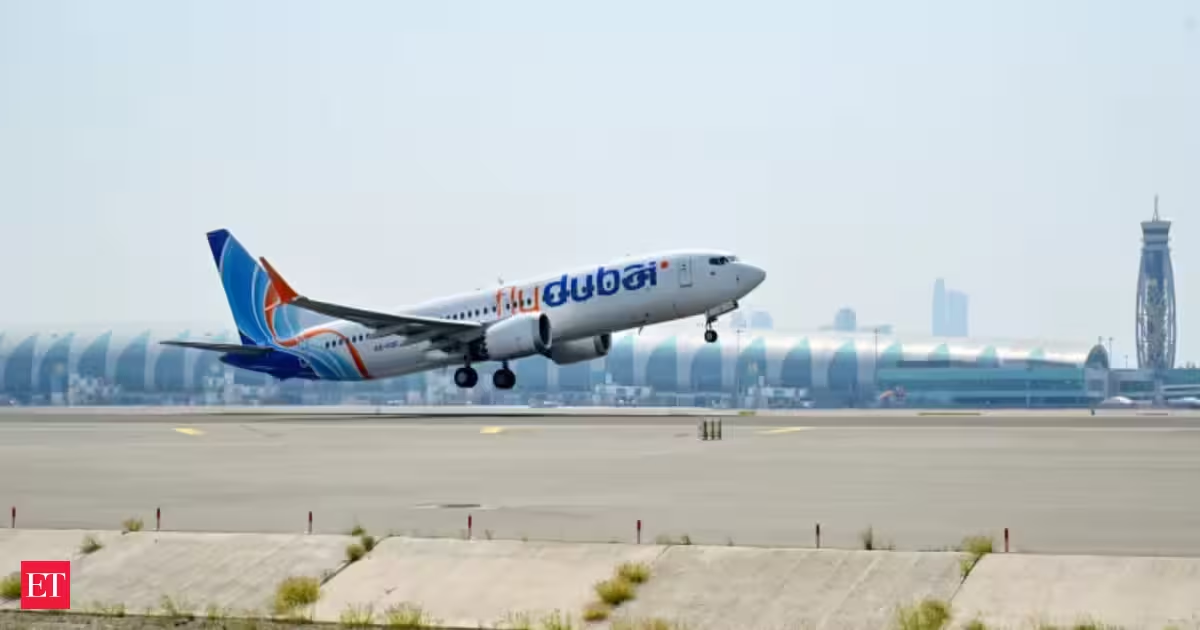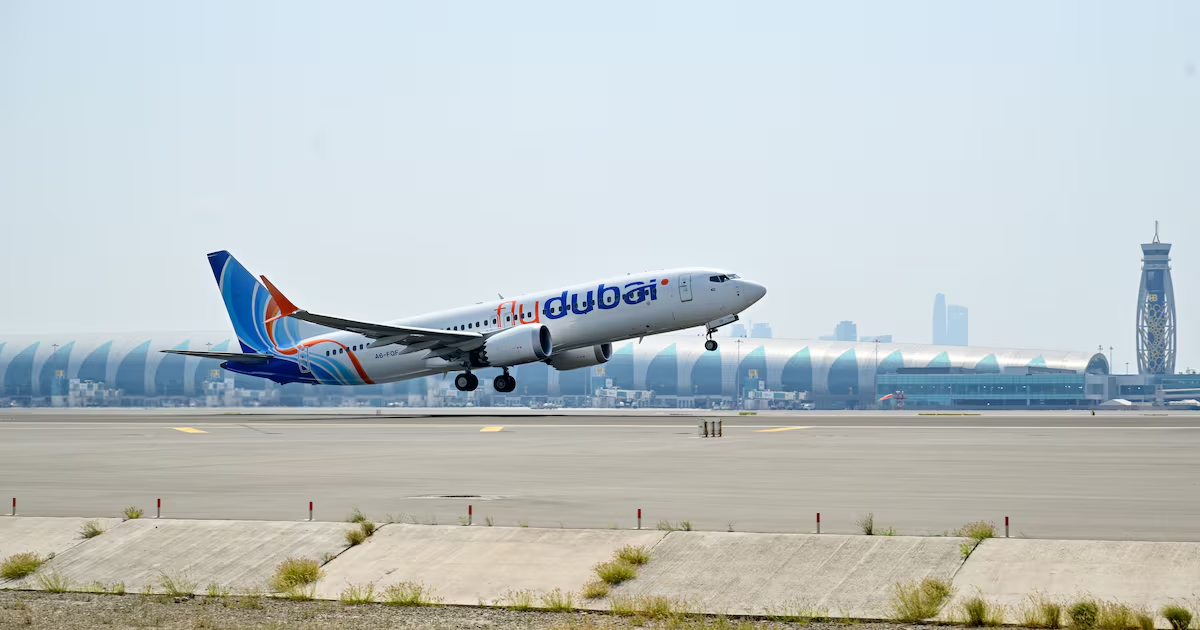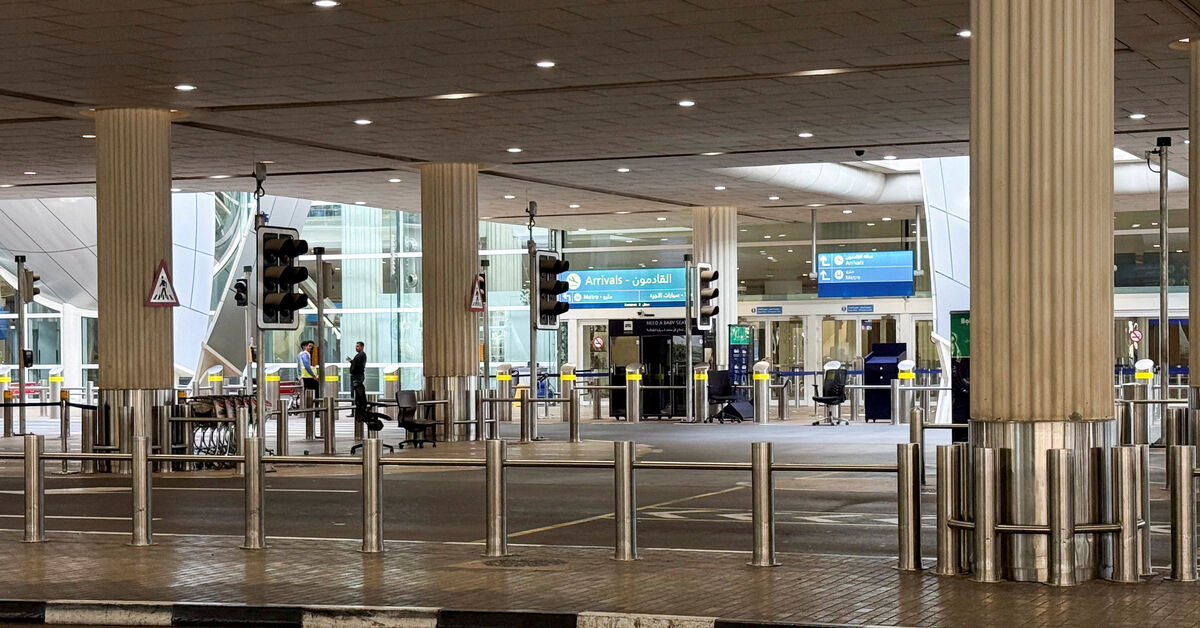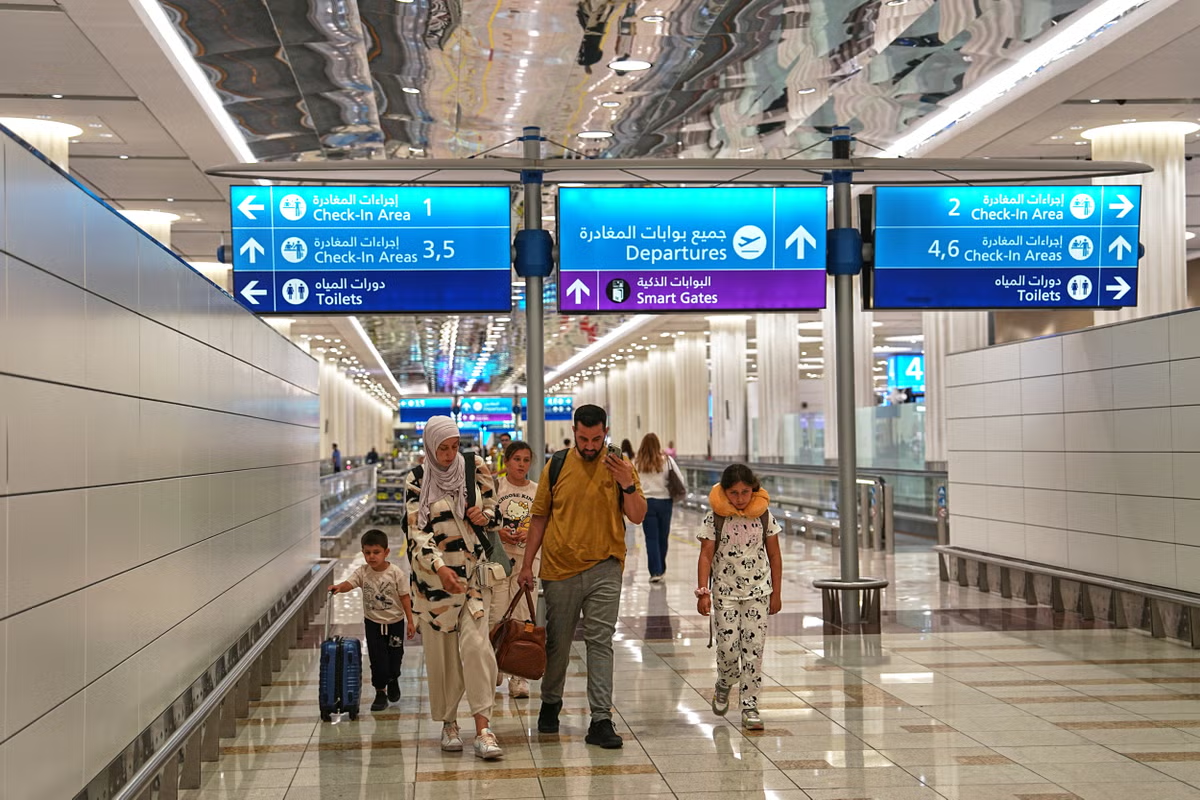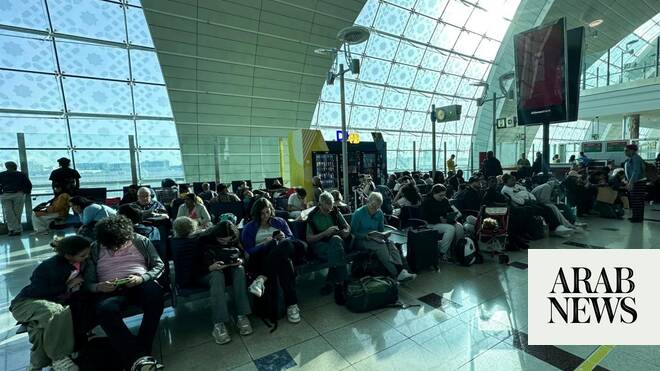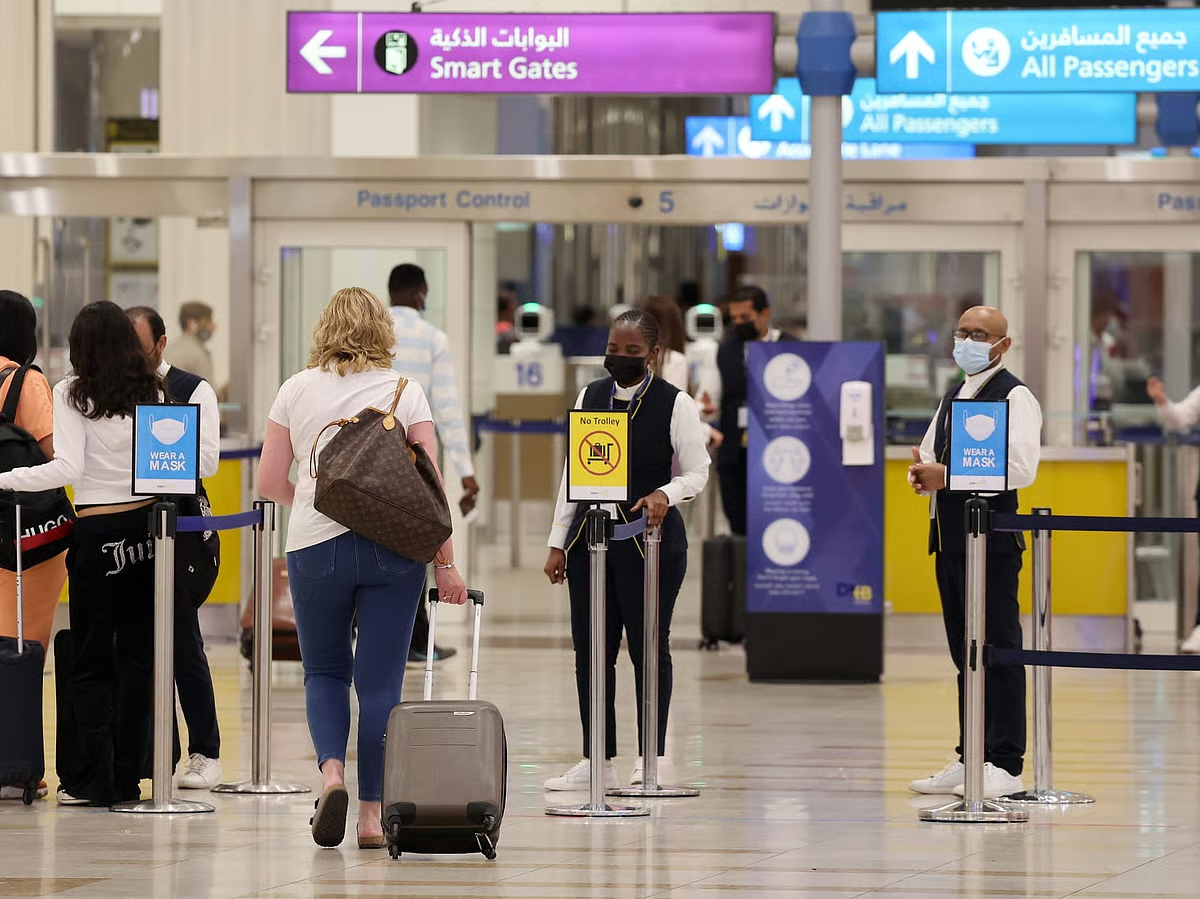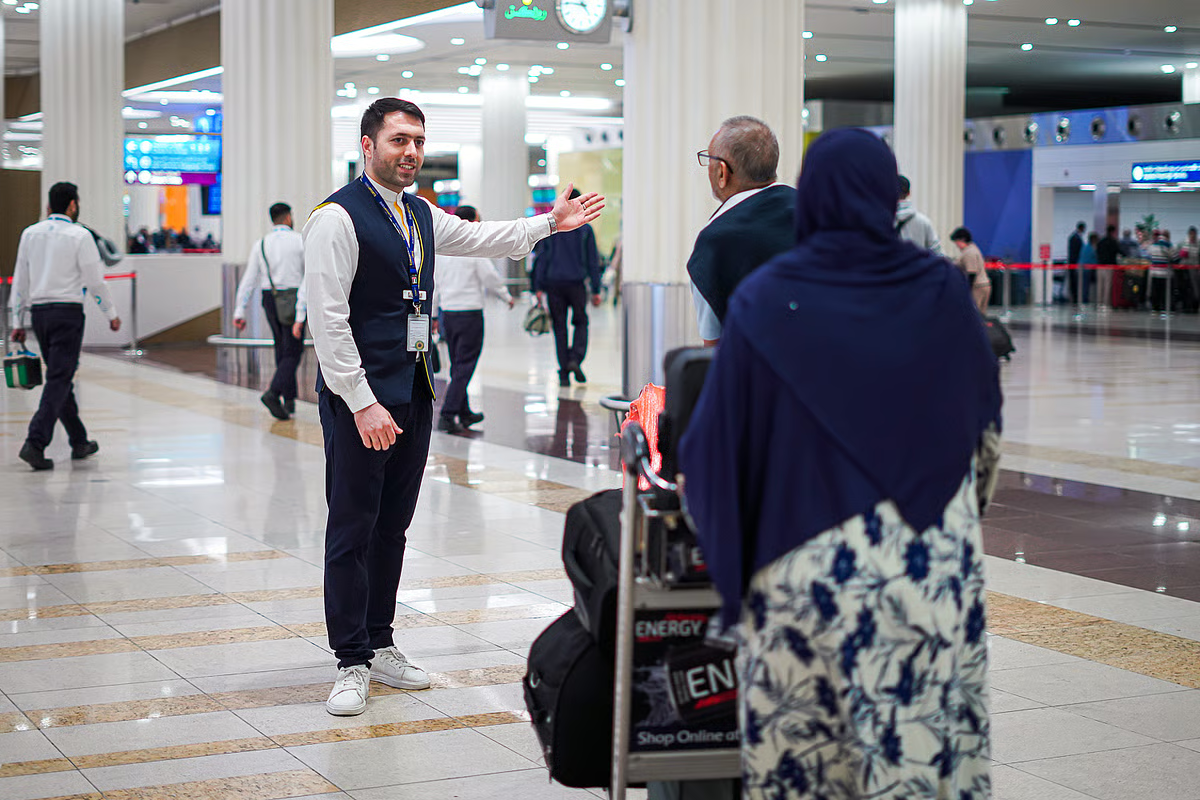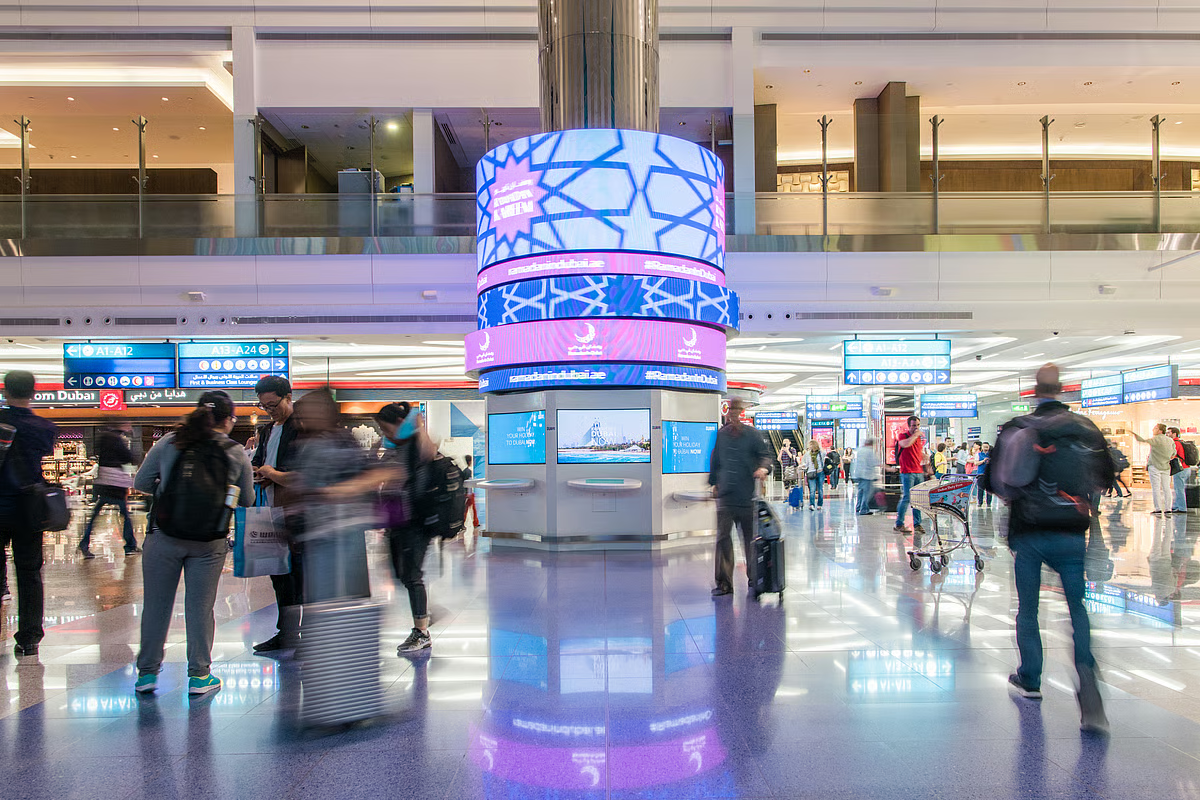
"Griffiths told reporters at a media roundtable, adding that DXB should finish this year with passenger numbers in the "low 70 millions", after handling 95.2 million passengers last year."I think if we end up this year in the 70 millions, that will be a very good sign that recovery is definitely with us. And you know, we did 95.2 million last year. I'm hoping that we may exceed that during the course of 26.""Let's be confident — I reckon we're going to end this year in the sort of low 70 millions, which was great.""Normally our forecasting ends up being quite conservative, and it's quite nice to be able to say every time that we got it wrong, but we got it wrong in the right direction," he explained.Busiest crownGriffiths also said he expects DXB to end 2026 still holding the title of the world's busiest airport for international travel, despite currently sitting in second place for the first six months of the year."I think we're pretty confident by the year ends that we'll be back in that position for international travel," he said. "We've been, I think, nearly 12 years as number one, and I'm not going to lose that crown to anyone else."He attributed the current dip in rankings to two months of disruption earlier in the year, when the airport came under missile attack. "We had two months where we were under ballistic missile attack. That's going to affect your traffic numbers, isn't it?" he said. Griffiths said damage from the earlier attacks was resolved within 30 days in most cases."But if you take the balance of the year, the growth that we've seen over the last couple of months has been so strong, and our confidence in Q3 and Q4 is very high."Recovery on trackPassenger numbers are currently running at around 80 per cent of pre-disruption levels, with capacity back to 86 per cent, Griffiths said. By the end of the first half, DXB was served by 56 airlines flying to 236 cities across 100 countries, with new routes added most weeks."Every week, that gap between last year and this year gets smaller and smaller," he said. "I'm pretty confident by the end of Q3, we'll have a full schedule. We'll have all the airlines back."Emirates, flydubai strongHome carriers Emirates and flydubai have posted particularly strong recovery numbers, with load factors and customer satisfaction scores both climbing. "Emirates and flydubai are in the 90s now compared to last year, so that's extremely good," Griffiths said.Confidence not the issueGriffiths pushed back firmly on any suggestion that international traveller confidence remains shaky, insisting the real issue lies elsewhere."I don't think we have any problem with traveller confidence at all," he said. "Every time airlines announce the return of a route, those load factors are immediately strong."Instead, he pointed to slow-moving foreign government travel advisories as the main brake on recovery. "The biggest problem we've had is the fact that foreign governments, being foreign governments, are incredibly cautious, and therefore their travel advisories have been very slow to respond to the true situation of what's happening here," he said, adding that outdated advisories create knock-on complications around travel insurance for both passengers and airlines.High fares explainedRather than reading elevated ticket prices as a sign of weak demand, Griffiths argued the opposite is true. "High airfares are the results," he said. "High airfares are the arbiter between shortage of supply and a huge amount of demand. You would not see high airfares if consumer confidence was low. High airfares are the result of the fact that more people want to buy tickets."Foreign carriers returningEuropean and US airlines that redeployed aircraft to popular northern summer routes are expected to return to Dubai as the winter season begins at the end of October, Griffiths said, with one major carrier already back in force."Air France have already started back, which is good, and their loads are extremely strong," he said. He added that close to 100 million passengers transit through Middle East hubs each year, with Dubai holding a 45 per cent share of that transfer market. Air taxis on trackDubai's ambition to launch flying taxis also remains alive, Griffiths confirmed, with the city's vertiport infrastructure now officially completed. "It's still pretty much on track. I think it's a really wonderful product," he said, adding that he was personally looking forward to using the service. "I'm looking forward to being able to get to and from home in about three minutes, which would be wonderful."However, he stopped short of naming a firm launch date, stressing that safety certification would take priority over speed to market. "Anything with air travel is always covered by the highest possible standards of regulation and air safety, and that applies whatever the situation is," he said. "Dubai still has the resolve to be first to launch that service... but I couldn't say" whether it lands in the third or fourth quarter.
Dubai International Airport on track to hit 100 million passengers by early 2027
Dubai International Airport set to hit 100 million passengers within 18 months as DXB traffic rebounds, airlines return and flying taxi plans advance.
823 words~4 min read