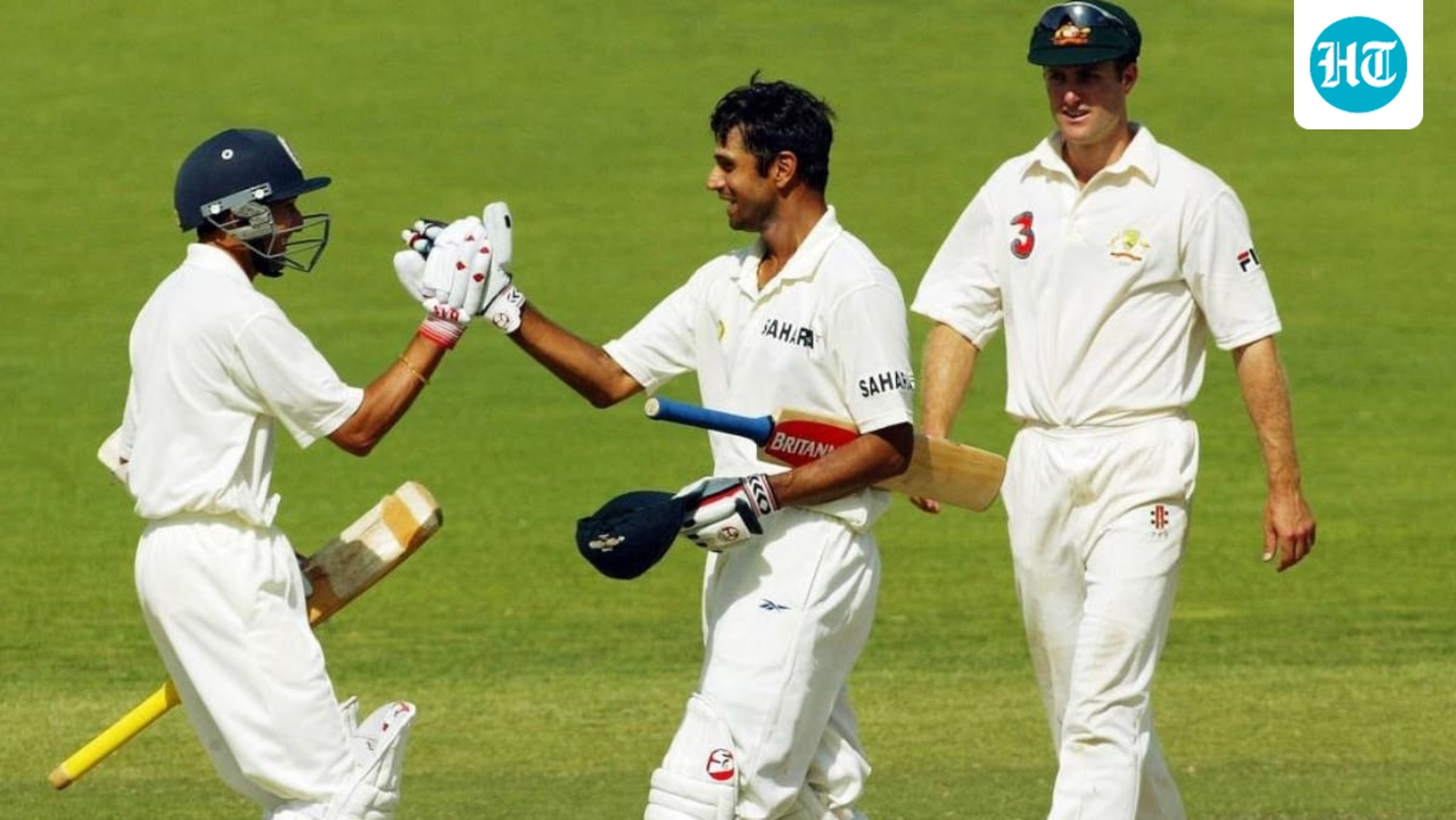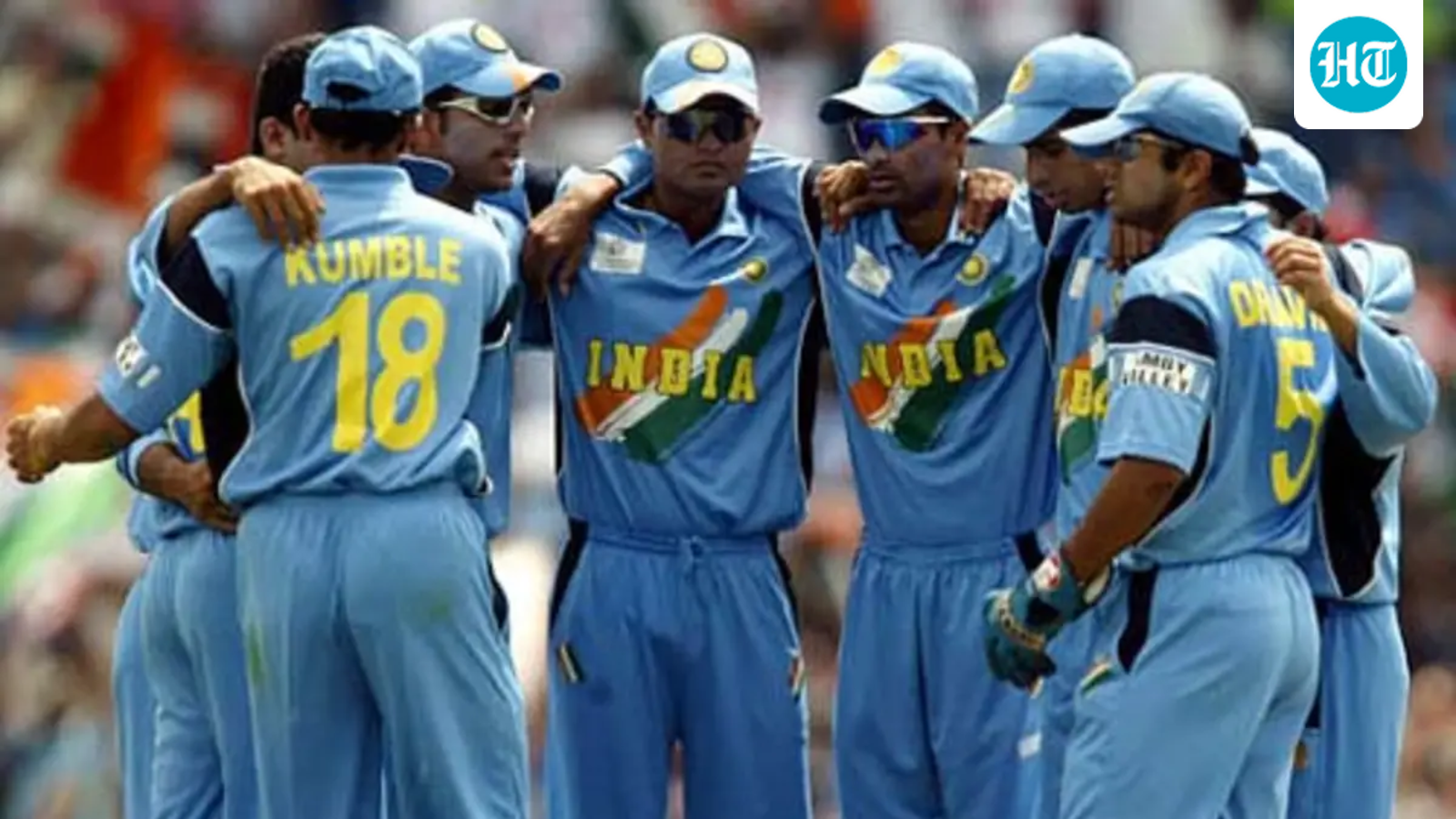
He scored a triple century and then two double hundreds in one Duleep Trophy season. In a World Cup match, his bowling spell lasted one ball and produced a wicket. Years later, he would top-score for India in the country's first-ever Twenty20 international. Yet the same cricketer finished with more than 8,000 first-class runs at an average of nearly 49 without ever playing a Test.Indian team in the 2003 World Cup. (X Images)Long before his international career began, the left-hander had built the sort of domestic record selectors usually cannot ignore. In November 2000, he hammered an unbeaten 308 for Punjab against Jammu and Kashmir, facing 409 balls. A few months later, representing North Zone in the Duleep Trophy, he made 201 against South Zone and 208 against Central Zone. He finished that competition as the leading run-scorer with 532 runs at 88.67.His international career would eventually contain moments that were almost too neat to script. One came at the 2003 World Cup. With New Zealand nine wickets down at 146, Sourav Ganguly tossed the ball to his part-time left-arm spinner. Daryl Tuffey drove the first delivery back towards the bowler and was caught. Figures: 0.1 overs, no runs, one wicket. His entire bowling contribution that afternoon had lasted precisely one ball.The cricketer was Dinesh Mongia, a name remembered mostly as a supporting character from an Indian side filled with much bigger stars. But look closely at the numbers and incidents scattered across his career, and Mongia emerges as one of the more unusual Indian internationals of his generation.Mongia made his ODI debut against Australia in Pune in March 2001 after his mountain of domestic runs. His most memorable year for India came in 2002, and one of its strangest episodes began not with Mongia but with Douglas Marillier. In the first ODI against Zimbabwe at Faridabad, India appeared to have the match under control after reducing the visitors to 210 for eight while defending 274. Marillier, batting at No.10, then produced the innings that would become inseparable from his name. He repeatedly moved across his stumps and scooped India's fast bowlers over and behind the wicketkeeper, racing to an unbeaten 56 from only 24 balls as Zimbabwe pulled off a remarkable one-wicket victory.Three days later, at Mohali, India were confronted by Marillier again. Mongia had already made 45 at the top as India piled up 319 for six when Ganguly later turned to his part-time left-arm spin during Zimbabwe's chase. Mongia removed Andy Flower for 29 before Marillier arrived, carrying the reputation created by his extraordinary Faridabad assault.This time, Marillier made only two. Trying to sweep Mongia, he top-edged the ball and was caught by Ajay Ratra. Mongia then bowled Craig Wishart and finished with three for 31 from six overs, figures that would remain the best of his ODI career. India won by 64 runs. The man who had tormented India three days earlier had been stopped by a batter whose bowling was usually little more than an additional option.Nine days later, Mongia produced the innings that would define his international batting career. In the deciding fifth ODI at Guwahati, he opened the innings and carried his bat for an unbeaten 159 from 147 balls, hitting 17 fours and a six. India reached 333 for six and won by 101 runs to take the series 3-2. Mongia was named both Player of the Match and Player of the Series. Remarkably, the 159 remained the only century of his 57-match ODI career.That 159* also left Mongia with a record that makes his career even more unusual. No Indian who has never played Test cricket has made a higher score in an ODI. For a batter who would eventually finish with more than 8,000 first-class runs at an average of nearly 49, it is a striking distinction: his greatest international innings remains unmatched among India's non-Test players. The knock also became the highest ODI score at Guwahati's old Nehru Stadium, while his unbeaten 308 for Punjab against Jammu and Kashmir remains the state's highest individual score in Ranji Trophy cricket. At the time, the 159* was also the highest ODI score by a left-hander against Zimbabwe, briefly putting Mongia in territory occupied by some of the biggest names of his era.A World Cup place ahead of VVS LaxmanThe following year brought perhaps the biggest selection call associated with Mongia's career. India left VVS Laxman out of their 15-member squad for the 2003 World Cup and selected Mongia instead. The decision became one of the major talking points around the squad, with Mongia offering India the possibility of runs as well as useful left-arm spin.Mongia went on to play all 11 of India's matches as Sourav Ganguly's team reached the final. His batting returns were modest — 120 runs from six innings at an average of 20, with a highest score of 42 — but he also contributed five wickets. Against New Zealand in the Super Six stage came that wonderfully odd one-ball spell, Tuffey's dismissal closing the innings at 146 before India chased the target with seven wickets remaining.Yet another historical footnote was still to come. On December 1, 2006, India played their first Twenty20 international, against South Africa in Johannesburg. Sachin Tendulkar was playing what would prove to be his only T20I, MS Dhoni was dismissed for a duck and India were chasing 127. Mongia made 38 from 45 balls, the highest score of India's innings, before Dinesh Karthik finished the chase.India won by six wickets with one ball remaining. Mongia, despite top-scoring for India in the country's first T20I, never played another international in the format. One match, 38 runs and a permanent little place in Indian cricket history.Also Read: Triple century, a gift from Tendulkar and two records that still stand 25 years later: One of India’s strangest careersHis ODI career ended in 2007 with 1,230 runs at 27.95, one century and four fifties, along with 14 wickets. Those numbers do not immediately suggest an extraordinary career. His first-class record tells a very different story: 8,028 runs from 121 matches at 48.95, with 27 centuries and 28 fifties. His highest score remained that unbeaten 308. Yet the Test cap never arrived.Mongia later joined the Indian Cricket League and eventually announced his retirement from all forms of cricket in 2019, 12 years after his final ODI for India. It closed a career full of contradictions: a prolific first-class batter who never played a Test, a World Cup regular whose most memorable bowling spell lasted one delivery, and India's top scorer in a historic T20I who was never picked for another. For a player whose international record can easily be passed over while scanning a list of numbers, Dinesh Mongia left behind an unusually rich collection of cricketing trivia — some of it stranger than careers far more celebrated than his own.
A historic 308, story of revenge, and a World Cup selection ahead of a legend: India’s forgotten middle-order batsman
A record-breaking domestic giant, a World Cup surprise and a one-match T20I footnote: the story of an Indian career packed with unlikely twists and near-misses. | Cricket
1,143 words~5 min read