Show Caption
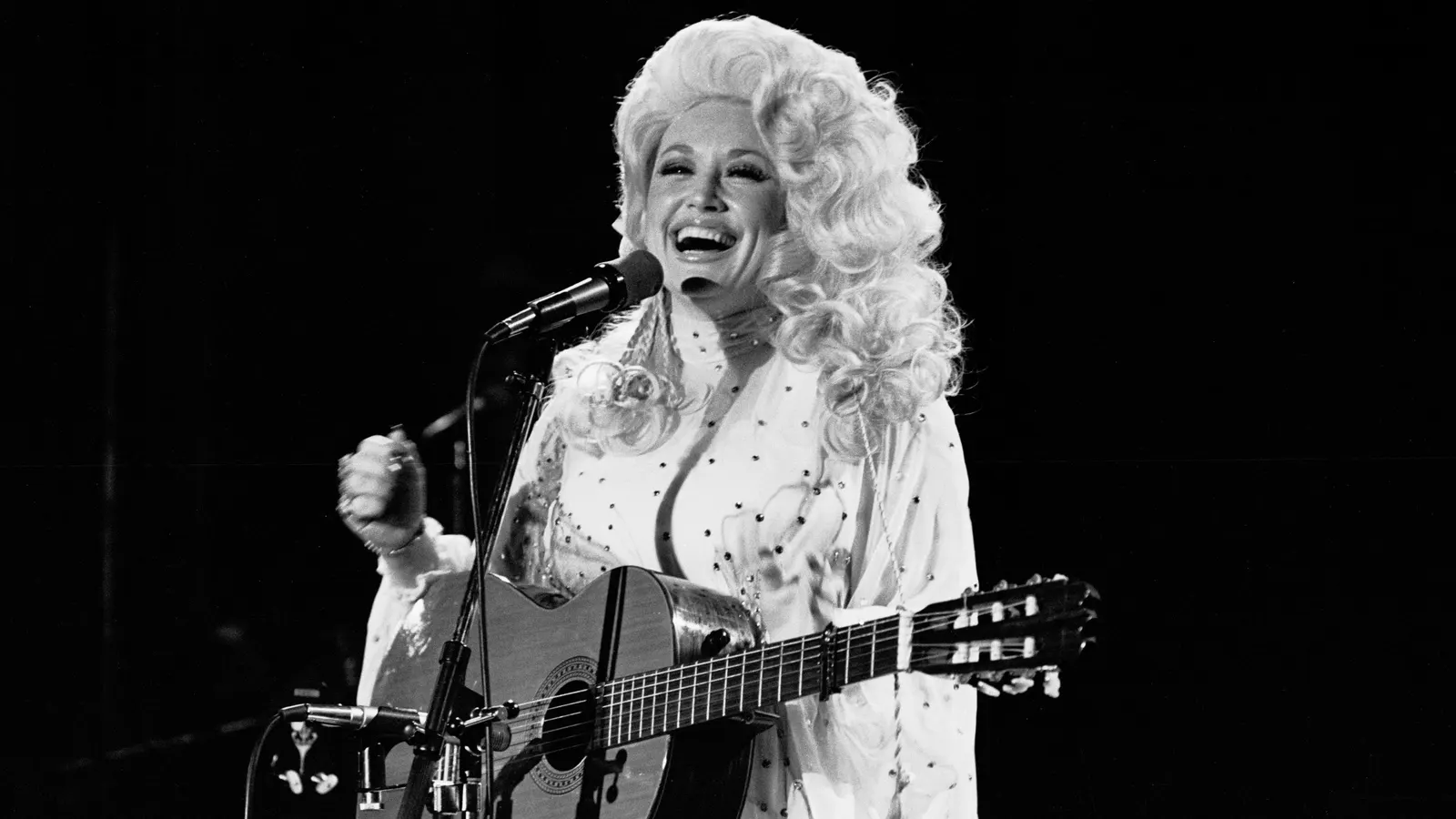
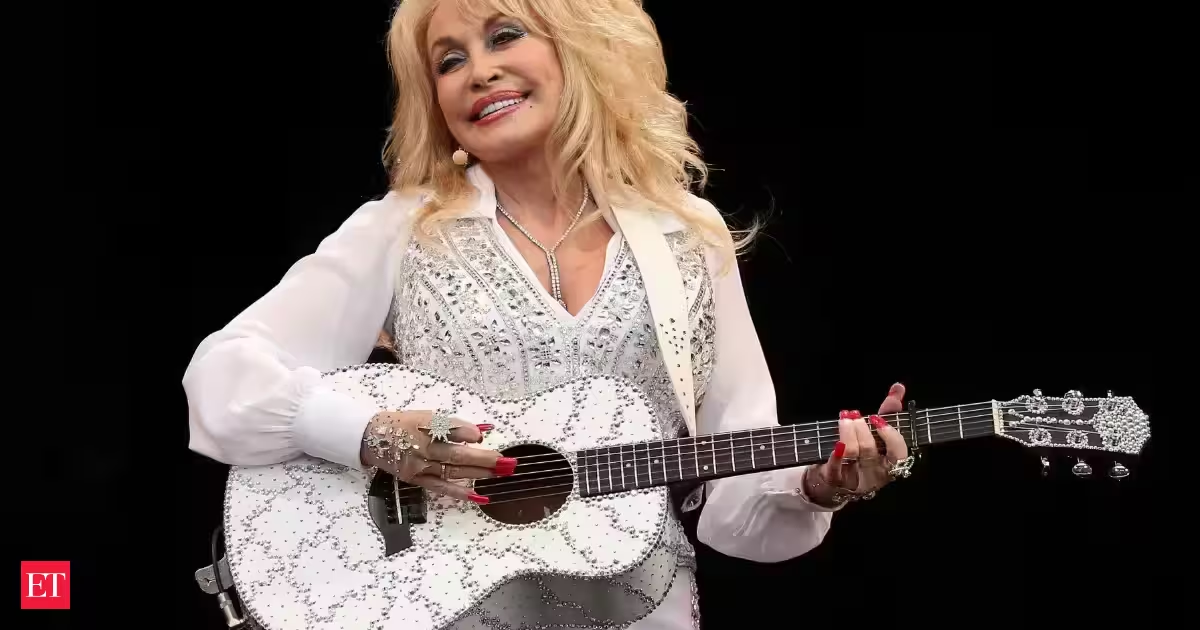
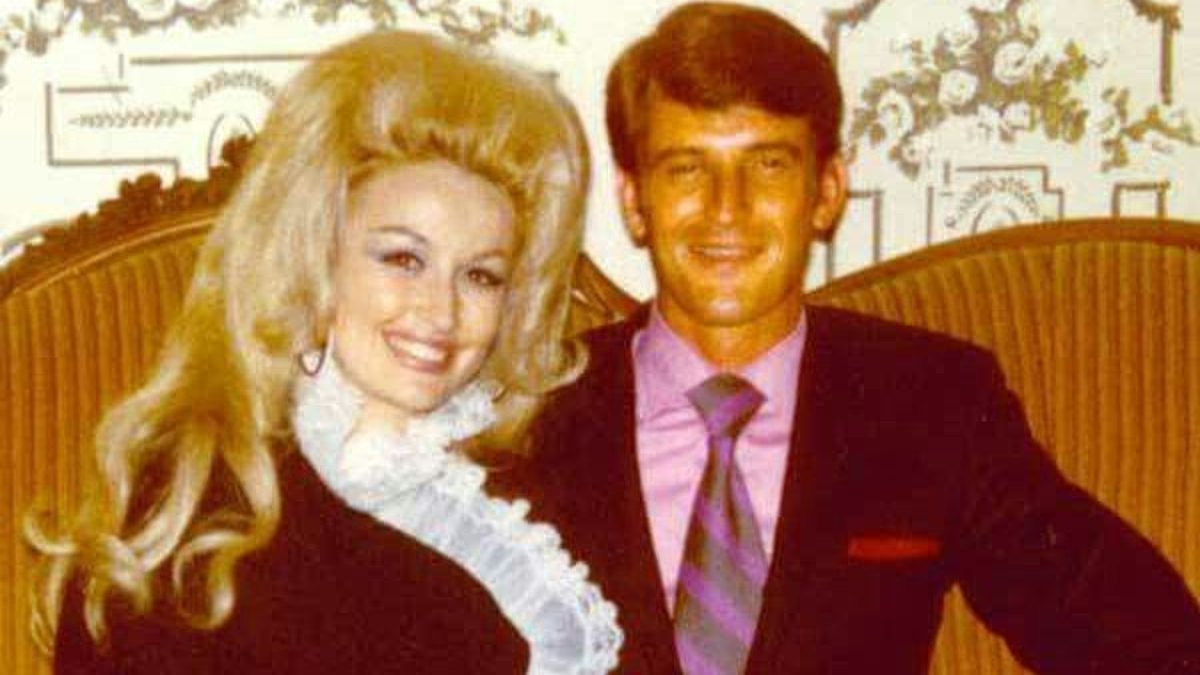
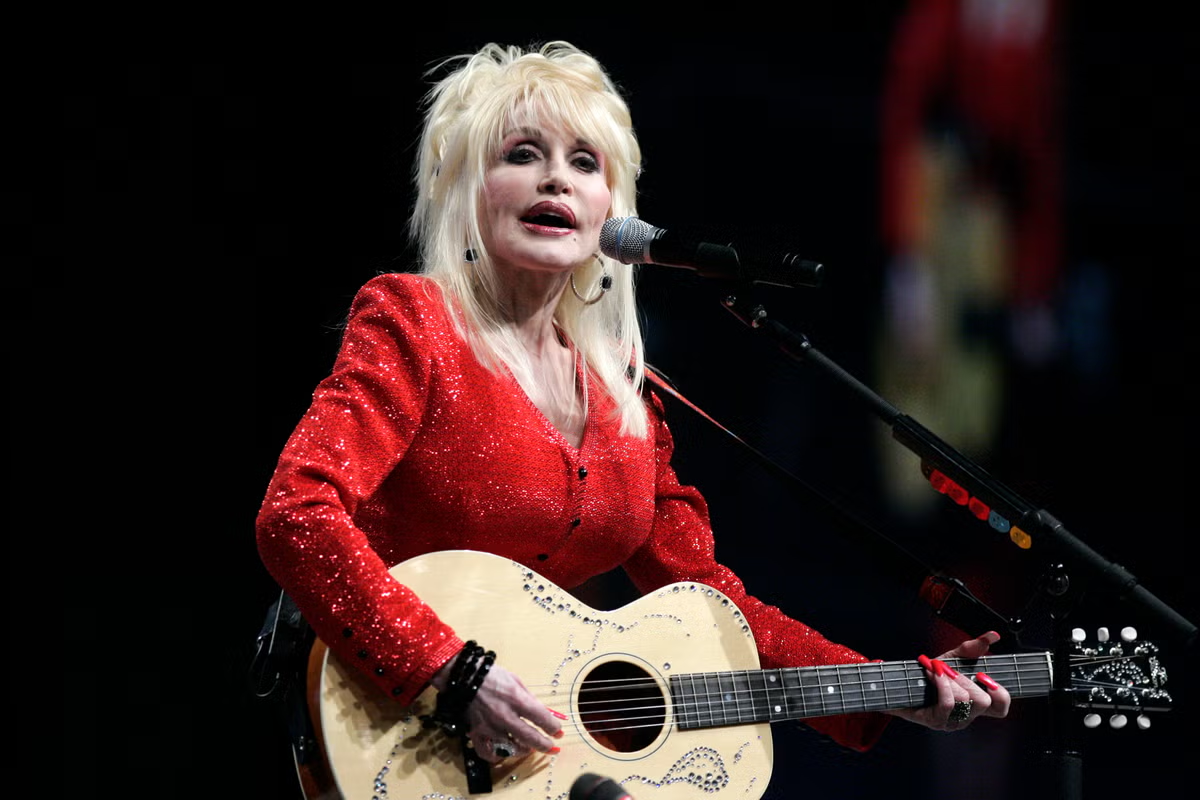
In 1973, Dolly Parton wrote "I Will Always Love You" to soften the blow of leaving her business partner Porter Wagoner after years of producing hit country duets together. Parton was ready to pursue a solo career. So she played the song for Wagoner to express her gratitude and her need to move on. The story goes that he cried, then let her go. Released in March 1974, the country single reached No. 1 on the Billboard Hot Country Songs chart and caught the attention of Elvis Presley, who wanted to record it himself. But that would have meant Parton relinquishing half the publishing rights and therefore half the royalties.Much as she loved Presley, she turned him down. When Whitney Houston recorded the song for the 1992 movie “The Bodyguard,” the hit generated millions of dollars for Parton.The decision to hold fast to her publishing rights early on resulted in a catalog of more than 3,000 songs − a treasure trove that generates compounding royalties and a rich musical legacy that she alone owned. It was just the first in a series of savvy business moves to maintain complete financial and creative control that would come to characterize Parton’s storied career.Lifetime control of her own empireNavigating a cutthroat industry at a time when women rarely called the shots, Parton’s preternatural grit helped her scale the Great Smoky Mountains of East Tennessee to the heights of the business world and Hollywood, laying the foundation for Dollywood and the rest of her glittering empire.Parton kept the turnstiles swinging even after the death of her husband, Carl Dean, and her own health problems. She died on Aug. 25 at age 80. Throughout her career, Parton kept tight control while building an empire based on her personal brand. Parton described those ambitions in a 1982 interview with The Tennessean."I have a big dream of having a big empire based in Nashville," she said. "What I really want to do is just to (do) – what I've always done – own myself."Long before other celebrities thought to own their own brand, Parton started her own cosmetics, lingerie and shoe lines, all before age 36. "God had a plan for me and I got a few of my own," she said at the time.University of Tennessee entrepreneurship professor Tim Pollock said Parton controlled her own destiny from an early stage, “at a time when stars were not doing that." "The managers and other people controlled where their images went and who things were licensed to, but keeping the rights over her own music, she was one of the pioneers in doing that,” Pollock said. “That control allowed her to be selective."Parton also had an unerring sense for what people enjoy, from wine and baking mixes to clothing and homewares, even an indoor ride that combines a roller coaster with white-water rafting. Along the way, Parton cultivated an international business reputation and a vast fortune that Forbes pegs at $450 million.“I just have a natural feel for what people want,” Parton told the Wall Street Journal in a 2026 interview.Parton debuted her first business venture, Owepar Publishing Co., at 21 years old, in partnership with her uncles Bill and Louis Owens in 1967. Its principal holdings were Parton's lyrics and music. Though it was far more common for record labels to own an artist's masters, Parton and her uncles maintained ownership of her catalog from the start of her career. Parton went on to open Fireside Studios in 1973 with mentor Wagoner and licensed her songs to the likes of Merle Haggard and Nancy Sinatra. The 'Dolly Parton effect'Over the decades, Parton's influence extended beyond her music career and international celebrity. The economic impact of her various business entities in Tennessee and beyond was often referred to as the "Dolly Parton effect."She was also Dreamer-in-Chief of her Dollywood theme park in Pigeon Forge, Tennessee. Dollywood Parks & Resorts bring in millions of visitors each year. She had a popular array of consumer goods such as baking mixes with Duncan Hines, Dolly Wines, a pet accessories line called Doggy Parton as well as a plethora of fragrances, apparel and beauty products. She also accumulated an extensive portfolio of real estate and commercial holdings and a media licensing business.A noted philanthropist, she donated millions of dollars for college scholarships through her Dollywood Foundation, established the Imagination Library and provided $1 million for the research that helped to create the Moderna vaccine for COVID-19 during the 2020 global pandemic. After Hurricane Helene caused devastating floods in her East Tennessee homeland in 2024, Parton donated $1 million to assist flood victims.'Dolly's story is our story'Parton's effect extended beyond the economy to people's hearts, said Kevin Trowbridge, an associate professor and chair of public relations at Belmont University in Nashville, where he taught a course last year called "Dollyology: Branding, Leadership & Strategic Communication in the Dollyverse."Trowbridge, who was teaching class when students learned of the news of Parton's passing, said, "It is evident that Dolly's passing affects everyone in a very personal and deep way.""No matter who you are, you could find a point of connection with Dolly," Trowbridge told USA TODAY. "Dolly's story is our story."That connection bonded us to her throughout her life and career. "It was more than a brand because the brand was Dolly," he said.While some people may have thought of her as simply a performer, "she clearly had such a strong sense of how to establish a business in a way that was going to benefit others and that would benefit society," Trowbridge said.Contributing: Devarrick Turner, Melissa Ruggieri