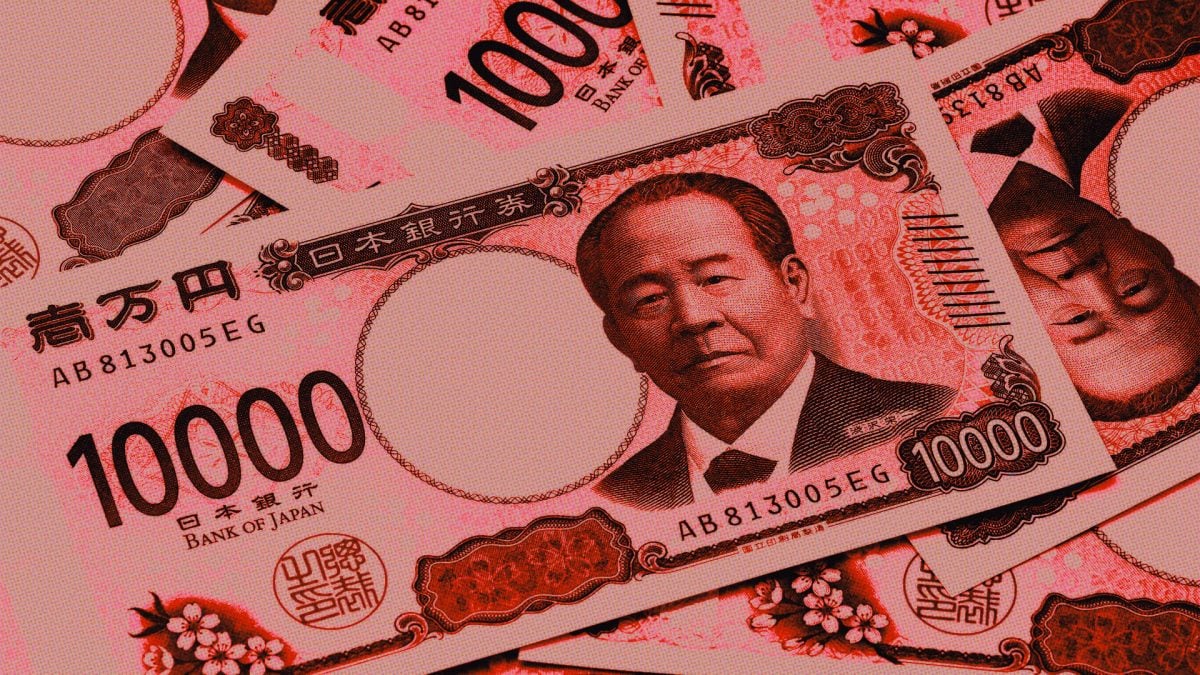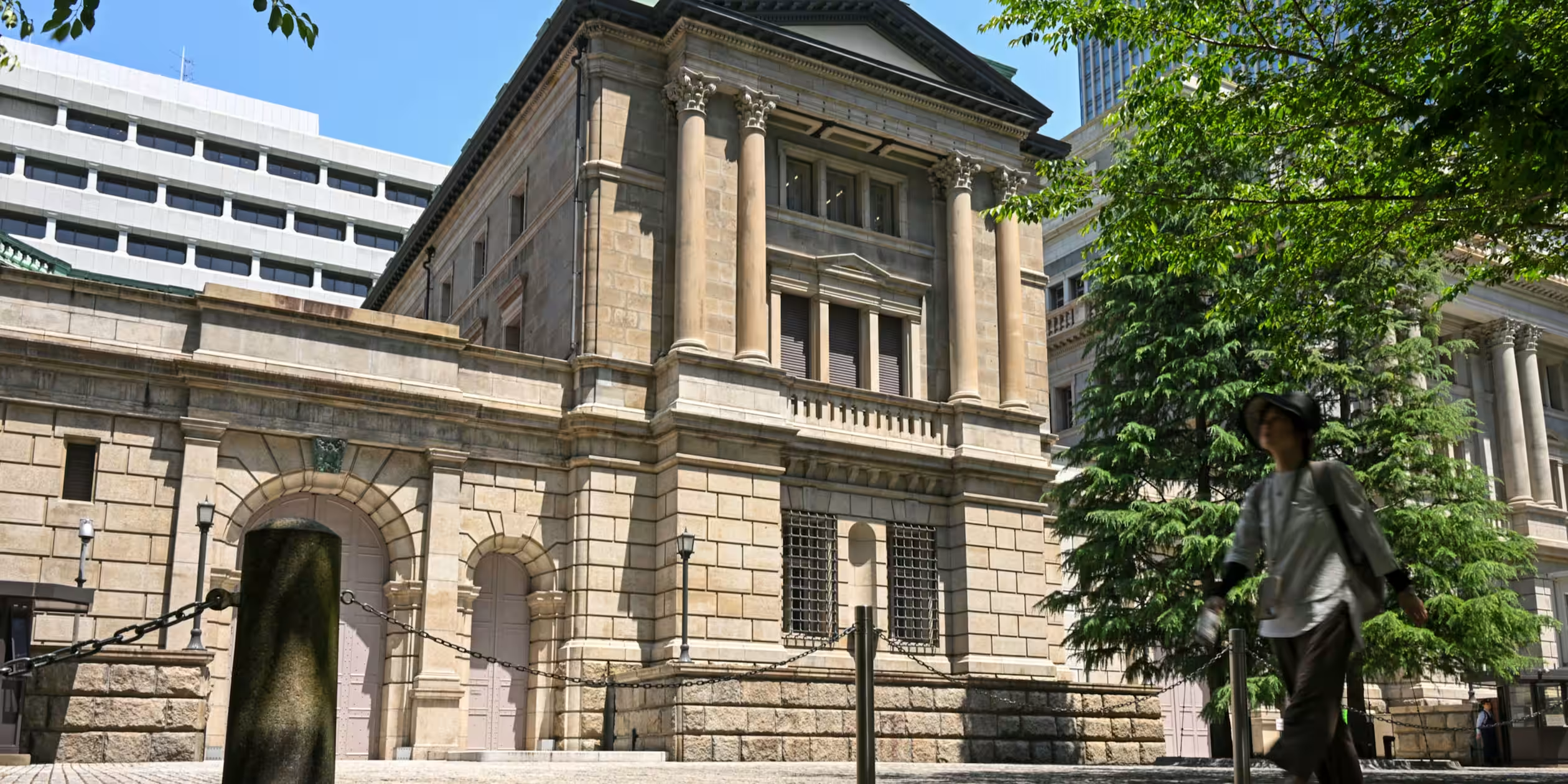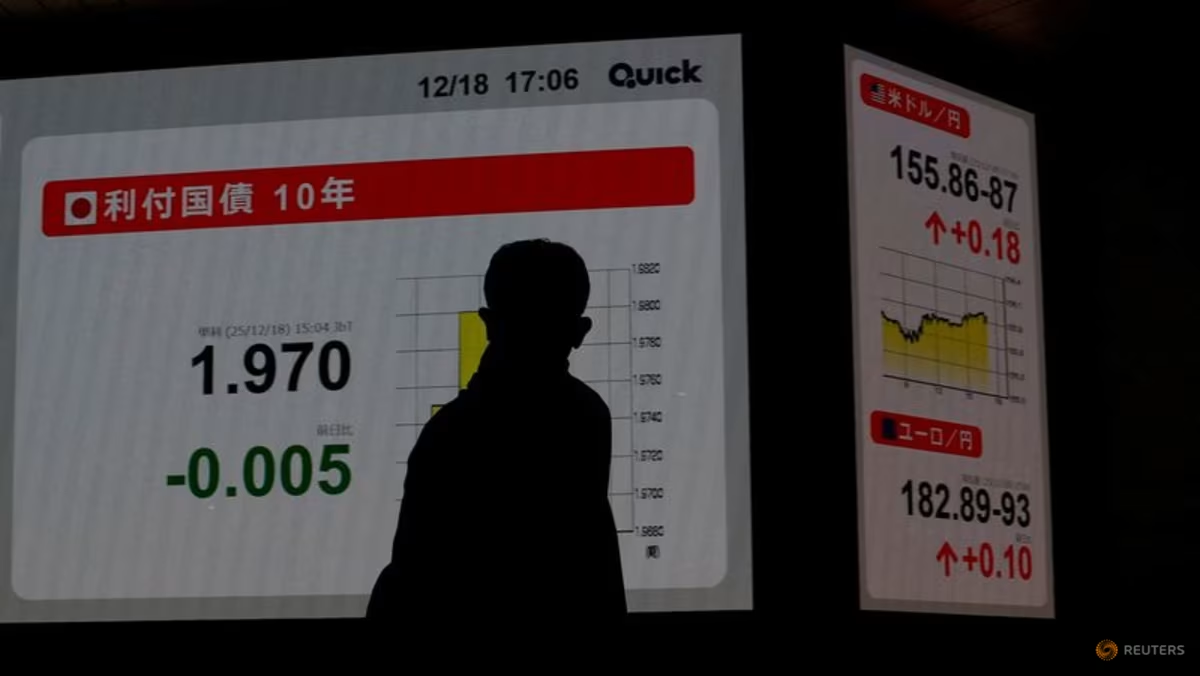
25 min ago2 min readJapan joins the race to tokenize stocks and government bonds as the local demand for these investment products increase. (Takashi Miyazaki/Unsplash)SummaryJapanese regulators, the Bank of Japan and financial institutions plan to develop a national blockchain-based settlement system for stocks and government bonds, with work expected to begin by early 2027 and operations potentially starting in the early 2030s.The system would use tokenized central bank reserves as a wholesale digital currency, reducing settlement times for stock and government bond trades to nearly zero.The initiative builds on blockchain pilots by Japan’s largest banks and could support tokenized cross-border payments as the United States and Europe modernize their capital markets.Japan's financial regulators, the Bank of Japan (BOJ) and major financial institutions are planning to develop a national blockchain-based settlement infrastructure for stocks and Japanese government bonds (JGBs), the Nikkei reported Wednesday.The Japanese Financial Services Agency (FSA), the Ministry of Finance and the Bank of Japan this summer plan to launch a group, which aims to begin work by early 2027. If formally approved and testing goes as planned, operations of the new onchain system would kick off in the early 2030s, according to the report.The plan is to get banks to convert a portion of the reserve accounts they hold at the BOJ into digital tokens. These would function as a wholesale central bank digital currency (CBDC), a digital representation of the local currency used only between financial institutions, not by individuals.All banks in Japan use those accounts for interbank payment settlement. Stock trades in Tokyo currently settle two business days after execution. JGB trades settle the following day. The new infrastructure would cut both to near-zero, allowing investors to reinvest proceeds almost immediately.Nearly 80% of Japanese institutional investors plan to allocate to crypto within three years, according to a survey by Nomura and Laser Digital published in April. Japan could lose these investors to other jurisdictions, Nikkei said, as the U.S. and Europe race to modernize capital markets through tokenization, while Wall Street pushes toward 24/7 tokenized stocks.The bond tokenization plan builds on existing momentum. MUFG said earlier this month that it is preparing a proof of concept for onchain JGB settlement using the Canton Network. Japan's top three banks, MUFG, SMBC, and Mizuho, are already running a pilot on tokenized stocks and JGBs.The BOJ expanded its blockchain settlement sandbox, a safe, isolated digital testing workspace, in March to continue its CBDC and blockchain efforts, including making them interoperable with legacy interbank and securities settlement infrastructure.The BOJ is also involved in Project Agorá, a Bank for International Settlements (BIS) initiative that brings together seven central banks and more than 40 financial institutions to test tokenized cross-border payments. Japan's new blockchain settlement infrastructure could serve as a foundation for that effort12345678910Anvil: The Missing Collateral LayerAnvil: The Missing Collateral LayerAnvil is a shared on-chain collateral layer built on a programmable letter of credit: reserve assets as a guarantee -no loan, no interest, keep custody & yield.Jul 29, 2026Anvil is a shared on-chain collateral layer built on a programmable letter of credit: reserve assets as a guarantee -no loan, no interest, keep custody & yield.Why it matters:Anvil is a shared on-chain collateral layer built on a programmable letter of credit: reserve assets as a guarantee -no loan, no interest, keep custody & yield.View Full Report
Japan targets early 2030s for blockchain stock and bond settlement system
As Western markets push toward round-the-clock tokenized trading, Japan's financial authorities are stepping up efforts to build a national blockchain.
554 words~3 min read