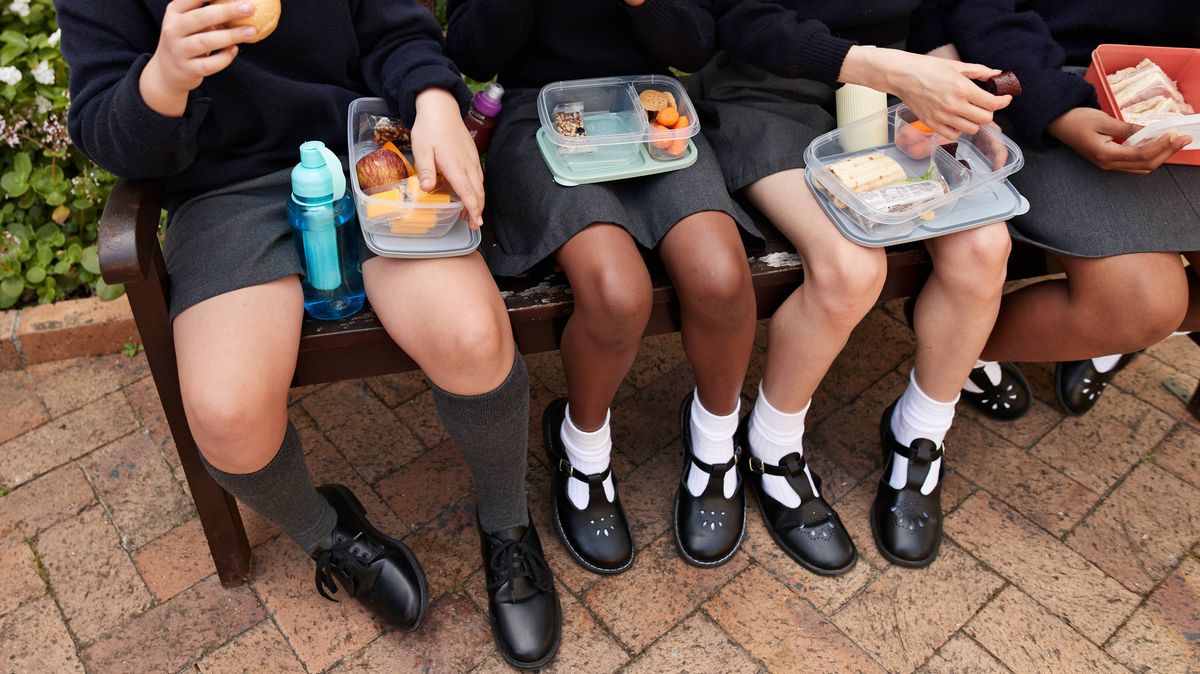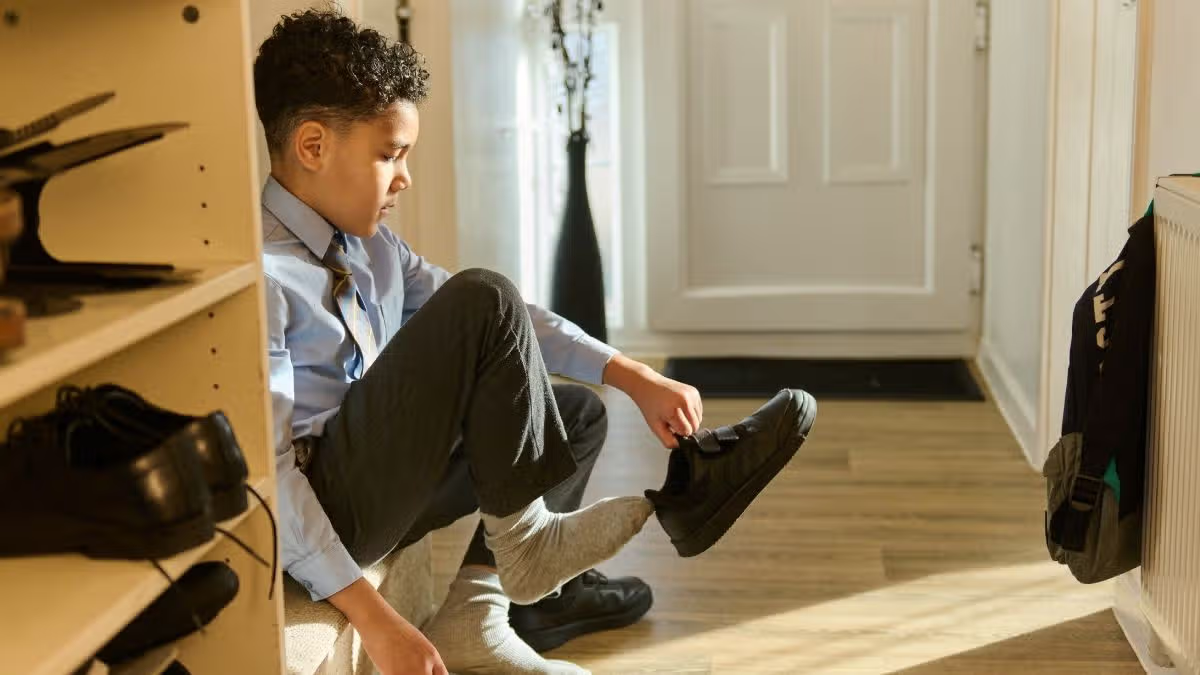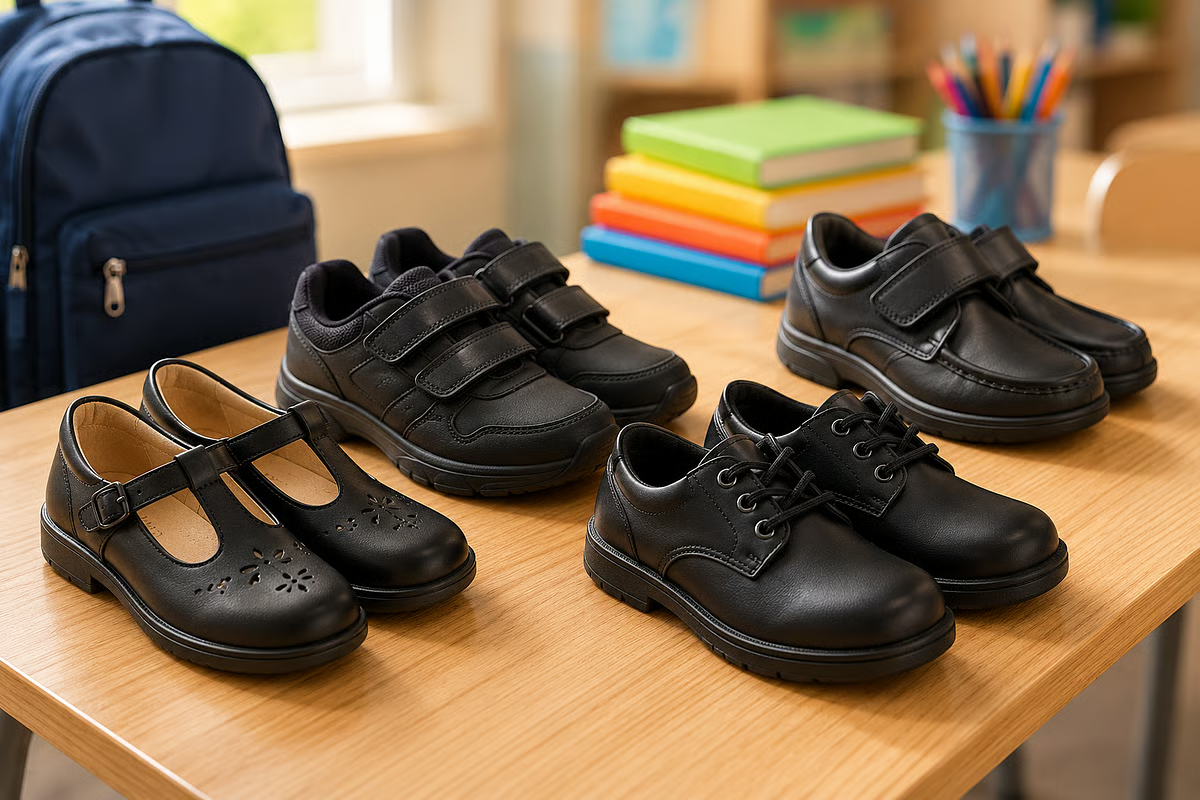
UAE doctors share how to choose school shoes that protect growing feetLast updated: August 26, 2026 | 12:438 MIN READA shoe that looks sharp, fits the budget, and matches the uniform can still be wrong for the foot inside it. Uniforms, backpacks, stationery, water bottles...shoes. SHOES!You can guarantee that every parent mutters the same chant in their sleep, and invariably, realise that they have forgotten about shoes. And for all you know, the shoes would either be too tight, or the soles have worn down (Double sigh). As any morose parent would tell you: A shoe that looks sharp, fits the budget, and matches the uniform can still be wrong for the foot inside it. And a wrong fit shows up weeks later as a blister, a limp, or a child who suddenly hates PE.For parents prepping for the new school year, Dr Pooja Pradeep, Specialist Pediatrics at Aster Clinic Sports City, and physician Dr. Brijesh Puthalonkunath Valsalan, Specialist in Orthopaedics Surgery at Medcare Hospital, Sharjah break down exactly what to look for, and what to ignore, when buying school shoes.Start with the fit Comfort should come first. Swankiness, can be ranked lower. Dr Pooja Pradeep breaks it down: "First and foremost, shoe should be comfortable in such a way that it should match the shape of foot and toes should be able to move freely inside." As she says, they normally encounters kids who have abnormal foot shape and fungal disease in toes especially due to tight shoes. Parents should look for:Adequate length and width, with enough room for the toes to spread naturally.A generous, rounded, deep toe box, rather than a tapered or pointed front.A shoe that is secure around the heel and midfoot, so the foot does not slide around.Flexibility at the forefoot, the shoe should allow the foot to bend naturally where the toes meet the foot.A sole with reasonable grip and durability, particularly for children who run and play at school.Materials that are reasonably breathable, especially in hot climates.An adjustable fastening system, laces, Velcro or strap, that can hold the foot securely without squeezing it.So shoes should be of appropriate fit, be comfortable and allow normal foot movements, as Dr Valasan summarises. The thumb test: Check the toes and the heel Getting the length right is not simply a matter of buying the size printed on the box.The heel should feel secure. In fact, a small amount of movement can be normal, but the heel shouldn't repeatedly lift, when the child walks. Moreover, there should be a minimum gap of about a thumb's width between toes and the front of the shoe, when the child is standing, explains Dr Pradeep. Her advice: "Always have the child walk around in both shoes before buying it."Dr Valsalan recommends trying shoes while the child is standing and wearing the socks they will normally wear at school. "Check both feet, because feet are often slightly different sizes."For the toes, he recommends:The longest toe should have approximately 1 to 2cm of space between it and the end of the shoe.The toes should be able to wiggle and spread, without being compressed from the sides or top.Check the width as well as length. A shoe can be long enough but still be too narrow.Don't rely solely on pressing the toe of the shoe while the child is sitting; the foot changes shape under weight. Assess it standing.The heel needs its own check and should feel secure without being painfully tight. On cushioning:As the experts maintain, some cushioning is useful, particularly for older schoolchildren who spend substantial time walking, running and playing on hard surfaces. But maximum cushioning is not necessarily better.On sole thickness:There is no magic thickness. The sole needs to provide protection and traction without making the shoe unnecessarily heavy or rigid.And when it comes to heel support:A reasonably secure heel is useful because it prevents excessive movement of the foot inside the shoe. A stable heel counter can be beneficial, but the shoe does not need to resemble an orthopaedic boot.Do children actually need arch support? This is another area where parents can easily be swayed by marketing. "For an otherwise healthy child, I would not routinely choose a shoe because it has a prominent arch support," says Dr Valsalan. "If a child actually has painful flat feet, a specific foot deformity, neurological condition or another orthopaedic problem, that is different and warrants individual assessment," he adds. Moreover, aggressive arch support or corrective shoes are needed only for children with foot abnormalities such as flat foot, explains Dr Pradeep. The takeaway for parents of otherwise healthy children: don't assume that more structure automatically means more support.The longest toe should have approximately 1 to 2cm of space between it and the end of the shoe. The toes should be able to wiggle and spread, without being compressed from the sides or top. Check the width as well as length. A shoe can be long enough but still be too narrow. Don't rely solely on pressing the toe of the shoe while the child is sitting; the foot changes shape under weight. Assess it standing.Dr. Brijesh Puthalonkunath Valsalan Specialist in Orthopaedics Surgery at Medcare Hospital at SharjahWhat happens when school shoes don't fit?A poorly fitting shoe may start with something seemingly minor, a little rubbing or redness, but persistent discomfort should not be dismissed. As a result, a shoe that is poorly fitting can change the way the child walks trying to adjust to the discomfort. Shoes that are too short or narrow, can produce pressure on the toes and other parts of the foot, contributing to rubbing, blisters, calluses and pain. Dr Valsalan explains that there is an association between incorrectly fitted footwear and foot pain and various foot disorders. If a child develops persistent pain, limping, avoidance of activity or an obvious change in gait, the shoe should be assesses, and if symptoms persist after changing footwear, the child should be medically evaluated."Furthermore, Dr Pradeep adds that tight shoes can risk of fungal infection in warmer climates, as it creates warm and moist conditions from sweating. How to tell if last year's shoes are too small Children can outgrow their shoes long before the shoes look worn out.Dr Pradeep advises parents to check whether the toes are getting close to the end of the shoe, whether there are red marks after taking the shoes off, or whether the child has started complaining about rubbing or discomfort. Moreover, look for toes pressing against the upper or the sides of the shoe."And don't just judge a shoe by its appearance: Children can outgrow a perfectly intact shoe. Check the fit throughout the school year rather than assuming one pair will last until the end of the academic year.The experts recommend checking the fit periodically throughout the school year rather than assuming that a shoe bought at beginning of academic year will remain correctly sized until the following the end of academic year. Remember, children's growth rates vary considerably.Parents should look out for:Complaints of toe, heel or foot pain.New blisters, redness, corns or pressure marks.The child repeatedly removing the shoes or saying they hurt. Toes appearing crowded or overlapping inside the shoe.The child walking differently, limping or avoiding running.The heel slipping excessively.The shoe becoming compressed, twisted or permanently deformed.The outsole becoming smooth and losing traction.Uneven or excessive wear of the sole.The child's foot extending into the end of the shoe with little remaining space."Dr Pradeep also suggests turning the shoe over to assess wear and tear. If the tread has worn down significantly, the heel is wearing unevenly, the heel section has collapsed, these are signs that the shoe needs closer attention.Should you buy a bigger size so it lasts longer?This is one of the most tempting back-to-school shortcuts, and one of the easiest to get wrong.As Dr Pradeep explains, there should be some growing room definitely, around 1cm of space in front of the longest toe is usually a sensible amount. Extra room is useful, but don't go too far. So, a modest amount of growing room is sensible; deliberately buying substantially oversized shoes is not. This is one of the most common mistakes I see parents make because they understandably want the shoes to last, Dr Valsalan explains. And, bigger is not always better. An excessively large shoe can allow the foot to slide around, reduce stability and potentially increase tripping."So, the final word: So buy a correctly fitting shoe with sensible growth allowance and recheck it regularly than buy a very large shoe intended to last the entire class year. The heel should feel secure, a small amount of movement can be normal but heel shouldn't repeatedly lift out shoe while the child walks and there should be a minimum gap of about a thumb's width between toes and front of the shoe when the child is standing. Always have the child walk around in both shoes before buying it...Dr Pooja Pradeep Specialist Pediatrics at Aster Clinic Sports CityThe biggest school-shopping shoe mistakes When the school-shopping list is long, it can be tempting to prioritise price, appearance or the hope that a pair will survive an entire academic year. But Puthalonkānath says parents commonly make several mistakes.Buying shoes for appearance or brand rather than fit.Buying shoes that are too narrow, particularly around the toes.Buying substantially oversized shoes to “get more wear” from them.Assuming that a hard, heavy or highly structured shoe is automatically more supportive.Choosing a shoe based on arch support alone in a child who has no foot problem.Buying shoes without having the child try the actual shoe on.Checking only length and forgetting width and heel security.Waiting until a child complains before checking the fit.The three things parents should never comprompise onAfter all the measurements, features and advice, the decision can be boiled down to three essentials.1. Correct fit.Enough length and width for the child's actual foot, with a roomy toe box and a secure heel.2. Comfort and natural movement.The shoe should allow the foot to move normally rather than squeezing or immobilising it. A child saying 'these shoes hurt' should be taken seriously.3. Appropriate construction for the child's activities.And the simplest rule may be the most useful one to remember when faced with rows of shoes in a shop:For a healthy child, choose the shoe that fits best, feels comfortable and allows natural foot movement—not the shoe with the most arch support, thickest sole or most expensive brand. Current evidence supports that approach, while also acknowledging that the scientific evidence for many specific shoe-design claims remains limited.Finally, if a child's feet are causing ongoing problems, the answer may not be another pair of shoes.Also In This PackageLakshana is an entertainment and lifestyle journalist with over a decade of experience. She covers a wide range of stories—from community and health to mental health and inspiring people features.
Back-to-school UAE: If the shoe fits, is it really the right fit for your child? Doctors reveal what to check
UAE doctors share how to choose school shoes that protect growing feet
1,833 words~8 min read