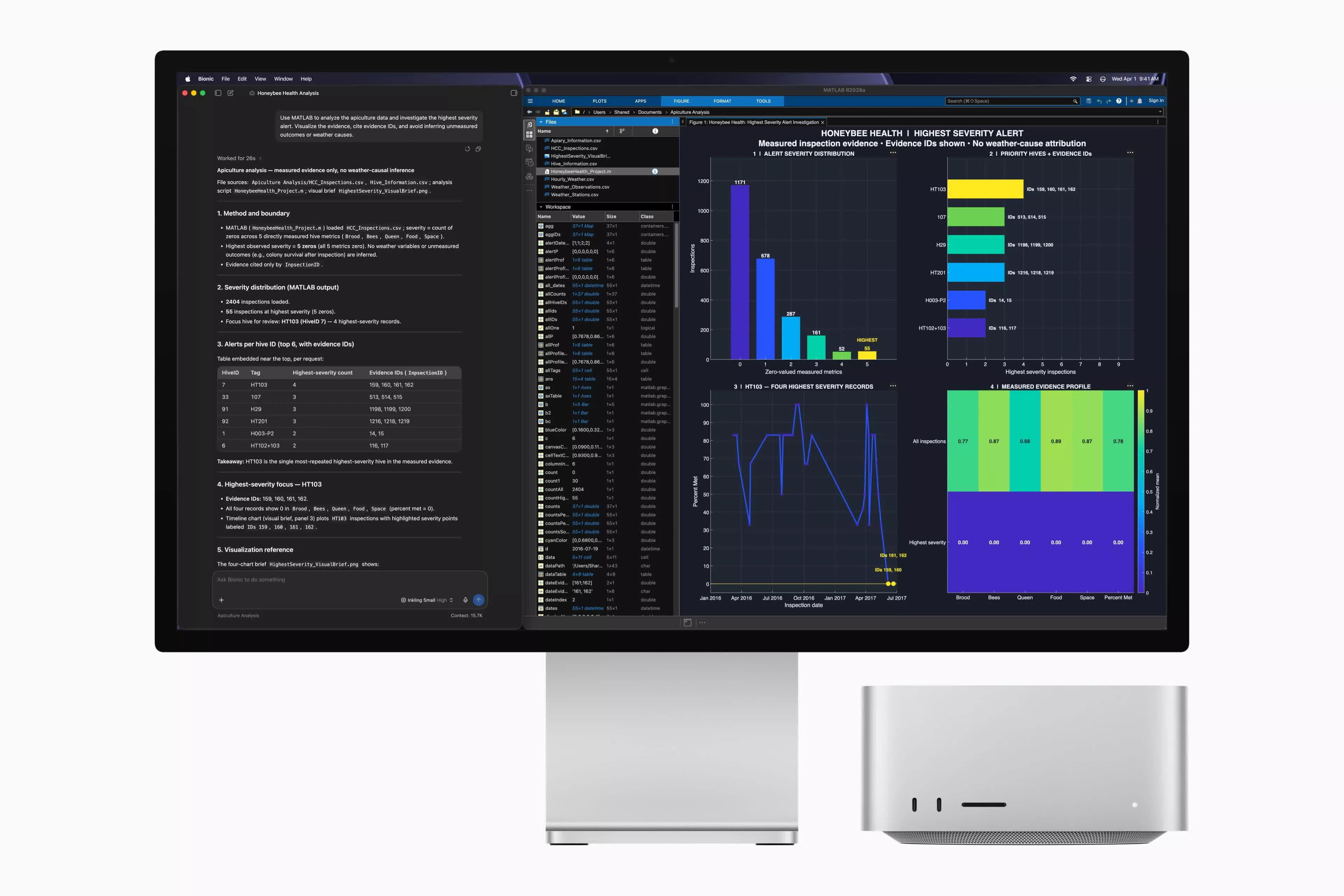
Key Highlights● M5 Ultra carries up to 512GB of unified memory at 1.2TB/s, against 128GB and 273GB/s on Nvidia's DGX Spark and 128GB at 256GB/s on AMD's Ryzen AI Max+ 395.● M6 is Apple's first 2nm chip, with a 12-core CPU built from three core types, 32GB of memory and 170GB/s of bandwidth.About The AuthorAt heart, I am a storyteller drawn to the watershed moments that bend the technology landscape. I braid narrative with data, humanise statistics, and trace the arc from first spark to world-changing impact. My reportage, features and reviews are witty, sardonic, visual and vivid, using anecdote to illuminate rather than eviscerate.
As a technology journalist with over sixteen years of experience, I have travelled the world and the seven seas, covered every major tech conference worth its lanyard, chronicled the defining breakthroughs of the last decade and a half, and played a pivotal role in launching some of India’s most important technology publishing platforms across web, print and TV.
In my current role as Editor of Gadgets Now Studios, I bring that experience, instinct and editorial firepower to the table, with the mandate of scaling the brand to towering heights.
When I am off the clock, I am usually lost in music, from underground electronic and progressive rock to stone-cold blues. I am also an incurable F1 nut, a hangover from my previous life as an auto journalist, and always game for a jam session with friends, where I do my best to make my guitar gently weep.● Mac mini with M6 starts at Rs 99,900 and $899, up from $599 for the M4 model it replaces.SummaryApple launched the M6 and M5 Ultra on 25 August 2026, pairing its first 2nm chip with its first quad-die processor. M5 Ultra reaches 36 CPU cores, 80 GPU cores and 512GB of unified memory at 1.2TB/s, well beyond any desktop part Intel, AMD, Qualcomm or Nvidia sells. Mac mini with M6 starts at Rs 99,900.Apple put two chips on sale yesterday that answer different questions, and the more interesting answer belongs to the older number. M5 Ultra, built by joining four dies into a single processor, carries up to 512GB of unified memory running at 1.2TB/s. Every rival desktop part on sale today stops far below that figure. The M6 beside it matters for a separate reason: it is Apple's first chip on a 2nm process, and the first M-series part to mix three kinds of CPU core in one complex.That gap in memory is the story of the year in silicon, and it opened for a reason with little to do with engineering brilliance. A DRAM shortage driven by AI data centres has frozen product roadmaps at Nvidia, AMD and Intel through 2026. Apple designs its own silicon and buys memory as part of its own bill of materials, so it kept shipping while others waited. It also passed the cost straight to buyers, which is why a Mac mini now costs half as much again as the machine it replaces.What Apple Shipped On 25 AugustThe M6 arrives in a new Mac mini with a 12-core CPU split three ways: two super cores, four performance cores and six efficiency cores. Alongside it sits a 12-core GPU carrying a Neural Accelerator inside every core, plus a Dual 16-core Neural Engine that system frameworks can drive at the same time. Memory tops out at 32GB and 170GB/s, a 10 per cent bandwidth gain over M5 and 2.5 times the M1. Pricing starts at $899 in the United States and Rs 99,900 in India, with deliveries from 22 September.M5 Ultra takes the opposite approach to the same problem, and it does so at four times the die count. Apple joins two dual-die M5 Max chips through a new version of UltraFusion, producing the first quad-die M-series processor, with more than 4.4TB/s moving between dies and six times the connection density of the previous design. The four dies behave as one processor, which is what allows the part to reach 36 CPU cores, 80 GPU cores, 512GB of unified memory and 1.2TB/s of bandwidth. Mac Studio with that chip starts at $5,499, or Rs 6,29,900.More articles by AuthorTrending StoriesSri Santhanam, Apple's vice president of Silicon Engineering Group, described the pair as "the next giant leap in performance and AI compute for Apple silicon". Johny Srouji, Apple's chief hardware officer, made the Mac Studio case around what fits in memory: "By integrating Neural Accelerators directly into the GPU and offering massive amounts of high-bandwidth unified memory, the new Mac Studio is our most powerful Mac ever." Both statements point at one design choice, which is to treat memory capacity and bandwidth as the constraint worth spending die area on. That choice is what separates the range from everything else on sale.Between those two poles sit the parts most buyers will choose in practice. M5 Pro reaches 18 CPU cores, a 20-core GPU, 64GB of memory and 307GB/s, and it carries Thunderbolt 5 in the Mac mini at $1,699. M5 Max runs 18 CPU cores built from six super cores and 12 performance cores, a 40-core GPU and up to 128GB at 614GB/s, from $2,499 in the Mac Studio. That 614GB/s figure alone clears every rival chip listed later in this article.Why The M6 Sits Below The M5 UltraA buying ladder that held since 2020 broke on Tuesday morning. Apple sold M6 and M5-generation silicon on the same day, and the higher number belongs to the cheaper machine. The $899 Mac mini carries M6; the $5,499 Mac Studio carries M5 Ultra and beats it by every measure that matters for heavy work. Anyone reading the number as a ranking will buy the wrong machine.Process timing explains the split far better than any marketing decision does. M6 sits on a 2nm node, which yields well enough for a small die aimed at high volume, and Apple used the density gain to add two CPU cores, two GPU cores and a second Neural Engine inside a smaller footprint. Ultra-class parts need four large dies, and the economics of four 2nm dies in one package remain punishing while the node is young. So Apple built its largest chip on the mature process and its smallest on the new one.Leaks suggest that split will widen rather than close over the next year. Apple appears to have cancelled M6 Pro, M6 Max and M6 Ultra outright, moving those tiers to an M7 generation carrying a further bandwidth increase. Should that hold, the M6 line will consist of one chip, and the number on the box will describe a process node rather than a position in the range. Buyers upgrading a Mac in the next 12 months should treat the memory figure as the spec that decides the purchase.The Memory Shortage That Set 2026 PricesEvery price in this article traces back to a single shortage. AI data centre demand pulled global DRAM supply toward high-bandwidth memory, leaving the conventional memory used in laptops, phones and desktops short. J.P. Morgan Global Research estimates DRAM prices will have risen more than 400 per cent between the start of 2024 and the end of 2026. TrendForce put Q1 2026 DRAM contract increases at 90 to 95 per cent quarter-on-quarter, with LPDDR5X — the memory Apple, AMD and Qualcomm all solder onto their packages — up about 90 per cent in one quarter, the steepest rise in that memory's history.The research houses agree on the shape and argue only about the depth. Omdia raised its 2026 semiconductor revenue forecast to 62.7 per cent growth in April, with the DRAM market forecast to almost double in value and meaningful supply relief held back until well into 2027. Counterpoint Research director MS Hwang has pointed out that the three big DRAM producers are already selling capacity for 2027 and 2028. Avril Wu, senior research vice president at TrendForce, puts the arrival of useful new supply at 2028.Buyers across every price band carry the result of this pressure. IDC forecasts global PC shipments falling 11.3 per cent across 2026, with the fourth quarter down about 20 per cent year on year, and Jitesh Ubrani, a director in IDC's Worldwide Consumer Device Trackers group, expects the squeeze to run to the end of 2027. Omdia reaches a similar 12 per cent, or about 245 million units, and its sharpest number sits at the bottom: PCs below $500 fall 28 per cent this year while machines above $900 hold up. Ye Maosheng, Omdia's chief analyst, cautions against reading that resilience as strength.Apple's new Mac mini starts at $899, one dollar under the line Omdia draws for the segment that survives. Pricing decisions of that precision come from a company reading the same forecasts everyone else reads. What separates Apple is the ability to act on them across the whole product, from die to retail price. Its rivals set prices around a memory contract they negotiated months earlier.How Nvidia's Year WentNvidia spent 2026 shipping fewer gaming products than in any year for three decades. The RTX 50 Super refresh, including a finished 24GB RTX 5080 Super design, was shelved in December 2025 and has stayed shelved; those parts needed 3GB GDDR7 modules, the exact component the shortage made scarce. Supply-chain accounts through the first half of the year describe production cuts of 20 to 40 per cent across the RTX 50 line, with the 5090 and 5080 hit hardest. Anyone wanting more than 32GB of video memory on a consumer card has had one option all year, and its street price has climbed past $4,000.The desk-side AI machine tells the same story from a different angle. DGX Spark pairs the GB10 Grace Blackwell superchip — a 20-core Arm CPU and a Blackwell GPU with 6,144 CUDA cores — with 128GB of coherent unified memory on a 256-bit bus, good for 273GB/s and 1 petaFLOP of FP4 compute. It launched in October 2025 at $3,999 and now lists at $4,699, a rise of $700 driven by the memory it is built around. Its 4TB of storage and ConnectX-7 networking remain the best in the category.Set against M5 Ultra, the comparison divides into a software advantage and a capacity advantage. DGX Spark holds the software side, because CUDA remains the environment most AI research is written for, and its FP4 hardware suits low-precision inference. Mac Studio holds four times the memory capacity and more than four times the bandwidth, which decides whether a model loads at all. For a 200-billion-parameter model at low precision both machines work, and above that figure only one of them has the room.Where AMD Stands On Unified MemoryAMD reached the unified-memory idea before anyone else in the x86 world and then stalled there. Ryzen AI Max+ 395, the Strix Halo flagship, combines 16 Zen 5 cores, a 40-compute-unit Radeon 8060S built on RDNA 3.5, and an XDNA 2 neural unit rated above 50 TOPS. Memory runs to 128GB of LPDDR5X-8000 on a 256-bit bus for 256GB/s, with up to 96GB of that assignable to the GPU. Mini PCs built around it sell from about $1,600, and AMD's own Ryzen AI Halo developer platform lists at $3,999 with the full 128GB.That value case remains the strongest anywhere in the category today. A Strix Halo box holds a 70-billion-parameter model in GPU-addressable memory for about a third of what a comparable Mac Studio configuration costs, and it runs Windows 11 and Linux as first-class targets. Its weakness shows in prompt processing, where iGPU-class compute meets server-class capacity: decode speeds sit close to rival boxes, while prefill on long prompts falls well behind. ROCm has also matured slower than Metal and MLX on the Apple side.The calendar poses the bigger problem for AMD over the next two years. Zen 6 silicon exists and taped out first on TSMC's 2nm process, yet the halo part that would carry it, Medusa Halo, has slipped to 2027 at the earliest and by some accounts to CES 2028. What AMD shipped this year is Gorgon Halo, a refresh whose headline change is a boost clock moving from 5.1GHz to 5.2GHz on the top Ryzen AI Max+ 495. Memory capacity and bandwidth stay where they sat 18 months ago.What Intel Delivered With 18AIntel had the best manufacturing year of the four and the least relevant product for this comparison. Core Ultra Series 3, codenamed Panther Lake, launched at CES 2026 as the first compute platform built on Intel 18A, designed and manufactured in the United States. The flagship Core Ultra X9 388H pairs 16 cores with an Arc B390 integrated GPU carrying 12 Xe3 cores. Intel's measured claims put it 60 per cent ahead of Lunar Lake on Cinebench 2024 multi-core at matched power, and 77 per cent ahead on a 45-game average at 1080p.Delivering 18A on schedule after years of slipping is the result Intel needed, and more than 200 partner designs shipped in the first half of the year. Judged against M5 Ultra, though, Panther Lake competes in a different weight class. It is mobile silicon feeding from ordinary system memory, with bandwidth set by the laptop maker rather than the chip designer. Machines built on it stop around 64GB in most configurations, and that memory sits behind a conventional bus.Intel's answer to the large-memory question lives in its server line rather than its client line, which puts it beyond reach for a person buying a desktop. Intel has also certified Series 3 for embedded and industrial edge use for the first time, covering robotics, automation and healthcare. That breadth is real, and it explains the 200-plus designs partners brought to market inside six months. For a reader choosing between a Mac Studio and a workstation to run models at home, Panther Lake belongs on the list of good laptop chips and off the list of large-memory machines.Qualcomm's Ceiling On Windows LaptopsQualcomm built the best Arm laptop chip Windows has had and then hit the same wall. Snapdragon X2 Elite Extreme, on TSMC's 3nm process, carries 18 third-generation Oryon cores in a 12 Prime plus 6 Performance arrangement, boosting to 5.0GHz on up to two cores with 53MB of cache. The Adreno X2-90 GPU runs at 1.85GHz and the Hexagon NPU is rated at 80 TOPS on INT8, double Microsoft's 40 TOPS Copilot+ requirement. Memory runs on a 192-bit bus at 228GB/s.Independent reviews from April 2026 backed the headline CPU claims in full. The Asus Zenbook A16 with the Extreme part posted a Geekbench 6 single-core score of 3,807, ahead of the Core Ultra X9 388H at 3,066, which puts Qualcomm at the top of the thin-and-light class on single-thread work. Battery life on the same machine is quoted above 21 hours in Asus's own web-browsing test. Those two results together make it the most credible Arm challenger Windows has fielded.The ceiling on all of this shows up in memory capacity. Qualcomm's architecture supports up to 128GB on-package, yet shipping laptops have arrived at 48GB and 64GB, because that is what the memory market allows at a sane bill of materials. A 228GB/s part with 48GB of memory competes with an M5 Pro Mac mini rather than a Mac Studio. Qualcomm has since aimed a separate Snapdragon C part at budget laptops, the segment the DRAM squeeze has hollowed out.The Desktop AI Chips ComparedChipCPU coresGraphicsMax unified memoryMemory bandwidthSystem starts atApple M5 UltraUp to 36Up to 80-core GPU512GB1.2TB/s$5,499 / Rs 6,29,900Apple M5 Max18Up to 40-core GPU128GB614GB/s$2,499 / Rs 2,79,900Apple M5 ProUp to 18Up to 20-core GPU64GB307GB/s$1,699 / Rs 2,09,900Apple M61212-core GPU32GB170GB/s$899 / Rs 99,900Nvidia GB1020 ArmBlackwell, 6,144 CUDA cores128GB273GB/s$4,699AMD Ryzen AI Max+ 39516 Zen 540 CU RDNA 3.5128GB256GB/sAbout $1,600Qualcomm X2 Elite Extreme18 OryonAdreno X2-90128GB on-package228GB/sAbout $1,899Intel Core Ultra X9 388H16Arc B390, 12 Xe3 coresSet by system builderSet by system builderLaptop dependentThe Case Against Apple's Memory LeadA strong argument says the 512GB figure matters far less than it appears. Software decides productivity in AI work, and CUDA holds an advantage measured in years of libraries, papers and tooling written against it first. A researcher whose stack assumes CUDA will lose more hours porting to Metal than they gain from extra memory, and Nvidia's FP4 hardware handles low-precision inference in ways Apple's GPU handles in a different way. On that reading, DGX Spark at $4,699 buys more finished work per rupee than a Mac Studio at Rs 6,29,900.The same argument extends to the price paid per gigabyte of bandwidth. A Strix Halo mini PC delivers 128GB at 256GB/s from about $1,600, which is a quarter of the Ultra Mac Studio's price for a quarter of its capacity, at a similar ratio of bandwidth to money. Buyers who need 70-billion-parameter models and little more are paying Apple a premium for headroom they will leave unused. Add the fact that most computing happens on laptops, where Panther Lake and Snapdragon X2 compete well against M-series parts, and Apple's desktop lead starts to look like a trophy in a small room.Two counter-points answer that case, and both rest on how memory behaves. Capacity works as a cliff rather than a slope: a model either fits in memory or runs at speeds that make it useless, so headroom converts into capability the moment a buyer needs it. Apple's software gap has also narrowed while the argument was being made, with MLX, Metal and the new Core AI framework carrying local fine-tuning and inference workloads that once demanded CUDA. The honest version of this case survives for laptop buyers and for anyone whose models fit inside 128GB, and above that line it stops applying.What Apple Left UnresolvedSeveral figures published this week deserve a closer look before anyone treats them as settled. Apple's silicon release quotes M5 Ultra at up to 4.5 times the peak GPU compute for AI against M3 Ultra, while the Mac Studio release published the same morning quotes up to 4.3 times the peak AI compute performance against the same chip. Those are adjacent metrics rather than identical ones, and Apple has left the difference between them unexplained. Both figures come from Apple's own July and August testing.Pre-announcement leaks had put M6 memory bandwidth at 200GB/s. The shipping figure is 170GB/s, which is a 15 per cent shortfall against what the supply chain expected, and it lands in the year when bandwidth is the number buyers watch. The M5 Pro Mac mini carries a similar wrinkle: Apple's headline quotes up to an 18-core CPU and a 20-core GPU, while Indian retail listings describe the shipping base configuration at 15 cores and 12 cores. Anyone ordering from a headline number should check the configuration page.One connectivity detail on the cheaper Mac mini cuts against the clustering pitch. Mac mini with M6 carries three Thunderbolt 4 ports, while the M5 Pro version carries Thunderbolt 5, and Thunderbolt 5 is what allows multiple machines to be clustered for large models. The cheapest route into Apple's clustering story therefore starts at $1,699 rather than $899. Indian pricing carries a smaller discrepancy, with most listings at Rs 99,900 and at least one at Rs 99,990.What Else Changed In The MachinesThe media engine is where Mac Studio earns its keep for video work. M5 Ultra carries twice the video encode and decode blocks of M5 Max, with four ProRes encode and decode engines, hardware-accelerated H.264 and HEVC, and AV1 decode. That combination plays up to 33 streams of 8K ProRes 422 at 30fps on a single machine. Storage moves to a PCIe Gen 6 architecture Apple rates at twice the previous read and write speeds, which matters when a 400-billion-parameter model has to load from disk.Connectivity closes a gap that has irritated Mac Studio buyers since 2022. The Apple-designed N1 chip brings Wi-Fi 7 and Bluetooth 6 to the machine for the first time, and six Thunderbolt 5 ports carry 120Gb/s each. Display support reaches eight screens, or four Studio Display XDR units at 5K and 120Hz. Genlock over USB-C arrives on both machines, syncing a display with a professional camera feed including iPhone 17 Pro, while Mac mini gains 2.5Gb Ethernet as standard with a 10Gb option.Which Machine Runs The Model You WantMemory capacity decides which models load, and bandwidth decides how fast they answer. Those two numbers, in that order, should drive the purchase for anyone running language models on their own hardware. Core counts and TOPS ratings matter after both are satisfied. Everything else on a spec sheet is secondary to the question of whether the weights fit.For models up to about 30 billion parameters at four-bit precision, a Mac mini with M6 and 32GB works, and so does a Snapdragon X2 laptop with 48GB or a Strix Halo mini PC with 64GB. The M6 machine wins on power draw and on software maturity, since MLX and Metal have had longer to settle than ROCm. It also arrives at Rs 99,900, which undercuts the alternatives once storage and memory reach parity. For a student or a solo developer, that is the whole decision.Between 70 and 200 billion parameters the field narrows to four options: a 128GB Strix Halo box from about $1,600, a DGX Spark at $4,699, a Mac Studio with M5 Max at $2,499, or a Mac Studio with M5 Ultra. Strix Halo wins on price and loses on prompt processing. DGX Spark wins on CUDA compatibility and loses on bandwidth. M5 Max sits between them at 614GB/s with 128GB, which makes it the value pick of the Apple range for this class of work.Above 200 billion parameters M5 Ultra stands alone among single desktop machines, and the 512GB configuration arrives in late October rather than on 22 September. Four Mac Studio units clustered over Thunderbolt 5 with RDMA reach about three times the inference throughput of one, extending the ceiling further for teams willing to spend. Buyers should hold one caution in mind: every performance figure published so far comes from Apple's own testing, and independent benchmarks have yet to appear. Judgement on the real-world gap should wait for review units in September.What The Mac Costs In IndiaMachineChipIndia priceUS priceMac miniM6Rs 99,900$899Mac miniM5 ProRs 2,09,900$1,699Mac StudioM5 MaxRs 2,79,900$2,499Mac StudioM5 UltraRs 6,29,900$5,499Indian buyers meet the memory shortage twice over, once in the chip price and once in the exchange rate. Education pricing brings the Mac mini to Rs 88,990 and the M5 Ultra Mac Studio to Rs 5,84,900, the largest single discount Apple offers across the range. For developers and studios in Bengaluru, Pune and Hyderabad running models on their own hardware to avoid token costs, the M5 Max Mac Studio at Rs 2,79,900 sits where capacity, bandwidth and price meet. The M5 Pro Mac mini at Rs 2,09,900 covers the same ground for anyone content with 64GB.The generational increases are steep enough to change upgrade maths across the range. Mac mini moved from $599 to $899, Mac Studio's Max tier from $1,999 to $2,499, and the Ultra tier from $3,999 to $5,499. Those rises track the DRAM contract increases the research houses have published all year rather than any change in Apple's margin structure. Anyone holding an M1 or M2 machine faces a larger bill than the last upgrade cycle suggested they would.MachinePrevious priceNew priceIncreaseMac mini (M4 to M6)$599$899$300Mac Studio (M4 Max to M5 Max)$1,999$2,499$500Mac Studio (M3 Ultra to M5 Ultra)$3,999$5,499$1,500What Comes Next For Each VendorApple's next move is M7, which leaks place with a further bandwidth increase and the Pro, Max and Ultra tiers M6 skipped. An iMac refresh on M6 is expected before the end of the year, and the 512GB Mac Studio configuration ships in late October. Both dates fall inside the window where memory contracts stay tight, so pricing on either is likely to hold or rise. Anyone planning a purchase should treat today's prices as the floor.AMD's Medusa Halo, carrying Zen 6 cores and an RDNA 5 graphics block, has moved to 2027 or 2028, with LPDDR6 support the change that would close the bandwidth gap. Nvidia's RTX 50 Super refresh has a possible CES 2027 window, and its N1X Arm PC chip has slipped through 2026 on repeated silicon revisions. Intel's next client platform is Nova Lake, and its own 18A capacity decides how fast it scales from here. Qualcomm's third Oryon generation is shipping now, so its next capacity increase depends on the memory market rather than on its own roadmap.All four of those timelines share a single external dependency. Omdia holds meaningful DRAM relief back to well into 2027, IDC to the end of that year, and SK Hynix has warned the crunch could run longer still. Until conventional memory supply loosens, every vendor's ability to sell a large-memory machine is set by a contract negotiation rather than by a design team. That is the condition Apple exploited this week.Apple designs the processor, specifies the memory, sets the retail price and captures the margin at every step, so a global component shortage becomes a cost it chooses how to pass on. Its rivals buy the same memory from the same three suppliers and sell into a market where a $500 PC has stopped being possible. The 512GB figure on the Mac Studio spec sheet measures purchasing power as much as it measures engineering. Whichever of those two things loosens first will decide who leads the next generation. FAQsIs the M6 faster than the M5 Ultra?The M5 Ultra is far faster. M6 is Apple's newest chip and its smallest current desktop part, with 12 CPU cores and 32GB of memory. M5 Ultra reaches 36 CPU cores, 80 GPU cores and 512GB. For heavy work the generation number misleads.How much does the M6 Mac mini cost in India?Rs 99,900 for the model with 16GB of unified memory and 256GB of storage. Education pricing brings it to Rs 88,990. The M5 Pro version starts at Rs 2,09,900. Pre-orders opened on 25 August 2026 and deliveries begin on 22 September.Can any PC match the M5 Ultra's 512GB of unified memory?Single-chip rivals stop at 128GB. Nvidia's GB10 and AMD's Ryzen AI Max+ 395 both cap there, and Qualcomm's X2 Elite Extreme supports 128GB on-package with shipping laptops at 48GB or 64GB. Multi-GPU workstations reach higher totals across separate cards rather than one shared pool.Why did the Mac mini price rise from $599 to $899?A DRAM shortage driven by AI data centre demand has driven memory contract prices to record levels through 2026. J.P. Morgan estimates DRAM prices rose more than 400 per cent between early 2024 and the end of this year. Every PC maker has raised prices; Apple raised its by $300.Should I wait for the M7 Mac?Wait if you want a Pro, Max or Ultra tier on the newest process, since leaks suggest M6 skips those and M7 carries them. Buy now if you need memory capacity today, because the DRAM market looks set to stay tight into 2027 and prices are likelier to rise than fall.Is the M6 Mac mini good for running local AI models?For models up to about 30 billion parameters at four-bit precision, yes. Its 32GB pool and 170GB/s bandwidth handle that class well, and Apple's MLX framework is tuned for the hardware. Larger models need an M5 Pro, an M5 Max or a Mac Studio with M5 Ultra.end of article