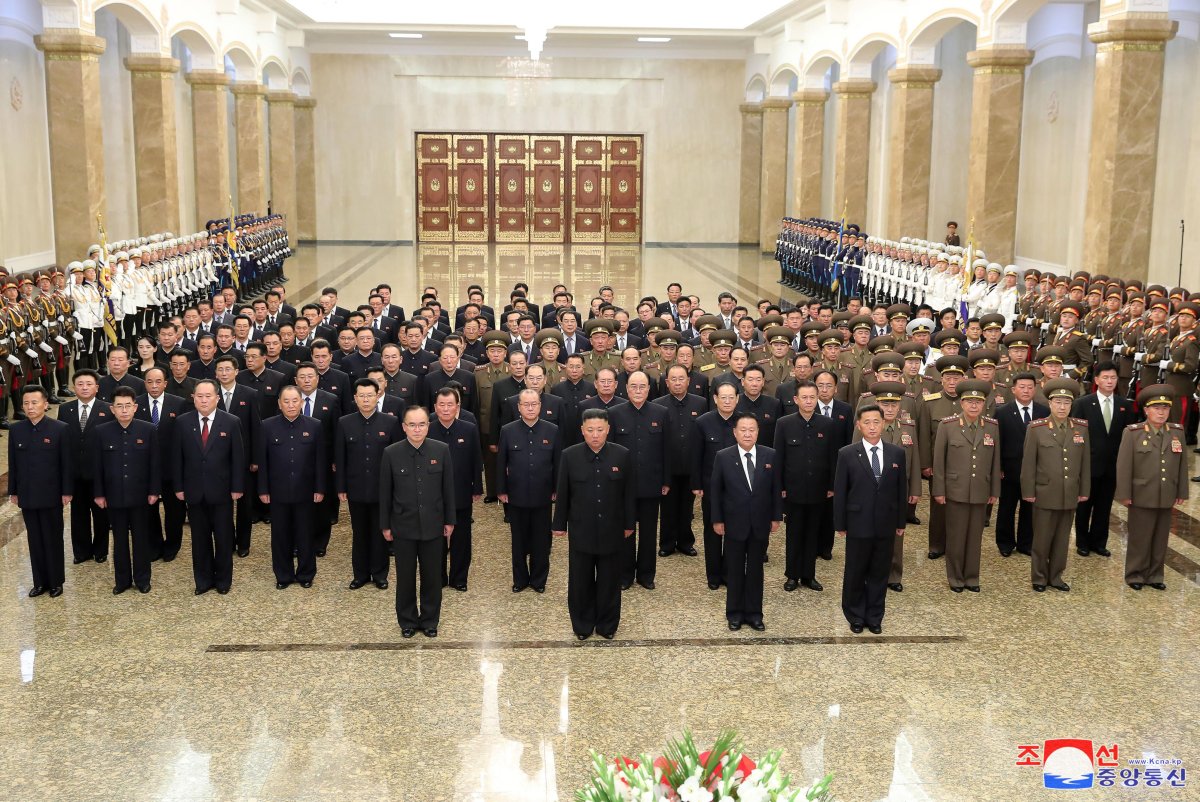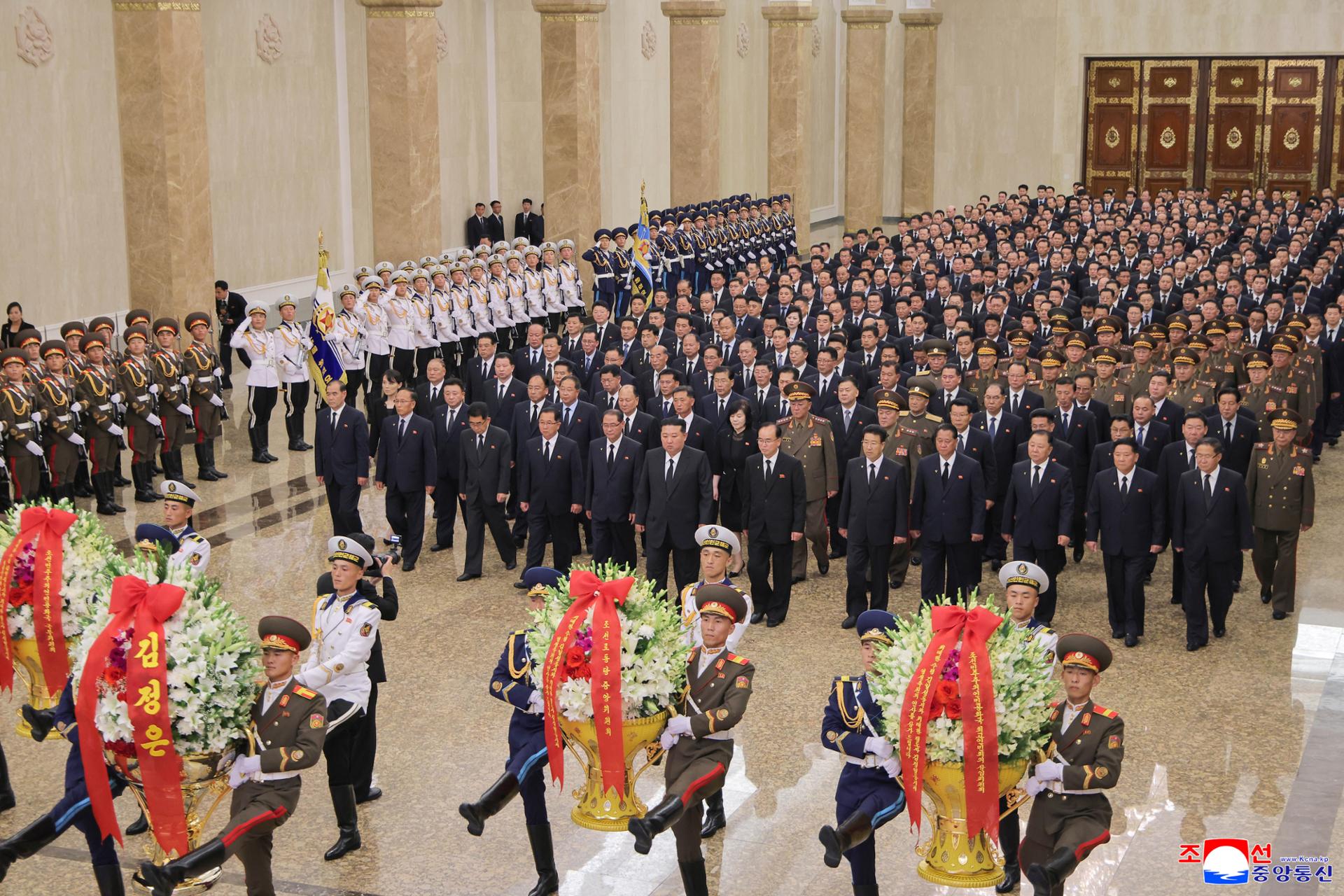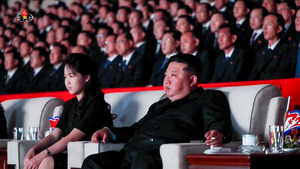
North Korean leader Kim Jong-un sheds tears while attending a performance marking the 73rd anniversary of what North Korea calls its victory in the Korean War in Pyongyang on July 27. His daughter, Kim Ju-ae, is seated to his left. This image was aired by North Korea's state-run Korean Central Television on July 28. (KCTV-Yonhap) Kim’s era ascends: North Korea is increasingly recasting state identity around Kim Jong-un, while reducing the prominence of symbols and narratives tied to Kim Il-sung and Kim Jong-il.Songun pushed aside: State media gave unusually muted treatment to the Aug. 25 anniversary linked to Kim Jong-il’s military-first doctrine, mentioning “Songun” only once and placing coverage on page two.Legacy redirected: Kim Jong-il was still praised, including for helping build North Korea into a nuclear power, but the anniversary narrative repeatedly returned to Kim Jong-un’s leadership and current policy goals.Dynasty hierarchy shifts: Kim Jong-un has skipped more commemorations for his predecessors, while honorific labels such as “Day of the Sun” and “Day of the Shining Star” have faded from official coverage.Constitution rewritten: A March constitutional revision cut lengthy references to Kim Il-sung and Kim Jong-il, while elevating Kim Jong-un-era concepts including people-first governance, monolithic leadership and national interests.‘Normal state’ push: South Korea’s NIS says Pyongyang appears to be strengthening conventional state institutions and nationalism while reducing reliance on revolutionary and socialist terminology.Power, not liberalization: Analysts say the shift does not signal political opening; it points to a more state-centered system built around sovereignty, nuclear status, national power and Kim Jong-un’s personal rule.
[Key Points] Kim Jong-un reshapes North Korea in his own image
Kim’s era ascends: North Korea is increasingly recasting state identity around Kim Jong-un, while reducing the prominence of symbols and narratives tied to Kim
255 words~1 min read