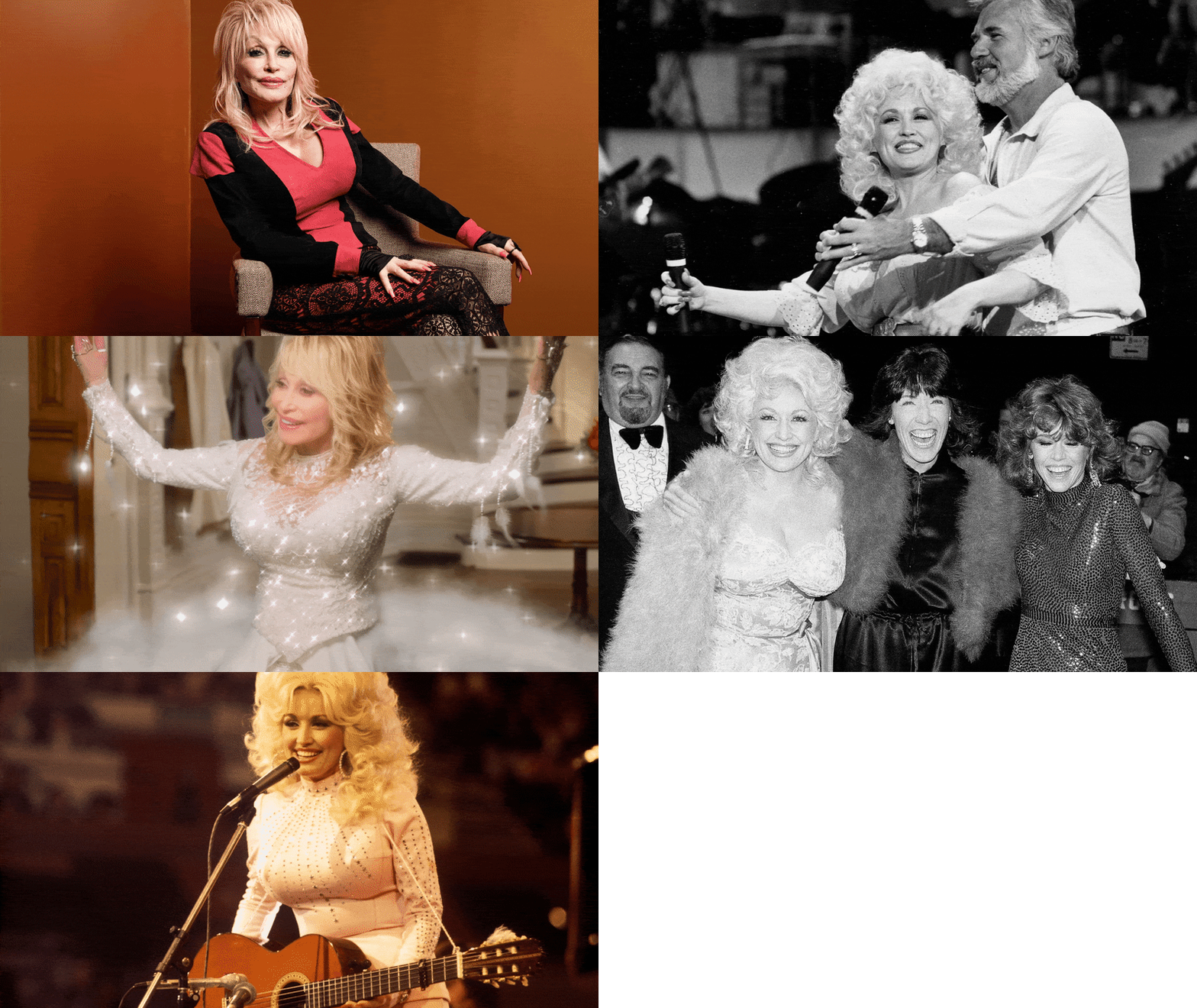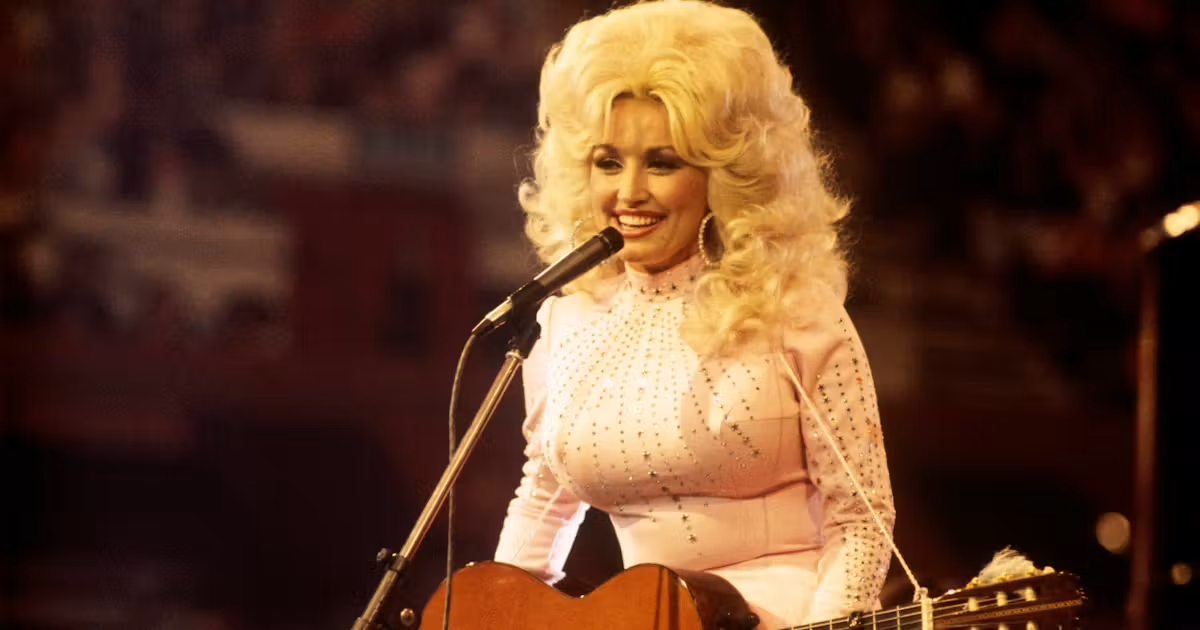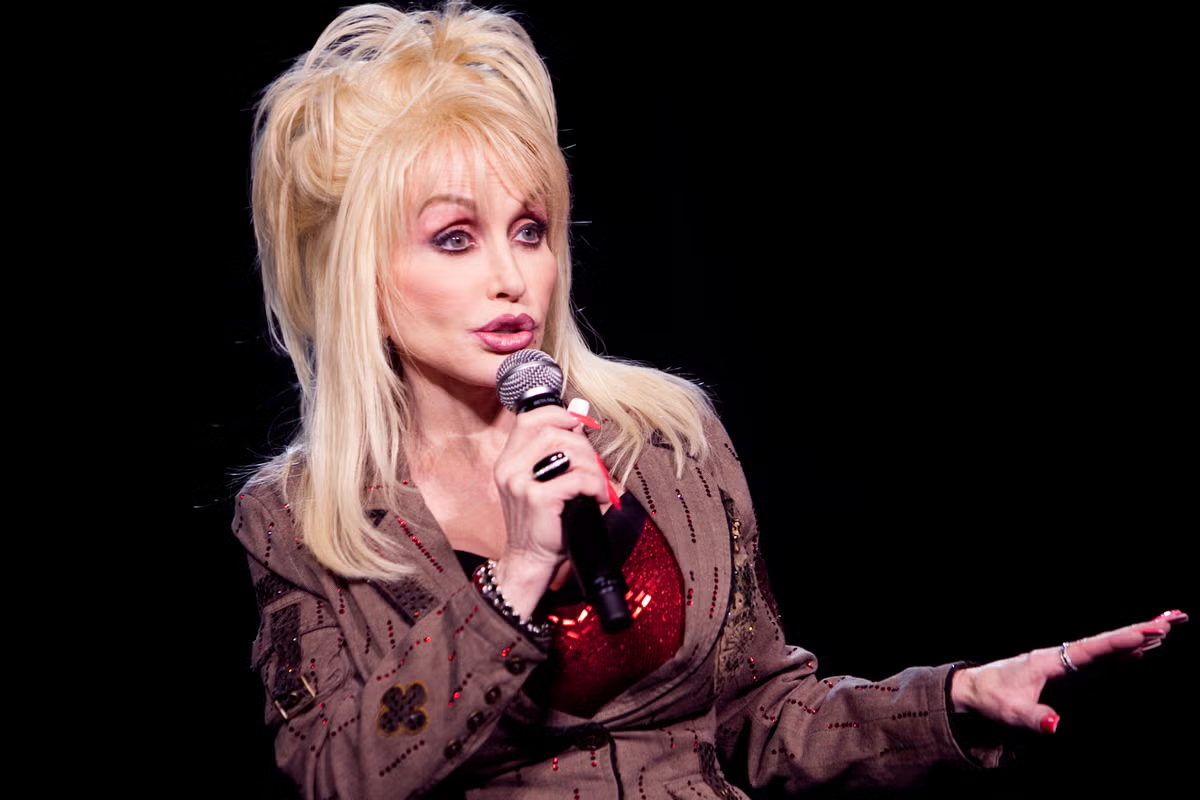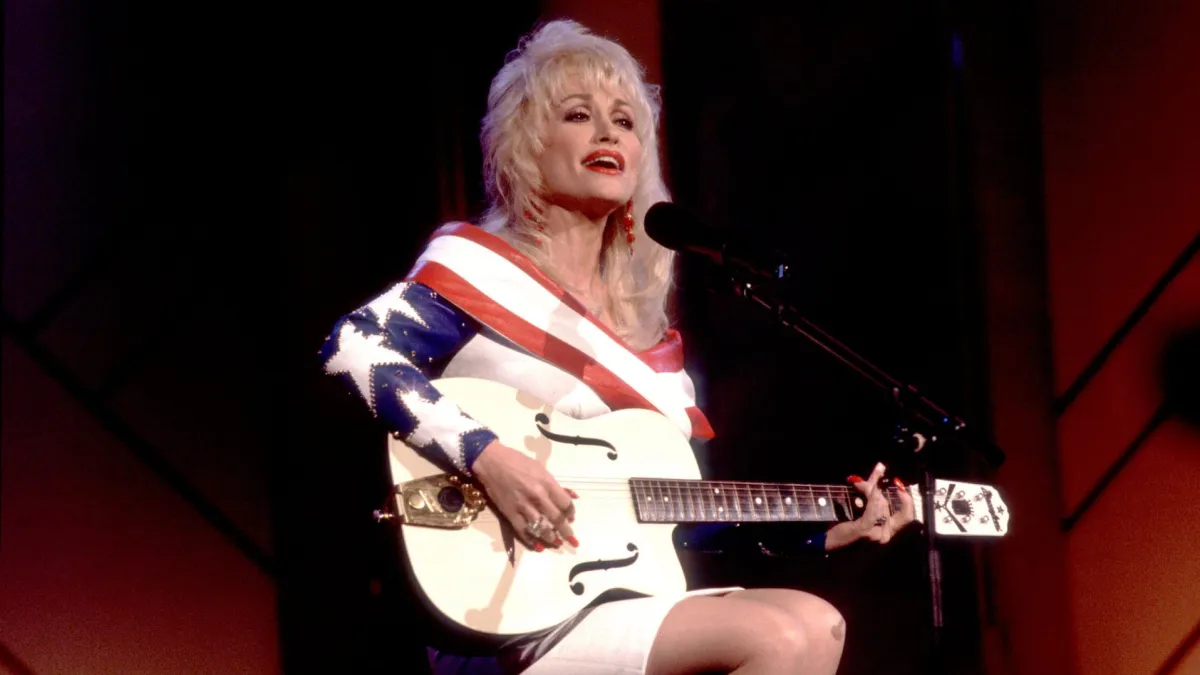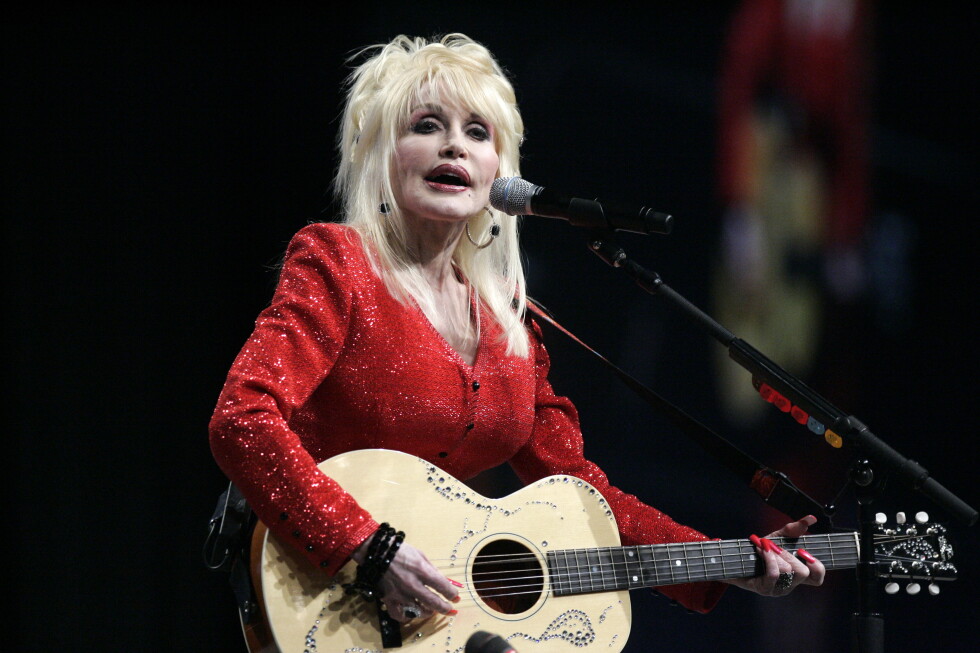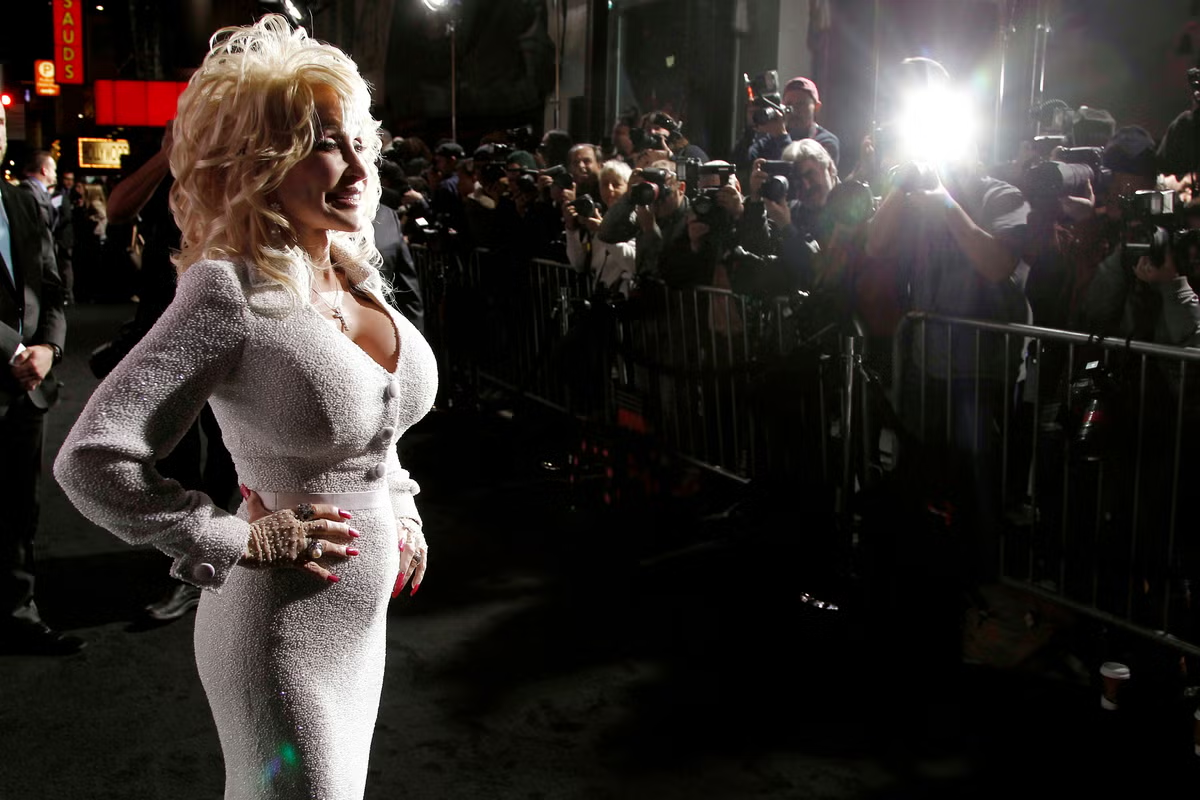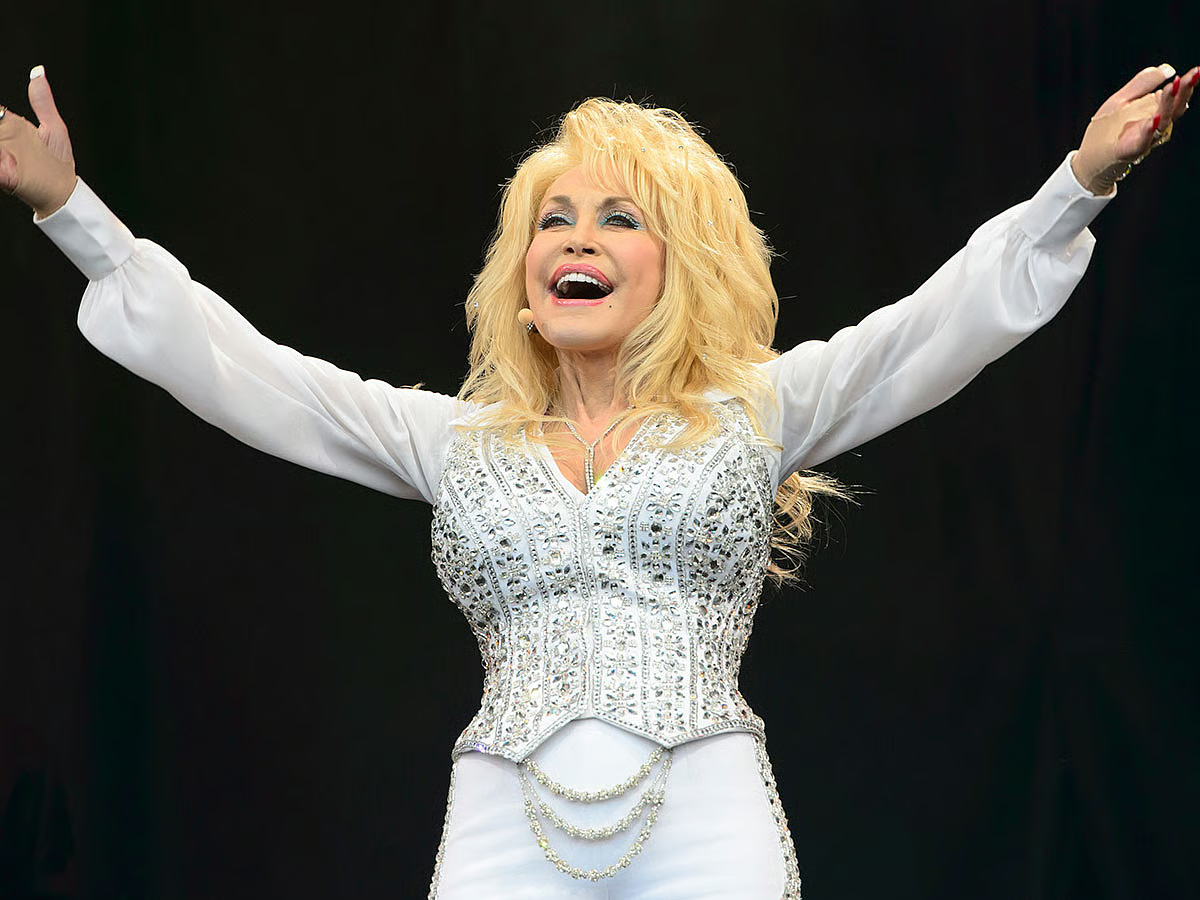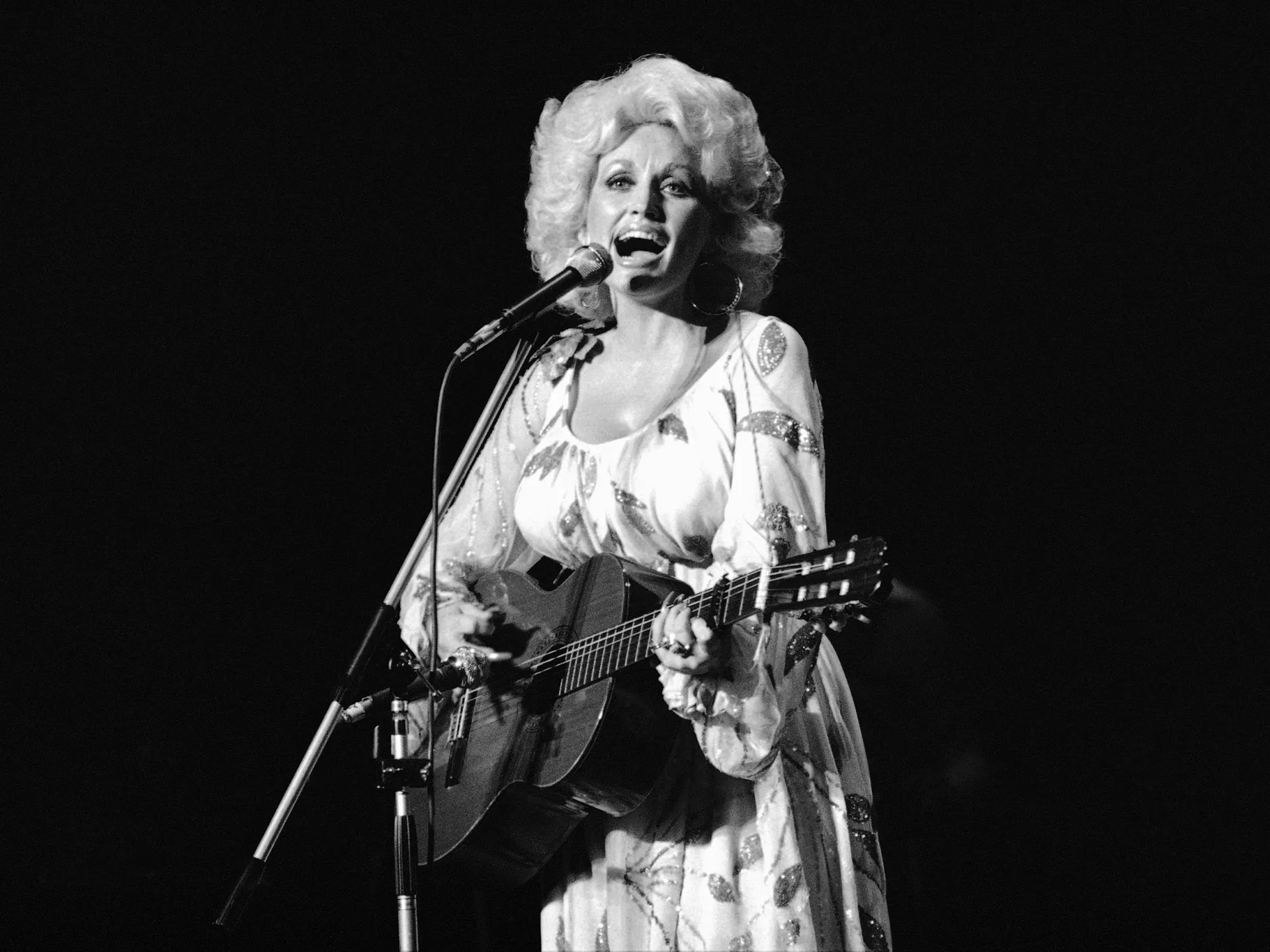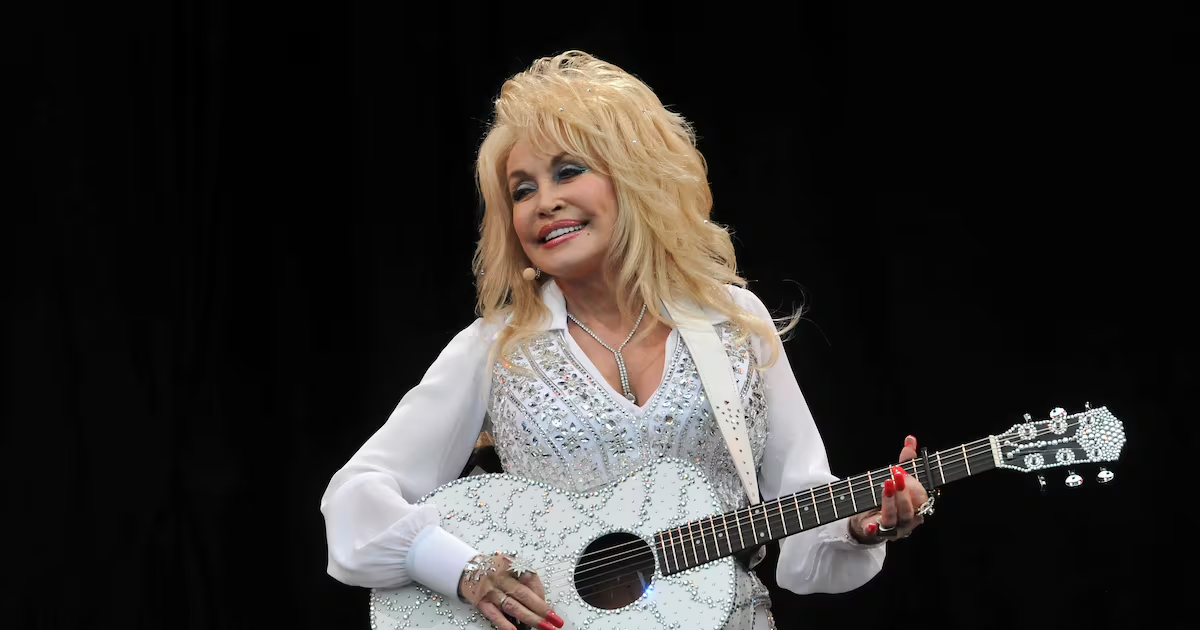
The news came on a humdrum August afternoon and the declarative force of the ticker and crawler headlines – Dolly Parton Dies At 80 – pushed the ostensible business of the day off the agenda. Swept away, for a few hours at least, were the potentially ruinous tariff war initiated by Donald Trump against Canada; the Senate primary election run-offs and the nonstop flow of bitter discourse as Americans of all political hue and age cast a glad if sorrowful backwards glance at one of the more remarkable figures to emerge from their country since the end of the second World War.The death of an 80-year-old would not normally be greeted with shock but one of the many aspects of Parton’s force of personality lay in her possession of an unusual vitality and positivity that seemed like a repudiation of age itself. Although health concerns had caused her to cancel several shows, she told People magazine as recently as last week that she would continue working. Her publicist confirmed on Tuesday night she had died after “a brief battle with cancer.”By then, the tributes to Parton had become a torrent as Americans, particularly those old enough to remember her rise in the 1970s when the analogue age had a fixed grip on the national imagination, absorbed her contribution to the developing 250-year-old story. Many of those tributes seemed to express an intensity of sorrow and feeling that caught its issuers unawares. Almost alone, she seemed to have skated from the era when Johnny Carson ruled the television firmament, and the Grand Ole Opry was a national Sunday-night event, to the fractured music entertainment business of today, without ever seeming defined by or trapped within an era. Over the course of Tuesday’s tributes, the extraordinary story of I Will Always Love You, perhaps the most famous of the thousands of songs she wrote in her lifetime, was told and retold: how she wrote it, quickly, as a bittersweet parting gift to Porter Wagoner, the Nashville singer who gave her a recurring role on his popular television show; how the song had several iterations of music immortality, with Elvis Presley yearning to record it but for Parton’s smart decision to reject the demands of his manager, Col Tom Parker, for full rights, before Whitney Houston relaunched it to global acclamation in 1992. Presley was, of course, just 42 years old when he died at home in Graceland in August 1977 and Houston’s death, at the age of 48, after an accidental drowning in the bathtub of her suite in the Beverly Hilton in 2012, was equally bleak. The announcement of Parton’s death was nothing like those grim tragedies, nor comparable to Buddy Holly’s plane wreck, nor the horror after John Lennon was gunned down outside the Dakota building in 1980. But for some reason Tuesday’s news had the effect of stilling the polluted national political discourse and caused millions of Americans to marvel at not just the songbook, but at the life’s work. Parton was the comparatively rare example of someone who thrived under the intense spotlight and expectation of belonging to the first rank of American music entertainers. The sudden, unexpected occurrence of her death was, in a sense, the final logical act in her lifelong success at maintaining, for all the natural effervescence, a clear moat of privacy throughout the decades. And the swift appraisals were accompanied by a realisation that although her image, voice and sound had established her as one of the more obvious touchstones of postwar Americana, the woman herself was not so easily categorised.American flags being lowered to half mast by National Park Service staff around the Washington Monument following the announcement on Tuesday of Dolly Parton's death. Photograph: Finn Gomez/Getty Images So, on Tuesday afternoon, she elicited from president Donald Trump arguably the most generous and least contentious social media posting of his second term in office, when he ordered all US national flags to fly at half-mast for a week and caught the national mood when he wrote: “This is a true loss for millions of people. There has never been anyone like her and never will.” At the other end of the spectrum, Marshall Mathers, or the rapper Eminem, shared a written message he received from “Dolly” upon his induction to the Rock & Roll Hall of Fame.“I hope what I have to say will not seem weird or strange to you, but I have always felt some unexplained connection to you like I know you somehow,” she wrote.“I had hoped to meet you at the show, but you know how nuts those things are, personally I hate ‘em and I missed my chance but maybe someday we’ll meet.”[ ‘It’s run by a bunch of sanctimonious bloody Americans’: The weird world of the Rock & Roll Hall of FameOpens in new window ]At precisely 9.25pm, the time a nod to her feisty classic 9 to 5, the Empire State Building turned pink. Barack Obama paid tribute and there were replays of his sheepish admission to Stephen Colbert that he had erred in not awarding Parton the Medal of Freedom, confessing that it was a “screw-up” because he’d assumed she’d already received it. He vowed to “call Biden”. Parton later explained she’d declined that invitation on the grounds she’d already turned it down before.“Well, I actually have,” Parton said in a television interview.“To be honest, in all fairness, I got offered the Medal of Freedom from the Trump administration. I couldn’t accept it because my husband was ill. And then they offered it again and I wouldn’t travel because of the Covid. Now I feel like if I take it, I’d be doing politics, so I’m not sure. I don’t work for those awards – it would be nice but I’m not sure that I even deserve it. But that’s a nice compliment that people would think that I might deserve it.”It was a telling aside: Parton’s steadfast refusal to ever declare political favouritism towards either party was a mask that facilitated decades of worthwhile activism and quiet philanthropy. She navigated a path that led from a two-bedroom shack (now a national landmark) in the deeply conservative south of the 1940s and 1950s Great Smoky Mountains to a stardom defined by subtle but significant espousal of women’s rights, civil rights, the Black Lives Matter movement and LBGTQ rights. She was never cool and she transcended fashion, at once self-deprecating and deadly serious about persevering with – and, in later years, preserving - Hollywood blonde with a countrified, rhinestone wink.“‘Cos people like you ask me and I don’t want to lie about it,” she shot back at Larry King in 2003 when the talkshow host asked her why she was so candid about her various surgical enhancements.“If someone wants to know something ... I always say if I see something saggin,’ taggin’ or baggin’, I’m gonna go have it sucked, tucked or plucked.”That underlying humour combined with the generosity of spirit and the beseeching voice with songs filled with pain rather than bitterness was what America – and the world – fell for. Parton was the inverse of Bob Dylan, America’s other unstoppable octogenarian, and Nobel laureate, who is still touring and still gnomic. Dolly Parton performing on her ABC TV variety show in 1987. Photograph: John Seakwood/Disney General Entertainment Content via Getty Images If Dylan stands as the explicit chronicler of American political and civil change and discord, Parton occupied a more mischievous space: popular, fun, sometimes spangly and commercial but, it became apparent as the decades passed, with a vault of songs immense and inimitable in their own unorthodox way. Significantly, the pair never hit it off; although Parton had spoken of her admiration for Dylan, she sensed on his part a reticence and a “lack of warmth from him to me” on the few times they met. “I think I may have offended him somehow by the way I looked or the way I was,” she famously said in an interview. “I love his music, but he’s a weird buckeroo.”If that descriptor ever reached the Unwashed Phenomenon, chances are it drew a cackle of recognition.[ Dolly Parton embraced glitter and glam, but her songs sparkled with wisdom, wonder and witOpens in new window ]So, Parton’s last act was to silence the political bickering for an evening. The tributes will continue as Americans grapple with the immensity of a performer and inheritor of the country music tradition who offered, through ceaseless example and song, the best of what this country itself can be. “Part of it was this generosity, this virtue, this spirit, this deep, deep faith that allowed her to be so many things to so many different people,” said Ken Burns, the documentarian who has spent his life chronicling the great historical and cultural narrative sweeps that have shaped the United States.“I love the way she straddled it and at the same time she is a conduit back to hundreds of years of a folk tradition. However modern, however pop, however country she might be, she is also recalling these songs that, as she put it in our film, were Welsh and Scottish and Irish and English – and she said that was the way we would carry the news through the hollers of east Tennessee.”
Keith Duggan: Dolly Parton offered the best of what the United States can be
If Bob Dylan stands as the explicit chronicler of American political and civil change and discord, Parton occupied a more mischievous space
1,555 words~7 min read