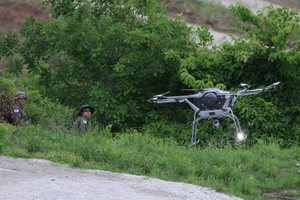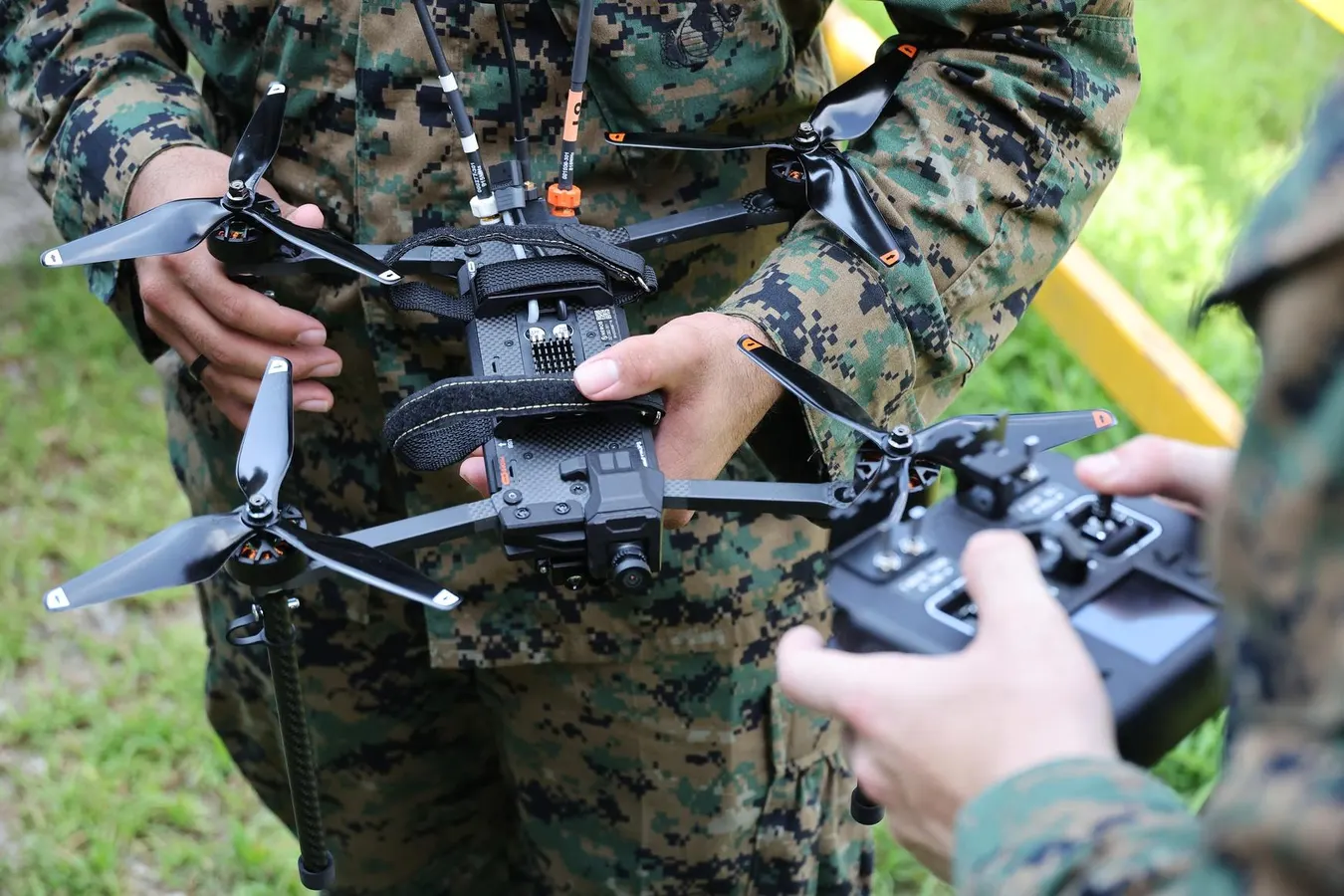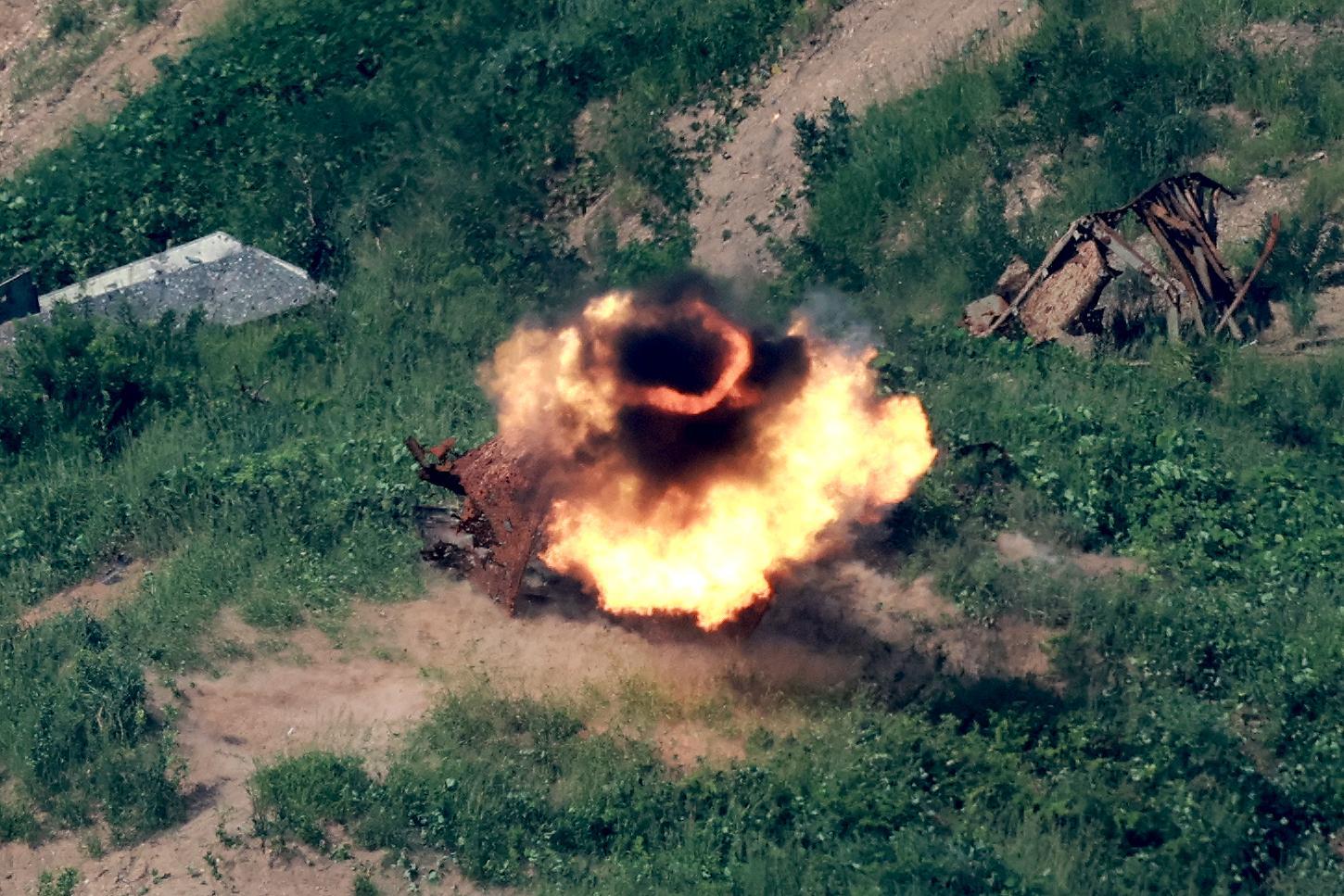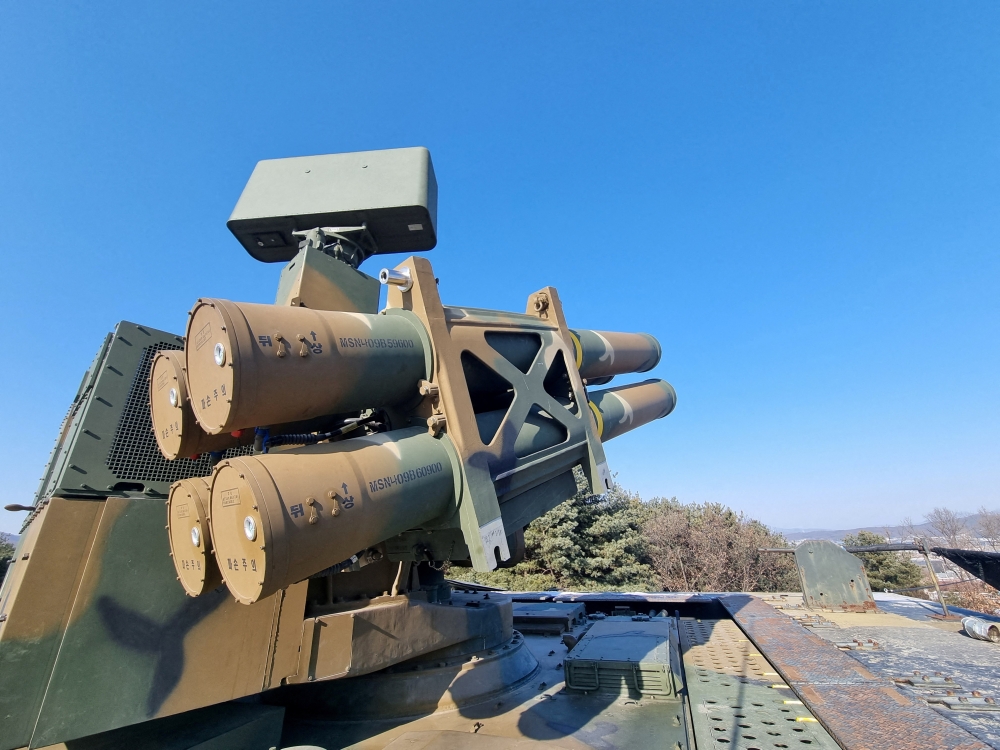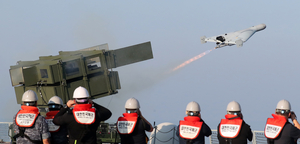
After 30 successful land sorties, drone fails in first sea trial Officials from the Agency for Defense Development, the Navy and defense companies watch a suicide drone launch from aboard the ROKS Marado in waters off Busan on Tuesday. (Joint Press Corps via Yonhap) BUSAN — South Korea's homegrown suicide drone may have proved itself on land. At sea, it was not quite ready.On Tuesday, the Agency for Defense Development and the Navy opened the first maritime combat trial of the domestically developed medium-sized suicide drone to the media aboard the ROKS Marado, a 14,500-ton Dokdo-class amphibious assault ship, in waters south of Busan after sailing past Hongdo.ADD is a state-run defense research agency responsible for developing weapons systems and related technologies for the South Korean military.The demonstration comes as the Navy looks to deploy suicide drones aboard large vessels, including Dokdo-class amphibious assault ships, as part of efforts to expand lower-cost strike options at sea.The drone is designed to stay airborne for up to 10 hours using aviation fuel. It cruises at around 130 kilometers per hour, while its speed can increase to several hundred kilometers per hour during a diving attack, according to ADD.The system can also relay data and receive commands over long distances through links with low-Earth orbit satellites, allowing it to operate far beyond the range of conventional line-of-sight ground control.While the Navy sees the system as a potentially cheaper option for striking targets that may not warrant the use of expensive precision-guided missiles, ADD emphasizes that the Korean drone is not designed simply as a low-cost one-way weapon.Kim Hee-jun, an ADD team leader involved in the project, contrasted the system against weapons such as Iran's Shahed drones and Russia's Lancet loitering munitions, which he described as largely "fire-and-forget" systems.The Korean system, Kim said, is intended as a more sophisticated "high-end" suicide drone capable of conducting reconnaissance and identifying and tracking targets before carrying out an attack.The aircraft can carry electro-optical and infrared sensors to search for and identify targets and relay information gathered during flight. Its modular payload design also allows different mission equipment to be installed, depending on operational requirements.Those capabilities make it more expensive than simpler one-way attack drones, but ADD stressed that the technologies and major components incorporated into the system have been developed domestically.Several South Korean defense companies participated in developing the system. Korean Air developed the aircraft, LIG Defense & Aerospace provided the rocket propulsion system and launcher, while Hanwha Systems developed ground control equipment. A rocket booster separates from a suicide drone as the aircraft falls toward the sea during a test off Busan on Tuesday. (Joint Press Corps via Yonhap) A suicide drone falls into the sea as an orange uncrewed surface vessel, serving as a simulated enemy target, passes in front of it during a test off Busan on Tuesday. (Joint Press Corps via Yonhap) Tuesday's demonstration, however, did not go as planned.Two drones prepared for the trial crashed into the sea within seconds of launch, preventing the test from proceeding to the target detection and strike phases.The first aircraft was launched from a rocket-assisted launcher on Marado's flight deck at around 3:30 p.m. It rose briefly before losing altitude and falling into the water.ADD initially suspected a possible misalignment between the aircraft and its launch system. Unlike previous land-based trials, the equipment, including explosive components, had to be disassembled for safety before being brought aboard the ship and then reassembled on deck.After researchers inspected the suspected issue, a second aircraft was prepared and launched about two hours later.It, too, crashed within seconds.The similar outcome in the second launch left ADD unable to confirm its initial suspicion."The exact cause remains unknown," an ADD official told reporters after the trial, saying flight data collected by the ground control system and the recovered aircraft would undergo further analysis.The agency said key elements of the launch sequence appeared to have operated normally in both attempts. The rocket boosters separated as designed, the propellers engaged and engine revolutions per minute remained within normal parameters.The result was unexpected for the developers.ADD said it has produced about 10 prototype aircraft and conducted some 30 sorties on land without a similar crash, including tests under wind conditions far stronger than those recorded at sea Tuesday.The project, launched in 2024, is intended to secure core technologies for a future operational weapon system and is scheduled to conclude in September.ADD said the required technologies had already been demonstrated through previous testing and Tuesday's trial was intended to additionally assess their operation in a maritime environment.The agency said it would analyze flight data and inspect the recovered aircraft to determine the cause of the two crashes and reflect the findings in subsequent stages of development.
S. Korea opens first sea trial of homegrown suicide drone
BUSAN — South Korea's homegrown suicide drone may have proved itself on land. At sea, it was not quite ready. On Tuesday, the Agency for Defense Development and
790 words~4 min read