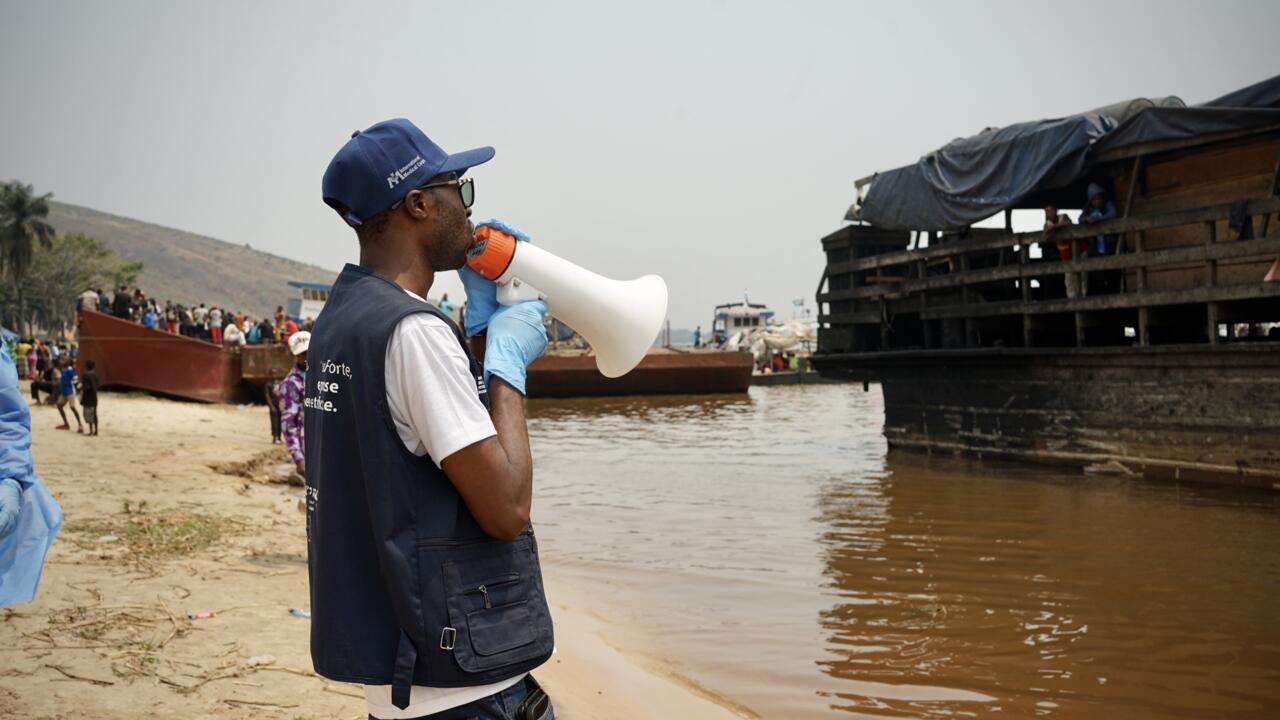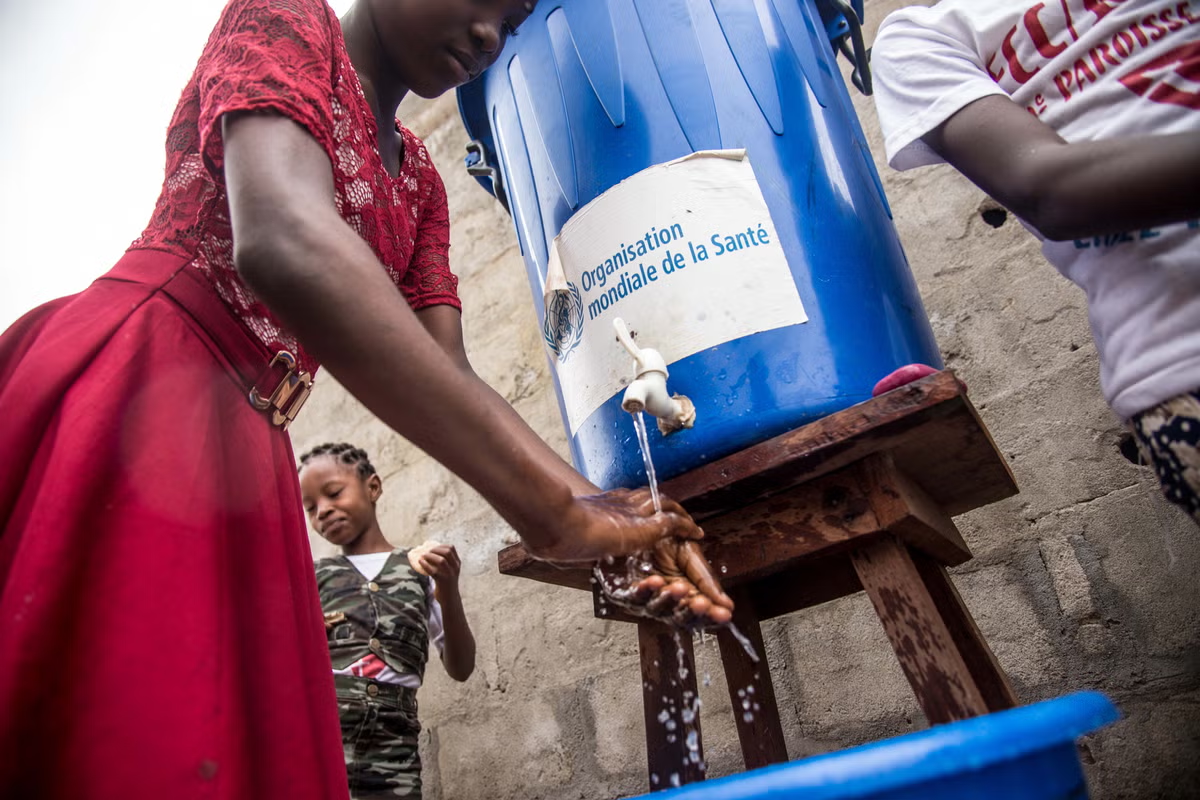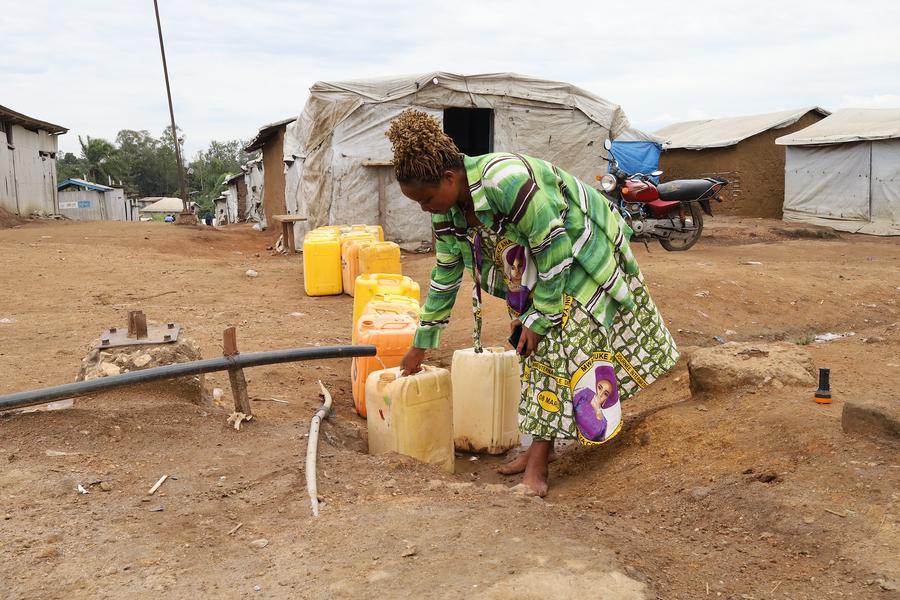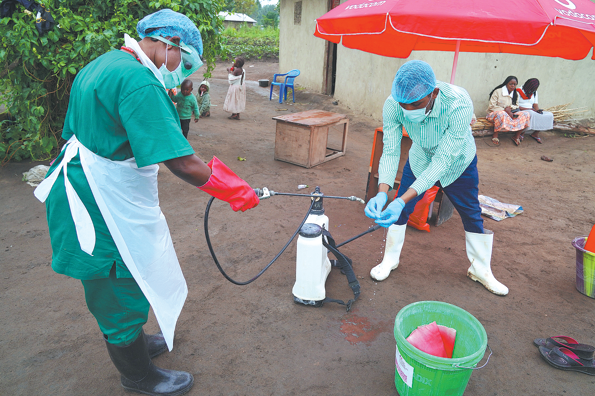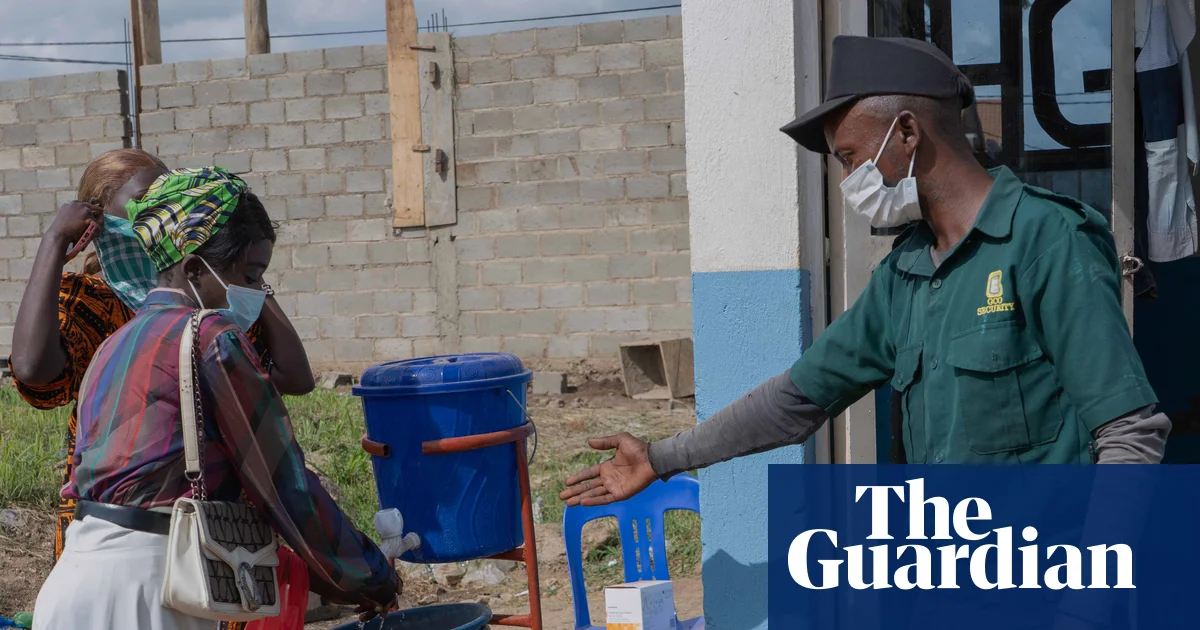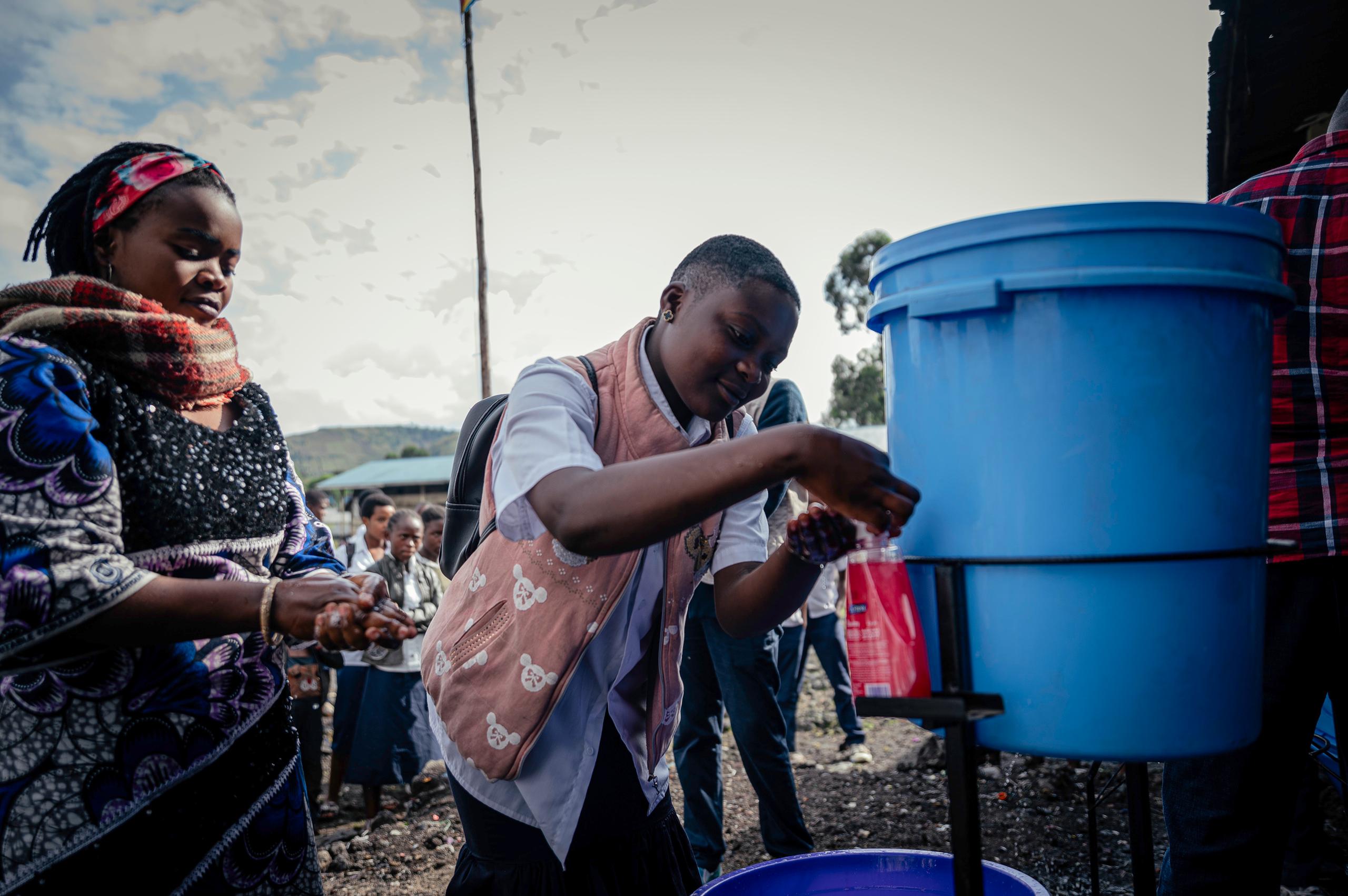
Safe access to water is scarce across parts of Ituri province, which is the epicenter of the Ebola outbreak in the Democratic Republic of the Congo.The Ebola virus is transmitted through direct contact with bodily fluids like blood, saliva and urine of an infected person. It is, therefore, crucial, in order to prevent the spread of the disease, to be able to wash regularly. Response teams also need access to water to clean equipment and areas used by patients.People sometimes use taps and showers installed at Ebola treatment centers to collect water, potentially increasing contact between healthy and infected people.Artisanal and small-scale mining in the region also put pressure on local water resources, by turning some waterbodies muddy.
In Ndrele, a commercial center in Ituri with nearly 40,000 inhabitants, there is virtually no access to safe drinking water. Children leave home at 5:30 a.m. to fetch water for their families and often spend hours doing this activity. They usually don’t return before 11 a.m. or noon. “It’s a serious problem, and it’s the same everywhere,” Jacques Pithua, deputy coordinator of civil society group “Forces vives des Djukoth,” told Mongabay by phone.
Pithua lives near Ndrele, in Mahagi, in Ituri province bordering Lake Albert in eastern Democratic Republic of the Congo (DRC). In May 2026, the DRC declared its 17th Ebola outbreak in the province. To prevent Ebola transmission, health authorities recommend frequent handwashing, among other measures, but in many parts of Ituri, clean water remains scarce.