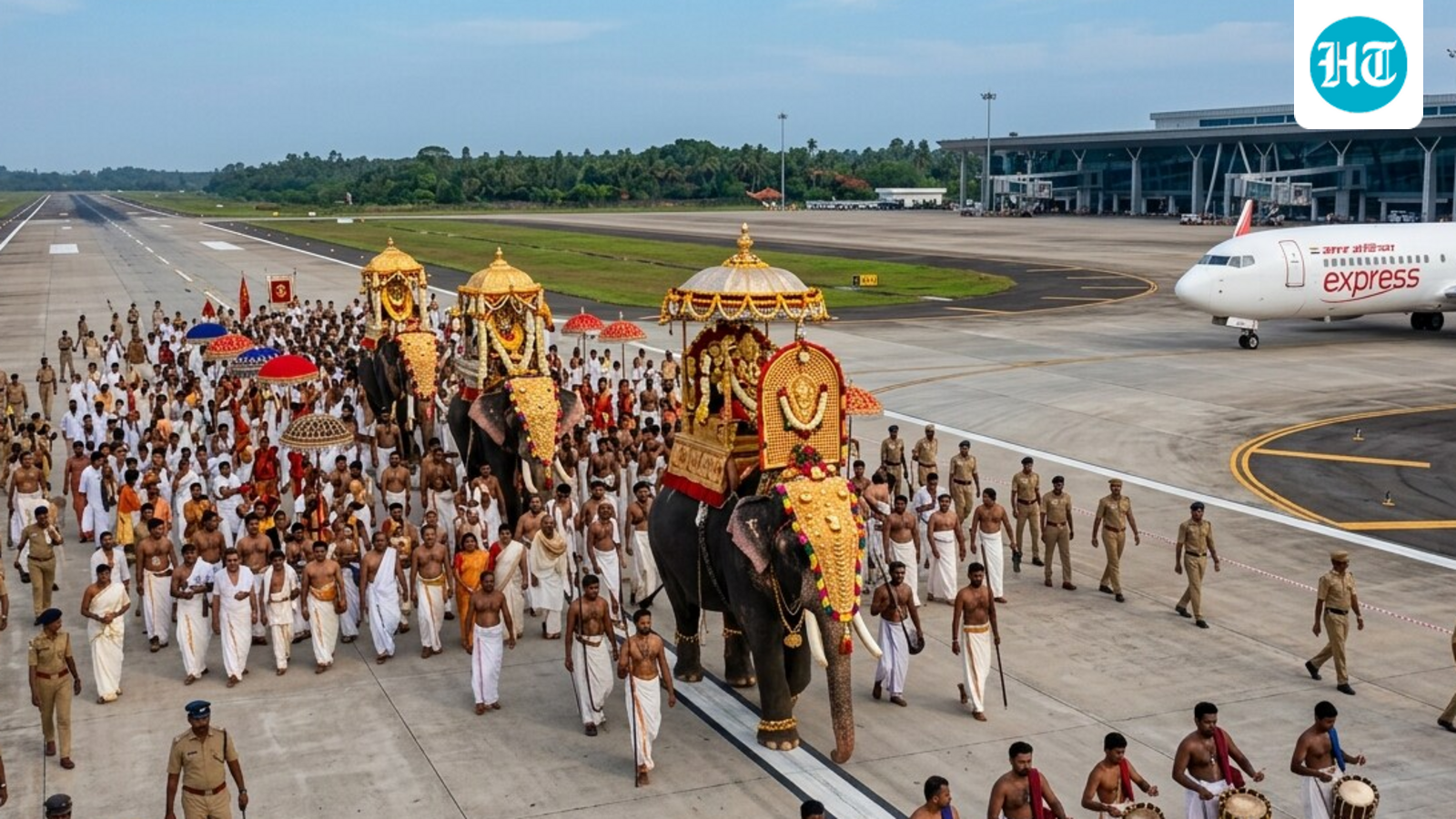
As Kerala celebrates Onam, the story of Thiruvananthapuram’s airport offers a fascinating glimpse into the state’s royal past and how an old legacy continues to shape modern infrastructure. The story traces back to the erstwhile Travancore kingdom and the land on which Thiruvananthapuram International Airport stands today. Long before commercial aviation became part of everyday life, the Travancore royal family was closely associated with the development of aviation in the region.Real estate trivia: Twice a year, Thiruvananthapuram airport’s runway makes way for the Arattu procession. (Photo for representational purposes only) (Gemini-generated photo)Reports quote court records as showing that 258.06 acres of land were handed over by the Maharaja of Travancore to the flying club for the development of the airport. Another 329.68 acres were subsequently acquired by the Airports Authority of India, while 40.85 acres were handed over by the Kerala government, according to media reports.The airport was established in 1932 under the patronage of the Travancore royal family. But the royal connection did not end with the transfer of the land. A centuries-old route used by the Sree Padmanabhaswamy Temple’s Arattu procession continued to pass through the airport premises even after the airfield came up and does so even today.What makes this piece of real estate history particularly intriguing is that the airport’s story is not simply about land changing hands. It is also about how a modern airport grew around traditions that predate it and how, decades later, the runway can still make way for one of Kerala’s most enduring royal-era rituals. Twice a year, the airport effectively makes way for the deity. The Arattu procession takes the idols of Sree Padmanabhaswamy and other deities from the temple to Shanghumugham Beach for the ceremonial sea bath.According to accounts of the royal tradition, when the airport land was given, the then Maharaja Sree Chithira Thirunal is said to have stipulated that the airport could be used by the public for 363 days a year, with the remaining two days reserved for Lord Padmanabha. In 2021, the Business Standard newspaper reported the royal family’s account of this arrangement when the airport was handed over for private operation.Also Read: Delhi Master Plan 2047: How earthquake-safe will 100-plus floor buildings be?"In the 1920s and 1930s, aviation was a source of immense pride for India’s Maharajas, with several princely states operating their own air services and airstrips. Before 1954, India had as many as 60 privately owned airports. Even today, the Jodhpur airport and the Begumpet airport Hyderabad, still maintain remnants of its royal past. The airstrip tradition that continues in Kerala to this day is unique, reflecting how royal families have sought to preserve customs and traditions linked to aviation and airports," Mark D Martin, a prominent aviation expert told Hindustan Times Real Estate.What does this have to do with Onam?The connection is less about the Onam festival itself and more about the enduring legacy of Travancore’s royal culture, so closely associated with Kerala’s history. Onam is rooted in the cultural memory of the ancient kingdom of Mahabali, while Thiruvananthapuram airport's modern identity remains deeply intertwined with the Travancore royal family and its historic association with Sree Padmanabhaswamy Temple.Also Read: Why Delhi-NCR’s rich are checking into 5-star branded residences
Real estate trivia: The royal land deal that still shuts down Thiruvananthapuram airport twice a year
As Kerala celebrates Onam, a little-known piece of the state’s real estate history offers a fascinating glimpse into how tradition and modern infra coexist | Real Estate News
537 words~2 min read