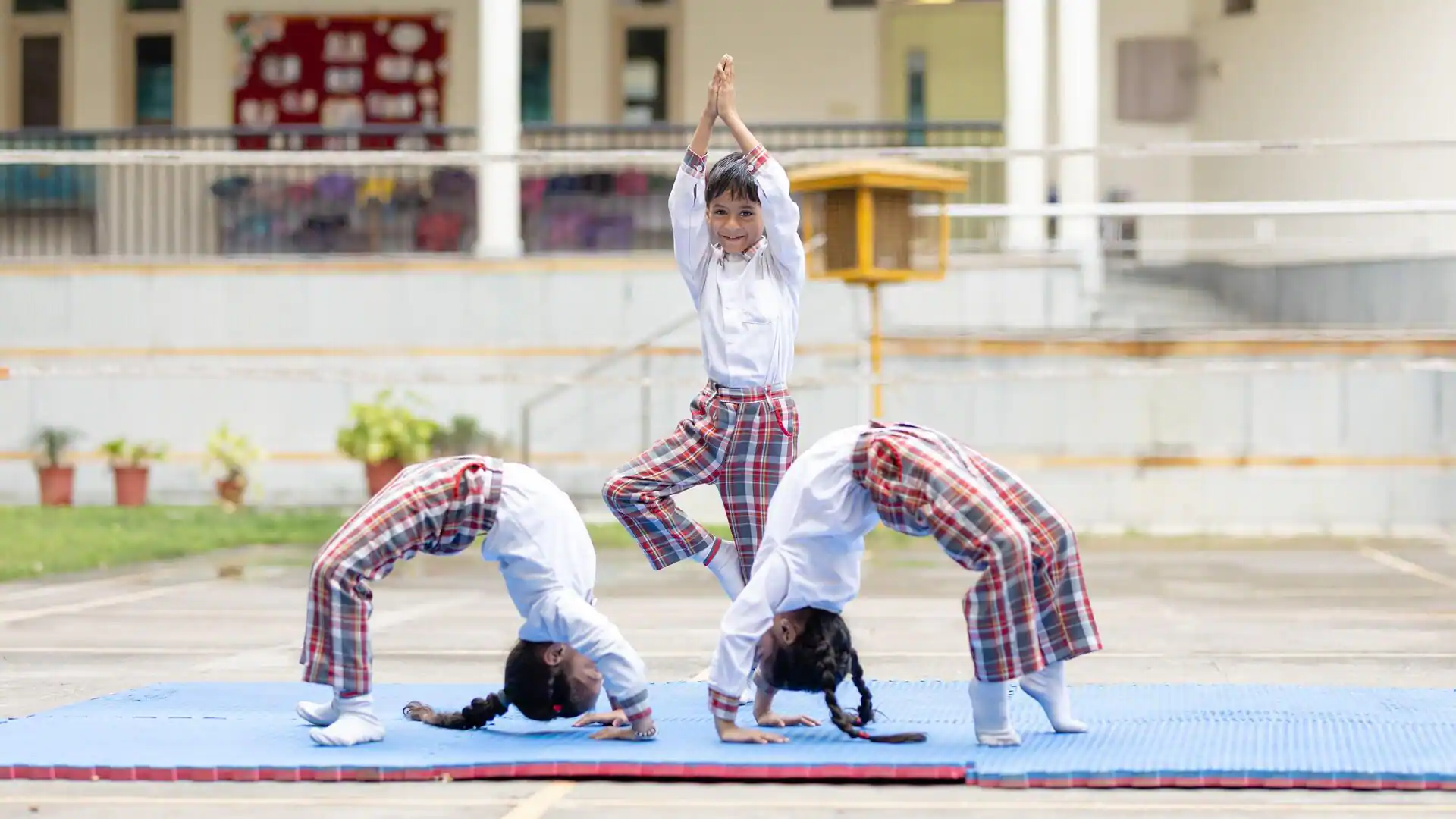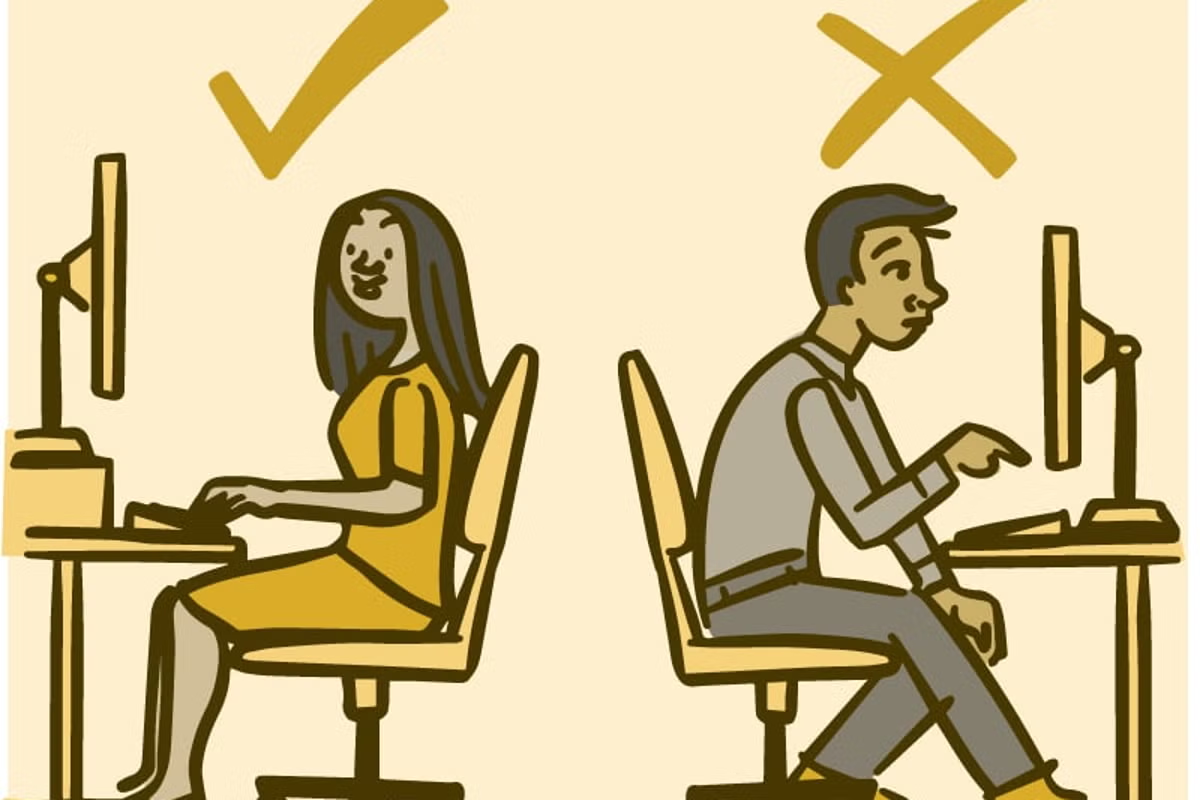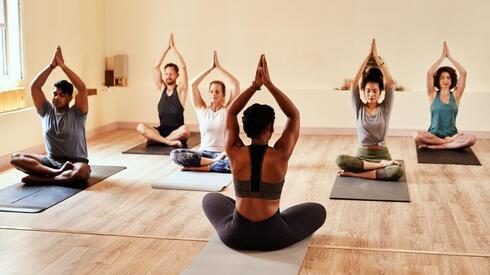
Slumped shoulders, a rounded back and a backward-tilting pelvis have become hallmarks of modern life; but not every posture issue is a medical problem, and not every workout can fix it; what can be changed, and how should it be done?For decades, the command “sit up straight” was a staple in Israeli households and somehow, perhaps because of the threatening tone, it actually worked. But a few years have passed since then, along with several thousand hours spent in front of a computer at the office or looking down at a phone. The result? Slumped shoulders, a rounded back and a pelvis that tilts backward — yet another consequence of modern life in the age of TikTok and artificial intelligence.Against that backdrop, promises to improve posture are everywhere, from Pilates and yoga classes to gym training programs. But the path to better posture is more complicated than it may seem.GalleryThe key window of opportunity is during the growth years (Photo: Shutterstock/New Africa)“According to the professional literature, posture refers to the way the different parts of the body are organized in relation to one another, and all of them together in relation to the body’s center of gravity,” explains Philip Halpert, a specialist in posture and rehabilitative exercise at the Levinsky-Wingate Academic College and a physical performance coach in Paralympic sports.“In simpler terms, it’s how we organize our bodies in everyday static positions such as sitting and standing, as well as during sports or other professional activities.”Halpert distinguishes between two main types of postural problems. The first is structural, meaning it originates in the skeleton itself. This category includes scoliosis, which causes asymmetry most visible when looking at the body from the front or back; kyphosis, an exaggerated rounding of the upper back; and excessive lordosis, an unusually pronounced curve in the lower back.“These problems are less common, but they are also more difficult to change because, as I said, their origin is not simply a weak or shortened muscle but the structure of the bones,” he says.The second and far more common type is a functional postural problem. In these cases, the skeleton itself is not the source of the issue. Rather, the body has adapted to what it has repeatedly been asked to do.“It happens as a result of repeatedly performing a certain activity,” Halpert says, citing tennis players as an example. “People who play tennis for many years will at some point develop a certain degree of asymmetry because they have a dominant hitting side. The muscles develop asymmetrically, and that also affects the spine.”But you do not need to be a professional athlete for the body to adopt such a pattern. Everyday life is also full of repetitive movements and asymmetrical positions.“These problems are very common because we have asymmetrical patterns in our daily lives. Over the years, muscles and connective tissues shorten on one side and lengthen on the other, and gradually the pattern becomes established,” he says.But it is never too late to start (Photo: Shutterstock/BearFotos)Despite the somewhat alarming term, a postural problem is not necessarily a medical condition. In fact, Halpert says nearly everyone has some form of deviation.“If I were to conduct a formal posture assessment, I would usually find some kind of issue in almost everyone, but people live with them just fine. It is rare for them to lead to injuries or pain.”It is easy to blame the smartphone for everything that has happened to our posture, but the older suspect is actually beneath us. Long before we started bending our heads toward screens, the chair turned sitting into the default position of daily life.Sitting itself is not the problem. The problem is the monopoly it has gained over our waking hours. According to Halpert, a sedentary lifestyle is, unsurprisingly, the main contributor to functional postural problems.“Look, for example, at people who live a more traditional tribal lifestyle and usually sit on the floor or in a deep squat, such as some communities in India or Australia. Their hip joints remain mobile throughout life,” he says.“We adopted the chair, which originally was actually a status symbol — only a tribal chief would sit on one — for the sake of comfort. The result is that certain muscle groups in the body are kept in a shortened position on a regular, daily basis. If we do not actively stretch them, over time it affects both the way we hold ourselves and our posture more broadly.”What matters is not the method, but a systematic approach and an understanding of the human body (Photo: Shutterstock/Mike_shots)So how much of this can be reversed, and is there an age at which it is simply too late to make a change? The short answer is no. The longer answer brings us back to the distinction between structural and functional problems.When the issue lies in the skeletal structure, Halpert says the most significant window for intervention is during the growth years. In some cases, a brace can be used during adolescence together with exercises designed to strengthen the muscles around the spine.“If you catch it early in adolescence, before the rapid growth phase begins, and intervene effectively, there is an opportunity to moderate it,” Halpert says. “Usually that includes wearing some kind of brace and combining it with active exercise, including various exercises that strengthen the muscles around the spine.“In most cases you cannot eliminate or completely straighten the problem, but you can reduce its effects and make some aesthetic improvements. The change is usually not dramatic, although exercise can have a very positive effect on quality of life.”With a functional postural problem, however, the question is not whether the bones can still change, but whether it is possible to influence the muscles, connective tissues and movement patterns that have become established over the years. Here, even at older ages, there is far greater room for improvement.“They can be influenced through targeted exercise, and depending on how committed the person is, very significant changes can be expected,” Halpert says.Once we establish that exercise can help, the most practical question remains: What kind of exercise? Yoga, Pilates or strength training?Halpert declines to declare a winner. “There is no single method that can be said to be better than another because what matters here is not the method, but a systematic approach and an understanding of the human body,” he says.The common denominator for success, he says, is a combination of several elements: awareness and precision in performing movements, strengthening the muscles that are meant to support the body, stretching shortened muscles, mobilizing the joints and improving range of motion.Without those components, even a workout that looks excellent on paper may simply reproduce the same posture a person brought with them from home. Choosing yoga, a discipline so closely associated with flexibility and posture, guarantees nothing on its own.“If someone starts practicing yoga and has a certain postural problem, the mere fact that they are doing yoga does not guarantee that the problem will be corrected or significantly improved,” Halpert says.“But if that person practices yoga with a teacher who understands posture and knows how to tailor the exercises to their specific needs, yoga can significantly improve posture. The same applies to Pilates and to any method that incorporates techniques for flexibility or improving range of motion, along with strengthening exercises.”And still?
Yoga, Pilates or the gym: Which workout can actually improve your posture?
Slumped shoulders, a rounded back and a backward-tilting pelvis have become hallmarks of modern life; but not every posture issue is a medical problem, and not every workout can fix it; what can be changed, and how should it be done?
1,908 words~9 min read