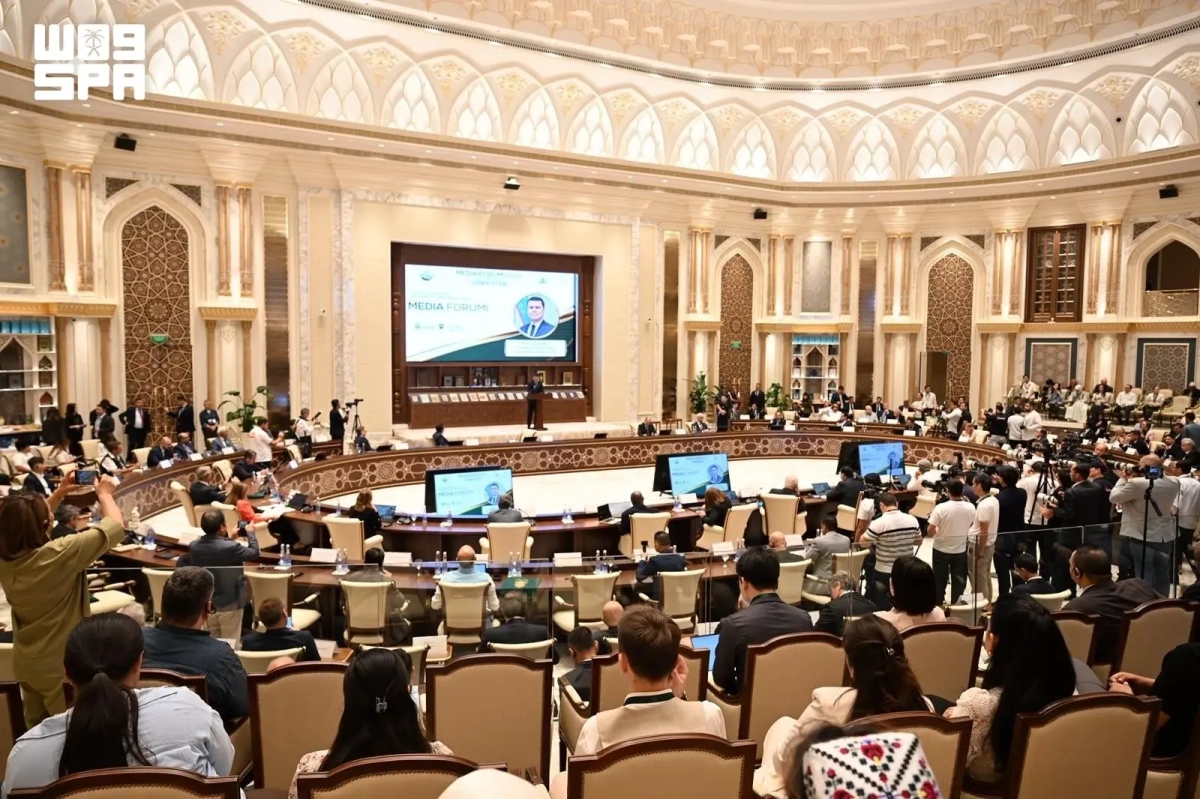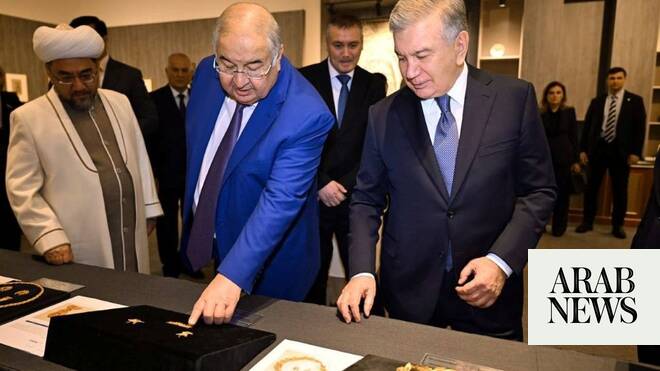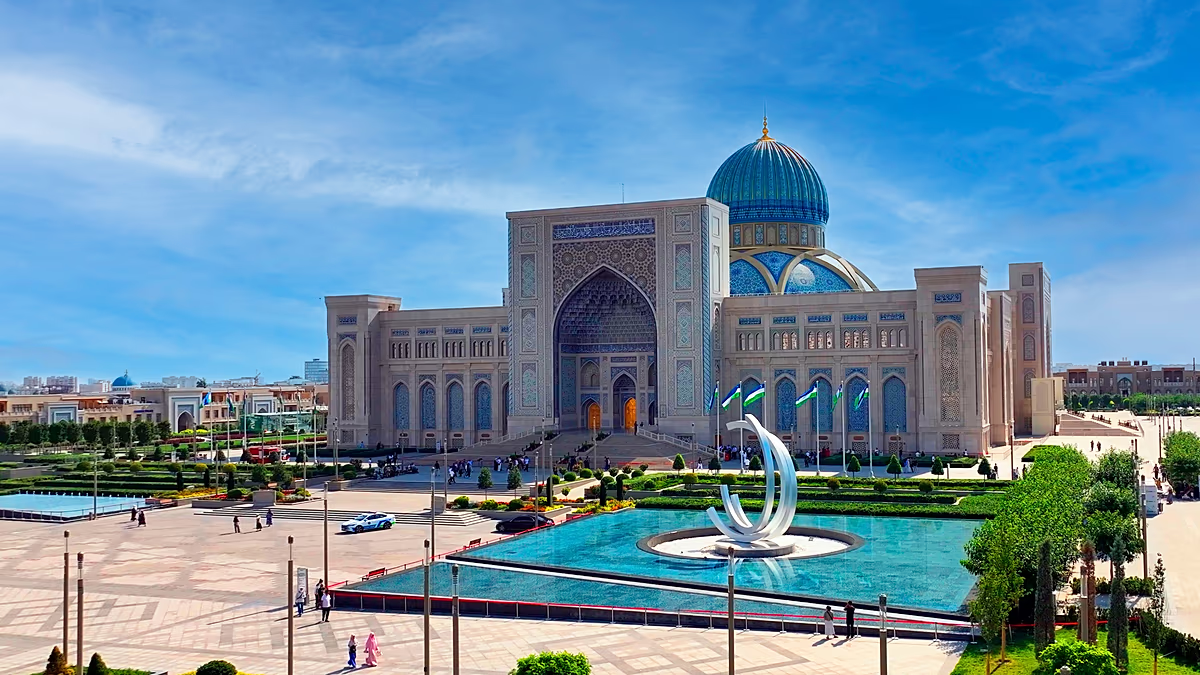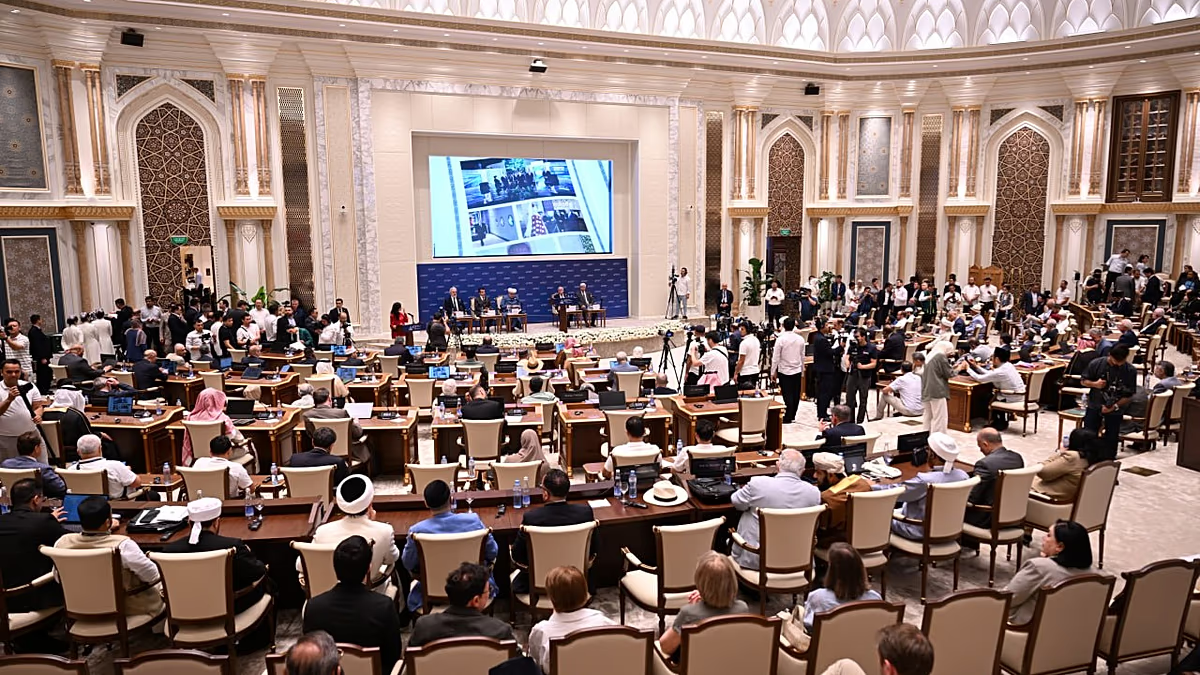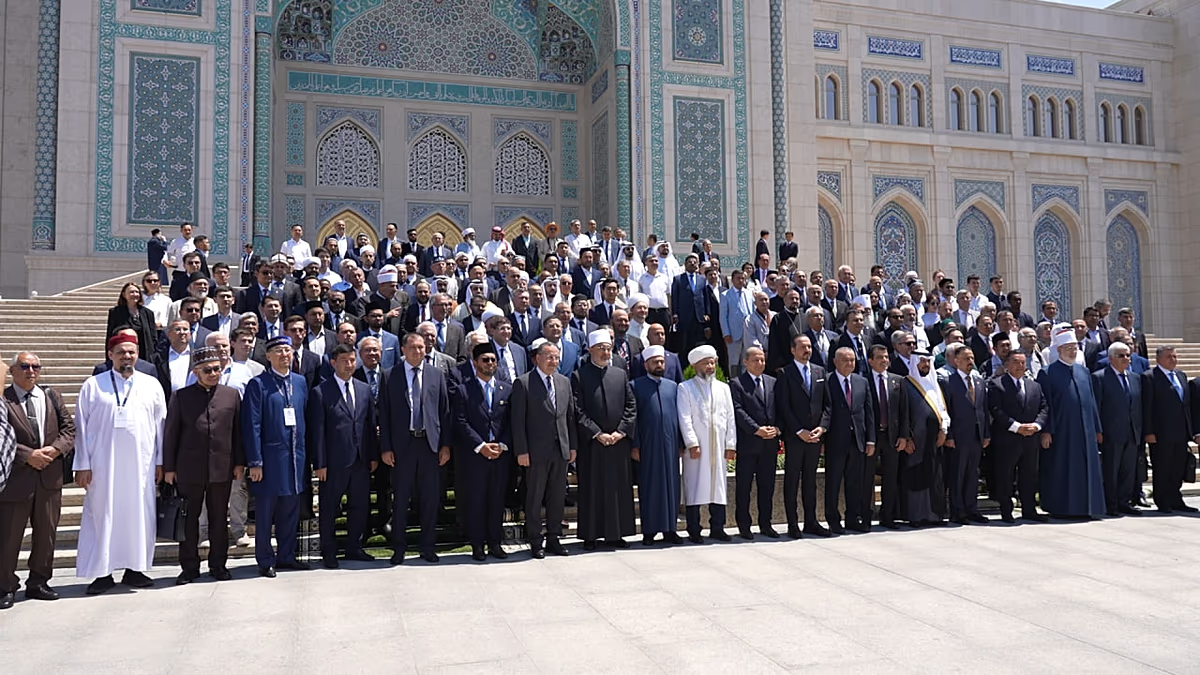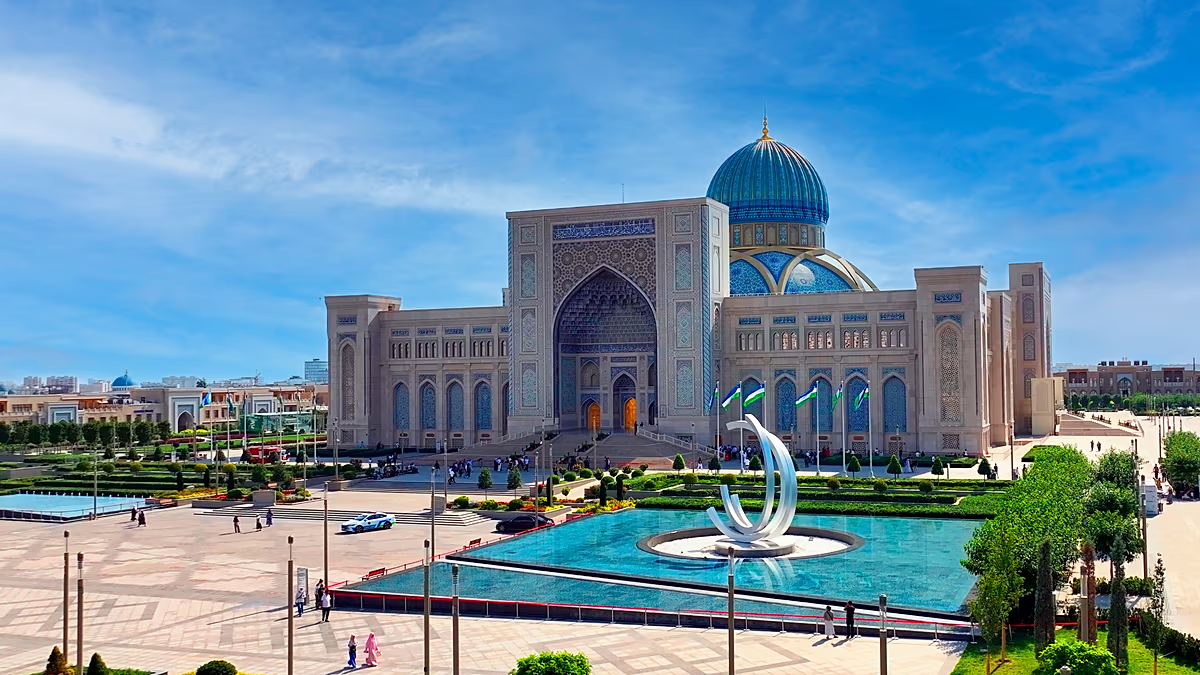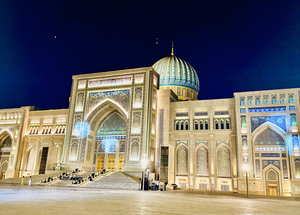
The Center of Islamic Civilization in Tashkent is illuminated at night, showing its turquoise dome, large arched entrances, Islamic patterns and calligraphy following the International Media Forum “Islamic Civilization: A New Perspective, New Discoveries” on Tuesday. (Sanjay Kumar/The Korea Herald) Tashkent’s Center of Islamic Civilization draws on centuries of Islamic scholarship to shape national identity and global influenceTASHKENT, Uzbekistan — Beneath a vast blue dome in the Uzbek capital, centuries of Islamic intellectual history are being recast as part of a modern national story at the Center of Islamic Civilization.At the new Center of Islamic Civilization, ancient manuscripts and the Uthman Quran sit alongside multimedia displays tracing Central Asia’s contributions to science, medicine and scholarship.But why is constitutionally secular Uzbekistan placing Islamic civilization at the heart of the “New Uzbekistan”?Tashkent is drawing on that heritage as part of a broader push to reclaim a pre-Soviet identity, inspire what the government calls a “Third Renaissance,” and reshape perceptions of Uzbekistan abroad.Uzbek officials cast the center as part of an effort to reclaim the country’s historical narrative after decades of Soviet rule.Sherzod Asadov, press secretary to Uzbek President Shavkat Mirziyoyev, said 35 years of independence had given Uzbekistan not only political and economic sovereignty, but also the ability to tell its own story internationally.“Our historical and spiritual heritage should not simply remain behind museum walls,” Asadov said, describing Islamic civilization as a legacy of “knowledge, enlightenment, intellectual thought and culture.”Muzaffar Komilov, adviser to the Administration of the President of Uzbekistan, pointed to scholars such as al-Khwarizmi, al-Biruni, Ibn Sina and Imam al-Bukhari as evidence of Central Asia’s historical contribution to civilization.A central task, he said, was “to counter ignorance through enlightenment.”The center seeks to challenge the familiar image of Central Asia as a mere crossroads on the Silk Road, highlighting instead a region that produced knowledge — from al-Khwarizmi’s algebra and algorithms to Ibn Sina’s medicine, al-Biruni’s science and Ulugh Beg’s astronomy. From left: Sherzod Asadov, press secretary to Uzbek President Shavkat Mirziyoyev; Euronews General and Editorial Director Claus Strunz; and Uzbek media scholar Beruniy Alimov speak with reporters following the International Media Forum “Islamic Civilization: A New Perspective, New Discoveries” at the Center of Islamic Civilization in Tashkent on Tuesday. (Sanjay Kumar/The Korea Herald) Reclaiming an interrupted pastThe project shows Uzbekistan’s continuing effort to reckon with its Soviet past, when restrictions on religious institutions reshaped the relationship between Islam, historical memory and public identity.Independence in 1991 presented a difficult question: How could a Muslim-majority country reclaim its Islamic inheritance while remaining a secular state?The center gives an answer.Uzbekistan remains constitutionally secular, but the center underlines Islam as a civilization of scholarship, science and culture allowing to embrace an Islamic intellectual legacy without casting religion as the foundation of the state.“For a long time, people did not know enough about Uzbekistan — sometimes even about Uzbekistan as a country,” Uzbek media scholar Beruniy Alimov told The Korea Herald stressing that effort could also help reshape perceptions of Uzbekistan left over from the Soviet era.But he also points that the center was not intended exclusively for Muslims.“Islamic civilization is not only about Islam as a religion,” he said.“Christians, Buddhists, Jews — everyone is welcome.”For Koreans, Alimov calls for closer exchanges between Uzbek and Korean journalists, saying Uzbekistan could draw lessons from South Korea’s global cultural reach while introducing Koreans to Central Asia’s lesser-known intellectual heritage.“Through understanding each other, we can learn more,” he said.Not Just ReligionEuronews General and Editorial Director Claus Strunz said a visit to the center had challenged some of his assumptions about Islamic history.“There are a lot of misunderstandings. The best thing to counter misunderstandings is information," Strunz told The Korea Herald.Meanwhile, British producer and social entrepreneur Ahmed Salim, founder of the educational initiative 1001 Inventions, said rediscovering Islamic civilization’s scientific contributions had changed his own sense of identity growing up in Britain.“We felt that we came from nothing. We didn’t have any history, anything to be proud of,” he said.Learning about algebra and scientific processes such as distillation changed that perception — and how his classmates viewed his heritage.“It achieved not only tolerance between myself and my peers, but appreciation,” Salim said.His experience underscores one of the center’s central messages: Islamic civilization is part of the shared history of science and knowledge, not simply a story of religion.Turning heritage into influenceMirziyoyev proposed the center in 2017 as part of his emphasis on education and enlightenment.After nearly eight years of development, it opened in March and had drawn about half a million visitors by June 1.By attracting international visitors, scholars and journalists, Uzbekistan is also using its historical legacy to raise its profile abroad.Uzbek officials have increasingly presented the country’s heritage as a diplomatic asset, linking the histories of Samarkand, Bukhara, Khiva and Termez to the image of a modernizing, outward-looking Uzbekistan.The government has framed the revival of Islamic heritage within Uzbekistan’s secular constitutional order, advocating scholarship, science and culture rather than religion alone.Under the “New Uzbekistan” vision, that heritage is being used to strengthen national identity at home and raise the country’s profile abroad.
Why ‘New Uzbekistan’ is looking to its Islamic past
TASHKENT, Uzbekistan — Beneath a vast blue dome in the Uzbek capital, centuries of Islamic intellectual history are being recast as part of a modern national st
846 words~4 min read