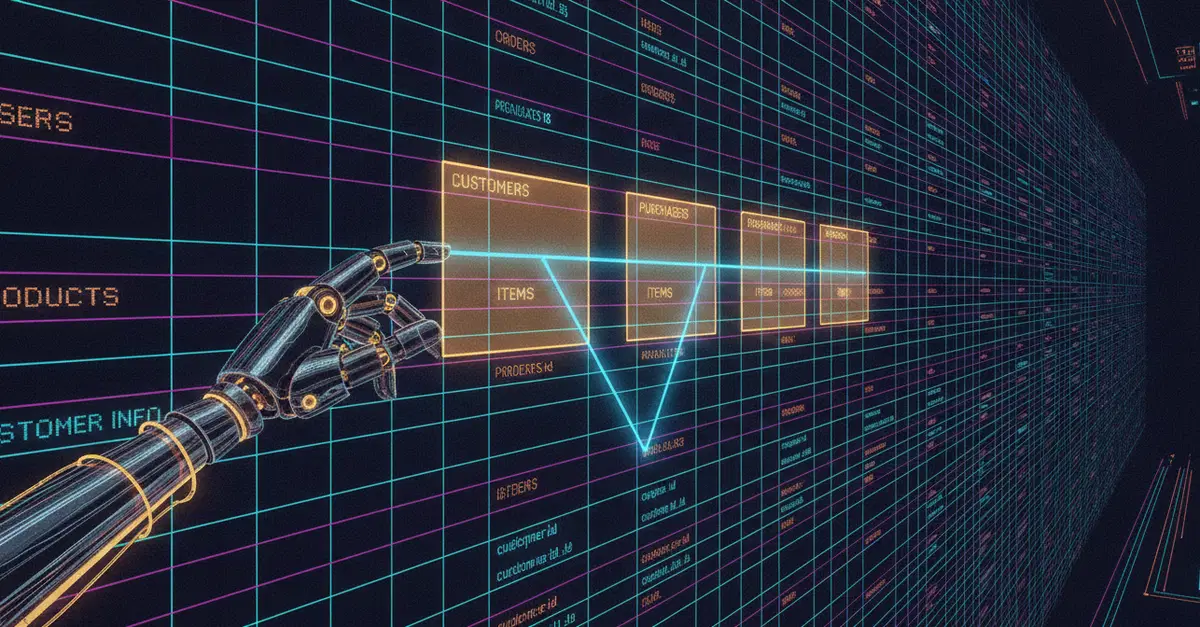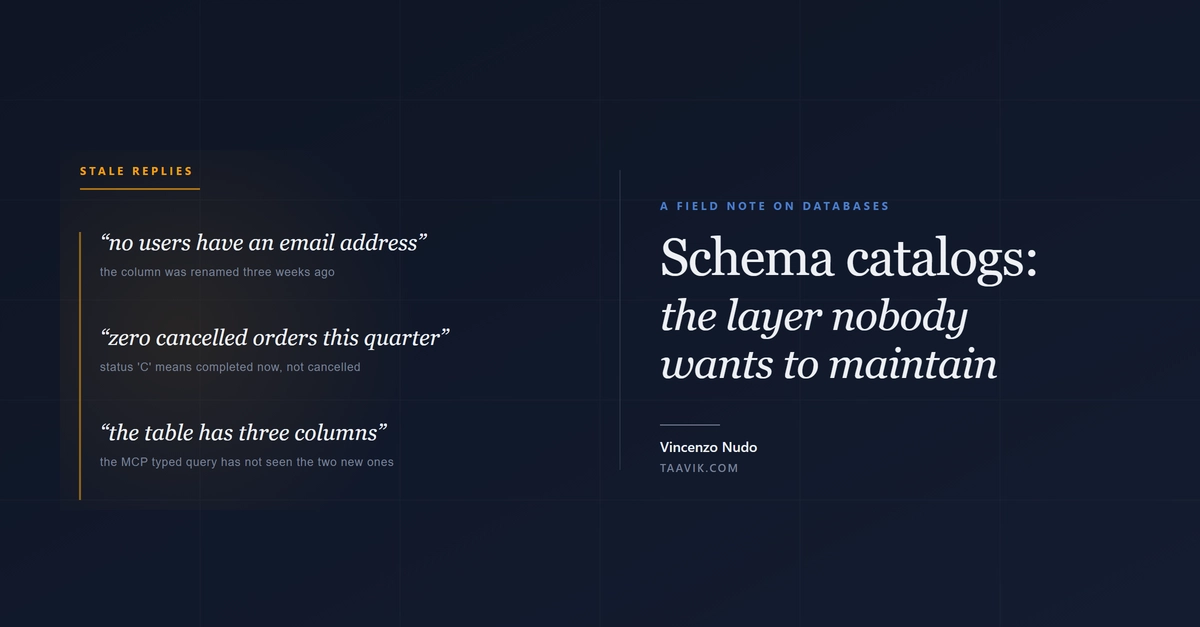
The schema catalog for an AI assistant is the artefact that answers the question "what does this database look like right now". Whether the database is Postgres, MySQL, SQL Server or Redshift, the shape of the problem is the same: the catalog carries table names, column names, types, keys, and enough relationships to let the assistant write a query that resolves. It lives somewhere between the database and the assistant, has to stay in sync with a database that changes underneath it, and is almost always built the same weekend the team decides they want an AI assistant reading their data. It runs fine for the first three tables. The problems start around the fourth week, and none of them look like the same problem twice.
The distinction worth naming early is between the connection layer (how the assistant reaches the database) and the knowledge layer (what the assistant knows about the database's shape). The connection layer receives most of the attention, because credentials, network isolation and query cost are visible failure modes and easy to argue about. The knowledge layer is where most of the actual quality of the assistant lives, and it decays quietly. The AI database context page covers why this second layer matters at all when the first one exists.