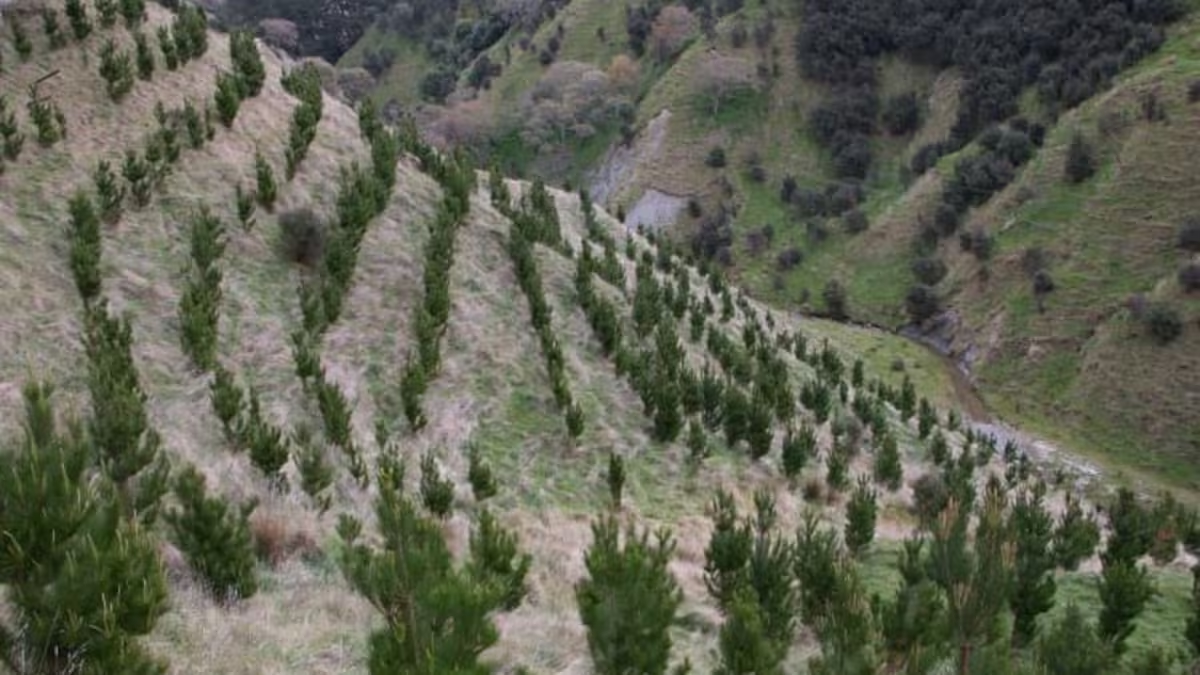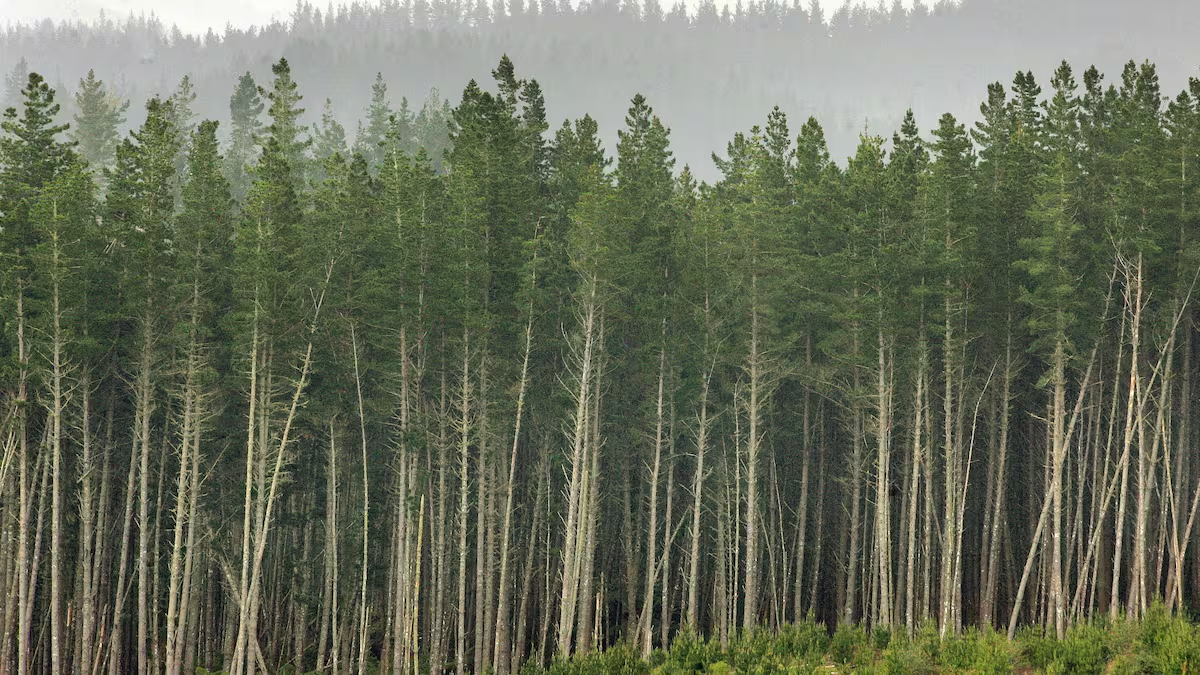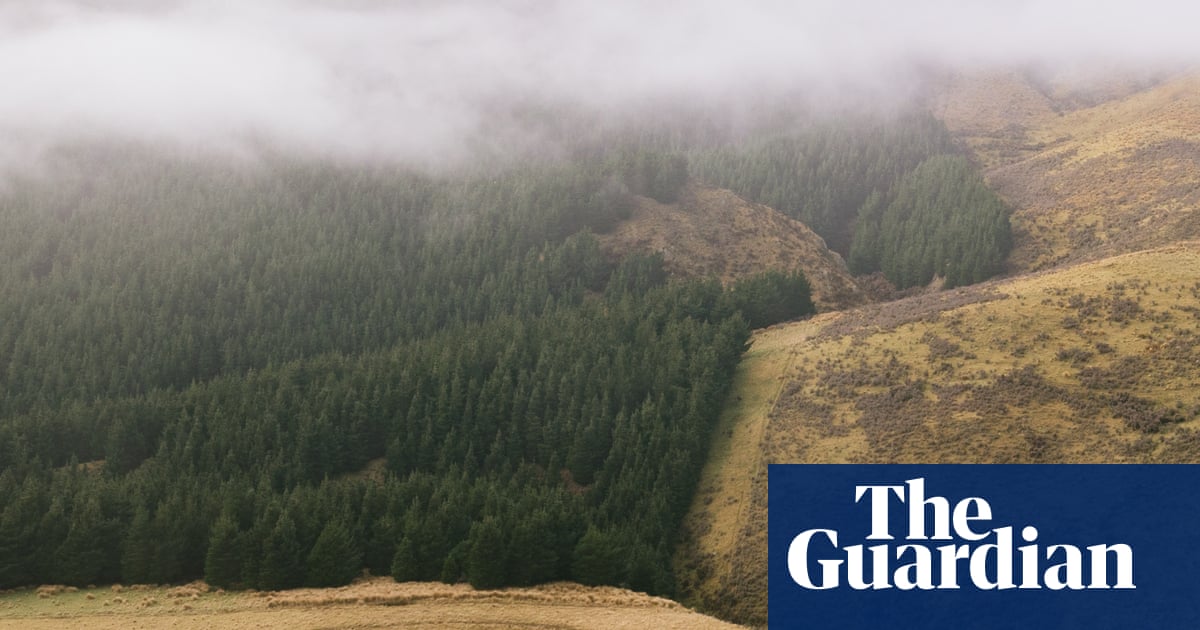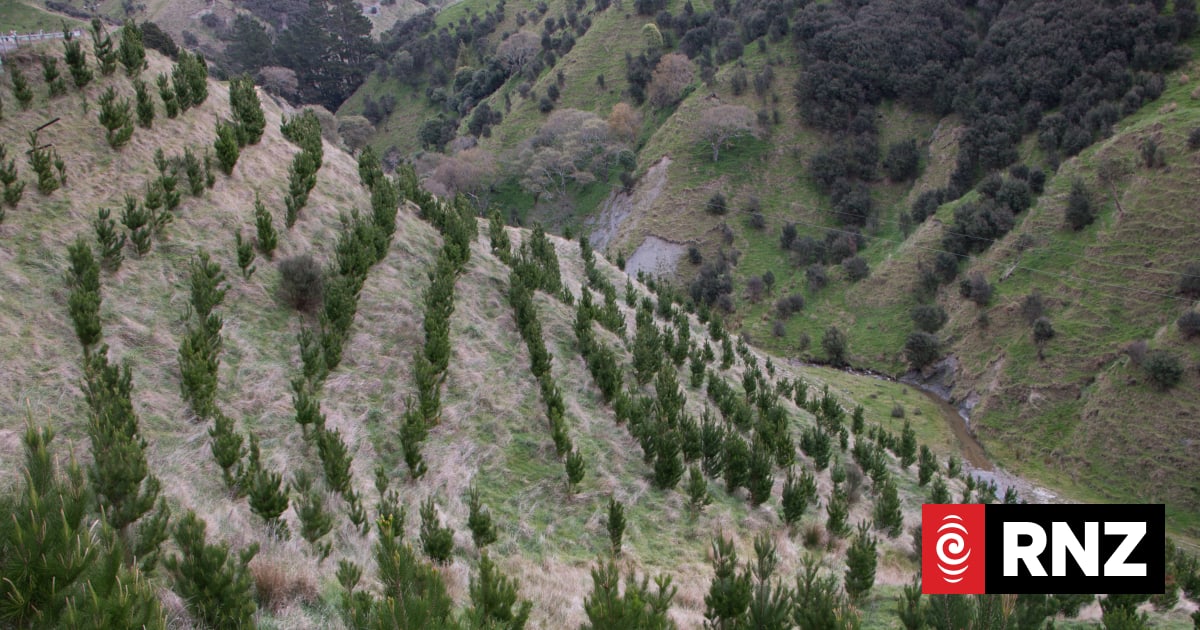
Forestry should be phased out of New Zealand's "rudderless" emissions trading scheme because it is allowing climate pollution to continue, the country's environmental watchdog says.Parliamentary Commissioner for the Environment Simon Upton is calling for the scheme to be overhauled, with a moratorium on allowing new forests to earn carbon credits in the meantime.The government has said the emissions trading scheme (ETS), which puts a price on each tonne of greenhouse gases, should be the main tool for driving down New Zealand's emissions.But in a report tabled today in Parliament, Upton said it had massively incentivised the planting of forests to offset carbon over the years, at the expense of real reductions in emissions."What we've done is incentivised a cheap way out," he told RNZ.The former architects of the scheme - including himself - "didn't think hard enough" about the long-term dangers of encouraging vast new plantations of highly flammable, storm-prone pine.Upton wrote of the "unease" he now felt talking to East Coast hill-country farmers watching land around them transformed into carbon forestry."I have listened to farmers wonder aloud about whether volunteer rural fire brigades will be there to defend unmanaged forests planted by distant owners on behalf of equally distant emitters."The report recommended a cross-party review and reform of the scheme, and, until that was done, also recommended pausing new forestry registrations in the scheme.The recommendations stopped short of removing forestry from the scheme completely, but Upton wrote that, in his view, it should be.Parliamentary Commissioner for the Enviornment Simon UptonVNP/Louis CollinsThe ETS, which launched in 2008, requires polluters to surrender one carbon credit - known as New Zealand Units - for each tonne of emissions they create in a year.They can pay for units through quarterly government auctions, or receive them for free if their business creates emissions that are difficult or expensive to reduce.New Zealand's ETS is unique in also allowing forestry owners to earn and sell units for carbon dioxide stored in trees, as long as the trees are re-planted after harvest or maintained as permanent forest.There is effectively no limit on forestry units that can enter the scheme, and so no hard cap on gross emissions.With forestry now contributing the vast majority of units in the system, the government had lost control of supply and demand - and therefore the carbon price, Upton said."The scheme is rudderless."Tree-planting a stop-gap - not a long-term solutionAdding forestry to the scheme had been designed to soak up carbon already in the atmosphere until lower-emission technologies like EVs and solar energy developed."Tree planting seemed an economical and responsible thing to do while we waited," the report said.Those technologies were now available, and getting cheaper all the time, "but their rollout has been slow, mostly because our attempts to price carbon through an ETS have been blunted by ongoing tree planting".Instead of emitting less, companies had simply taken advantage of relatively cheap forestry units to pay for their ongoing pollution."Allowing forestry into our ETS from its inception has enabled us to kick the can down the road."Until businesses started to cut their gross emissions, tree-planting would have to carry on to offset each new year of pollution - locking up ever more land that could not be converted back.And because the stored carbon only lasted as long as the trees remained, forests that had already been planted to offset past emissions would now need to be maintained "in perpetuity", either as rotational or permanent forest.An increasing proportion of New Zealand's pine plantations are now managed as permanent forestry - known as carbon farming.RNZ / Kate NewtonWildfire, severe weather, pests, disease and drought all threatened how permanently the carbon in those forests would be stored, the report said."If the risk ... was static, that would be one thing. But the risk posed by each of these threats is evolving with the warming climate."The "extraordinary fires" burning in Europe were a sign of what was to come, Upton told RNZ."We haven't seen it yet so badly in New Zealand, but ... our temperatures are going to rise. We're going to see a different world, which is going to put this sort of planting at risk."There was a huge financial liability to the Crown if permanent forest owners chose to walk away once the trees stopped growing and were no longer earning credits, or if their forests were repeatedly damaged."Forestry losses from adverse events will also have negative implications for New Zealand's ability to meet its emissions budgets and international targets if large amounts of sequestered carbon are re-emitted into the atmosphere."Aerial firefighters tackle wildfires in Gironde, France in July this year.Gauthier Bedrignans / AFPNo easy way outThe scheme had become increasingly complex over the years, and fixing it would also be complicated, the report said.Upton's chief advisor Matt Paterson said modelling they commissioned showed "tweaks and fiddling around the edges will not solve the problem".Keeping the scheme in its current form would do just enough to get New Zealand to its 2050 net-zero emissions target - probably ahead of schedule.However, net emissions would then start to rise again as the returns from tree planting diminished but the country was still producing greenhouse gases."A more major reform that potentially takes forestry out of the scheme would help drive the gross emissions reductions down," Paterson said.Upton said the scheme had been "fiddled" with almost from its inception."Everyone has taken part in the mistakes that have brought us to where we are, so it's not a party political issue."A review, and any resulting solution, also needed broad political consensus, he said."This can't be the plaything of whoever wins this year's next election and then changing again whoever wins the next one."The report was "not anti-forestry", Upton said."Without the use of forestry, we would have no chance of meeting current or future climate targets. But in my view, forestry's role should be outside the NZ ETS."There would be a long-term role for forestry to act as a carbon sink, to account for emissions created by agriculture, which is not covered by the ETS, and hard-to-abate industries like aviation, he said.The report says forestry still has a role to play as a carbon sink for industries not covered by the ETS - such as agriculture.RNZ / Kate NewtonBy phasing out or restricting forestry from the scheme, the government auctions - which have not cleared at all since 2024 - could once again become a more important source of credits, he said."If auctions cleared and the government had that income ... it could certainly afford to help Māori and other landowners with very, very steep land, which really needs to be recloaked in trees."Upton was "very sympathetic" to Māori landowners in particular."[They] will say with, I think, a real fairness, look, we've got some of the most marginal land - that's what we've been left with. This is the one thing we can do which can generate income."More recently, the government granted officials permission to start looking into new climate policies to help with a future shortfall in emissions savings."The ETS remains a major tool for meeting emissions budgets, but it is not expected to meet [them] on its own," officials wrote in a briefing.
Time to take forestry out of the emissions trading scheme - environment watchdog
Forestry should be phased out of New Zealand's "rudderless" emissions trading scheme because it is allowing climate pollution to continue, the country's environmental watchdog says.
1,196 words~5 min read