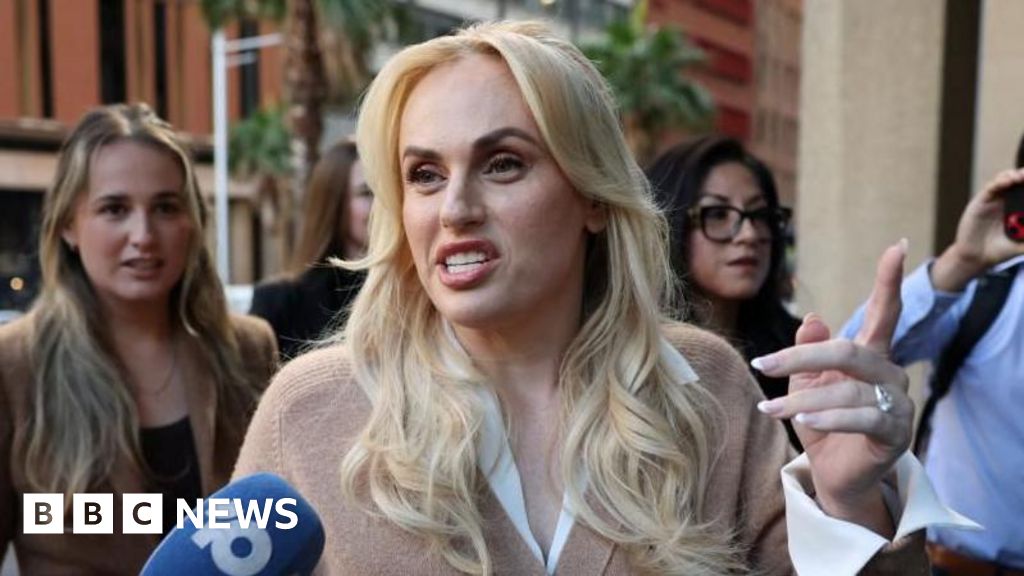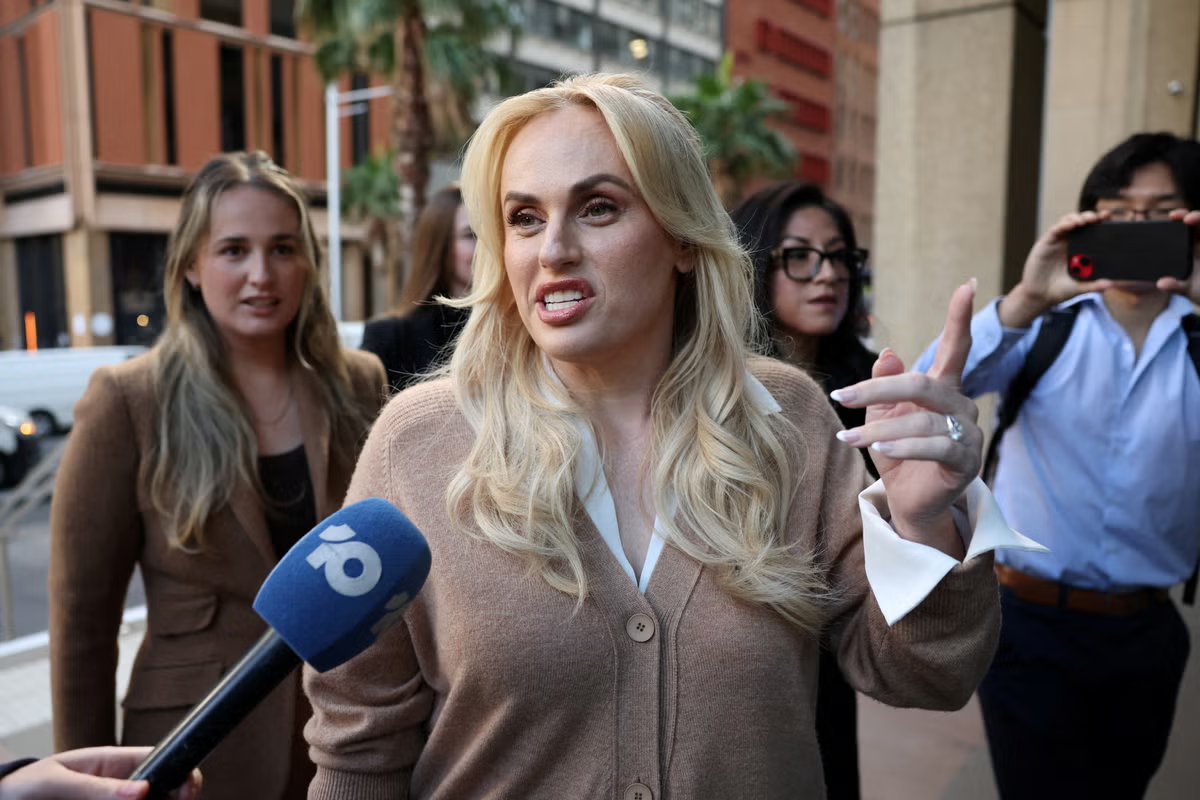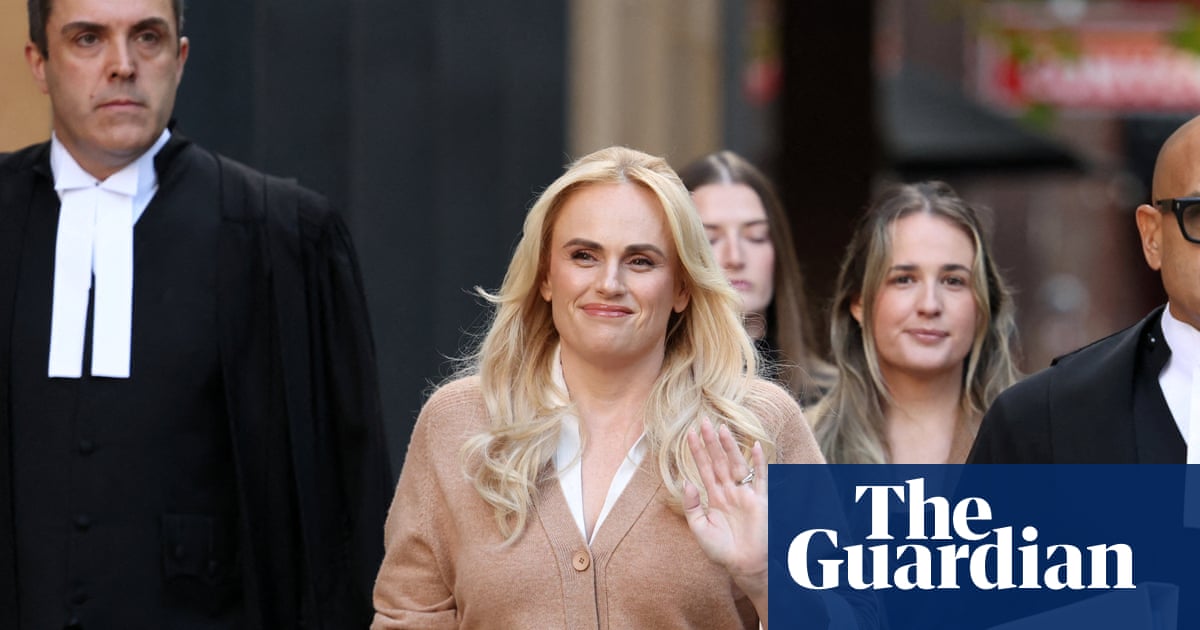
Debra KaminAugust 26, 2026 — 12:47pmFor two years, a Hollywood producer has been arguing in court that actor Rebel Wilson hired a team to destroy her reputation by spreading lies about her on the internet.New documents – obtained by lawyers for the producer, Amanda Ghost, and filed in the case in Los Angeles on Tuesday – appear to show that Wilson ordered and paid for the creation of anonymous websites that disparaged Ghost. According to the documents, Wilson used the same professionals who Blake Lively alleged directed Justin Baldoni’s online campaign against her.Rebel Wilson outside the Federal Court in Sydney in April.Sitthixay DitthavongAllyson Thompson, a lawyer for Wilson, called Tuesday’s motion “one-sided and thus incomplete.” She added, “There are two sides to every story, and Ms Wilson looks forward to telling her side at the trial in this disputed matter.”Wilson, a comedic actor, solidified her slapstick brand of humour in films such as Bridesmaids and Pitch Perfect. Ghost, a successful producer and the Grammy-nominated songwriter behind hits like Beyoncé and Shakira’s Beautiful Liar and James Blunt’s You’re Beautiful, was one of the producers of Australian film The Deb, Wilson’s directorial debut.During the rollout of the film in July 2024, it was clear there had been conflict on set.Wilson took to Instagram and told her nearly 11 million followers that Ghost and the other producers had embezzled funds and were trying to block the film’s debut at the Toronto Film Festival.Producer Amanda Ghost, at the Federal Court in Sydney in April. Her lawyers have filed new documents in a separate case in Los Angeles on Tuesday.Sam MooyGhost sued her, claiming that Wilson was defaming her because she did not grant Wilson screenwriting and songwriting credits on the film. Wilson countersued, accusing Ghost and other producers of embezzlement, breach of contract and sexual misconduct.At the height of their public spat, a website surfaced that disparaged Ghost, who has Spanish and Indian heritage. The website called her “the Indian Ghislaine Maxwell” and a “con artist, a thief and a pimp” who worked “procuring young women for the pleasure of the extremely wealthy”.After the website appeared in August 2024, social media posts and comments in online forums about Ghost shifted, her lawyer, Camille Vasquez, said. Her achievements were buried and, instead, the sex-trafficking accusations and offensive descriptions became the focus, Vasquez said.A second website contained the same language, and links had been emailed to people close to Ghost, Vasquez said. References to the sites were posted “thousands of times on social media,” Ghost claims in her lawsuit, in “a targeted campaign” that was “openly defamatory and clearly calculated to cause harm.”Wilson presented the same websites as evidence in her counterclaim to that lawsuit, using them in an attempt to show that Ghost had brought bad publicity upon herself.“Amanda Ghost has accumulated numerous enemies over the years. In fact, a website has emerged that exposes some of her darker dealings,” the counterclaim reads. “Despite countless individuals alleging that Ghost has devastated their lives, she now shifts the blame onto Wilson, ignoring the long list of adversaries she has made throughout her career.”The new documents filed Tuesday, including text messages and an email, allege that those websites were created at Wilson’s direction and with the knowledge of her lawyer, Bryan Freedman. The documents, filed as part of a motion requesting additional discovery, are the most recent development in the saga surrounding The Deb.Ghost’s lawsuit is scheduled to head to trial in Los Angeles in January, and will follow the Australian trial of Charlotte MacInnes, an actor who stars in the film and separately accused Wilson of defamation.Around the same time the websites against Ghost appeared, posts by Wilson on social media accused Ghost of pressuring MacInnes into taking a bath with Wilson during filming of The Deb. Both MacInnes and Ghost dispute her account.MacInnes lost her case on July 22, with the judge ruling that Wilson’s posts did not reach the bar of defamation; she filed a notice to appeal the following day.Ghost said in a statement Tuesday that the websites had taken a toll on her professionally and personally. “The smear campaign was designed to destroy my reputation and my career,” she said.According to Ghost’s lawsuit, Wilson relied on the assistance of Freedman; Melissa Nathan, a publicist; and Jed Wallace, a digital strategist. While Ghost has sued only Nathan, her lawsuit mentions Wallace and Freedman by name. The materials included in Tuesday’s filing further claim that all three were aware of the websites and played a role in their creation.All three are linked to Lively’s case, as well: Freedman is Baldoni’s lawyer and has been an outspoken critic of Lively on podcasts and digital talk shows for the last two years; Nathan led Baldoni’s public relations campaign after Lively accused him of sexual harassment, and later retaliation, in 2024. Wallace, a digital strategist, is described in text messages, depositions and legal filings as playing a key role in alleged efforts to damage Lively’s reputation.Baldoni, Wallace and Nathan denied Lively’s allegations. Her lawsuit was settled in May, just a few days before it was set to go to trial. Wallace separately sued Lively for defamation in Texas; a judge dismissed his claims, and he is appealing.The New York Times was first to publish an article about Lively’s allegations of sexual harassment in December 2024, and Nathan and Baldoni sued the Times for defamation over its coverage. A judge in federal court in New York City dismissed that case. The Times also successfully sued Wayfarer, Baldoni’s studio, for legal fees.Before Lively settled her case, discovery materials revealed that other high-profile clients had also sought Nathan’s assistance in flipping the narrative on negative publicity. Wilson is among them; others include Robert F. Kennedy, Jr. and Oren, Tal and Alon Alexander, the wealthy brothers convicted of sex trafficking in March.In the messages to Wilson that were submitted in the motion, Nathan, her publicist, walks her through how a disparaging website would unfold and how much it would cost. “We have full text for the website,” she wrote in a note a few weeks before the first site about Ghost went live in August 2024. “Your business manager has already sorted this with Bryan’s office,” she wrote, an apparent reference to Freedman, who represents Wilson. She explained that the “untraceable site” and a “full algorithmic push across all platforms” will cost “110USD,” which most likely meant $110,000.Within a week, Nathan received an email from Katie Case, an employee at her publicity firm. Wallace is copied.“Let me know if this works better :)” Case wrote at the top of email, which is attached as an exhibit in the motion and whose subject was “Draft for your review.” The email then contained the same paragraphs of disparaging language that would be posted on the websites.Contacted by The New York Times, Nathan and Freedman did not provide a direct response to questions about the new documents. Wallace did not respond to a request for comment.Ghost will use the email and text messages, as well as a voice recording from Wallace first reported by The Hollywood Reporter, to argue that Freedman, Nathan and Wallace apparently worked in tandem to carve a new lane in the field of crisis management, the motion shows. The approach goes beyond defending their clients to flipping accusations entirely through manipulating a person’s profile on the internet.In that recording, which was provided to the Times, Wallace leaves a voice note for Nathan describing his plan for the website that would target Ghost.“We need to create a path where we expose Amanda Ghost … as like the new Heidi Fleiss … we can’t just do like, oh, she’s a bitch, she sucks. It’s like, it’s got to be really, really heavy,” he says.Court filings also show that Nathan emailed a Word document, amandaghostwebsite.docx, to another executive at her company with the message, “Rebel wants a [sic] one of those sites.”Ghost and her husband, producer Gregor Cameron, are parents to a 19-year-old daughter and a 14-year-old son. Cameron was also a producer on The Deb, and although he does not appear to have been the target of any websites, he too was named in Wilson’s Instagram post and accused of embezzlement and bullying. He is also a plaintiff in Ghost’s lawsuit.“Being targeted publicly like this is terrifying,” Ghost said.The New York TimesStart the day with a summary of the day’s most important and interesting stories, analysis and insights. Sign up for our Morning Edition newsletter.From our partners
‘Rebel wants one of those’: Court documents suggest Wilson ordered websites attacking producer
New documents filed on Tuesday in a Los Angeles court appear to show the Australian actress was heavily involved in disparaging Amanda Ghost, a producer on her movie, The Deb.
1,415 words~6 min read