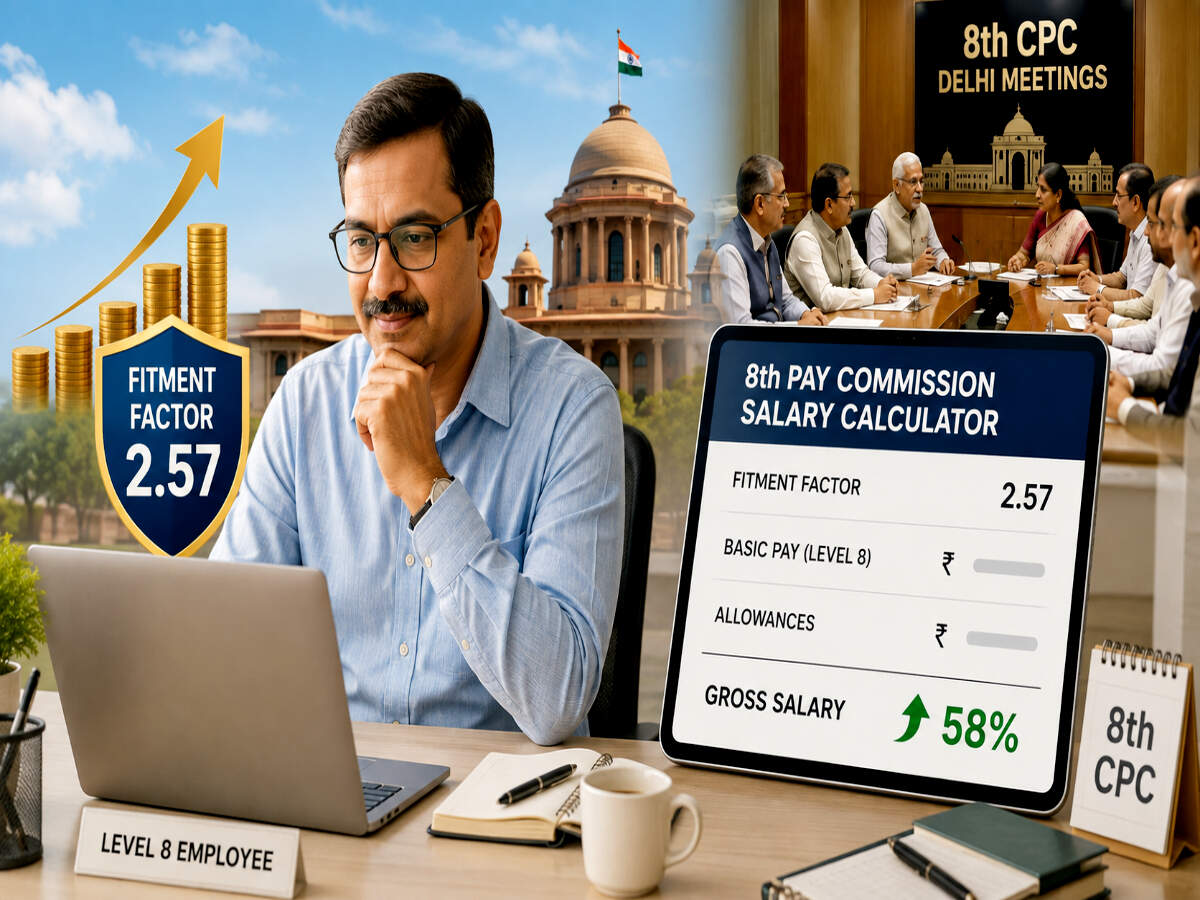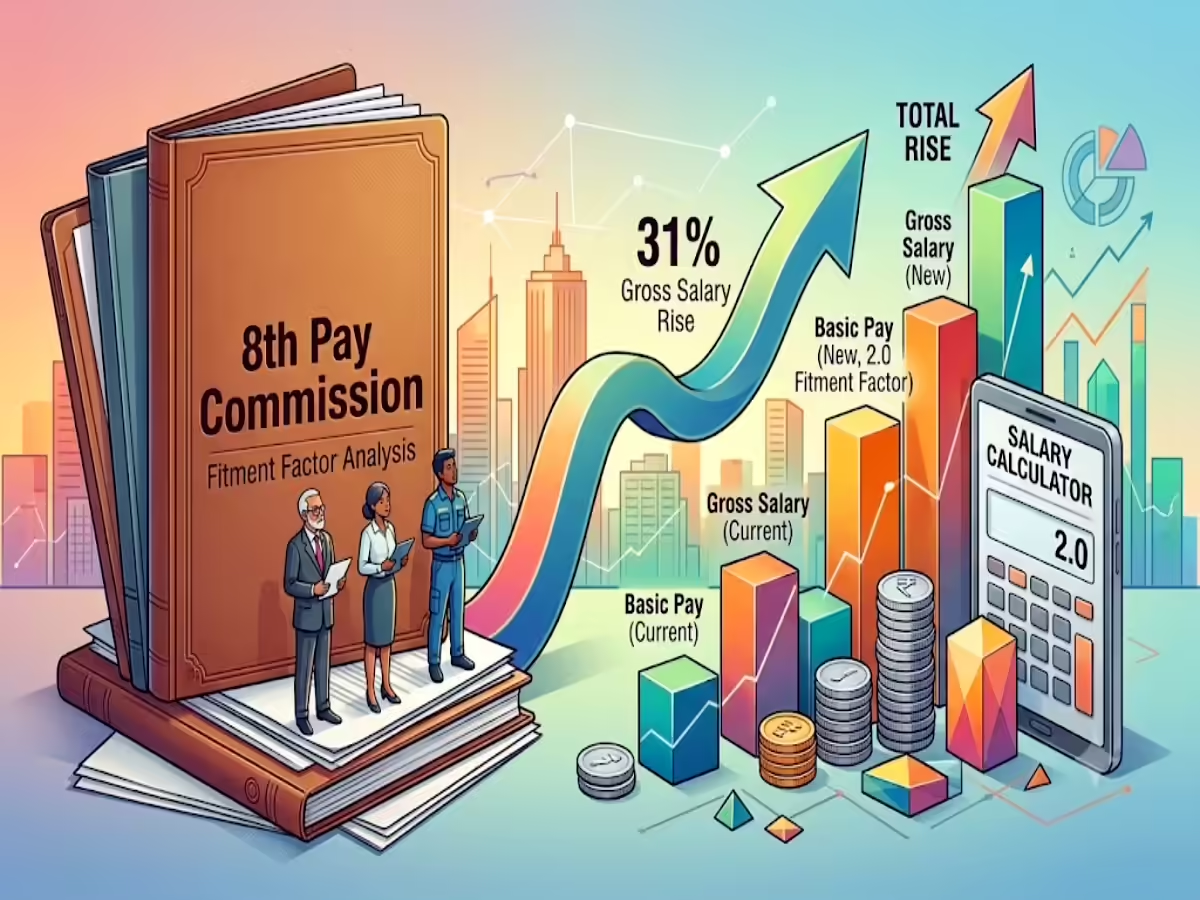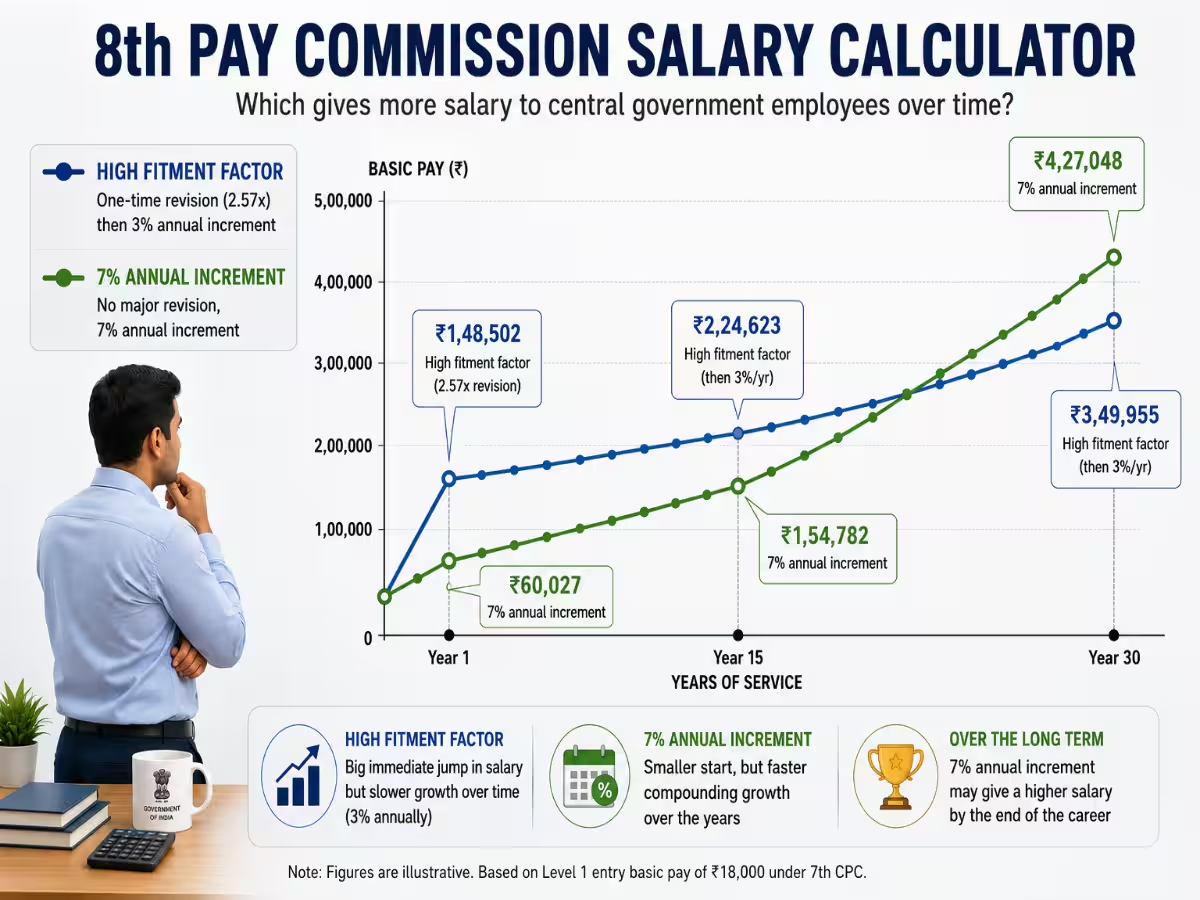
Synopsis8th Pay Commission salary hike: Employee organisations are pushing for larger annual salary increments in the 8th Pay Commission. They argue this approach would lessen dependence on a high fitment factor. Current projections show that a fitment factor can yield a notable immediate pay rise, whereas higher annual increments take years to achieve similar benefits. Consequently, a blend of both strategies may be most advantageous for workers.ET Online8th Pay Commission latest newsSome employee organisations such as All India New Pension Scheme Employees’ Federation (AINPSEF) have recommended a 7% annual increment for the central government from the 8th Pay Commission. Others like the National Council of the Joint Consultative Machinery (NC-JCM), All India Defence Employees' Federation (AIDEF) and the Federation of National Postal Organisations (FNPO) have recommended a 6% annual increment each. Their rationale behind it is that a higher increment rate will reduce the dependency on a high fitment factor in pay commissions and employees won’t have to wait for 10 years for a substantial salary raise.They argue that the annual increment under the 7th Pay Commission is 3%, which doesn’t help employees at low levels get much of a hike every year. A high annual increment rate will remove this anomaly as the basic pay of employees will be double within a 10-year timeframe, the AINSPEF says.Employee bodies’ recommendations for annual increment from 8th Pay Commission Organisation Proposed annual increment National Council of the Joint Consultative Machinery (NC-JCM) 6% All India Defence Employees' Federation (AIDEF) 6% Federation of National Postal Organisations (FNPO) 6% All India New Pension Scheme Employees Federation (AINPSEF) 7% Indian Railways' Technical Supervisors' Association (IRTSA) 5% Source: Official memorandums submitted to 8th Pay CommissionBut can a high annual increment rate suffice, or do employees still need a push from a fitment factor? Ramachandran Krishnamoorthy, associate partner, managed services, BDO India, says a one-time revision (fitment factor) front-loads a huge jump immediately, and even a much higher ongoing annual increment takes many years to catch up on cumulative earnings, if it ever does at plausible rates.Krishnamoorthy presents the case of a Level 10 employee (basic pay Rs 56,100) and compares two paths: a one-time fitment revision (like the 2.57x scenario) followed by normal 3% annual increments, versus staying on the old scale but with a permanently higher annual increment rate.His projections show it may take decades before a higher increment rate overtakes the salaries supplemented with a high fitment factor and a 3% annual increment rate. Path Year 1 basic Year 15 basic Year 30 basic One-time 2.57x revision, then 3%/yr ₹ 1,48,502 ₹ 2,24,623 ₹ 3,49,955 No revision, 5%/yr increment ₹ 58,905 ₹ 1,16,628 ₹ 2,42,461 No revision, 7%/yr increment ₹ 60,027 ₹ 1,54,782 ₹ 4,27,048 No revision, 10%/yr increment ₹ 61,710 ₹ 2,34,344 ₹ 9,78,911 Key takeaways from projections (As per Krishnamoorthy)-• A one-time revision wins decisively in the short-to-medium term (first 10–20 years of a career), because it resets the base immediately — you don't have to wait for compounding to build up.• A much higher increment (10%+, vs the current 3%) can eventually overtake a one-time revision in cumulative terms, but only after roughly 20–25 years, and only if that elevated rate is sustained the whole time — which historically doesn't happen (increments have hovered around 3% since the 6th CPC).• In practice, the two aren't really substitutes: pay commissions bundle both — a one-time fitment jump plus the normal annual increment continuing on top of the new higher base.From projections, what we see is that a high increment rate can help employees’ salaries keep pace with rising expenses, but it can work best when supplemented by a fitment factor. (Join our ETWealth WhatsApp channel for all the latest updates)...more
8th Pay Commission: 7% annual increment vs high fitment factor? Which may give moresalary to central government employees? - The Economic Times
8th Pay Commission salary hike: Employee organisations are pushing for larger annual salary increments in the 8th Pay Commission. They argue this approach would lessen dependence on a high fitment factor. Current projections show that a fitment factor can yield a notable immediate pay rise, whereas higher annual increments take years to achieve similar benefits. Consequently, a blend of both strategies may be most advantageous for workers.
617 words~3 min read