Support CleanTechnica's work through a Substack subscription, on Patreon, or on Stripe. Help us produce all of the high-quality, original content we publish week after week despite the challenges of content-scraping AI, antisocial media, inflation, and other hurdles.
Americans don’t think about grid reliability. They flip the light switch, open the refrigerator, turn up the AC, and expect the power to be there. But as electricity demand surges from data centers, advanced manufacturing, and extreme summer heat, keeping the lights on requires a grid that can deliver power exactly when it’s needed.
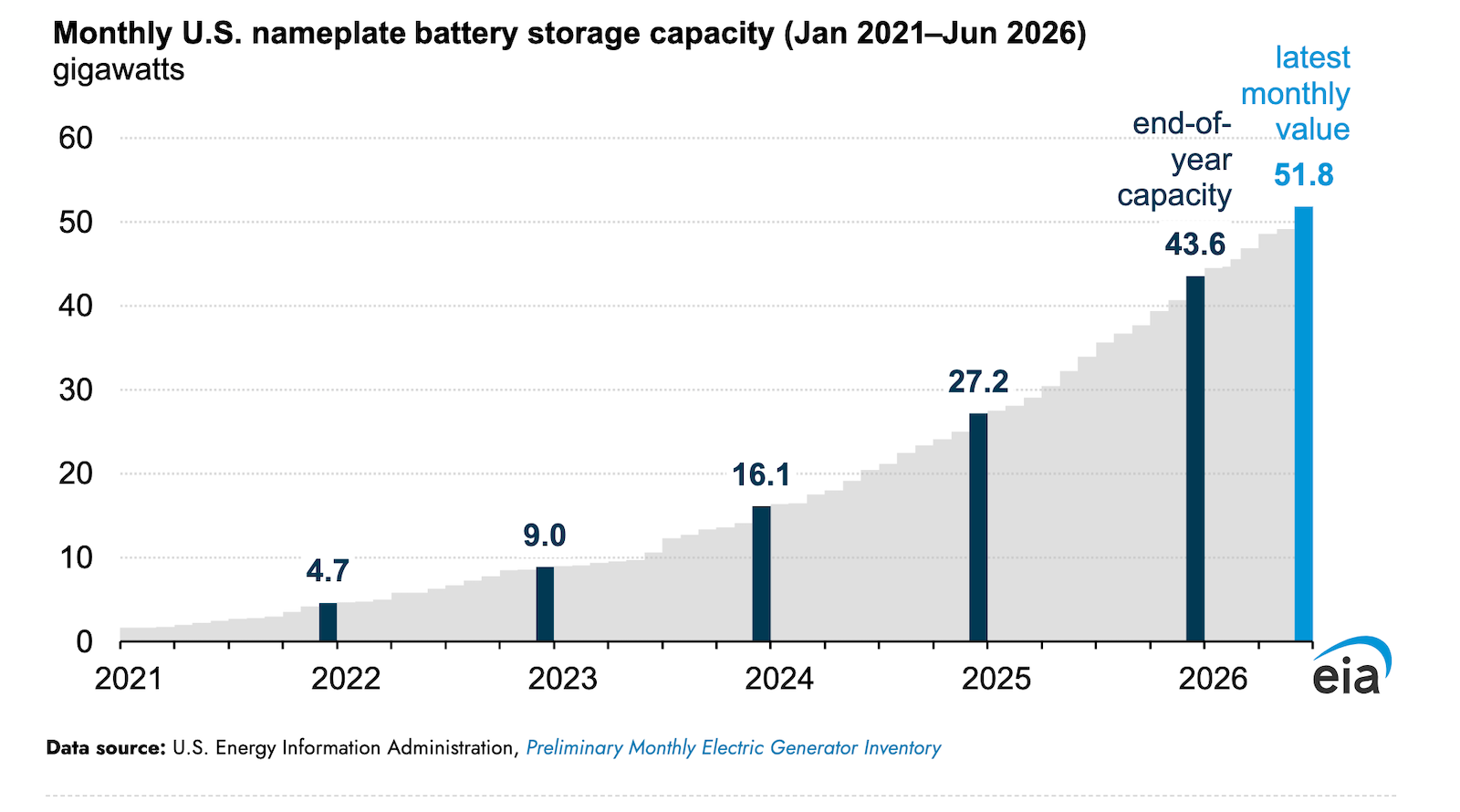
That’s where energy storage comes in. Energy storage allows grid operators to store energy when it is cheap and abundant, then dispatch it when demand increases to help reduce price spikes. The market for this technology is soaring. In 2020, there were 6,000 megawatt-hours (MWh) of energy storage capacity installed in the U.S. Today, the sector has eclipsed 175,000 MWh, enough to power over 5 million homes for a full day on just a single charge.
States across the country are taking notice and adjusting their energy strategies accordingly. From California to Massachusetts, policymakers are making energy storage a central part of their plans to build a more reliable grid. Since 2010, 13 states have enacted policies to build out their energy storage capacity, and some have already outperformed their own benchmarks.