When you want to use an LLM for a personal project or a prototype, the first obstacle usually isn't technical — it's registering payment information. You just want to try something out, but you're asked for a credit card; you'd rather not put it on the company card; you're nervous that usage-based billing will blow up on you. It's a shame to stall out for reasons like that.
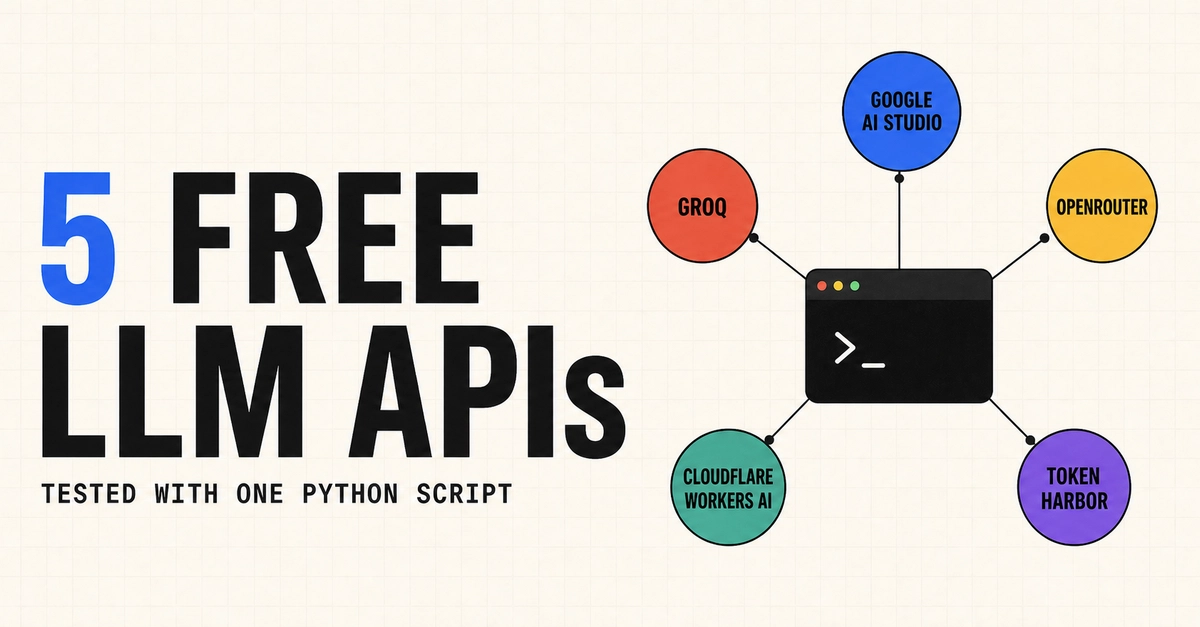
Fortunately, as of 2026, LLM APIs with free tiers that require no credit card are no longer rare. But if you stop at "apparently there's a free tier," the moment you actually run something you'll get smacked with 429 Too Many Requests and that's the end of it. This article covers how to read rate limits and how to design a fallback across multiple providers, so you can use free tiers in a way that holds up in real use.
A realistic sense of how far a free tier gets you
Let me give the conclusion up front: for personal experiments, prototypes, and internal tools, free tiers alone are plenty. On the other hand, supporting the backend of a publicly available service on free tiers alone isn't realistic. A free tier isn't a "cheap plan" — it's a favor that can change without notice.
With that premise in place, here's what free tiers are well suited for: