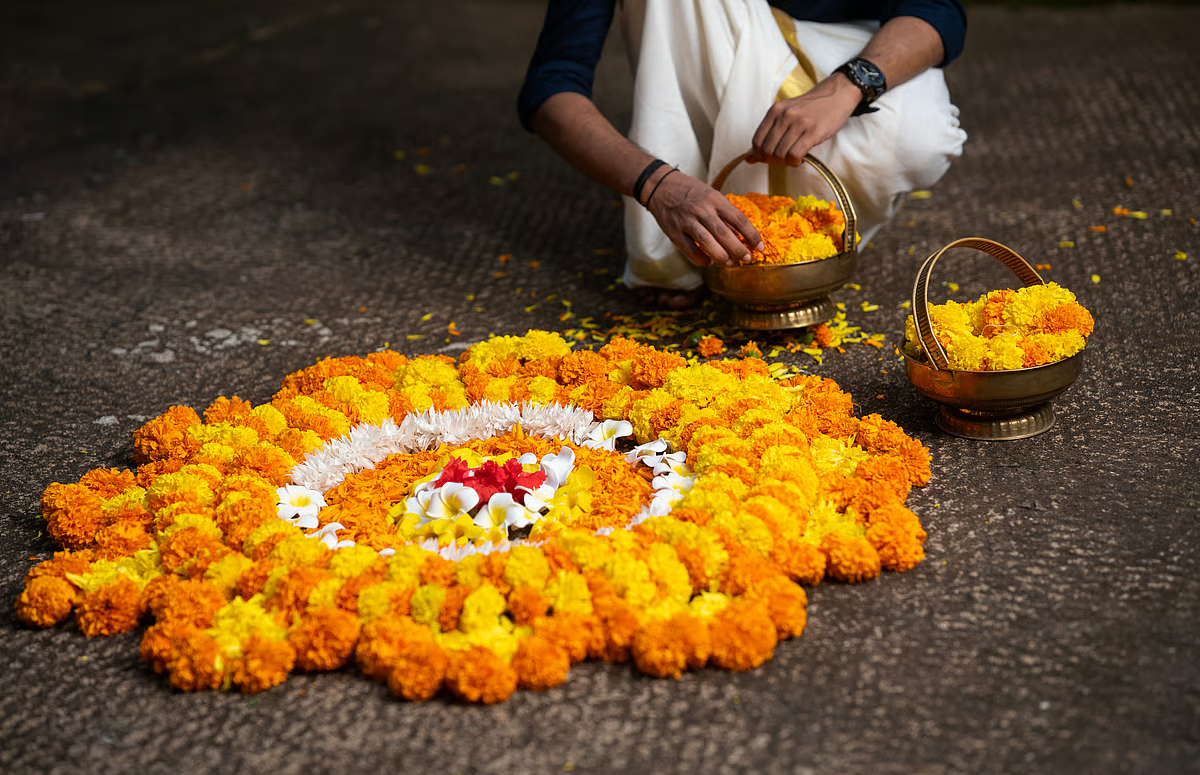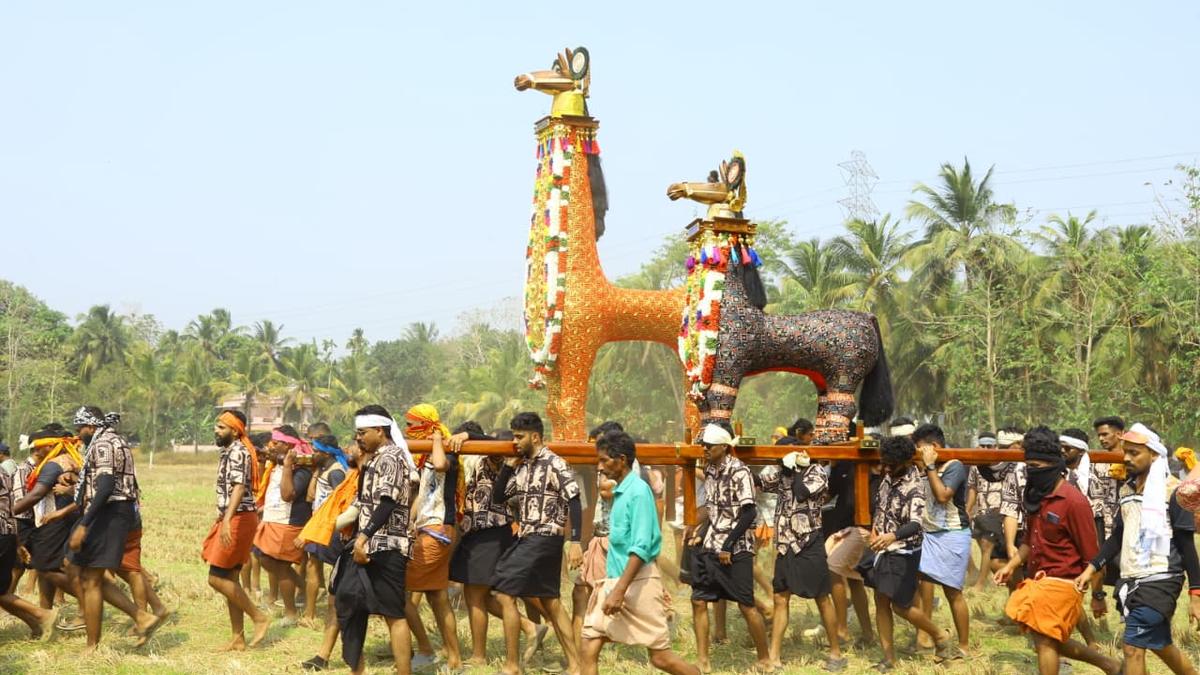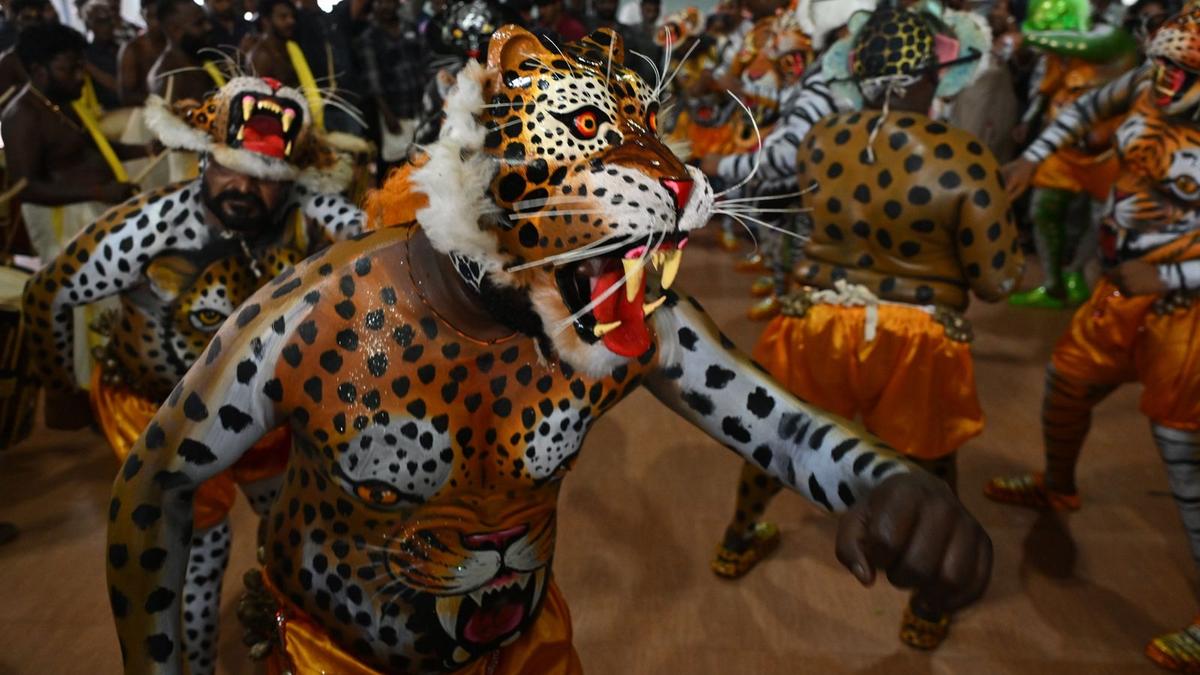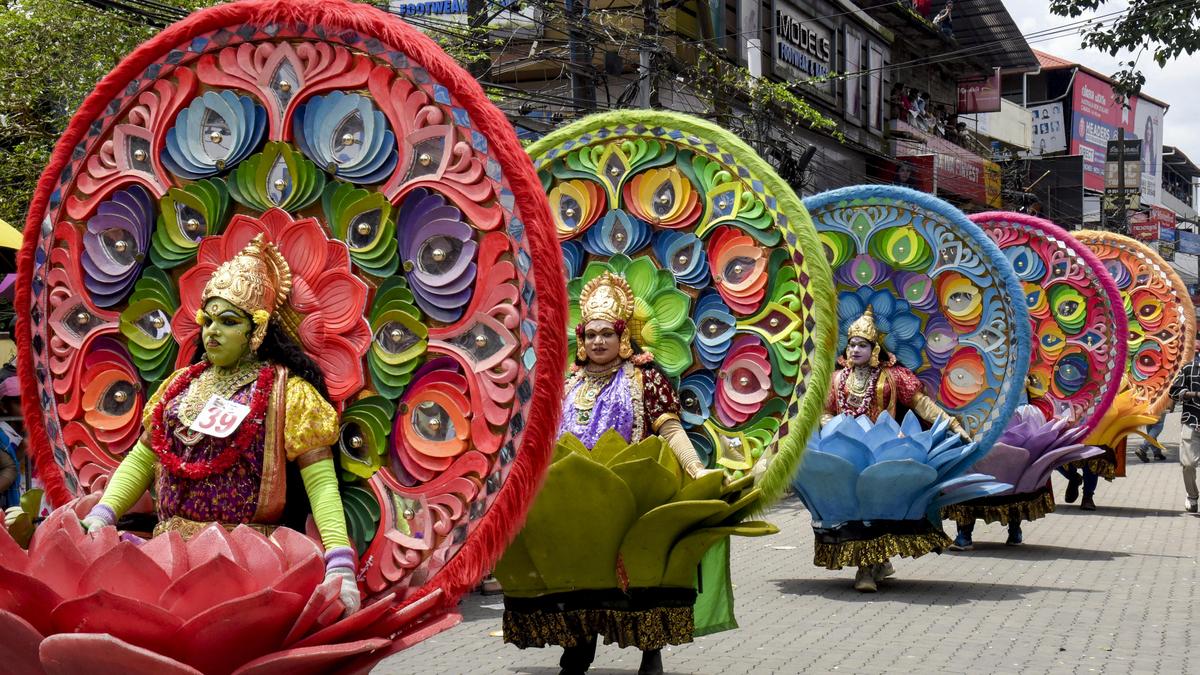
Onam in Thrissur is not complete until the Kummattis step onto the streets.As the festival season gathers momentum, the city is preparing for the arrival of these colourful, masked dancers who bring with them a distinctive blend of folklore, mythology, and sheer street revelry. From Uthradam to Chathayam, Kummattikali will unfold across Thrissur, with around 50 teams expected to take part this year.At the heart of the festivities is Kizhakkumpattukara, regarded as the cradle of Kummattikali in Thrissur. The area is already slipping into festival mode, with neighbourhood clubs preparing elaborate ‘kalams’ to welcome the Kummattis. Rice flour mixed with natural colours is traditionally used to create vibrant images of gods, goddesses and mythological characters, adding another layer of colour to the celebrations.The first thing that catches the eye is the striking wooden mask.Shiva, Ganesha, Hanuman, Kali, Kiratha, Kattalan and a host of other mythological and comic characters come alive through intricately carved and brightly painted masks. Animal faces and other imaginative characters also find a place in the colourful procession. The familiar figure of an elderly woman, carrying a stick, is traditionally seen guiding and controlling the group.The Kizhakkumpattukara team’s masks have an especially long history, with some believed to be around 80 years old.The masks were once made from areca-palm sheaths. Over time, lightweight wood became the preferred material, allowing craftsmen to carve faces with greater detail and character.The Kummatti’s body is covered in a distinctive costume made by weaving and tying parpadaka grass, known locally as Kummattippullu, with rope and vines. The earthy smell of the grass, the elaborate masks and the pounding rhythm of traditional drums create a sensory experience that is unmistakably Thrissur.Then the dancers take over. With rhythmic steps, drumbeats and cries from the crowd, the Kummattis move through the streets and visit homes. Children and elders alike join the celebration, turning neighbourhoods into spontaneous festival grounds.Kummattikali is steeped in mythology, although several legends surround its origins.One popular belief links the tradition to the bhoothaganas—the attendants of Lord Shiva. According to the legend, Shiva and Parvati, appearing in the guise of a hunter couple, set out to visit their devotees, accompanied by Shiva’s attendants. Another tradition connects the Kummatti figure with Shiva appearing as a hunter to test Arjuna’s warrior skills.The performances keep these stories alive while giving them a distinctly local flavour.The songs accompanying Kummattikali draw from mythology as well as local folk traditions. Stories such as the battle between Kali and Darika and Hanuman’s burning of Lanka find expression through the performances, alongside popular folk songs associated with Onam.It is this easy mix of the sacred, the theatrical and the humorous that gives Kummattikali its special character.When dozens of Kummattis, dressed in grass and wearing vividly painted masks, dance to the beat of drums while residents pour into the streets, the boundary between performer and spectator almost disappears.For a city known for its Pooram and Pulikali, Onam has another unmistakable sound—the beat that announces the arrival of the Kummattis. Published - August 26, 2026 07:00 am IST
Masks, music and myth: Kummattis return for Onam
Experience the vibrant Kummattis of Thrissur, blending folklore, festive tradition, and lively performances during Onam celebrations.
505 words~2 min read