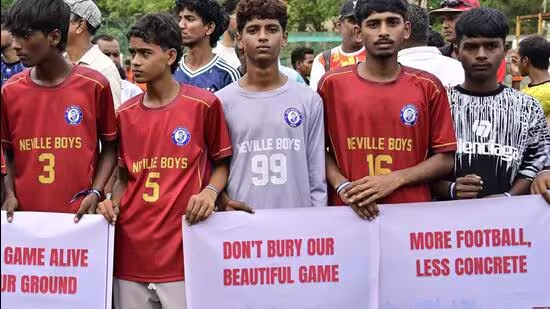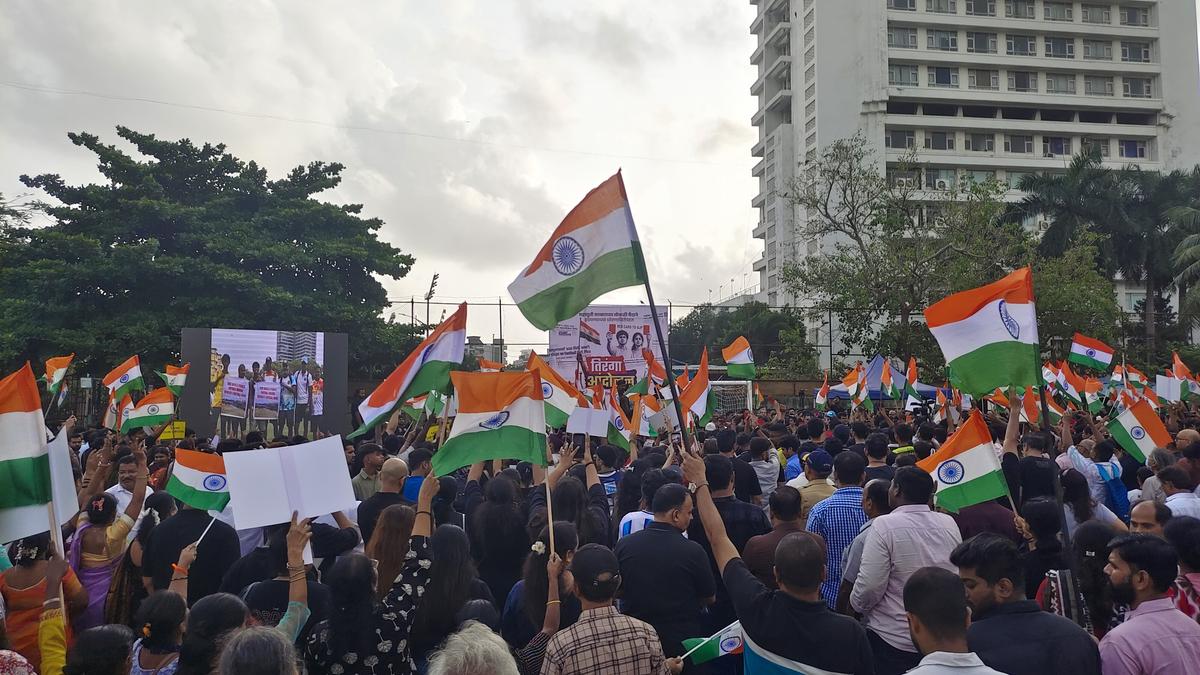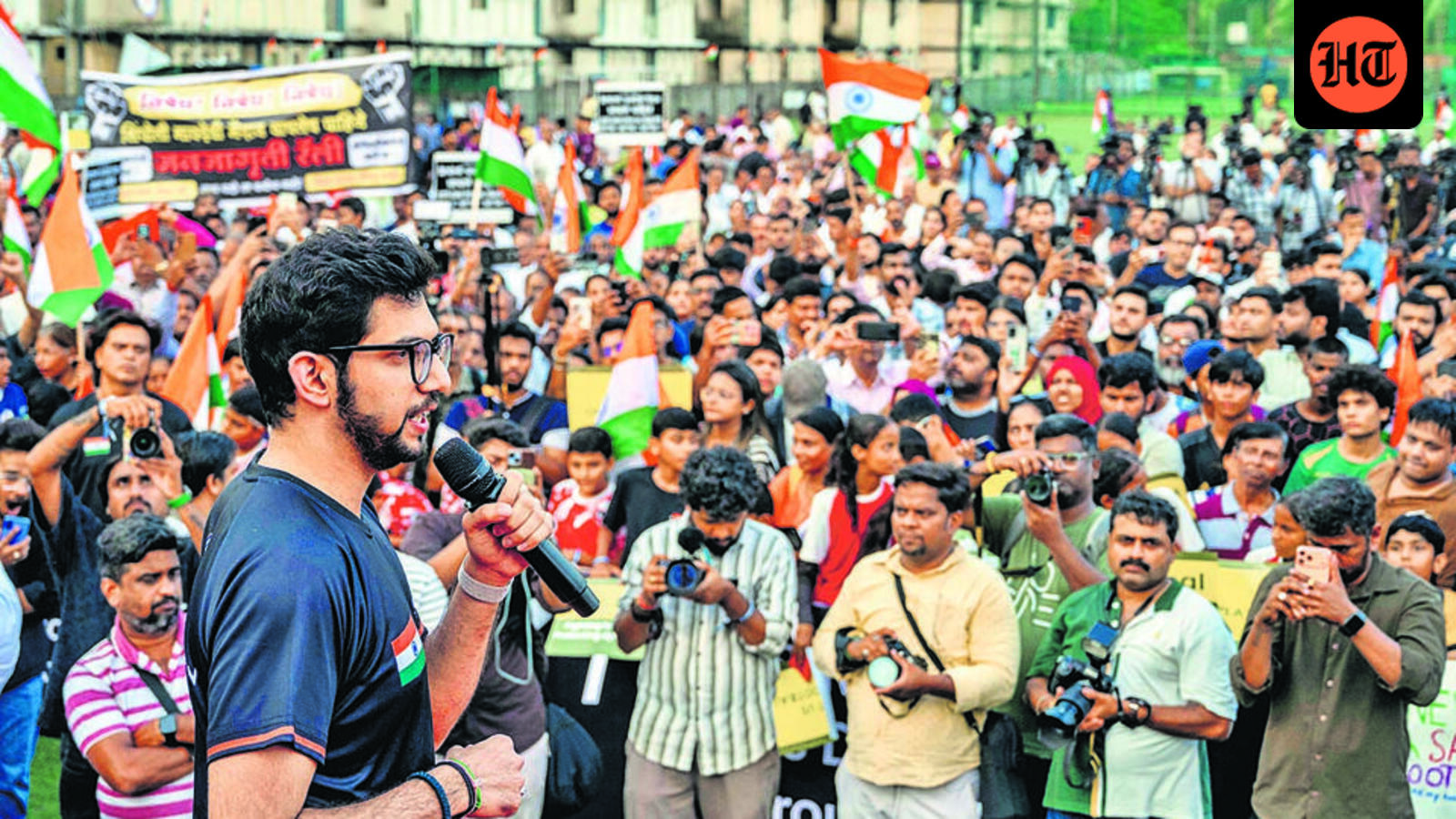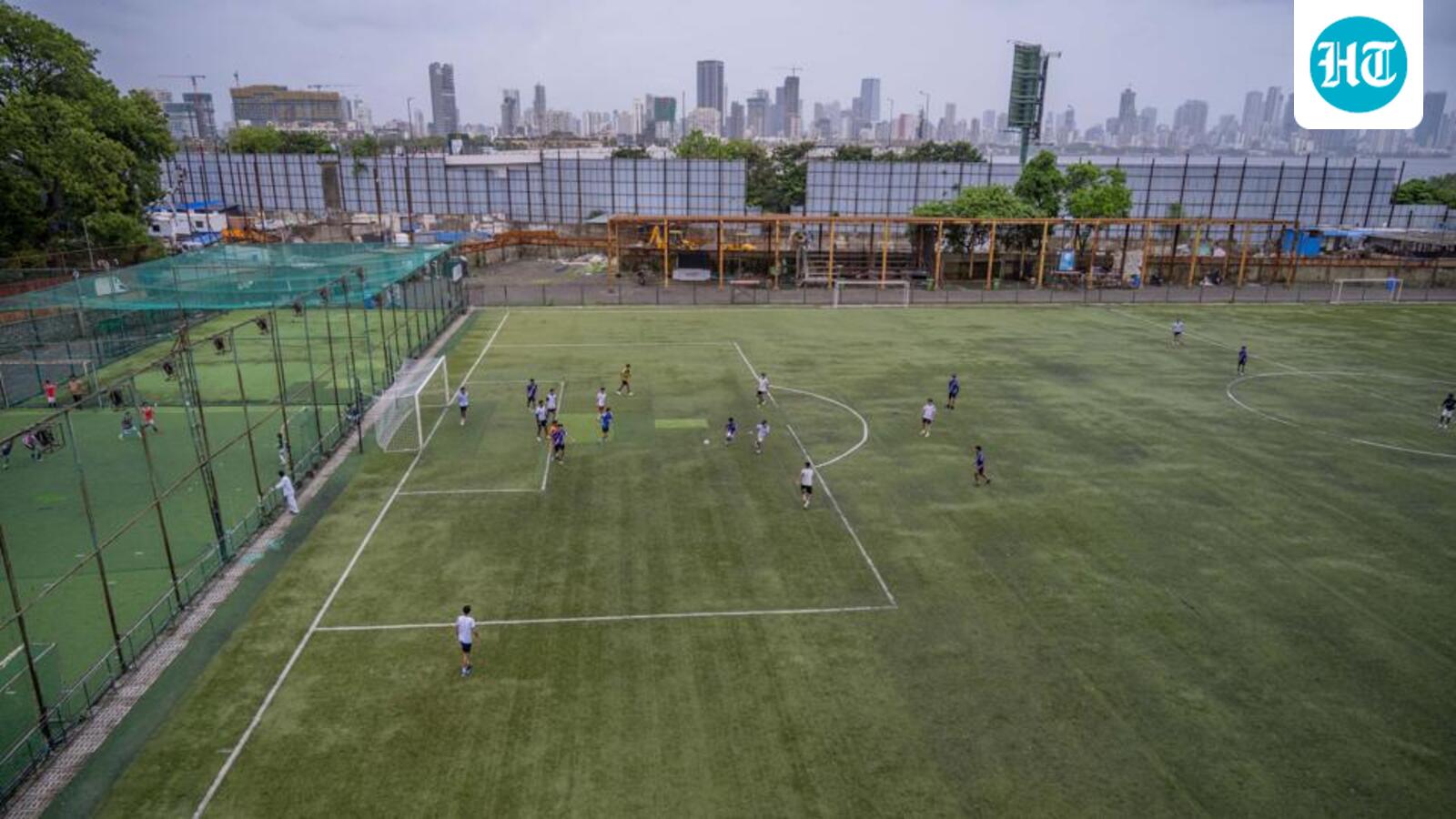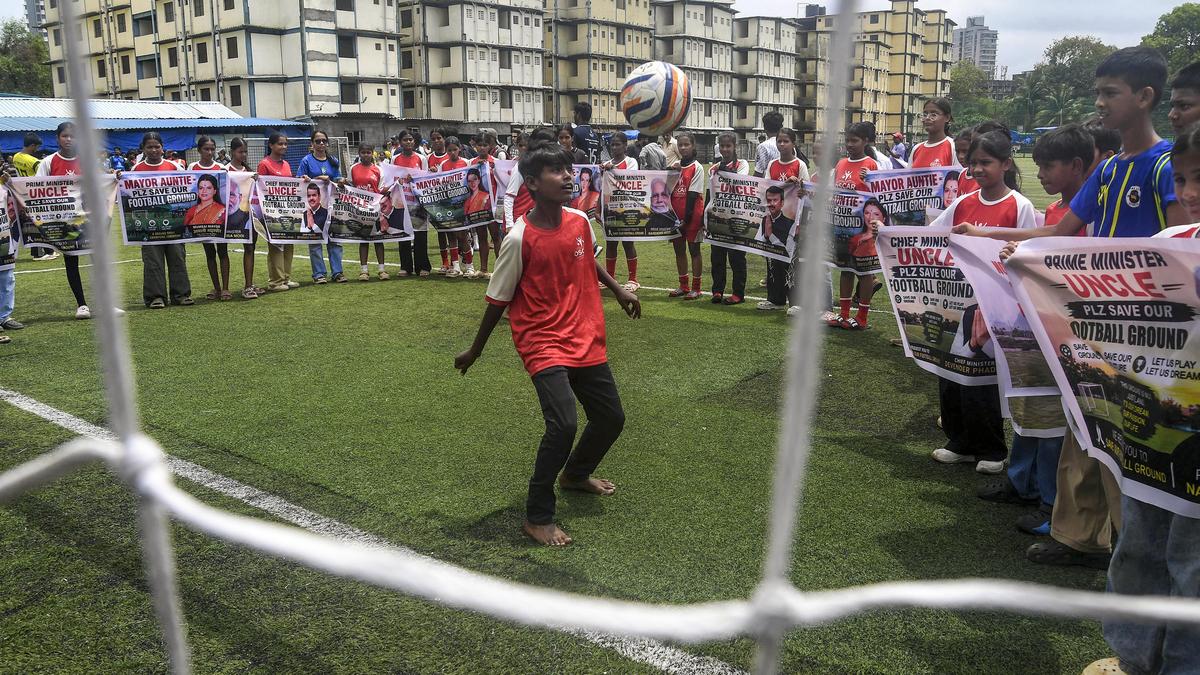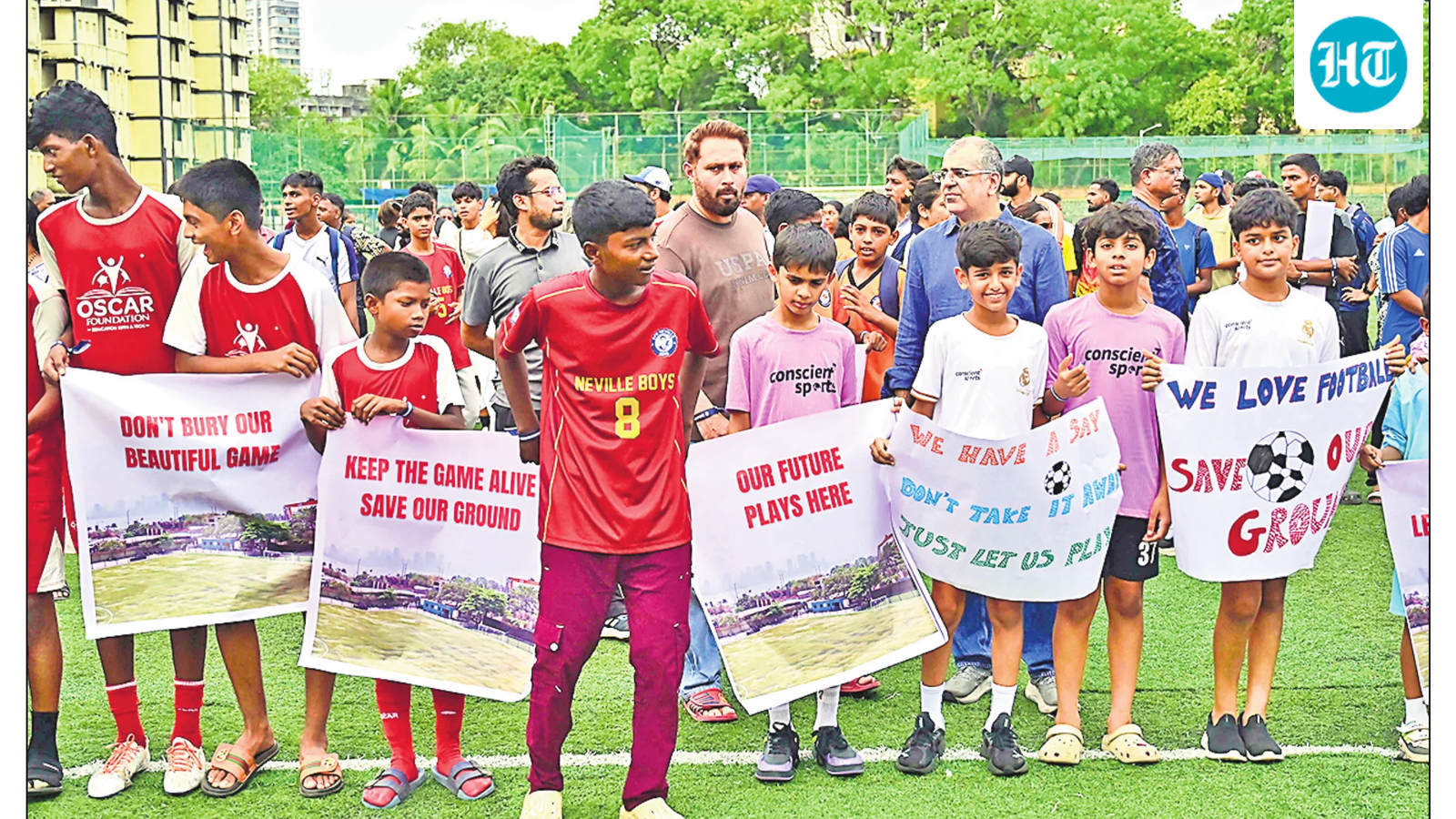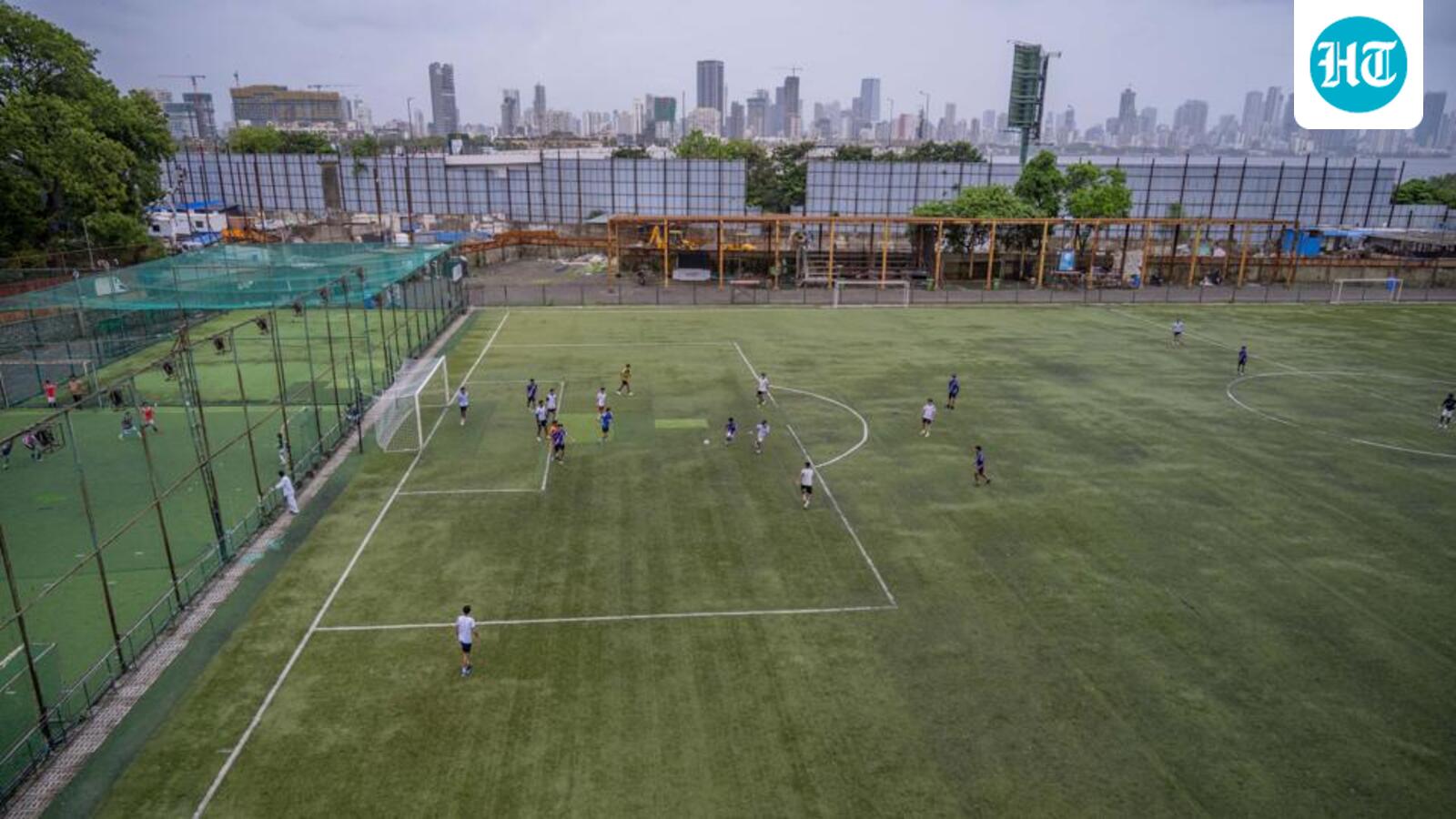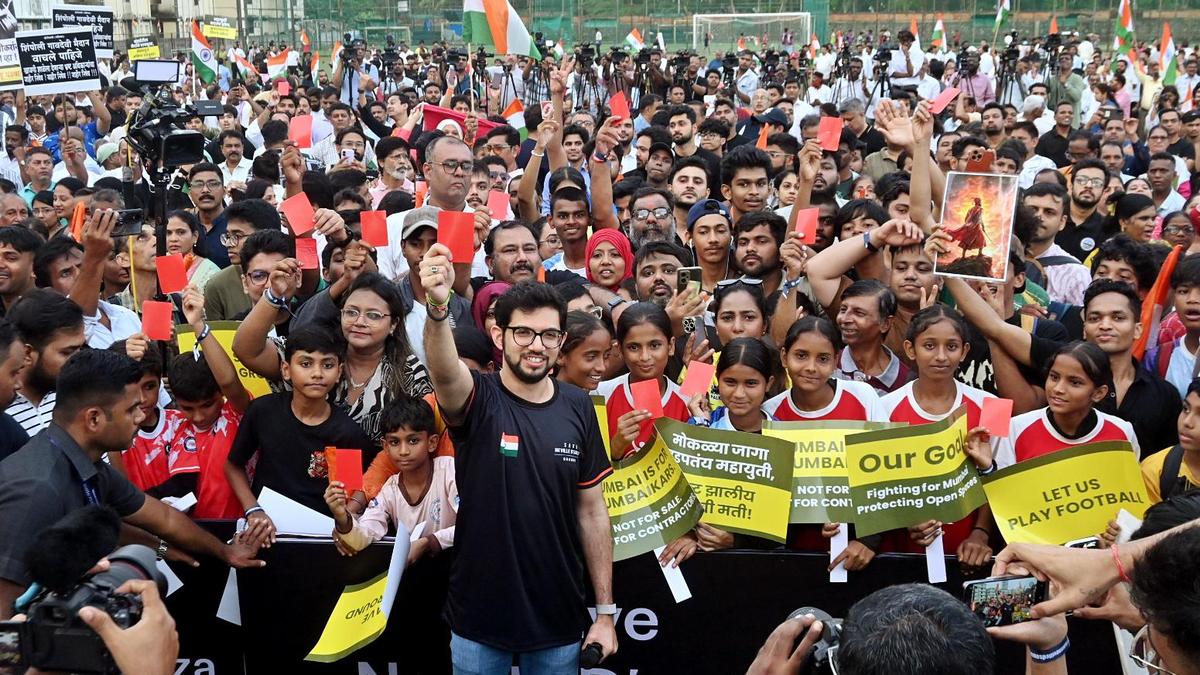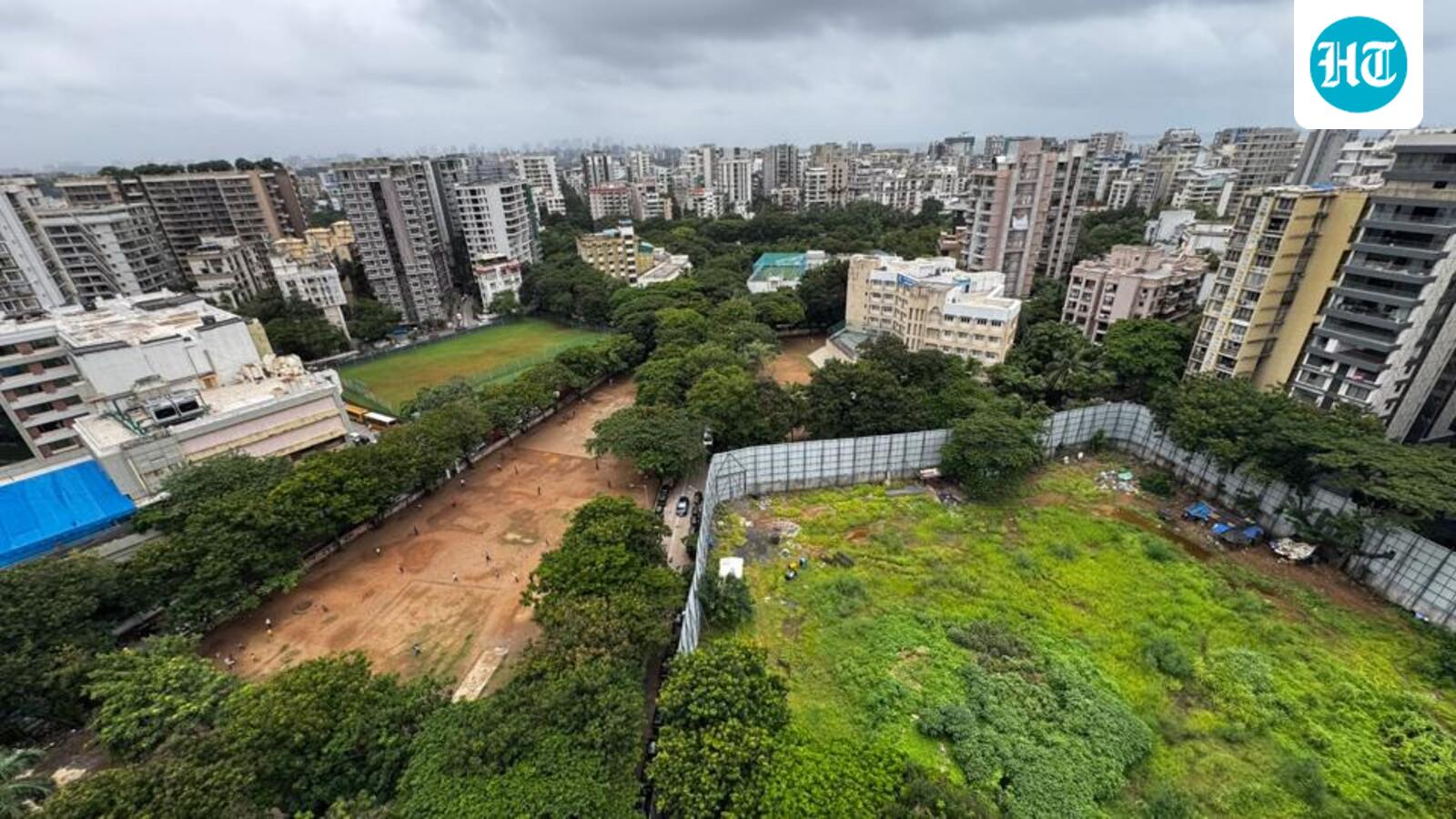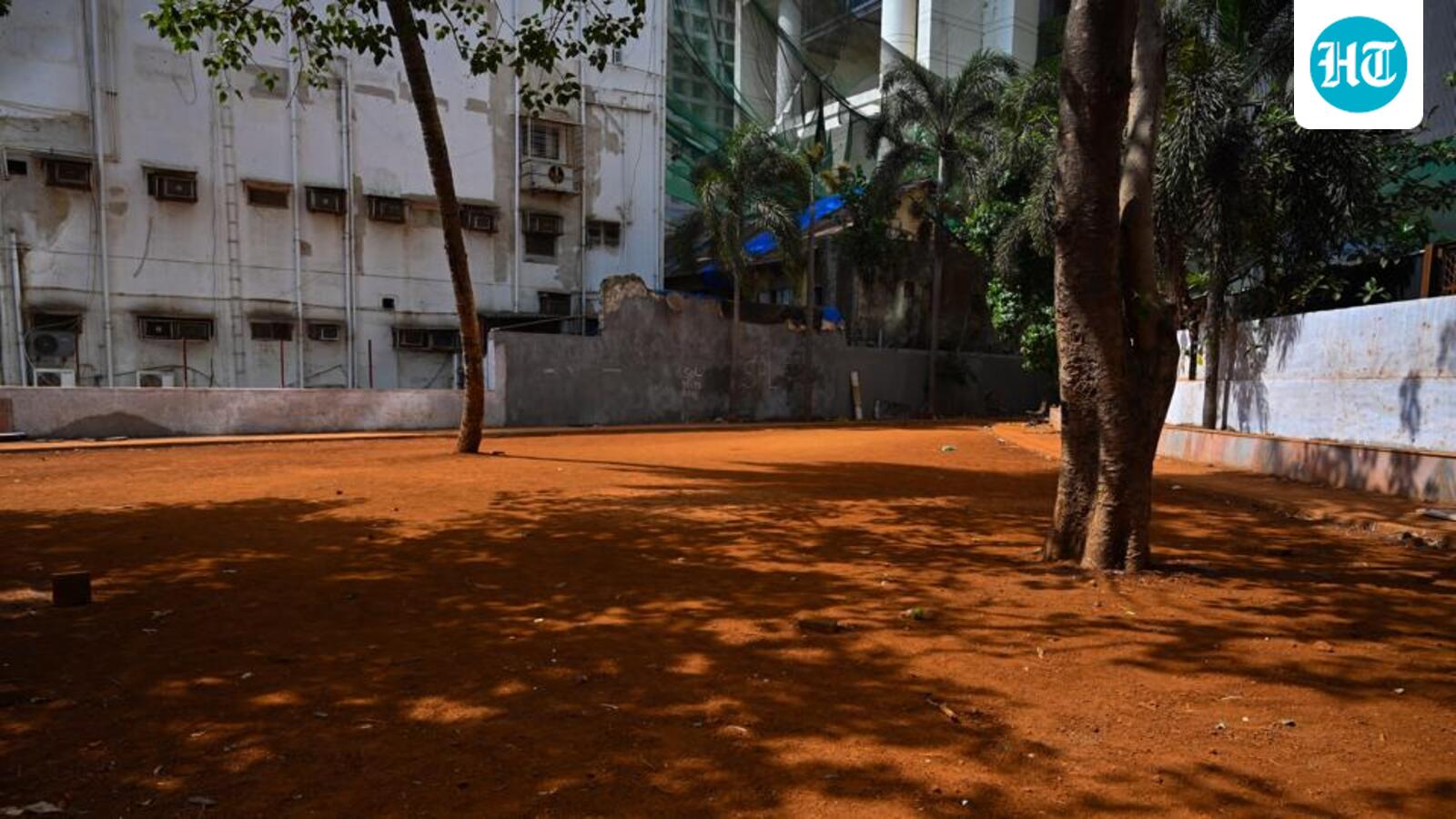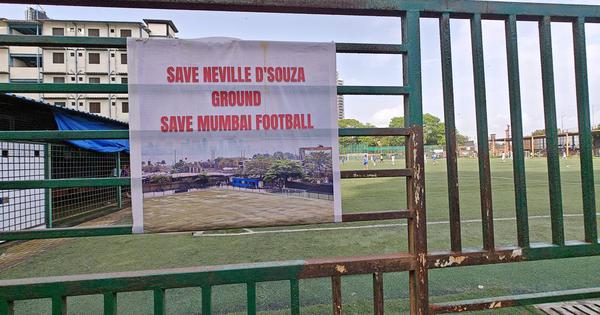
On the overcast afternoon of August 18, a football match of the Mumbai Football Association’s Second Division League was underway at the Neville D’Souza Football Ground in Mumbai’s Bandra West neighbourhood. Players attacked the ball aggressively, rushing to score before the approaching half-time break.As the game played out, in his office cabin, located on the ground, Sudhakar Rane, the association’s general secretary, struck a more placid note. “This is currently the only full-size functional football turf in the suburbs where professional football can be played in the city,” Rane said. “It is in a central location, so it’s easily accessible to players from across the city.”Rane was responding to a proposal that the Brihanmumbai Municipal Corporation put forward to its general body in late May, to change the “reservation” of the ground, or the specific function for which it was earmarked. The corporation proposed to turn the plot into a convention and exhibition centre.The city’s football community has reacted with alarm at the proposal, and noted that there is already excess demand for the ground. Ajit Sawant, the assistant secretary of the association, explained that the season that began in May 2025 and was to end in May 2026 is still unfinished. “This season should have been over by now,” Sawant said. “We are running three months late due to the non-availability of the ground.”Left to right: The Mumbai Football Association's general secretary Sudhakar Rane, assistant secretary Farhan Butt, assistant secretary Ajit Sawant and treasurer Udayan Banerjee.The 2.47-acre ground was named after Neville D’Souza, who in the 1956 summer Olympics became the first Asian to score a hattrick in Olympic football. It was inaugurated in 2018, and allotted by the Maharashtra Housing and Area Development Authority to the Mumbai Football Association to “beautify and maintain the ground and use it for football games”. Today the ground sees around 16 tournaments a year, and serves over 15,000 people.The association’s board members explained that demand for the ground was particularly high because other grounds in the city had become difficult to use over the years. For instance, they said, the popular Cooperage Ground in Nariman Point was leased to a private agency a few years ago, and has since become expensive and difficult to book. Meanwhile, the St Xavier’s football ground in Parel, also a major ground for the city, has been unused since 2022, when it was used by the municipal corporation to construct a rainwater harvesting tank.Since July, football players and locals from Bandra have been assembling at the ground on Sundays to protest against its closure. The Mumbai Football Association has also filed a petition in the Bombay High Court, seeking to quash the proposal. On August 10, the court instructed the corporation not to take any further decisions in the matter – despite this, on August 18the BMC’s general body cleared the proposal to change the reservation of the ground. Two days later, on August 20, the court stayed this plan until the next hearing, scheduled for September 18.Ryan Menezes, a lawyer and vice president of the football association, argued that there was no pressing need for a convention centre in the area, given that there were at least three convention centres between 5 km and 7 km away – the St Andrew’s auditorium, the Jio World Convention Centre and the MMRDA grounds.Tapan Ghosh, a football referee, travels regularly from Thane district to referee at matches on the ground, echoed this argument. “Why is a convention centre, which can be built anywhere else, more important than one of the few remaining open spaces where professional football can be played in the city?” Ghosh said. “It is all just for earning money.” Besides professional football, Ghosh explained that the ground was also used by local senior citizens for walks, and that working-class youth from the nearby informal settlements had also formed a football team, and used the ground for practice.Rane, the association’s general secretary, sounded a warning: “If this ground goes, Mumbai might as well stop playing football.”Tapan Ghosh, a football referee, travels regularly from Thane district to referee at matches on the Neville D'Souza football ground in Bandra. Photo: Nolina MinjScarce open spacesPK Das, an architect and activist based in Mumbai, said that the proposed takeover of the football ground was part of a larger pattern playing out across India, which he described as “the depletion of public assets for private interests”.In Mumbai, he noted, apart from recreational open spaces, ecologically important ones, such as the Dharavi salt pans, had also been taken over or destroyed, without much protest. “All land which comes under the umbrella of public land, whether or not it’s managed by an agency, is a common property resource,” he said. “Under our constitution and commitments to the nation, these lands have to be utilised for larger public groups. The government is merely a custodian to promote and protect the public interest.”But, he added, “they behave as if they are the owners of the land”.Mumbai has earlier had dedicated policies for the governance of open spaces, but they have lapsed over the years. At present, the city has no such specific policy.In 1991, for instance, the state government had introduced the Adoption and Caretaker Policy, which allowed for public-private partnerships to manage the city’s open spaces. Under the policy’s adoption mechanism, the government could hand public spaces over to private entities for five-year periods to restore and maintain them. Meanwhile, under the caretaker mechanism, the government could “reserve” an open space for a private entity for a minimum of 33 years – the mechanism also allowed for this period to be extended indefinitely. A year-long study on open spaces in Mumbai by the Urban Design Research Institute, or UDRI, and the NGO Alliance for Governance and Renewal, or NAGAR, noted that over the years, while many adopted plots were returned to the government, several plots leased under the caretaker mechanism remained under private control.The current conflict over the ground is playing out amidst a larger push towards the commercialisation and privatisation of already scarce open spaces.Earlier in the year, the BMC proposed converting the Colaba Back Garden into an astroturf, which would have made it unaffordable for lower income communities to use. The proposal was rescinded after locals protested against it. In July, the Gulmohar Area Societies Welfare Group wrote to chief minister Devendra Fadnavis about the allotment of three open spaces in Juhu and Andheri to the Shri Vile Parle Kelvani Mandal, a charitable trust. Similarly, locals in Bandra’s Pali village have also criticised the allotment of a ground to the NGO I Love Mumbai Foundation for conversion into a multi-sport turf and pickleball court. While it is owned by the government, residents said it had been open to the public for decades.The entrance to the Chhatrapati Shivaji Maharaj Sports Complex in Andheri. The facility is one of three open spaces allotted to the Shri Vile Parle Kelvani Mandala for management. Photo: Nolina MinjThe UDRI-NAGAR study found that greater Mumbai only has 1.28 square metres of public open space per capita. This is dramatically lower than the national standard of the ministry of housing and urban affairs, which recommends 10-12 square metres of open space per capita in cities, including recreational space and natural spaces like forest cover and flood plains.The study stated that the “city today faces a twofold challenge; a severe deficit in per capita open space, falling significantly short of national standards; and inadequate protection, development and maintenance of the limited open spaces that remain”. It further notes that the Mumbai Municipal Corporation Act of 1888 “classifies the maintenance of open spaces as a discretionary duty” and not a “mandatory” obligation.Of particular note is the study’s observation that according to the municipal corporation’s development plans, several spaces to which the public enjoys limited or no access, such as clubs, swimming pools and traffic islands are also counted as open spaces. Ashwini Deshpande, one of the study’s authors, explained that an open space should be “permeable, recreational and accessible to everybody”. She noted, “Clubs and gymkhanas are heavily built exclusive structures and they serve a very specific section of the public. If an open space is not following those norms then it’s really pointless to call it a public open space.”The Andheri sports complexOn the evening of August 20, I visited the Chhatrapati Shivaji Maharaj Sports Complex in Andheri West, which is to be given to the Shri Vile Parle Kelvani Mandal for development. The 12-acre complex houses a cricket ground, a pickleball court, a jogging track, a basketball court and an outdoor gym. In late August, the Gulmohar Area Societies Welfare Group, and the activist and filmmaker Ashoke Pandit, filed a public interest litigation in the Bombay High Court objecting to this allotment.The 12-acre Chhatrapati Shivaji Maharaj Sports Complex in Andheri West houses a cricket ground, a pickleball court, a jogging track, a basketball court and an outdoor gym. Photo: Nolina Minj“Hundreds of people visit this space in a day, from slum dwellers to high-rise residents. There’s no other open space like this in the neighbourhood,” said local Yogesh Mehta. “I live in a residential tower nearby, but it has no space to take long walks. It will be sad if this space goes or becomes expensive to enter.”Youth from Shyam Nagar, the neighbouring informal settlement, said the complex was the only open space to which they had access. “This ground was developed some six-seven years ago, before that we used to play on a small mud patch,” said Suraj Kumar. “It’s free for all to use. If they start charging us for entry then we will have to stop playing here.”A few women from Shyam Nagar also stressed the importance of the space for them. “We live in the neighbouring chawl, where we have just one large room for a house,” said Manju Devi. “So we come here in the evenings to get away and get some space. It will be sad if this ground closes or becomes costly to access.”She added, “But these decisions are in the hands of the authorities. What can we do?”Women from the nearby informal settlement Shyam Nagar said the Andheri sports complex offers them a space away from their crowded homes. Photo: Nolina MinjThe UDRI-NAGAR study noted that besides the municipal corporation, citizen groups and NGOs could play a “significant role in maintaining and managing” open spaces. It suggests that “advanced locality management” groups should be formally institutionalised, to ensure that citizens can participate in these processes.“Open spaces don’t protect themselves, you need to fight for them because there are lots of forces against them,” said Samarth Das, an architect and member of the Gulmohar group. He observed that over the years, active citizen groups in Juhu had played a vital role in upgrading and maintaining gardens in their area.But he observed that such efforts could not be replicated everywhere. “The average Mumbaikar is struggling to make a living and cannot be bothered about all of this,” he said. “There is no time on their hands. Meanwhile there is a constant wave of attack after attack, testing the tenacity of people involved in such issues. But we need to start asking, where is this kind of development really taking us?”Meanwhile, the current fight over the city’s open spaces has entered the political arena. On August 20, Congress leader and municipal councillor Ashraf Azmi in a speech in the BMC House raised concerns about the rampant use of public-private partnerships for developing Mumbai’s open spaces. Drawing on civic records he acquired, Azmi noted that in the last four years, the corporation had changed the land reservations of 17 plots in the city, eight of which were initially reserved for natural open spaces or gardens. Meanwhile, Shiv Sena UBT leader Aaditya Thackeray has announced that he will lead a “tiranga andolan” against the takeover of the over the Neville D’Souza ground, and against the broader takeover of public open spaces.The UDRI-NAGAR study’s researchers observed that once an open space is taken over and changed, restoring them to their original state is nearly impossible. “In Mumbai, it's very difficult to even acquire new spaces,” said Prerna Yadav, one of the authors. “So, there's only one way to ensure that we have enough open spaces, and that is by protecting what we already have.”
The takeover of a Bandra football ground is part of a larger fight for Mumbai’s public spaces
Players and activists say there is already excess demand for the ground, and that the government has already signed away management of several other grounds.
2,064 words~9 min read