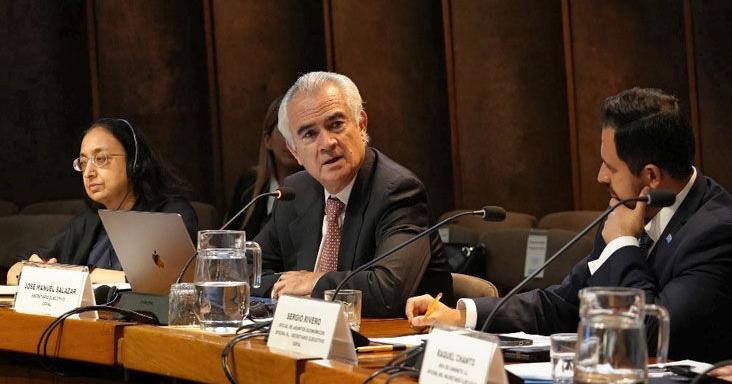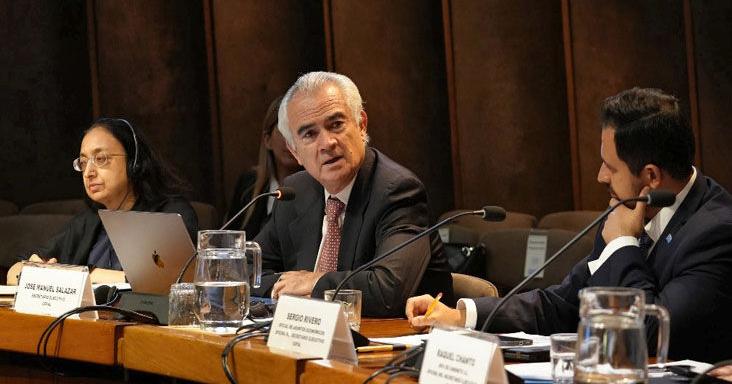
THE Economic Commission for Latin America and the Caribbean (ECLAC) is projecting regional economic growth of 2.2% this year, increasing slightly to 2.5% in 2027, urging that increasing productivity and growth is necessary for reducing informality through productive formalisation strategies.ECLAC has presented the latest edition of its annual report titled “Economic Survey of Latin America and the Caribbean 2026. Growth and productivity amid high informality; constraints and challenges in fostering productive formalisation in the region”.The report indicates that the regional economy is expected to grow by 2.2% in 2026, after a 2.4% expansion in 2025, and show a partial recovery of up to 2.5% in 2027.ECLAC said that if these projections prove correct, Latin America and the Caribbean will have maintained five years with average growth near 2.3%, an insufficient level to provide a sustained increase in income per inhabitant, close development gaps, and significantly expand policy spaces.At the regional level, ECLAC projects growth for Latin America and the Caribbean of 2.2% in 2026 and 2.5% in 2027, with marked heterogeneity at the subregional level.ECLAC said that the Caribbean is expected to grow 5.6% in 2026 and 7.9% in 2027, driven by increased growth in Guyana; if this country is not included, the subregional average would be 1.1% in 2026 and 2.2% in 2027The report also indicates that a declining international context—marked by lower worldwide growth, greater geopolitical tensions, financial volatility, and pressures in energy markets—partly explains the deceleration predicted for 2026. However, it states that the main limitation for regional growth is structural in nature: low levels of investment, decreased dynamism in formal job creation, and high and persistent labour informality.“The region has managed to maintain significant progress regarding macroeconomic stability, but that stability must become a platform for more and better growth,” said ECLAC’s executive secretary, José Manuel Salazar-Xirinachs.“To overcome the trap of low capacity for growth, we must increase investment and productivity and simultaneously move toward productive formalisation that strengthens people’s and businesses’ productive capacity, expands social protection, and generates more high-quality formal employment,” he added.ECLAC noted that during 2025, the region showed resilience in a reconfigured international context with increased uncertainty. Regional gross domestic product (GDP) grew by 2.4%; inflation continued to converge toward central banks’ goals, employment continued to broaden, though less strongly, and real wages continued to recover.At the same time, the current account remained at a moderate level of 1.2% of regional GDP, and net capital flow facilitated accumulation of international reserves.Global economicdownturn expectedECLAC said that a global economic downturn is expected for 2026, with growth of 2.9%, the lowest rate since 2022. It said geopolitical rivalries and the disruption of energy supplies have increased the prices of oil, fertilizers, and transportation, while the persistence of relatively high international interest rates and the appreciation of the dollar could worsen financing conditions for emerging economies.Inflation is expected to remain contained, though its convergence toward goals will be slower. The recent price shock has been mainly concentrated on energy and fertilizers, with a more limited transmission to food than in previous incidences. However, increased energy costs could delay new reductions in monetary policy rates. In this context, ECLAC highlights the importance of preserving monetary credibility and actively using macroprudential tools to mitigate financial risks.Regarding labour, the number of employed people increased by 1.6% in 2025—approximately 4.3 million jobs—but the job creation rate slowed for the third consecutive year. The unemployment rate decreased to 5.3%, and labour informality continued to drop, although it still includes nearly half of employed people. Indicators in early 2026 confirm a more moderate expansion of employment and show that the possibility of maintaining labour improvements will depend more and more on increases in investment, productivity, and growth.Regarding fiscal matters, in the Caribbean, gross public debt was approximately 73% of GDP in 2025, which also reinforced the same limitations to moving toward more productive, inclusive, and sustainable development.The Economic Survey 2026 also examined informality not only as a labour or social protection problem but also as a structural restriction that limits economies’ capacities to transform growth into sustained increases in productivity, investment, and high-quality employment. At the same time, informality is a consequence of low growth and one of the mechanisms that perpetuate the trap of low capacity for growth.ECLAC said historical evidence shows that the greatest progress in formalisation took place between 2000 and 2013, which was the most recent period of greater economic growth, high investment rates, productivity increases, and expansion of formal salaried employment.It said this process has been less robust since 2014, along with the deceleration of investment and stalling of productivity. Currently, nearly half of employed people in the region continue to work in informal activities.Call to boost productive formalisationThe analysis presented in the report showed that growth increased productivity both in the formal and informal sectors, but that its effects are more intense, rapid, and persistent in the first. Formal companies have more capacity to take advantage of economies of scale, incorporate innovation, access financing, and accumulate productive capacities. Therefore, the greater the weight of informality, the less growth capacity there is to generate permanent improvements to productivity.Given this analysis, ECLAC has proposed developing strategies to boost productive formalisation in the region. It said this concept refers to a process in which increased formality is accompanied by a strengthening of productive capacities of people and companies, increases in productivity, and a productive transformation able to maintain more dynamic and inclusive growth.This focus transcends regulatory reforms or isolated administrative incentives and requires coherence and complementarity among labour, fiscal, financial, and productive development policies.The report identified four complementary action areas.It said under Labour Policies, it would further programmes for job creation, training, and labour insertion; reduce gender gaps; better articulate labour and social policies; and strengthen the care economy and the use of digital tools to facilitate access and permanence in formality.With regards to Fiscal Policies, the report notes moving toward social protection financing systems that reduce disincentives to formality; establishing progressive and flexible paths to formalisation, and using digitalisation and administrative interoperability to simplify compliance and strengthen oversight.Under Financial Policies, the recommendation calls for reinforcing the role of the development bank as an instrument for productive insertion; designing mechanisms that recognise the heterogeneity of company make-ups, and broadening systems of guarantees to reduce credit segmentation.With regards to Productive Development Policies, ECLAC states that it would encourage strengthening and scaling integrated routes for company support, with an emphasis on technological extensionism; focusing interventions territorially; promoting anticipatory and multi-actor governance; along with productive integration and strengthening information, monitoring, evaluation, and learning systems.ECLAC concludes that reducing informality is a necessary condition for strengthening the region’s growth capacity and escaping the trap of low capacity for growth.“Productive formalisation would allow for improvement of employment quality, broadening social protection, and reducing inequalities, as well as increasing economies’ capacity to convert growth into sustained progress in productivity, broadening the space for public policy, and consolidating processes of productive transformation that maintain high rates of growth in the long term,” the report noted.—CMC
ECLAC urges productivity push as regional growth remains weak
THE Economic Commission for Latin America and the Caribbean (ECLAC) is projecting regional economic growth of 2.2% this year, increasing slightly to 2.5% in 2027, urging that increasing productivity and
1,169 words~5 min read