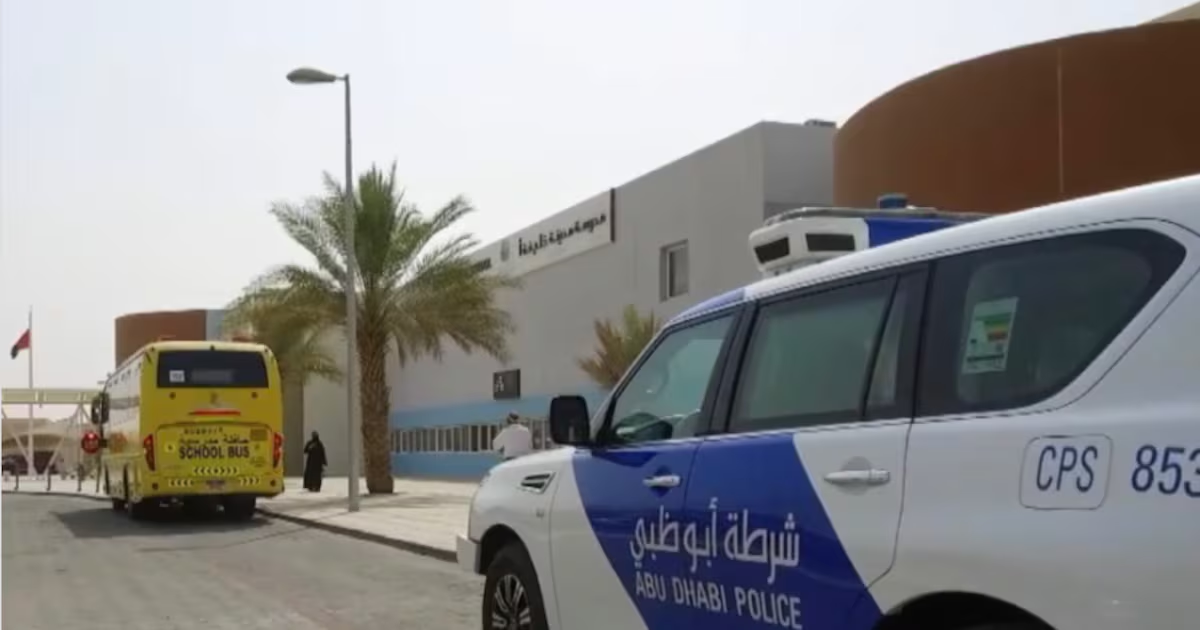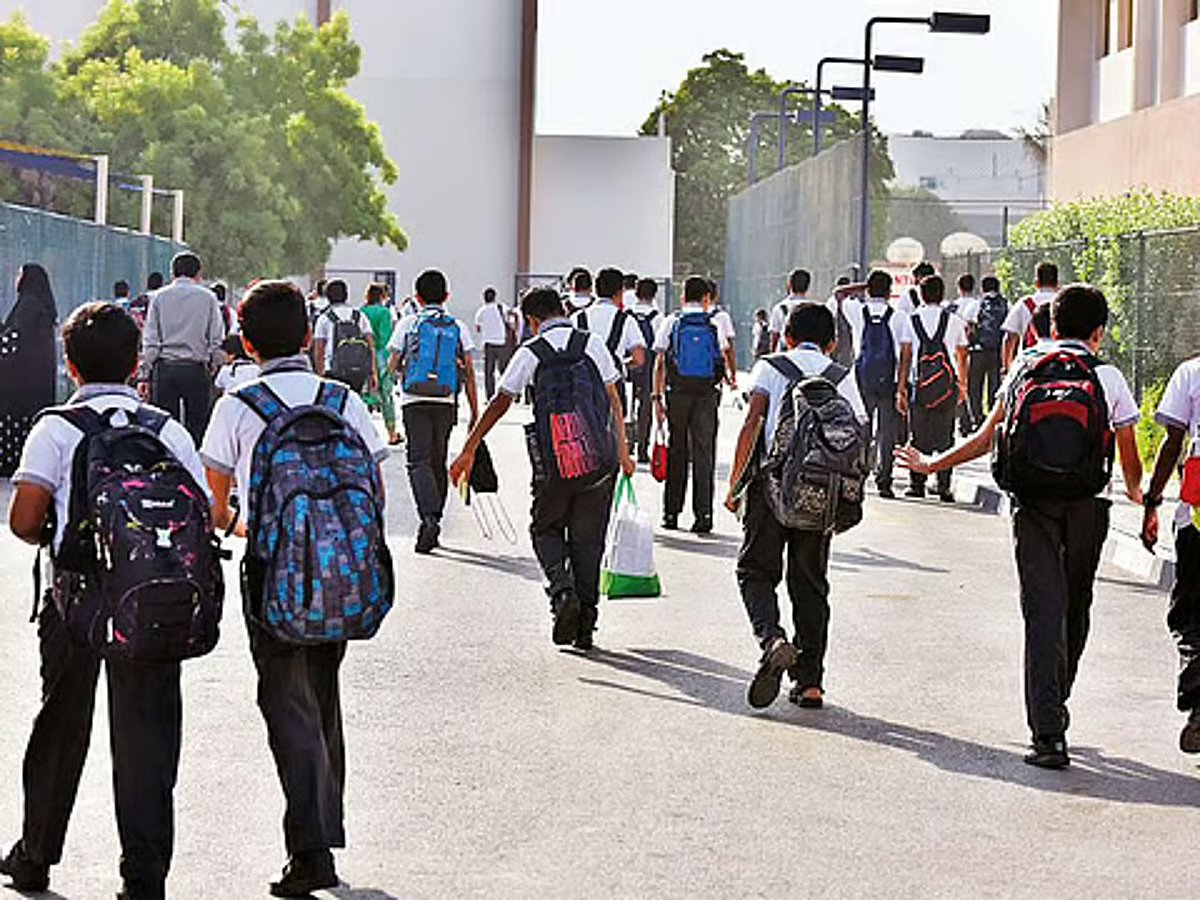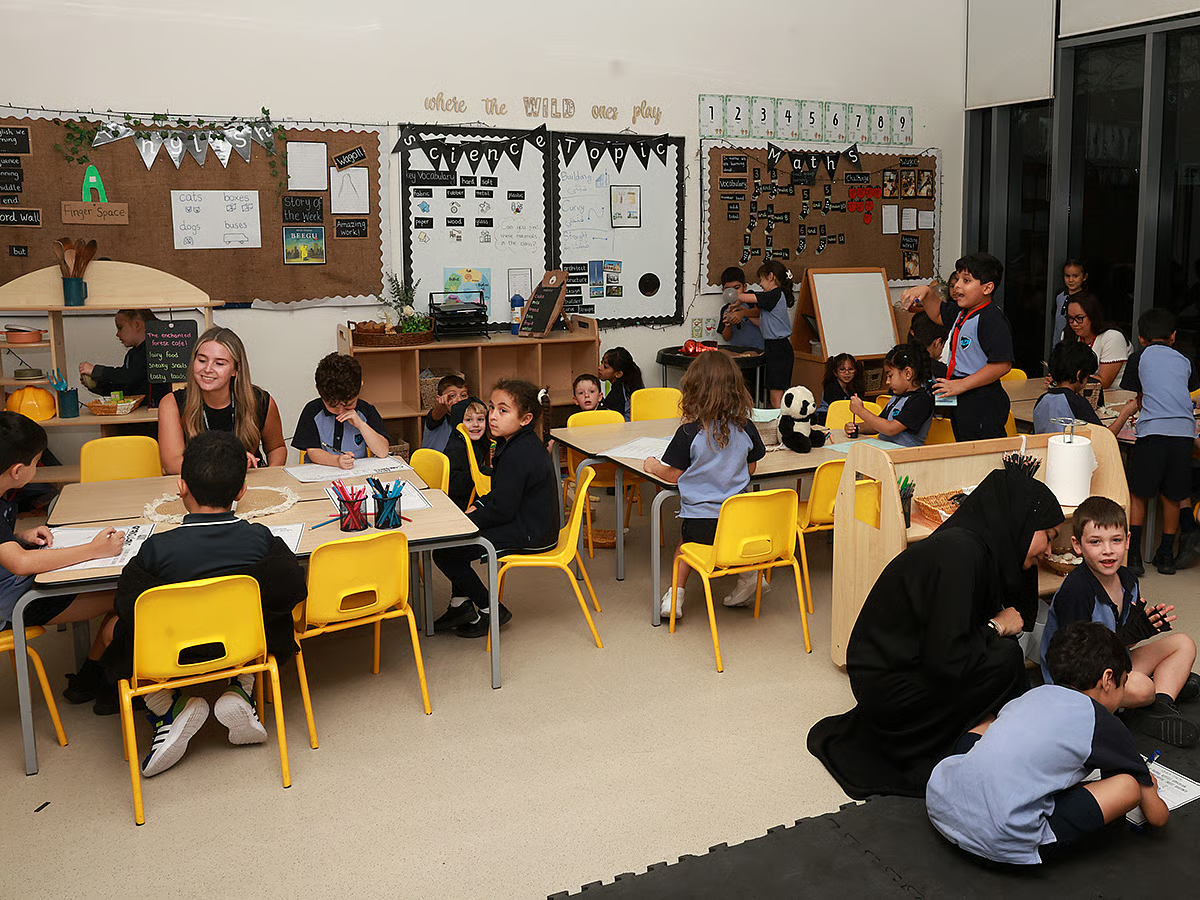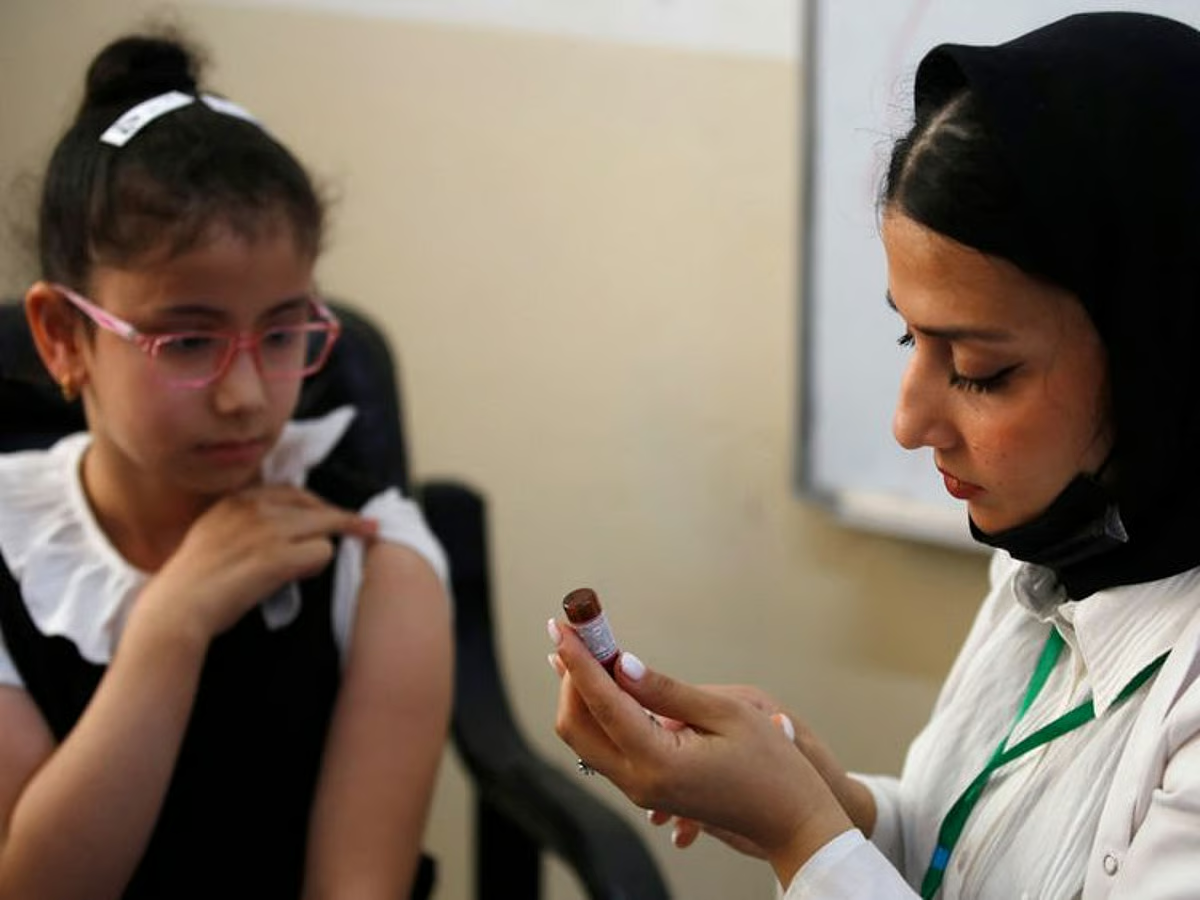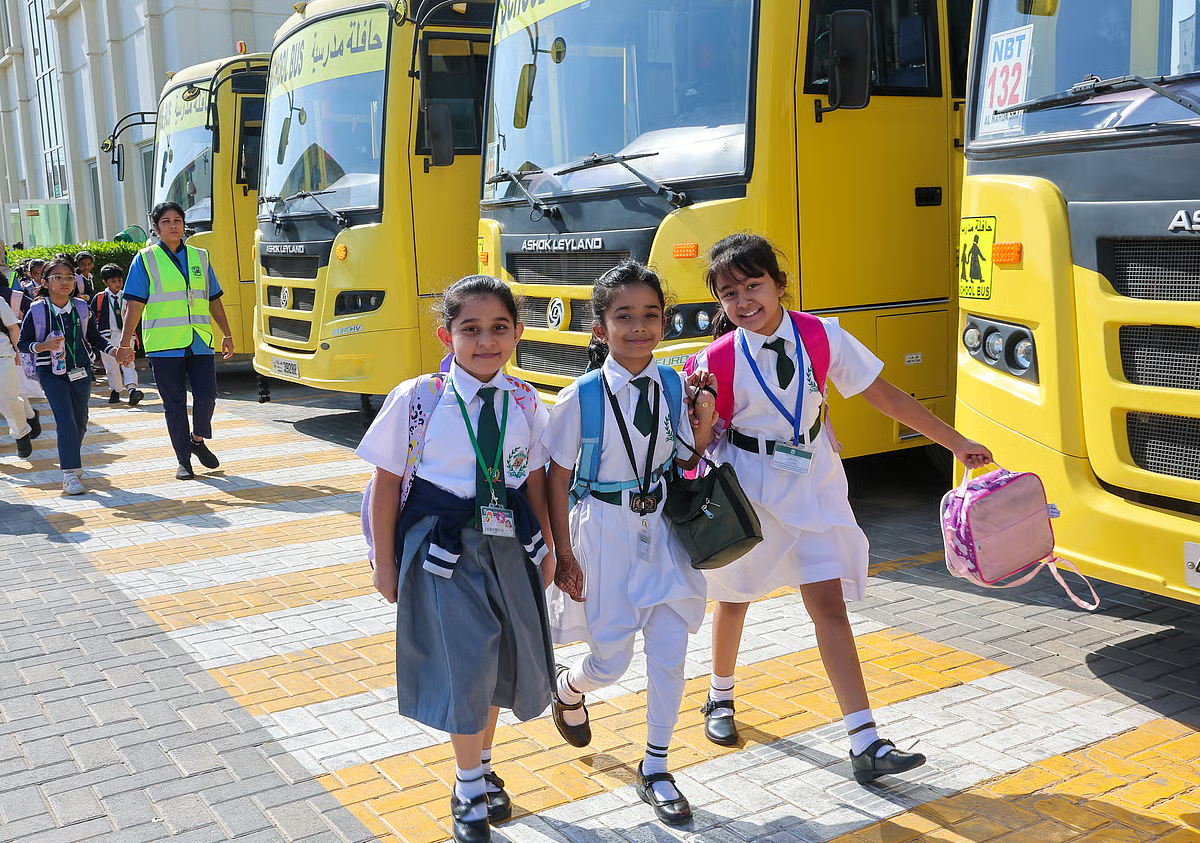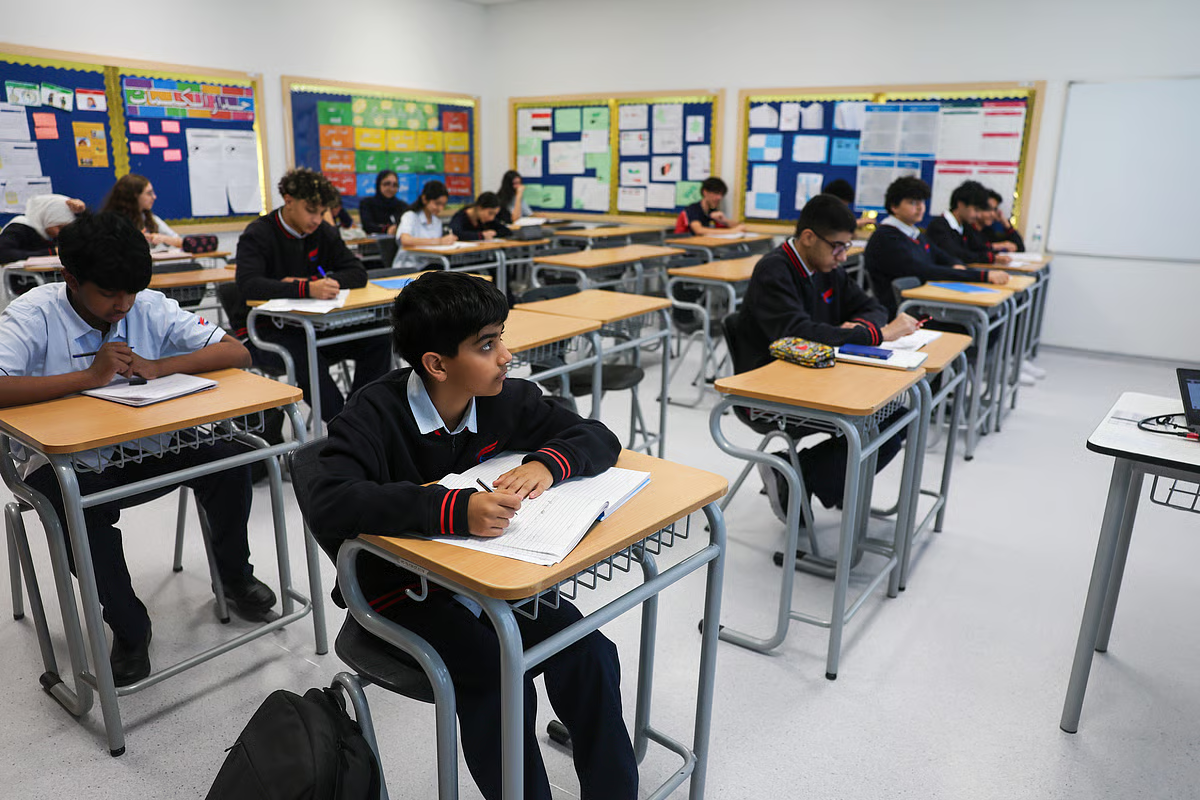
As the countdown to August 31 winds down, UAE households are deep in the annual back-to-school scramble, checking calendars, booking vaccine appointments, hunting for the right schoolbag, and trying to keep spending under control. Here's a complete roundup of what parents need to know this year, covering term dates, health checks, backpack safety, and smart ways to manage the costs.When school starts, and what the year looks likeMost schools across the UAE reopen on August 31, 2026, marking the start of the 2026–27 academic year. The majority of public and private schools follow a unified calendar that sets standard dates for terms and major holidays, giving families a consistent framework to plan around.For schools on the unified calendar, the key dates are:Academic year begins: August 31, 2026First-term mid-term break: October 12–18, 2026Classes resume: October 19, 2026Winter break: December 14, 2026 – January 3, 2027Classes resume: January 4, 2027Spring break: April 5–11, 2027Classes resume: April 12, 2027Academic year ends: July 2, 2027Sharjah's private schools also begin on August 31, 2026, but follow their own regulatory framework through the Sharjah Private Education Authority. Their winter break matches the unified calendar, but spring break runs April 5–8, with classes resuming April 12 and the year wrapping up a day earlier, on July 1, 2027.Not every school follows the standard calendar, though. Private schools in Sharjah operate under the emirate's own rules, and schools following certain Indian, Pakistani and Bangladeshi curricula may run entirely different academic years, some starting in April rather than September and finishing in March, provided they hit a minimum of 182 instructional days. A handful of private schools are also permitted to split their mid-term break between October and February, as long as it doesn't exceed five school days in total. Given the variation, it's worth confirming directly with your child's school before locking in travel or holiday plans.Public holidays worth marking on the calendar include Eid Al Fitr (March 8–12, 2027), Eid Al Adha (May 15–18, 2027), and the Hijri New Year (June 6, 2027), though Islamic calendar dates are always subject to official confirmation closer to the time.Getting vaccinations in orderWith classrooms reopening, UAE health officials are urging parents to treat vaccination checks as a priority rather than an afterthought. Children are more likely to pick up common infections once they're back in close daily contact with classmates, and immunity built up now pays off through the term.Paediatricians point to a handful of specific vaccines worth double-checking rather than assuming a child's record is complete. MMR (measles, mumps and rubella) deserves particular attention this year, since measles cases have risen sharply worldwide in 2026. If a child has had only one dose, or is due a second, doctors recommend speaking to a paediatrician about completing the schedule, ideally at least two weeks before the first day of school, to give immunity time to build.DTap/Tdap boosters (covering diphtheria, tetanus and pertussis) and, for older students, meningococcal vaccination status are also worth reviewing. Varicella, or chickenpox, is another commonly missed dose, particularly among children who received part of their vaccination schedule outside the UAE.The seasonal flu vaccine is also on doctors' radar. This year's version is expected to become available in the first week of September, and the recommendation is to get it either just before returning to school or right at the start of term.Families whose children travelled internationally over the summer are being encouraged to take extra care. Disrupted routines during travel can mean scheduled vaccinations were missed, and different destinations carry different health risks, some African destinations call for yellow fever vaccination, for instance, while malaria prophylaxis may be relevant depending on where the family travelled. If there's any doubt about a child's vaccination status, a paediatrician can review the records and recommend catch-up doses. It's also worth keeping both digital and physical copies of vaccination records on hand, especially for families who travel frequently or have recently relocated.Apart from the needle, doctors frame vaccination as just one piece of overall back-to-school readiness. The final stretch of the holidays is a good window to start easing bedtimes back toward the school schedule, rebalancing meals, and making sure children are staying active, with mental wellbeing treated as part of the preparation, not an afterthought.Getting to school safely: Dubai's transport measures For Dubai families, the Roads and Transport Authority (RTA) has rolled out a wide-ranging set of measures ahead of the new term to keep students safe on their daily commute. A 30-day intensive inspection campaign will check that school buses meet safety standards and operating procedures, running alongside field inspections and awareness drives that verify driver and attendant permits are valid. RTA has also issued circulars to bus operators stressing full operational readiness on safety, compliance and permits before buses hit the road.Parents have more transport options this year, too. E-hail school mobility services, Careem School Rides, Uber Teens and BOLT School, prioritise high-safety-rated drivers and modern vehicles, while a School Ride Pooling initiative in Al Barsha, available through the Yango app, lets students share rides. Students also get a 50 percent discount on Metro, Tram and public buses through the student nol Card.To ease congestion during peak hours, RTA is increasing taxi availability in several school zones and boosting frequency on more than 30 bus routes serving key areas, including Al Nahda, Muhaisnah, Al Barsha, Al Quoz, Dubai Silicon Oasis and Al Garhoud, to cut waiting times. Seat belts remain mandatory across school buses and all ride-hailing or pooling services, part of what RTA describes as an integrated approach combining inspections, compliance monitoring and expanded capacity to keep the school run safe and reliable.The schoolbag problem: How heavy is too heavy?Few back-to-school issues generate as much daily friction as the weight of the schoolbag itself. As textbooks, a laptop or tablet, a water bottle, lunch box, pencil case and PE kit start piling up, the manageable backpack can quickly turn into a genuine load, and orthopaedic specialists say the accumulation deserves more attention than it typically gets.The starting benchmark is to keep a schoolbag at around 10 percent of a child's body weight so a 30kg child should ideally be carrying about 3kg or less. Don't get swept up in 'ergonomic' or 'spine-friendly' marketing claims. The fundamentals, a lightweight bag that actually fits the child's torso, two wide and adjustable shoulder straps used together (not slung over one shoulder), some padding at the back, and multiple compartments to distribute weight, matter far more than branding. Heavier items should sit closest to the child's back rather than in an outer pocket, where they tend to pull the child backwards.On trolley bags, the advice is nuanced: wheels genuinely help when a child needs to move a heavier load over a longer, smoother distance, but pulling a trolley over stairs, uneven ground or crowded areas puts real strain on the wrist, arm and shoulder, and can be difficult for younger children to manoeuvre. For most children with a manageable daily load, a properly fitted backpack carried with both straps remains the more practical option.Parents are also encouraged to watch the child rather than fixate purely on numbers, persistent neck, shoulder or back pain, a noticeable forward lean, or symptoms like numbness or tingling that linger after the bag comes off are signs worth taking seriously and, if persistent, having assessed medically. On the practical side, doctors suggest checking the timetable before packing each day, using school lockers where available, periodically emptying the bag to clear out things that quietly accumulated, and factoring in the weight of extras like water bottles and laptop chargers, which add up faster than parents often expect.Getting the school shoes rightBackpacks aren't the only fit issue worth checking before term starts. Dr Pooja Pradeep, a specialist in paediatrics at Aster Clinic Sports City, says shoe comfort should take priority over brand or style, a shoe needs to match the natural shape of the child's foot, with enough room for the toes to move freely. Fit is easier to judge with a few concrete checks. The heel should feel secure, a little movement is normal, but it shouldn't repeatedly slip out as the child walks and there should be roughly a thumb's width of space between the toes and the front of the shoe when standing. Dr Pradeep recommends always having the child walk around in both shoes before buying, rather than judging fit while they're just standing still. The shoe should also flex where the foot naturally bends, around the ball of the foot; for a child with no underlying foot issues, a stable heel and sole matter more than aggressive arch support, which is really only necessary for conditions like flat feet.Poorly fitting shoes tend to announce themselves fairly quickly, rubbing, redness, blisters, pressure around the toes, and general discomfort are the early warning signs, and a child may even start changing the way they walk to compensate. Tight shoes also raise the risk of fungal infection, since they trap heat and moisture from sweating. Parents can check by seeing whether toes are pressing close to the end of the shoe or against its sides, looking for red marks once the shoes come off, and listening for complaints about rubbing. On the wear-and-tear side, flipping the shoe over to check the sole is worthwhile, significant tread wear, uneven heel wear, or a collapsed heel section are all signs it's time for a replacement.Managing the costsBack-to-school season comes with a real price tag in the UAE, uniforms alone can run into the hundreds of dirhams per child, and families report costs for uniforms, supplies and activities creeping up by 15 to 20 percent compared with last year. However, UAE parents interviewed by Gulf News described a range of resourceful strategies for keeping the budget in check without cutting corners on quality.Buying ahead is one recurring theme. One mother of three buys school shoes in bulk across half-sizes whenever there's a sale, allowing her children to simply size up as they grow rather than shopping under pressure, a habit that, alongside splitting purchases between trips abroad and local buys, keeps her per-child spend to roughly Dh1,500. Some schools also offer early-bird discounts on uniforms for parents who buy before a set date.'Refresh, don't replace' is a philosophy several parents mentioned, cleaning up existing school bags, repairing worn parts, and giving lunch boxes a good clean rather than automatically buying new ones each year. Smaller habits round out the picture, keeping a 'school supplies box' at home to collect unused notebooks and stationery throughout the year, involving children in budgeting conversations so they understand the value of what they're given, and making a checklist that separates genuine needs from nice-to-haves before heading to the shops. Easing the emotional transitionLogistics aside, going back to school is an emotional shift as much as a practical one, moving from the ease of home into separation, new expectations and a fresh set of demands. Psychotherapist Heenal Reddy, a child and adolescent specialist at Sage Clinics, told us that the biggest misstep parents make is trying to overhaul everything at once: resetting sleep, screen time, meals and independence all in the same week tends to overwhelm children rather than help them settle. A better approach is to pick just one or two changes that will actually make a difference, starting the shift about one to two weeks before term begins rather than flipping the routine overnight.Change gradually, not all at once. Resetting sleep, screens, meals and independence in the same week overwhelms kids. Pick one or two priorities and start shifting the routine one to two weeks before term, not overnight.Go easy on the check-ins. Repeatedly asking 'are you worried?' can plant the worry it's meant to soothe. A low-key "it might feel a little strange at first" reassures without making anxiety the focus.Read resistance as overload, not defiance. A child dragging their feet is often signalling too much change too fast, not being difficult. Scale back priorities and treat a rough morning as something to repair, not a failure.Make room for emotions: Ask what they're looking forward to and what feels hard. Younger children may show this through play or drawing rather than words. At pickup, lead with a hug or snack before the questions.Meet 'I don't want to go' with curiosity, not reassurance. 'What feels hardest?' opens more than 'You'll be fine.' Watch for anxiety showing up indirectly, tummy aches, clinginess, irritability, trouble at drop-off.Let go of needing it to be perfect. Children need to feel someone's alongside them, not a flawless transition and that goes for parents too.Also In This PackageLakshana is an entertainment and lifestyle journalist with over a decade of experience. She covers a wide range of stories—from community and health to mental health and inspiring people features.
UAE back-to-school 2026: Term dates, vaccines, costs and what parents need to check
What to know before August 31: Calendars, clinics, classrooms and family budgets
2,153 words~10 min read