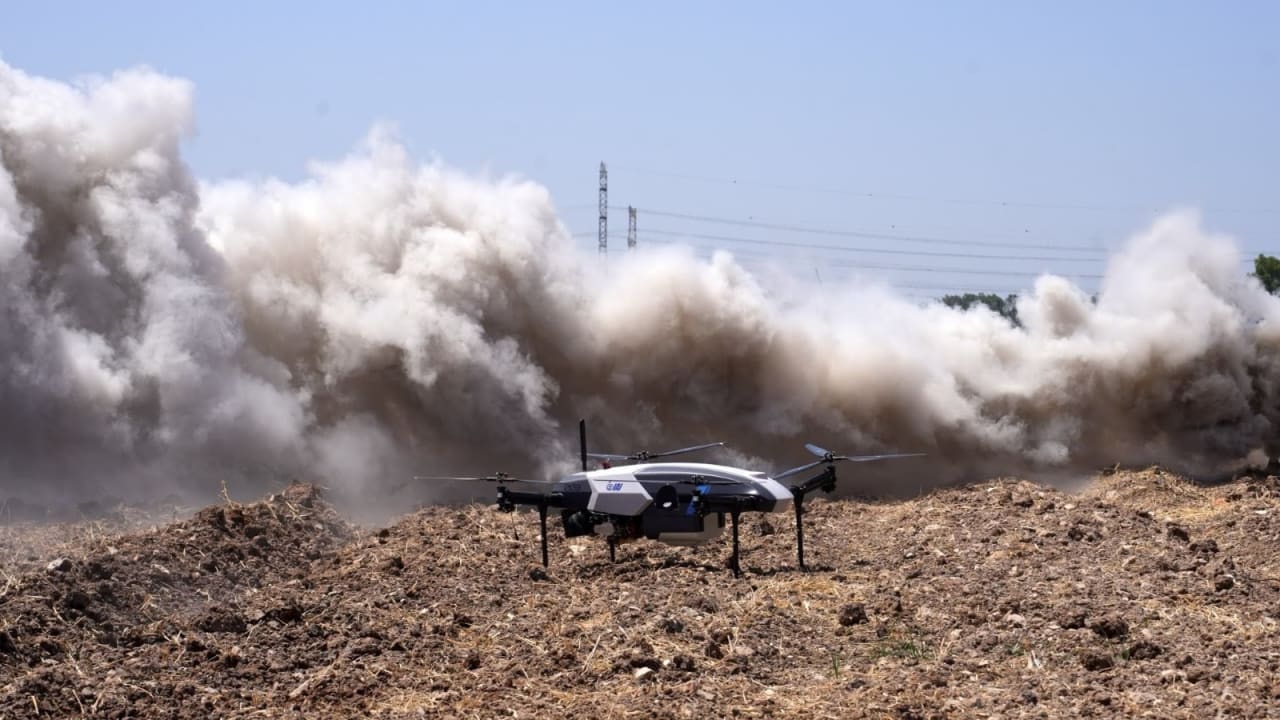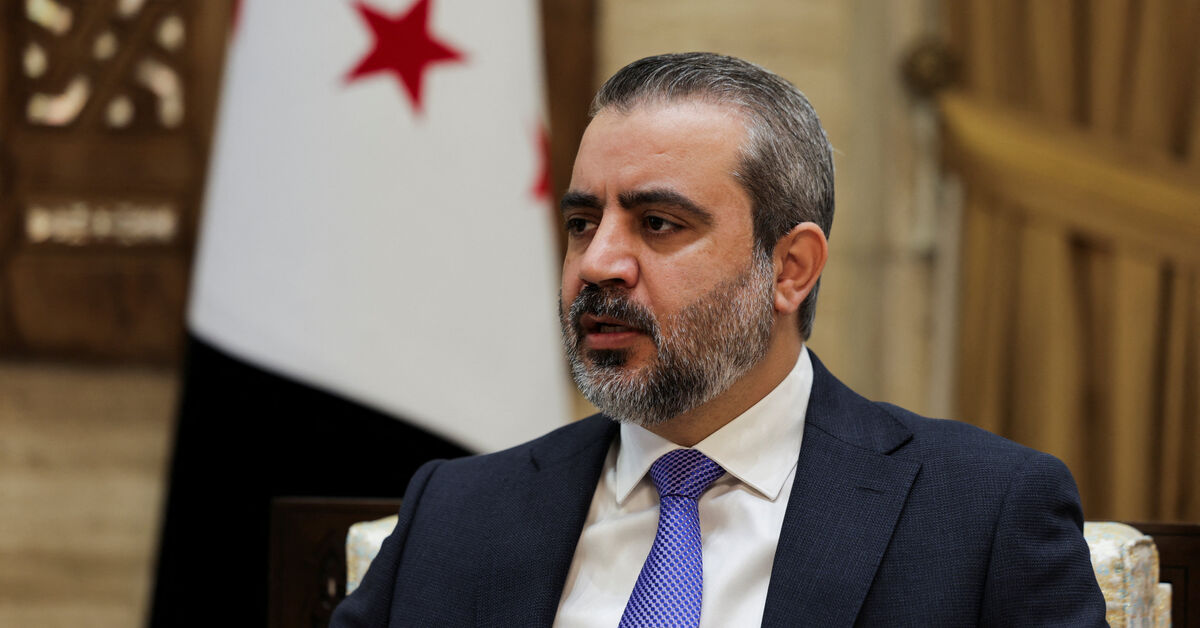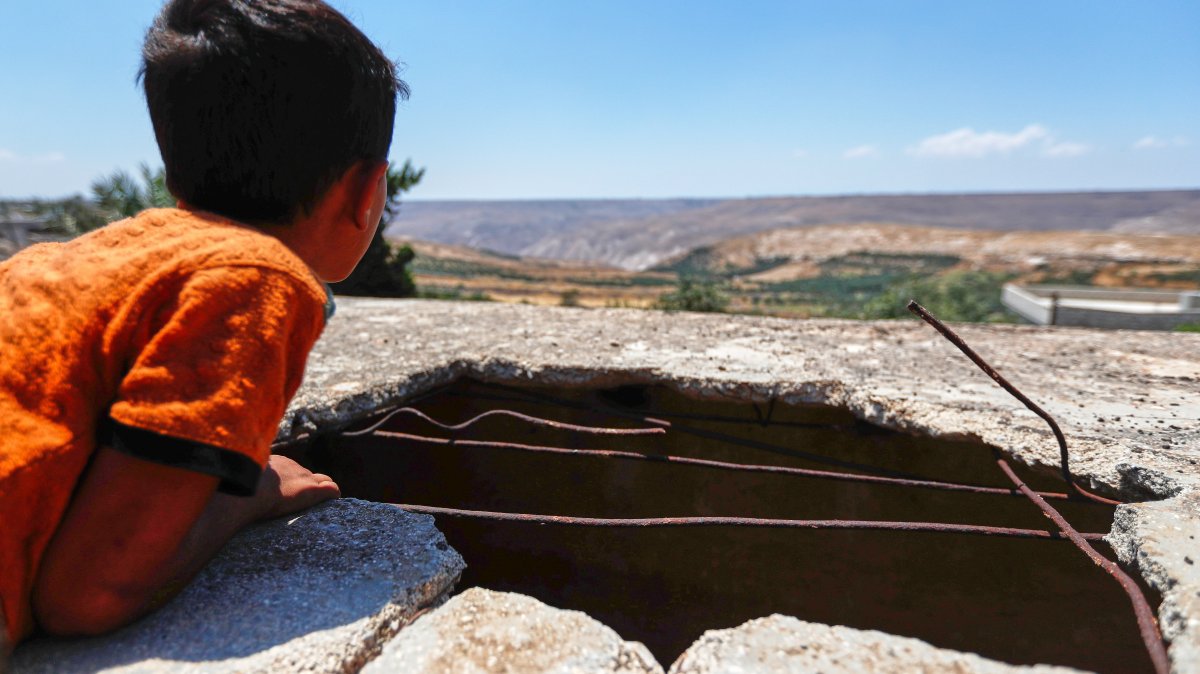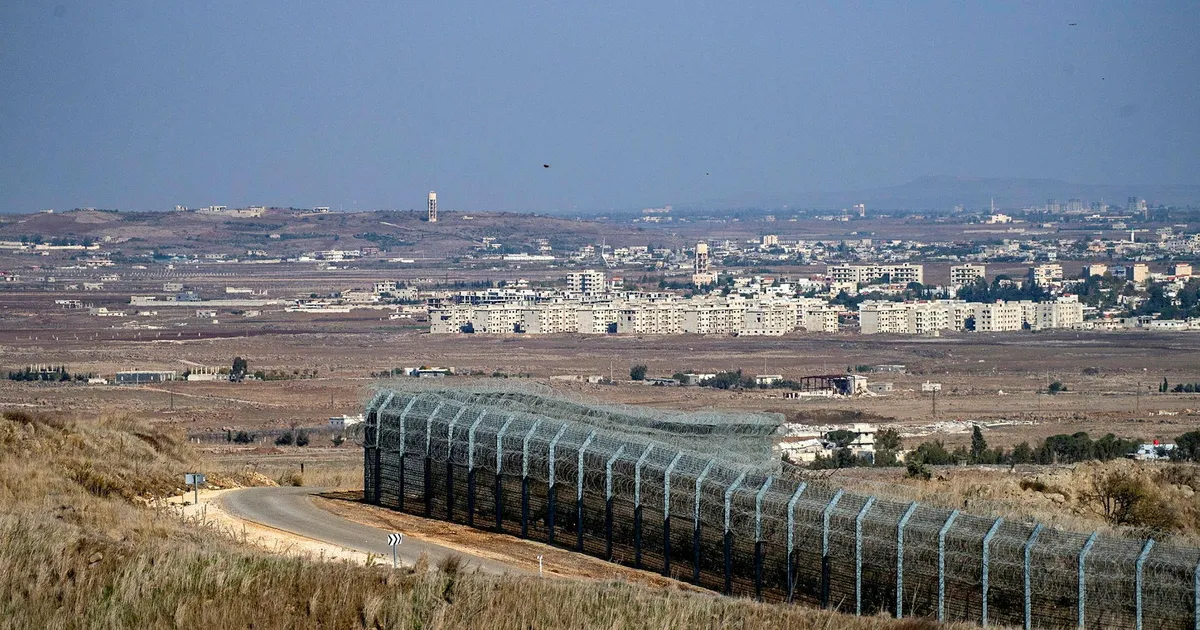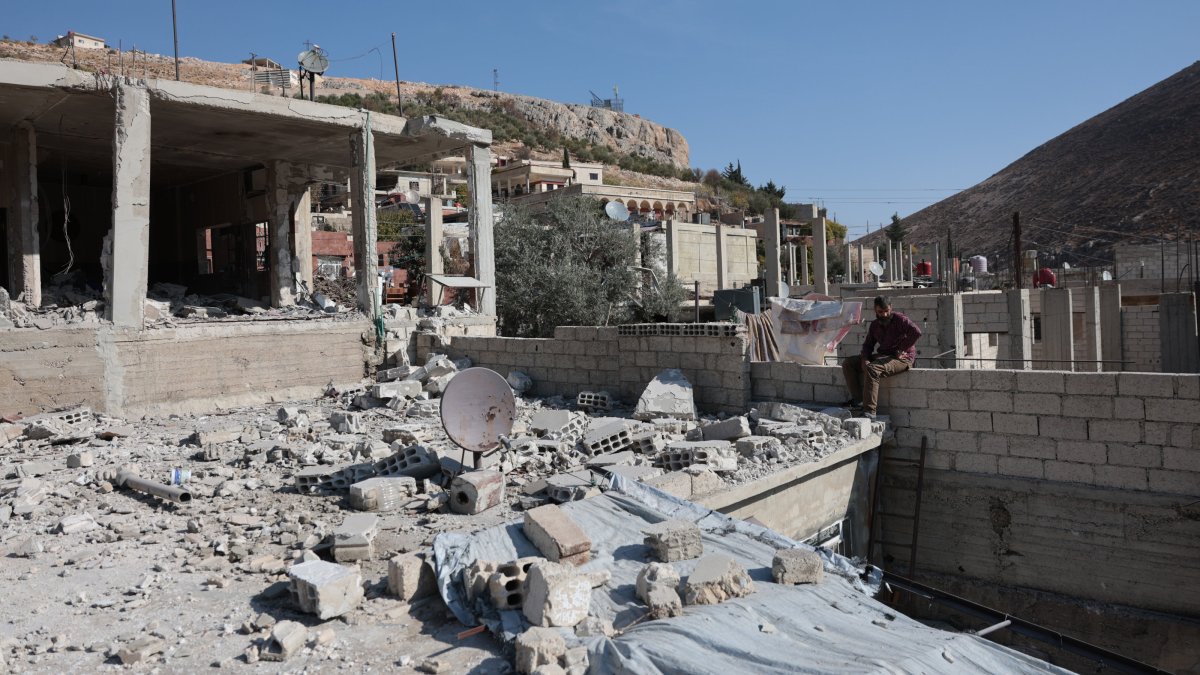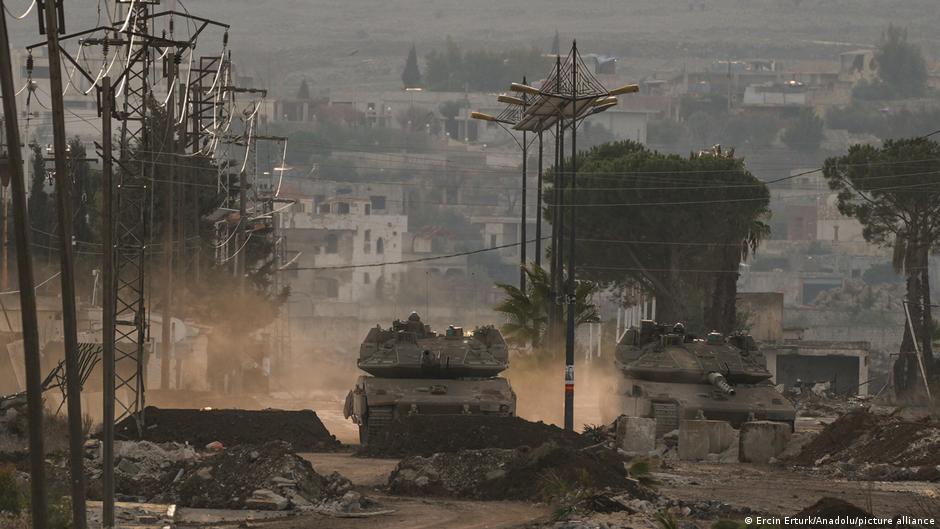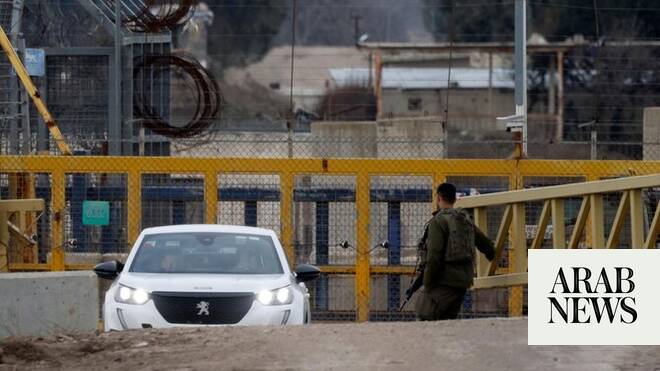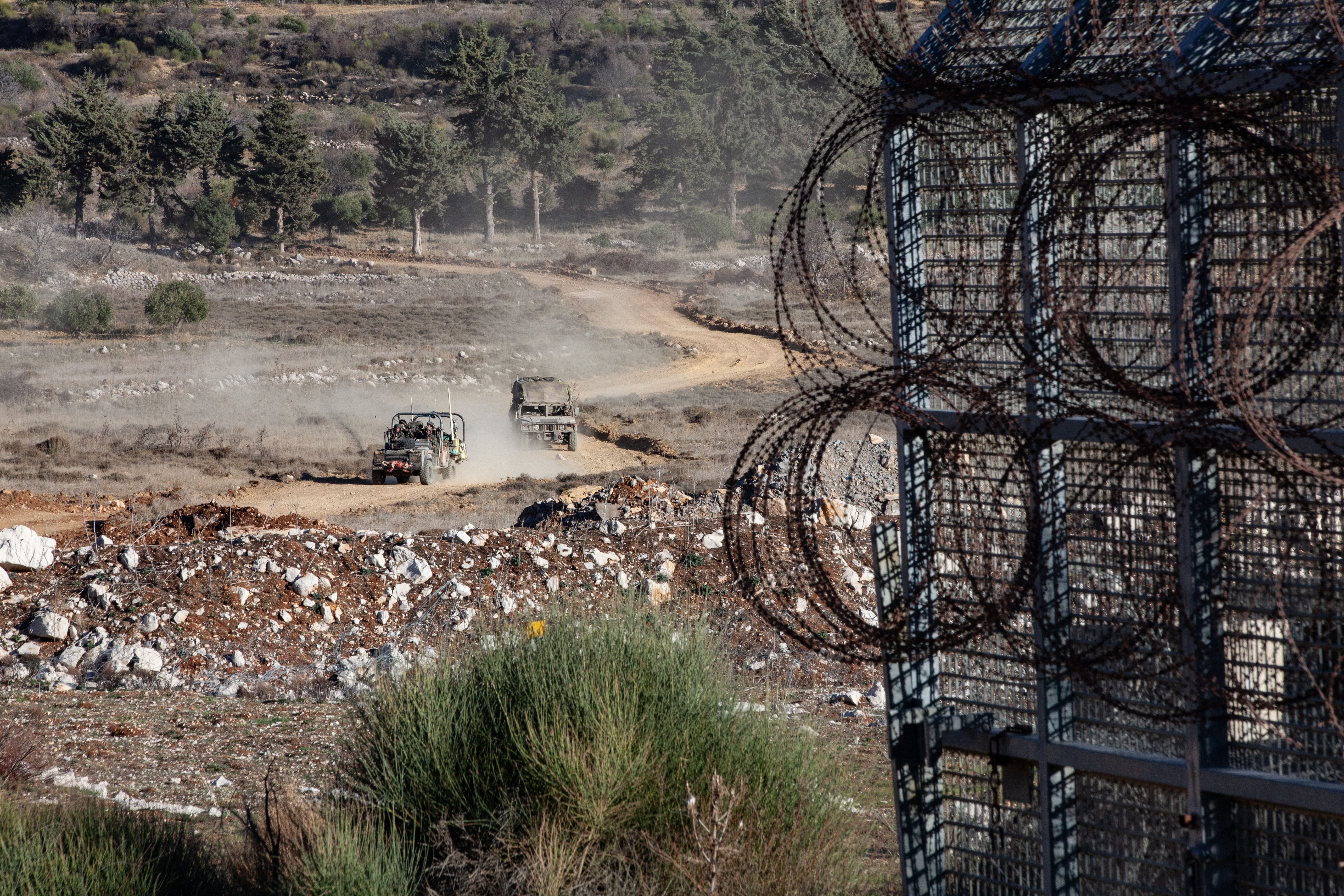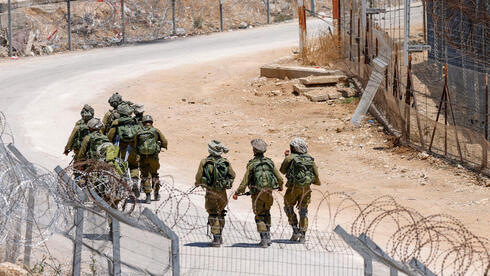
Israeli forces are detaining suspects, building military roads and regulating access to agricultural fields as Israel and Syria pursue a new security agreementAhmad Qweidar and Jacob Wirtschafter / The Media Line|An Israeli drone struck a car near Beit Jinn on August 22, injuring a Syrian man identified in local reports as Ammar Saeed Hamada, as Israel pressed military operations in southern Syria that it says are needed to stop attacks on its territory.The Israeli military described Hamada as a terrorist in the advanced stages of preparing an attack who posed an immediate threat to its soldiers, but did not publicly provide evidence supporting that characterization. A local security source quoted by the Syrian news organization Enab Baladi said Hamada was conducting private business rather than carrying out a military mission. Syrian media reported that the strike severely injured his hand.GalleryIDF troops on the Syrian border(Photo: Jalaa Marey / AFP)The Foreign Ministry in Damascus condemned the attack as a violation of Syrian sovereignty. The conflicting accounts could not be independently reconciled.Hamada is a cousin of Muhammad Hamada and Ali Qasim Hamada, two men detained during an Israeli operation in Beit Jinn in November. Ali was later released, while Muhammad remains in custody.During that operation, Israeli forces sought men the military identified as members of Jamaa al-Islamiyya, a Sunni Islamist organization. Syrian state media said 13 Syrians were killed after gunfire erupted. The Israeli military reported that six of its soldiers were wounded.Syrian security sources have described the Hamadas as former affiliates of the Fourth Division, which was commanded by Maher Assad, the younger brother of ousted Syrian President Bashar Assad.The August 22 strike followed two reported village raids in three days. Shortly after midnight on August 19, about 100 Israeli soldiers entered Jubata al-Khashab in Quneitra province and searched the homes of three brothers, according to residents.The force left roughly two hours later with two of the men's sons. Qutaiba Suliman, 26, was released that morning, while Moath Suliman, approximately 32, remains in custody.IDF soldiers inside Syria(Photo: IDF)Hassan Ahmed, 42, a farmer in the village, said soldiers arrived in about a dozen vehicles, ransacked the homes and beat one of the detainees. He said Israeli forces had confiscated about 150 mobile phones from residents without returning them. The Israeli military did not respond to questions about the account.“I cannot access my land because the Israeli army had previously bulldozed it completely,” Ahmed said.The Syrian Arab News Agency (SANA) reported that the detainees were taken to an Israeli position outside the village. The Israeli military did not respond to questions about the raid, the detainees or construction in the area.Syrian state broadcaster Alikhbaria reported that an Israeli shell and flares started a fire in fields south of Jubata al-Khashab on August 20. The fire reportedly burned between the ceasefire line and Sofa 53, the local name for a military road Israel has been building through Quneitra since 2022 alongside a berm and trench.The military operations are unfolding alongside renewed efforts to revive stalled diplomacy. The governments of Prime Minister Benjamin Netanyahu and Syrian President Ahmed al-Sharaa have been engaged in US-mediated talks intended to establish new security arrangements, but neither side has announced an agreement.Inside Syria(Photo: Elisha Ben Kimon)Axios reported that Syrian Foreign Minister Asaad al-Shaibani and Mossad Director Roman Gofman met on August 23 following Israel's August 18 attack on the Abu al-Duhur airbase, which, according to Syrian state media, damaged the runway and storage facilities. Axios cited three sources with knowledge of the meeting, two of whom said it took place in Jordan.Syria later confirmed that a delegation led by al-Shaibani, including the heads of General Intelligence and Military Intelligence, had met a high-level Israeli delegation in Jordan under U.S. mediation. SANA said the talks addressed ways to halt Israeli attacks, arrests and targeted operations and revive negotiations over a security agreement. The Israeli Prime Minister's Office declined to comment, and Israel has not officially confirmed Gofman's participation.Al-Shaibani told Reuters on August 23 that negotiations, which stalled during the recent Iran war, could resume soon under U.S. pressure. He said the sides had previously agreed on central elements of a possible arrangement, including demilitarized zones with a United Nations presence, but accused Israel of lacking the political will to carry it out.Airstrike inside SyriaDamascus is seeking an Israeli withdrawal from Syrian territory and an end to Israeli attacks as confidence-building measures. Israel says any agreement must prevent hostile armed groups and foreign forces from establishing positions near its border.The Israeli Prime Minister's Office said Syria had been close to violating a security understanding by permitting Turkish troops to deploy at the base. Netanyahu said Israel had warned both Damascus and Ankara against such a deployment.Al-Shaibani acknowledged that Turkish officers had visited the base as part of military training and cooperation, but denied that Damascus planned to establish a permanent Turkish base or station Turkish troops there. Turkey's Defense Ministry separately denied that a Turkish military delegation had visited the site before or during the Israeli attack.Alma Research and Education Center founder Lt. Col. (res.) Sarit Zehavi disputed those denials, saying that Turkey had planned to deploy air-defense systems at Abu al-Duhur and citing an account of a Turkish-speaking soldier as evidence thatTurkish troops had been present in the area. She did not say where that account came from, and Israel has not published evidence for either claim.“Such a Turkish military presence and the deployment of air-defense systems there would clearly have implications for Israel's security,” Zehavi said.Al-Shaibani said Damascus had told Israel in advance that Abu al-Duhur would not become a Turkish base, and that Israel struck it anyway.US special envoy for Syria Tom Barrack called the strike an “unnecessary escalation.” Washington is working to create a deconfliction and information-sharing mechanism among Israel, Syria and Turkey to reduce the danger of an accidental confrontation.Ahmad Al-Kinani, a political and security analyst in Damascus, said the raids demonstrated that Israel was exercising direct control in the south rather than relying on the proposed U.S.-backed mechanism.“Israel is now exercising direct security control over the southern region, carrying out direct assassinations and field executions without any coordination or reference to the joint contact point,” he said.“Israel is operating according to a security agenda tailored specifically to the south, targeting anyone suspected of being prepared to execute military activities against it,” Al-Kinani added.His description of “field executions” could not be independently substantiated. The Israeli military says its operations in southern Syria are intended to stop immediate threats, locate weapons and prevent armed groups from establishing themselves in the region. In an August 24, 2025, statement, the military said its forces had arrested suspects, found weapons and acted “to thwart attempts of terrorists to establish themselves in the region, in order to ensure the safety of Israeli civilians.”Abdullah Hamad, a Syrian security analyst, said the incursions could give Israel leverage in negotiations while complicating Damascus' attempt to strengthen relations with Arab governments and major powers.Netanyahu has said any agreement would require the demilitarization of Syrian territory from Damascus south to the existing buffer area, including the approaches to Mount Hermon. Such a zone could extend approximately 30 miles and reach close to the Syrian capital, substantially farther east than the area of separation established in 1974.Israel says its forces must remain in southern Syria to prevent armed groups from approaching its border and describes their presence as a forward defense for Israeli communities.Netanyahu ordered Israeli troops into the buffer zone on December 8, 2024, saying the 1974 disengagement agreement had collapsed after Syrian forces abandoned their positions during the fall of Assad's government.That agreement established a demilitarized area of separation between Israeli and Syrian forces, monitored by the United Nations Disengagement Observer Force (UNDOF), along with adjoining areas where military deployments are restricted. Israel has established positions inside and beyond that area since Assad's fall.Israel captured the Golan Heights from Syria in 1967 and applied Israeli law there in 1981, a step widely treated internationally as annexation. Most countries do not recognize Israeli sovereignty over the territory, although the US did so in 2019.Israeli engineering work, residents say, is changing how they move through the region. Crews reopened an old track north of Wadi al-Raqad on July 22 and extended it toward al-Qulla, a former observation post opposite Ma'ariya, according to residents. The track was resurfaced on August 3 and now reaches the watercourse.Residents believe the military plans to connect it with roads on the other side, but Israeli authorities have not announced their intentions for the site.Villagers also said bulldozers destroyed another road on August 8, severing al-Samdaniyah al-Gharbiyah's route to Khan Arnabeh.A Syrian liaison who works with UNDOF and whose name is being withheld for his safety said that peacekeepers had documented the construction and passed their observations through mission headquarters to the UN in New York.The liaison also said UNDOF had recorded detentions in Abidin and Jubata al-Khashab and sought the detainees' release. Israeli authorities largely rejected a request to put detainees in contact with their families, he said.The liaison spoke in a personal capacity. UNDOF did not respond to a request for official confirmation.The contest over roads has become a contest over movement. Residents in the Yarmouk Basin blocked routes with stones after Israeli vehicles entered Abidin in late June. SANA reported that Israeli artillery and helicopters fired toward the area after the vehicles withdrew.Families fled temporarily and returned within days, according to Muwaffaq Mahmoud, who heads the Abidin and Ma'ariya municipality. Anadolu Agency later reported that the Israeli military dropped leaflets telling residents to stop blocking the roads.Ismail al-Hassan, a 60-year-old farmer in Abidin, said UNDOF representatives met village elders and the mukhtar around August 1. He said the representatives asked residents to remove the stones and promised to help reduce friction with Israeli troops.The number of incursions initially declined, al-Hassan said. At dawn on August 17, approximately 100 Israeli soldiers in 12 vehicles entered Abidin and detained four men, according to his account. He said troops also uprooted olive trees.Two stonecutters were later released. Kamal Youssef al-Qasim, 41, a member of the Syrian Defense Ministry's 40th Division, and motorcycle mechanic Ruslan Adel al-Hassan, 40, remained in custody.The story is reprinted with permission from The Media Line.
Inside Syria, night raids and farm permits mark Israel's expanding reach
Israeli forces are detaining suspects, building military roads and regulating access to agricultural fields as Israel and Syria pursue a new security agreement
1,706 words~8 min read