Data governance tools explained: core capabilities, tool types, and a practical framework for evaluating and choosing the right one for your stack.
by Databricks Staff
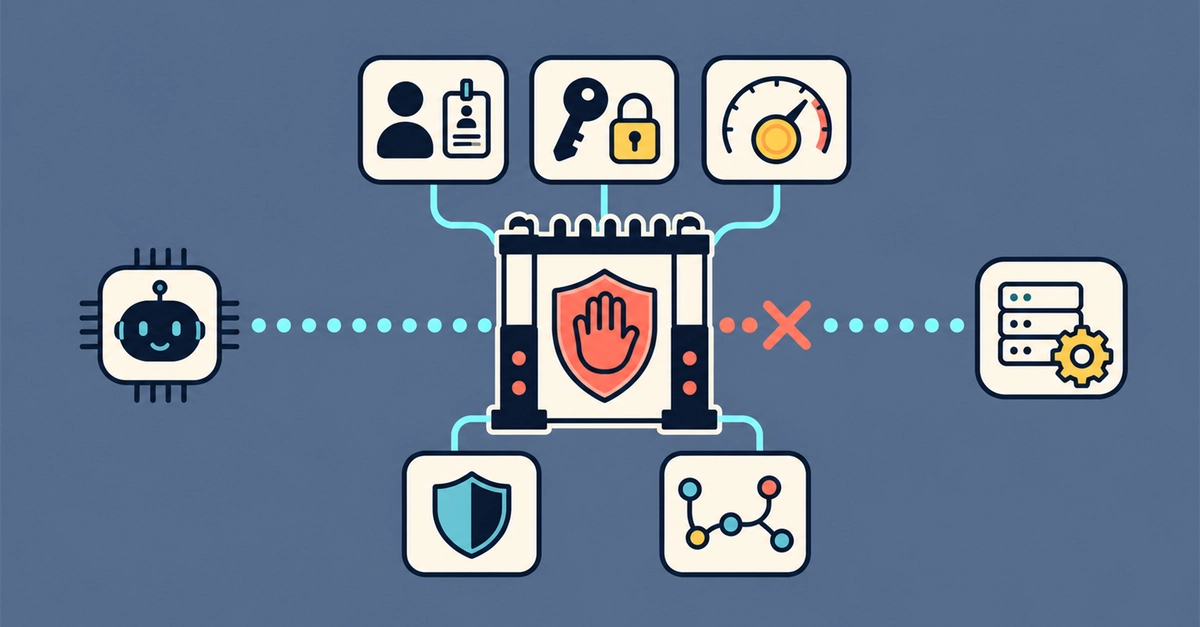
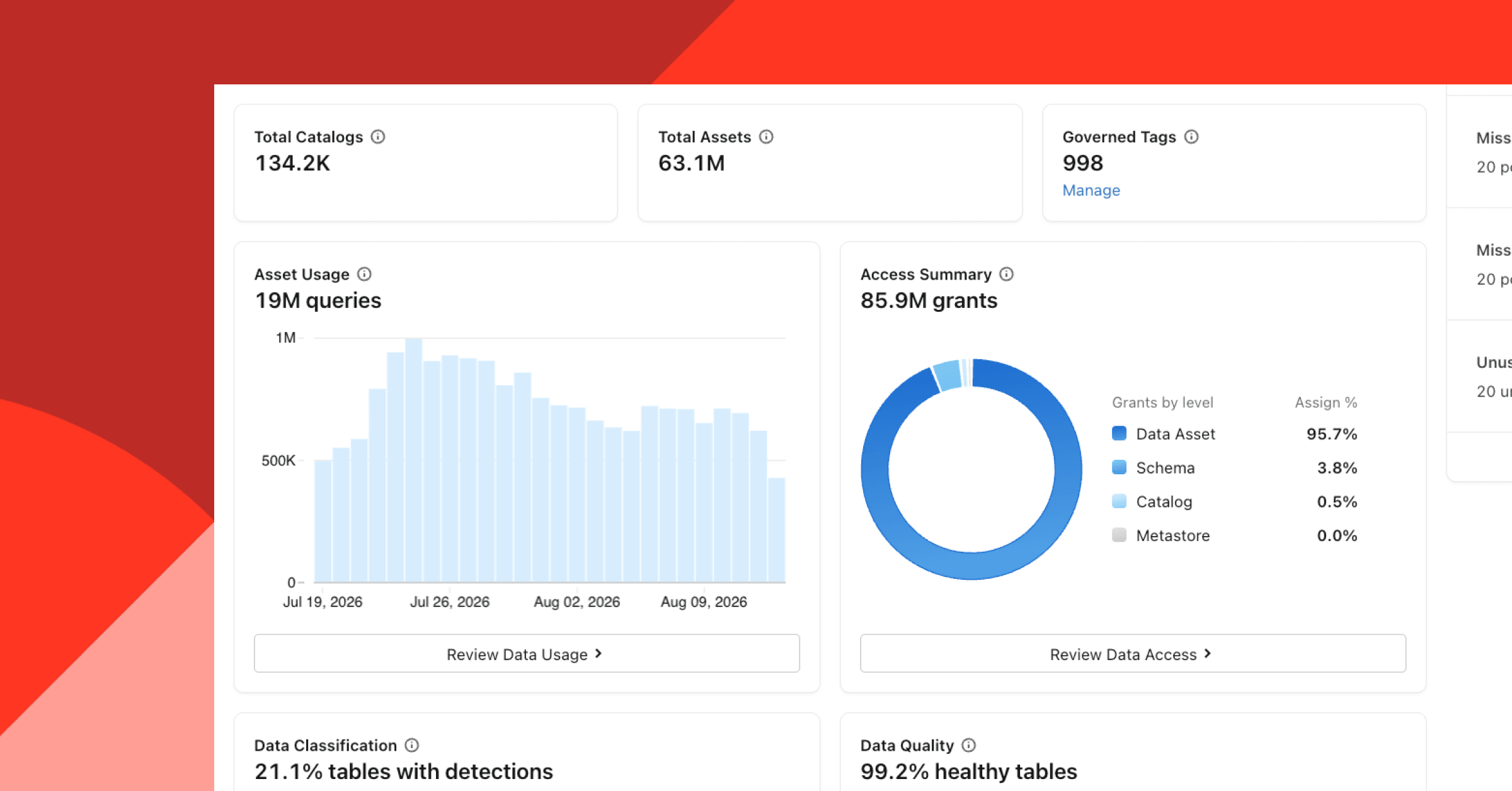
Data governance tools are software platforms that help organizations catalog, secure, monitor, and audit their data assets so that data stays accurate, discoverable, and compliant with regulatory requirements. They combine data cataloging, data lineage tracking, access controls, and compliance reporting into a single system that data teams use to manage data across an enterprise.
This guide explains what data governance tools actually do — whether described as data governance software, platforms, or solutions — the core capabilities and categories available today, and a practical framework for evaluating them against your organization's needs. It's written for data governance leads, platform architects, and IT leaders who already know they need better tooling and want a clear way to compare data governance solutions without a vendor scorecard.
Data governance tools translate governance policy into enforced, day-to-day practice across an organization's data estate. Rather than leaving data quality, security, and compliance to manual review, these tools automate discovery, apply access controls, track lineage, and generate compliance reporting so that what data governance is becomes an operational reality rather than a static document.