See more Daily Mail on Google - save us as a Preferred SourceBy JOHN-PAUL FORD ROJAS DEPUTY BUSINESS EDITOR Published: 00:09 BST, 26 August 2026 | Updated: 00:35 BST, 26 August 2026
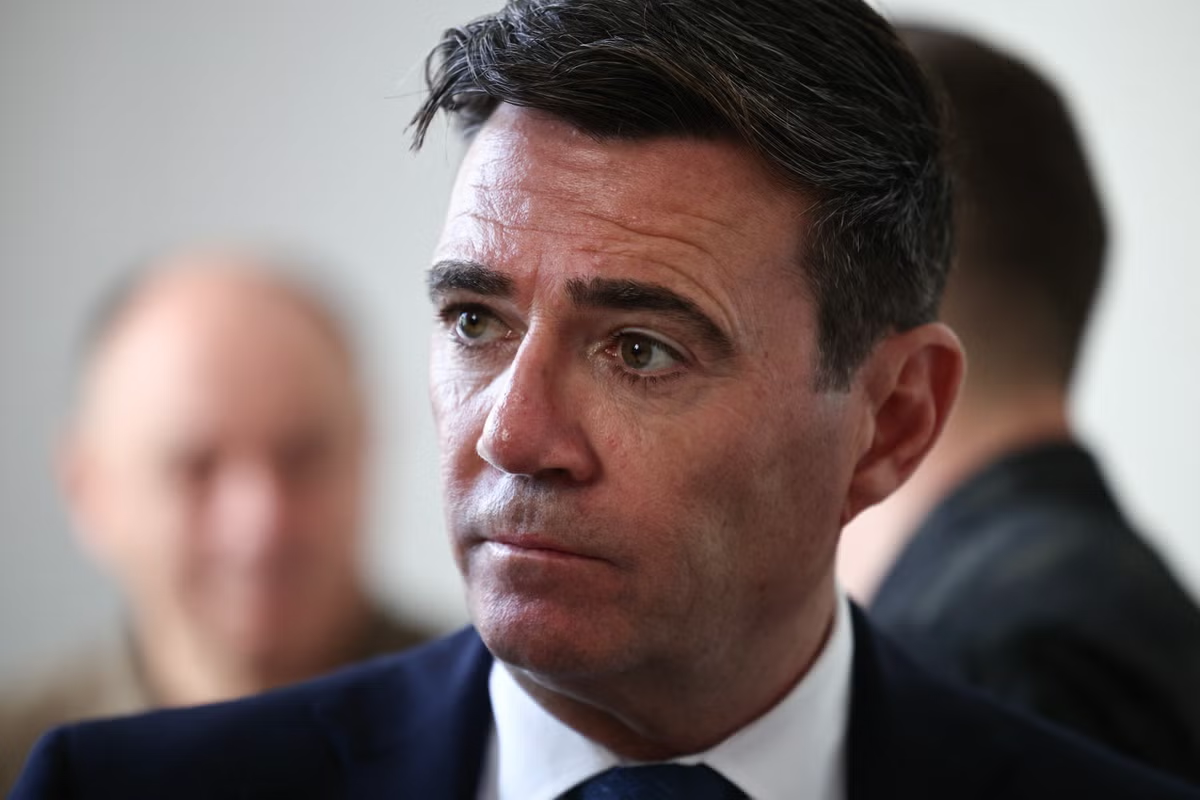
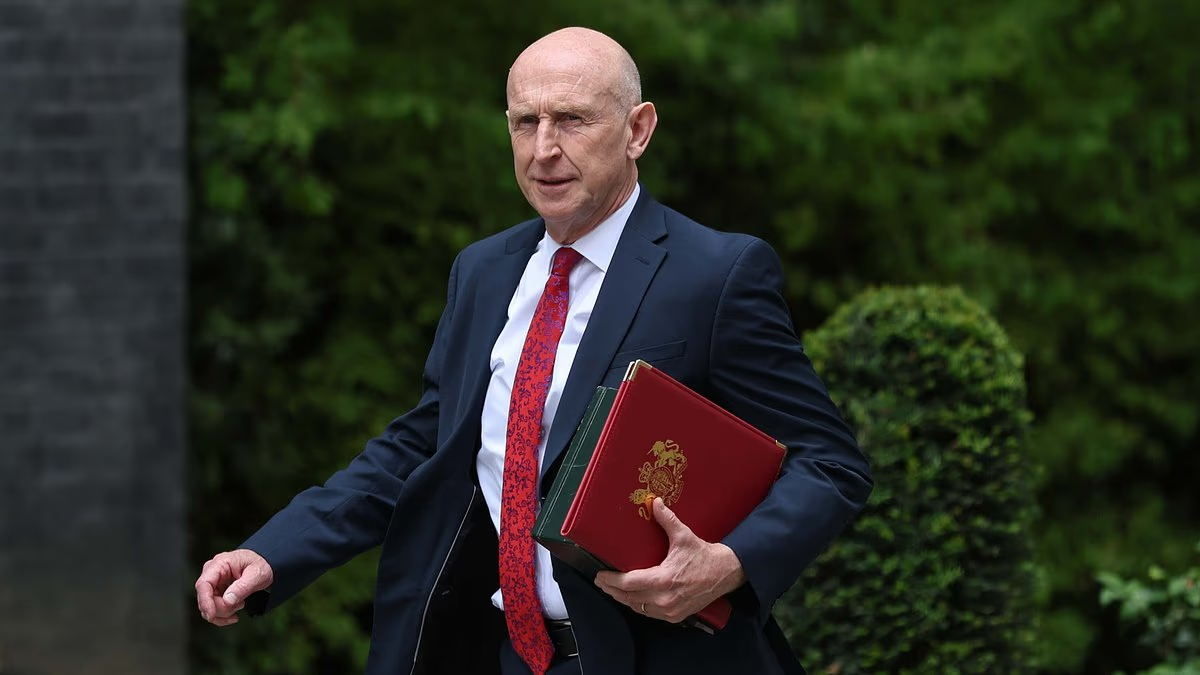
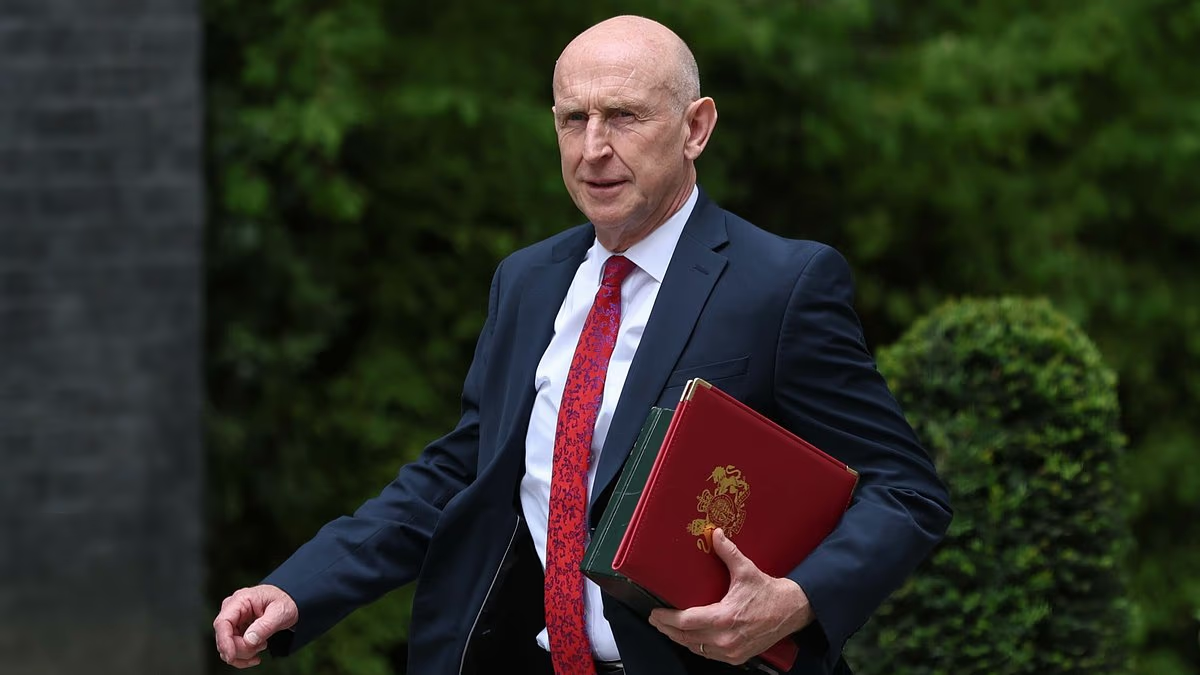
Older people should be targeted in a wealth tax raid to prop up public finances, says a think-tank.The Left-wing Institute for Public Policy Research (IPPR) has called for a reform of a system that is 'heavily tilted towards taxing work and younger earners'.Its conclusions are likely to be looked at closely by Labour as Chancellor John Healey prepares for his first Budget in October amid mounting spending pressures – and after Prime Minister Andy Burnham refused to rule out a wealth tax.But it could alarm many who have worked hard to afford homes and build nest eggs for later life.The report calls for council tax and stamp duty to be replaced with a proportional property tax set at an annual rate of 0.65 per cent. It admits there would be 'winners and losers' with homeowners in some wealthy areas potentially facing a big hit.It also backs the idea, supported by some in Labour, of increasing the rate of capital gains tax to the same as income tax. Defence Secretary Wes Streeting previously described such a move as a 'wealth tax that works'.Another proposal is to extend national insurance to employees above the state pension age. That would address what the report describes as a 'striking' disparity between older workers and younger graduates.Those over the retirement age and still earning £45,000, £70,000 or £105,000 face tax rates of 20 per cent, 40 per cent and 60 per cent. Chancellor John Healey has been urged to tax the older generation instead of working people and young earnersA younger graduate repaying a student loan and paying employee national insurance would face rates of 37 per cent, 51 per cent and 71 per cent, the report said.The IPPR says change is needed as the population ages – with the proportion over 65 set to climb from 18 per cent in 2024 to 27 per cent in 2075. That will create huge spending pressures from rising health and social care costs that will dwarf others, such as higher defence spending and the Net Zero transition, it argues.Oxford University professor Ben Ansell, the report author, said: 'Ageing is going to become by far the biggest source of pressure on the public finances.'Yet our tax system has increasingly shifted responsibility towards younger workers while protecting many of those who have benefited most from decades of rising property and asset wealth.'Reform is politically difficult but avoiding it has given Britain an ever more complicated tax system.'We need a new fiscal contract: one that raises the revenue the country will need, shifts more of the burden from work towards wealth and property, and is honest with the public about who pays and why.'The report comes amid growing speculation that Mr Healey could put up taxes in the Budget. Capital Economics, a consultancy, has predicted they may go up by as much as £25billion.The Chancellor will need to find £5billion more for defence as well as paying for a series of cost-of-living announcements Mr Burnham has made as well as an overhaul of social care and a major programme of council house building.The PM said this week, when asked whether he would have to put up taxes, that he 'won't be unrealistic' about the state of public finances and that Britain is in a 'challenging position'.Economists believe the Government's Budget 'headroom' has been reduced sharply from £24billion at the time of the Spring Statement with rising borrowing costs caused by the Iran war adding to pressure on the Treasury.The Resolution Foundation think-tank estimates it has fallen to £8billion.