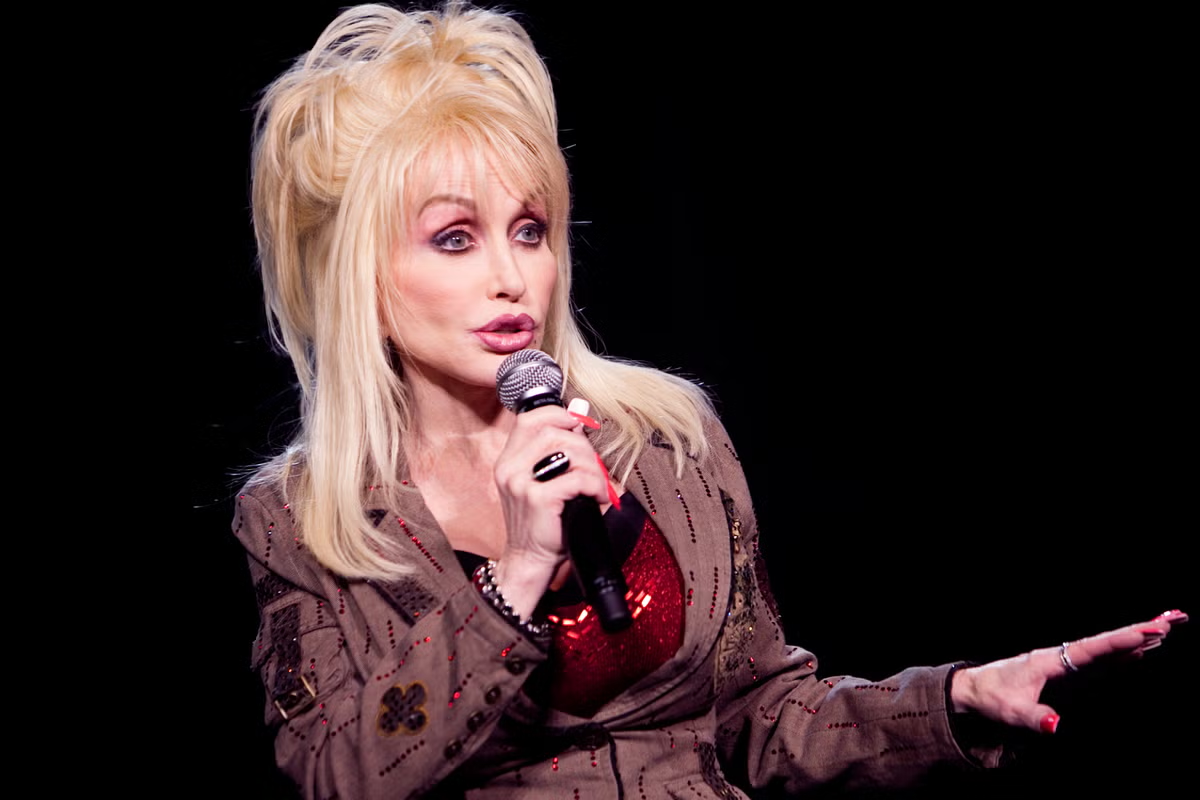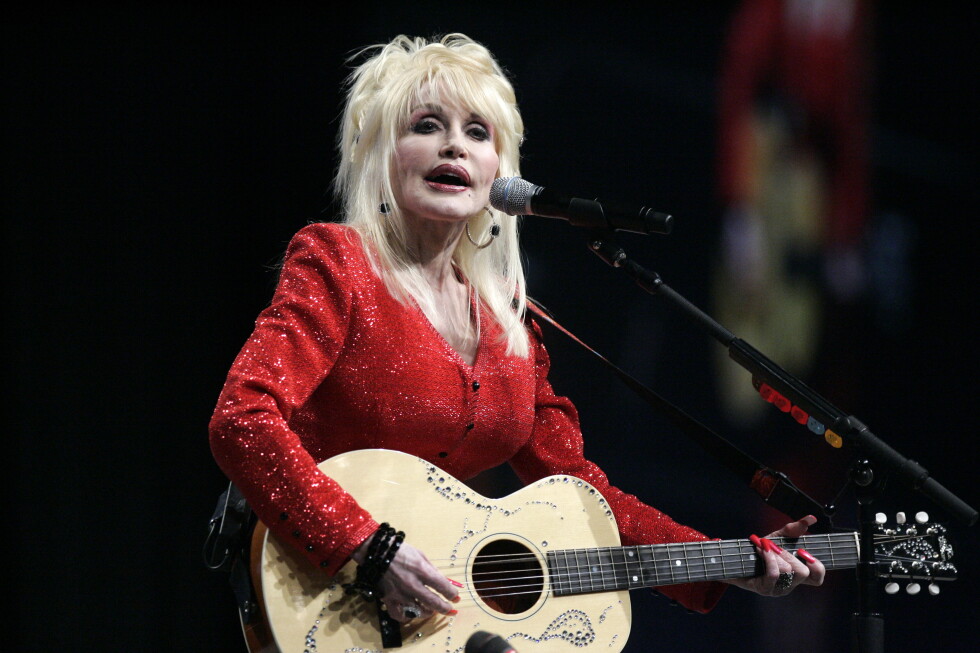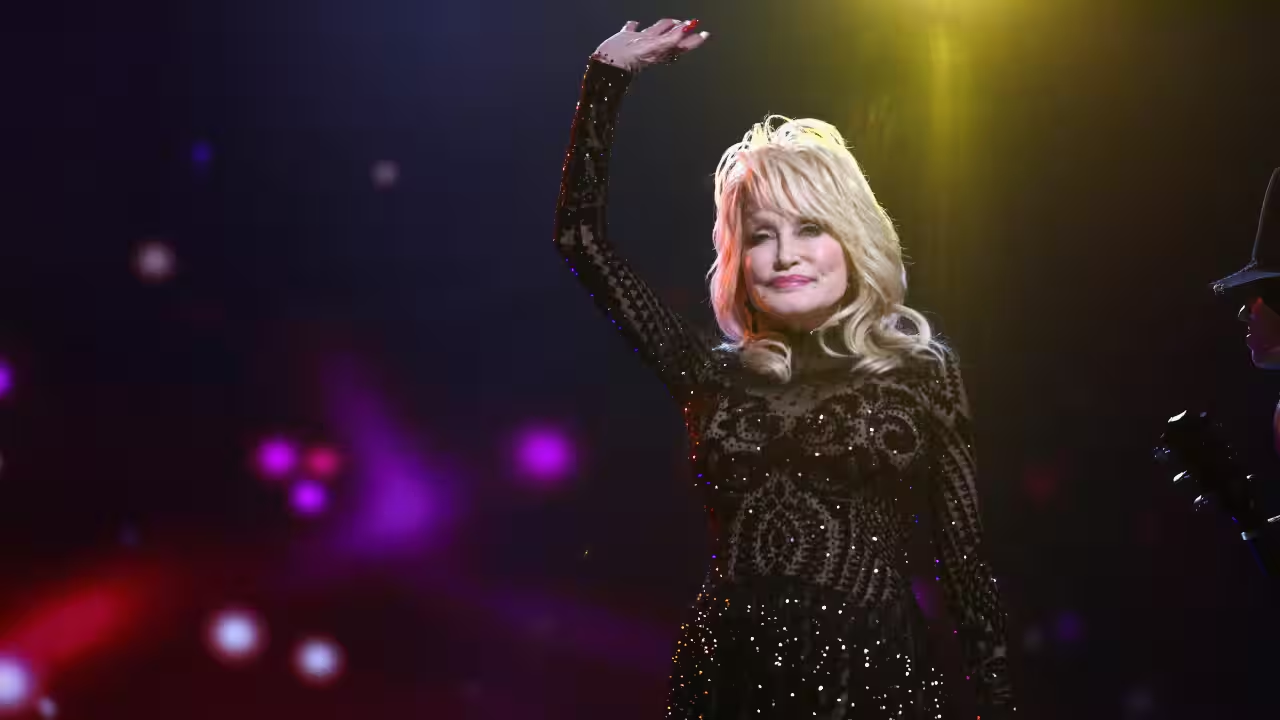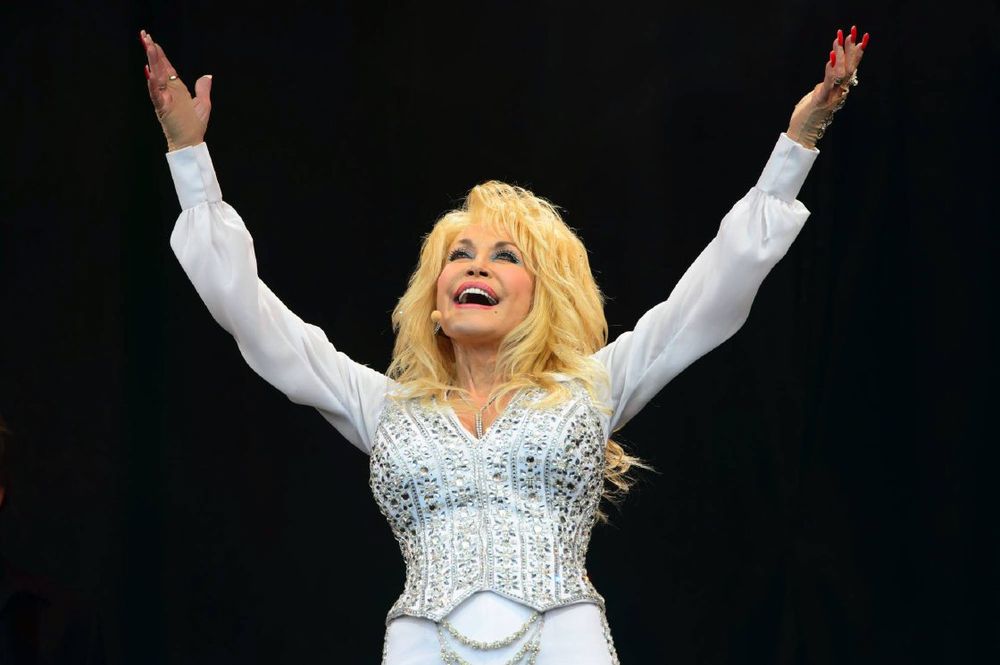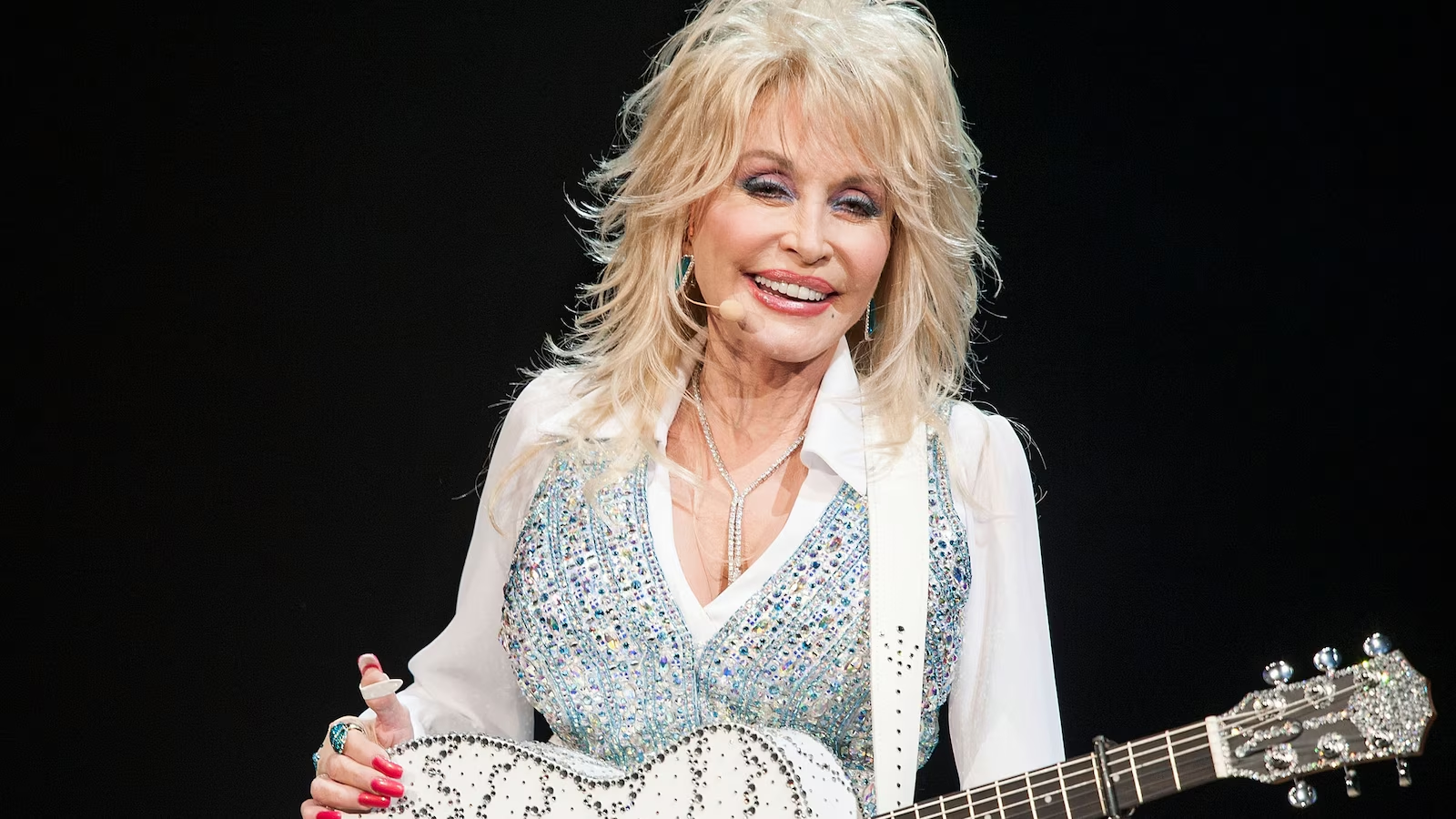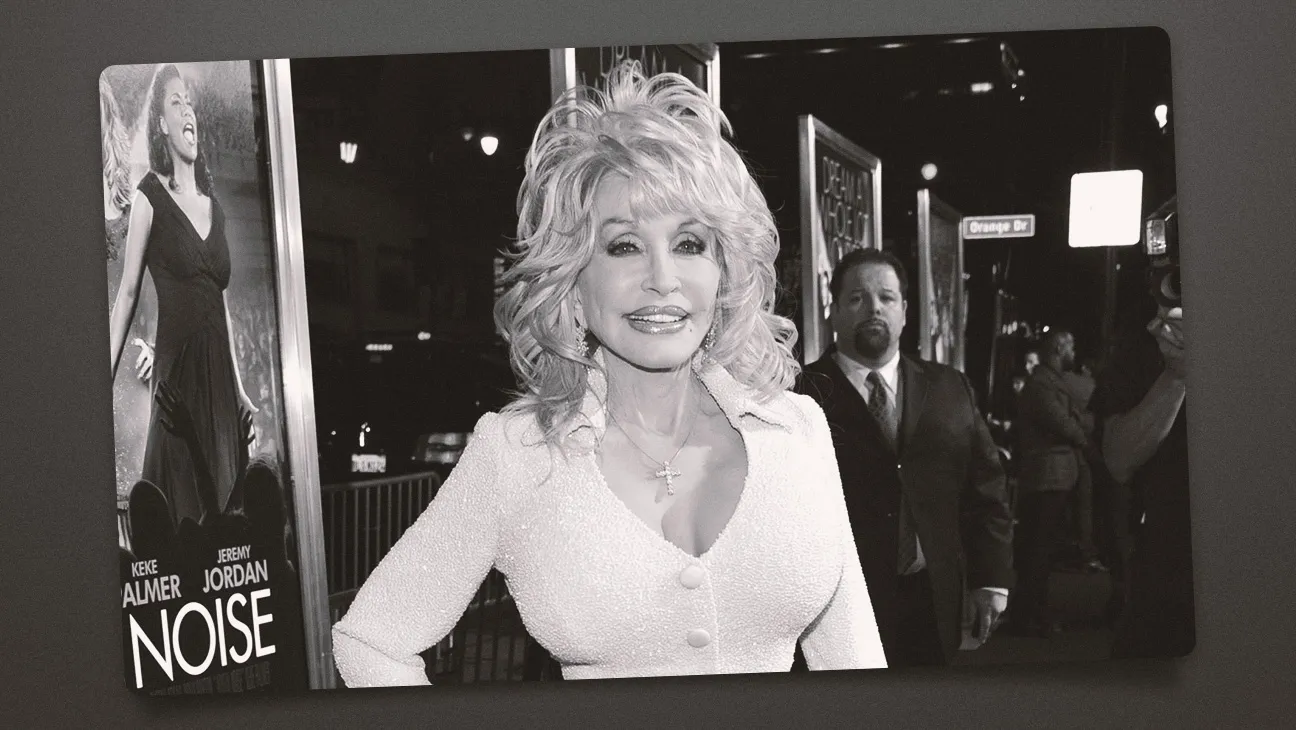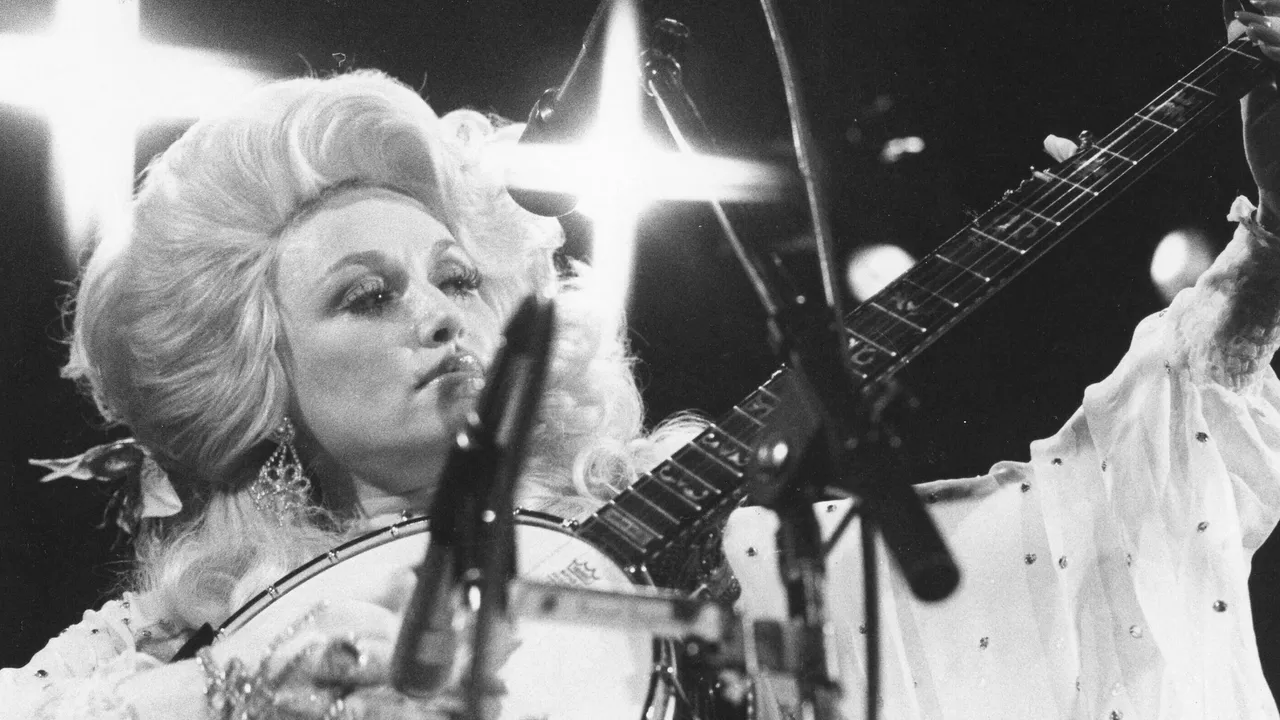
Dolly Parton performs at the Roxy in 1977.Photograph by Nancy Barr Brandon / Media Punch / AlamyA few years ago on my birthday, someone gave me a set of Dolly Parton-themed drink coasters, part of a collection of (mostly pink) kitchen sundries and assorted doodads that Parton had curated for Walmart. I leaned my favorite against the bathroom mirror; it’s been balanced there ever since. The front features a black-and-white portrait of Parton regarding herself before an illuminated vanity, fussing with her hair, which was—it goes without saying—blond, voluminous, impossibly firm. She was so beautiful. I liked seeing Dolly there every day as I initiated my own ad-hoc beauty regimen, which, regrettably, often consisted exclusively of piling my hair into an untidy bun. Dolly’s deep interest in cultivating carnal beauty never seemed shallow to me (though she often churned her insecurities into punch lines), or even chiefly concerned with aesthetics. It was always consonant with her art. “If I’m gonna have any looks at all, I’m gonna have to create them,” she once said. She was talking about makeup and plastic surgery, things she felt no shame in loving, but it’s hard to read that quote and not also think about what it means to be a visionary—to invent a whole world from nothing.She understood that beauty is intoxicating precisely because it’s hard to hold. Yet songs can do the holding: stop time, keep it still. The body of work that Parton left behind—the body she left behind—is so staggering in its gorgeousness and verve. In 1969, Parton released a song called “Little Bird.” It’s the final track on Side A of “In the Good Old Days (When Times Were Bad),” her third solo album, released by RCA Victor. It’s a great record, hardscrabble and honest and charming; Parton was just coming into her own as a writer and solo performer. All the tropes we now associate with country music—the idea that the genre boils down to “three chords and the truth,” as the songwriter Harlan Howard once put it—were beginning to crystallize. Parton was such a crucial engineer. Her writing contained enormous warmth and tenderness; unlike some of her erstwhile male colleagues, she possessed an almost uncanny capacity for empathy. Anyone can tell a story, but it takes a pure heart to make it mean something. “Little Bird” opens with a lament for the unstoppable passage of time:Beauty is a rare perfumePrecious, yet doesn’t last longYouth is but a playful breezeThat blows our way once then moves onParton’s voice was already such a marvel: round, crisp, rippled in a way that feels elemental, like the surface of a pond after a rock is tossed in. “Little Bird” is a minor song in her discography, less than two minutes long. Yet it’s the first track I thought to play when I heard the news of her passing. It’s a song about longing, and making peace with the immutable fact of our own mortality: “Then sing me a song as you fly me along, on our long last journey above,” she sings. Her voice rises on the final word, but it doesn’t sound like she’s grasping at something. It sounds, to me, as though she’s being carried.Illustration by George WylesolYoung people are already angry about their economic prospects. Jay Caspian Kang argues that it’s not going to get better anytime soon—and offers five predictions about housing, A.I., and the coming political backlash. Read or listen to the story »More Top StoriesWhen they’re stumped by medical mysteries, doctors can sometimes turn to a powerful type of genetic testing called metagenomics to get answers. Isaac Chotiner interviews the retired I.D.F. colonel Doron Meiner, who was arrested while trying to protect a Palestinian community from settlers in the West Bank. Jackie the bald eagle “lived her life according to ageless eagle principles,” Alex Ross writes, but also brought comfort and inspiration to scores of human viewers. There’s a case for cautious optimism about the Trump Administration’s war on vaccines. We’re tracking the results of tonight’s Republican Senate primary runoff in South Carolina, where the congressman Ralph Norman is taking on the Trump-backed newcomer Darline Graham. Charles Bethea recently reported on how Graham, the younger sister of the late Lindsey Graham, remains a mystery to voters and political insiders. The most-clicked item in yesterday’s newsletter was an investigation into Iran’s brazen international assassination campaign.Trade talks have collapsed into trade war between the U.S. and Canada. Donald Trump declared fifty-per-cent tariffs on scores of imports, and, in return, Canada has announced retaliatory tariffs on hundreds of products, starting on September 8th. We reached out to Bill McKibben, who has written previously about the comparative sanity of our neighbor to the north, for his thoughts about this escalating conflict.What does this mean for Canada?“The first impulse, of course, is to say it’s bad for Canada, whose economy is dwarfed by that of the United States. But Canada has been building new trade relations with other countries, China included, and the Prime Minister, Mark Carney, said in his address on Saturday, after he broke off talks, that a new, deeper set of talks with the E.U. was in the offing for the fall. In any event, there are several ways to measure success in a nation, and one of them is unity: Carney’s popularity numbers at home are almost the inverse of Trump’s here, and the latest American assault seems to be unifying Canadians even more. The President was reduced to threatening to rename Lake Ontario as Lake America, which doesn’t seem like the kind of stunt a winner pulls.”A book: “The Savage Landscape: How We Made the Wilderness” considers what it means to call a place wild in a world saturated by human intervention. It’s one of the best books of the year so far. A show: You have until September 12th to see Meg Stalter in “Oh, Mary!” Another book: It’s the last week to squeeze in a pocket-size summer read. Rachel Syme recommends “The Girls of Slender Means.”Today’s Crossword Puzzle: Breed of sheep known for its ultrafine wool: six letters. Catalogues: Can you sort the items into the correct order? Shuffalo: Can you make a longer word with each new letter? Laugh Lines: Test your knowledge of classic New Yorker cartoons.“Luckily, the A.I. trolley will decide who to kill all on its own.”Cartoon by Paul NothP.S. In a 2023 interview with The New Yorker, Dolly Parton said, of her singing, “It’s a voice you know when you hear it, whether you like it or not.” We liked it. 🎤Ian Crouch contributed to today’s edition.
What Dolly Parton Built
From the daily newsletter: the musician, who died today at the age of eighty, leaves behind a legacy of enormous warmth and tenderness.
1,099 words~5 min read