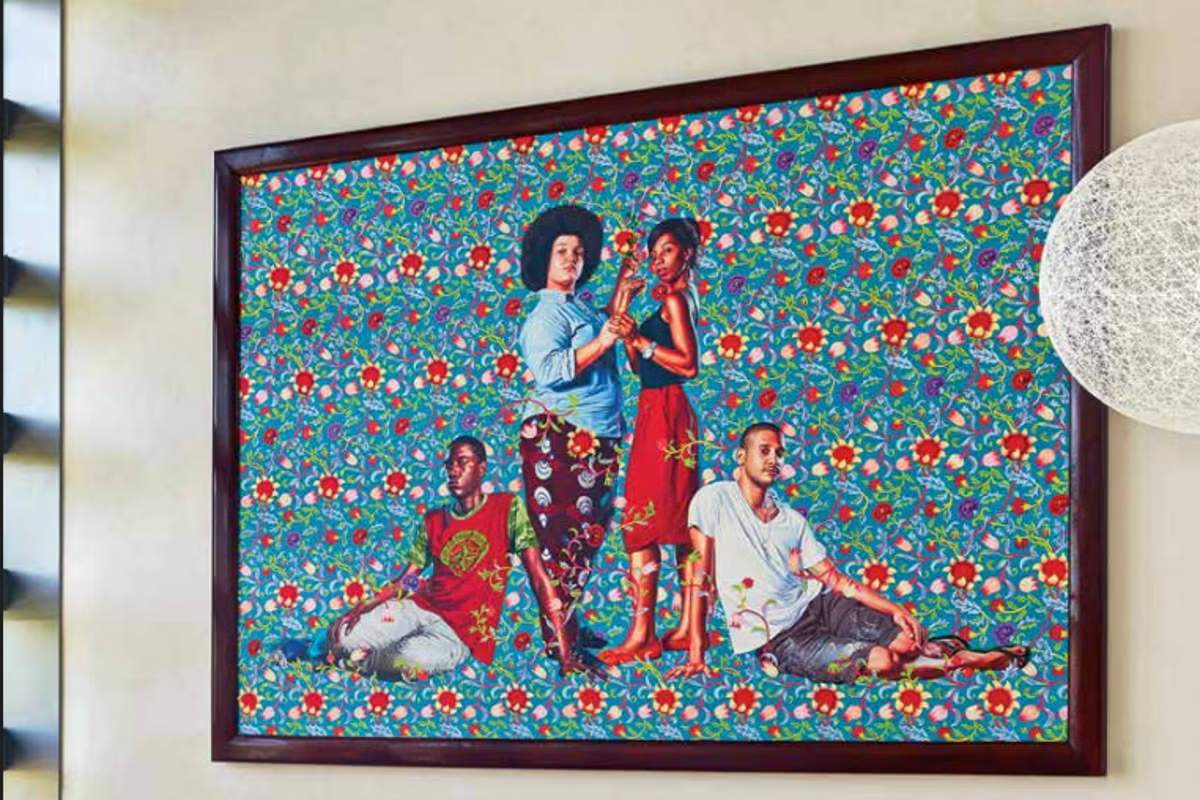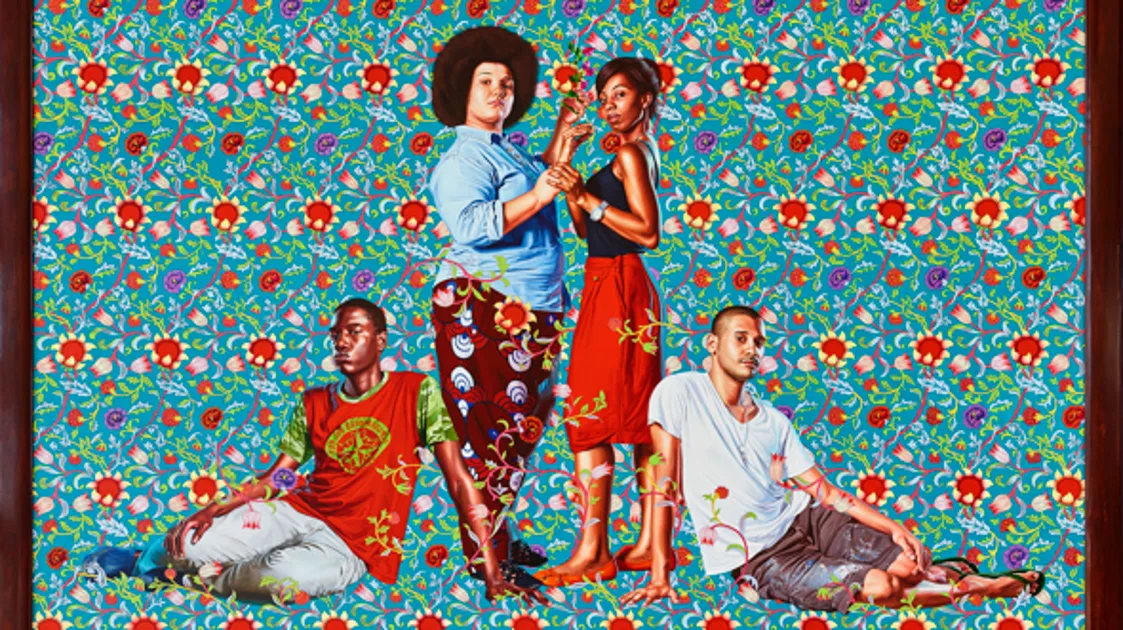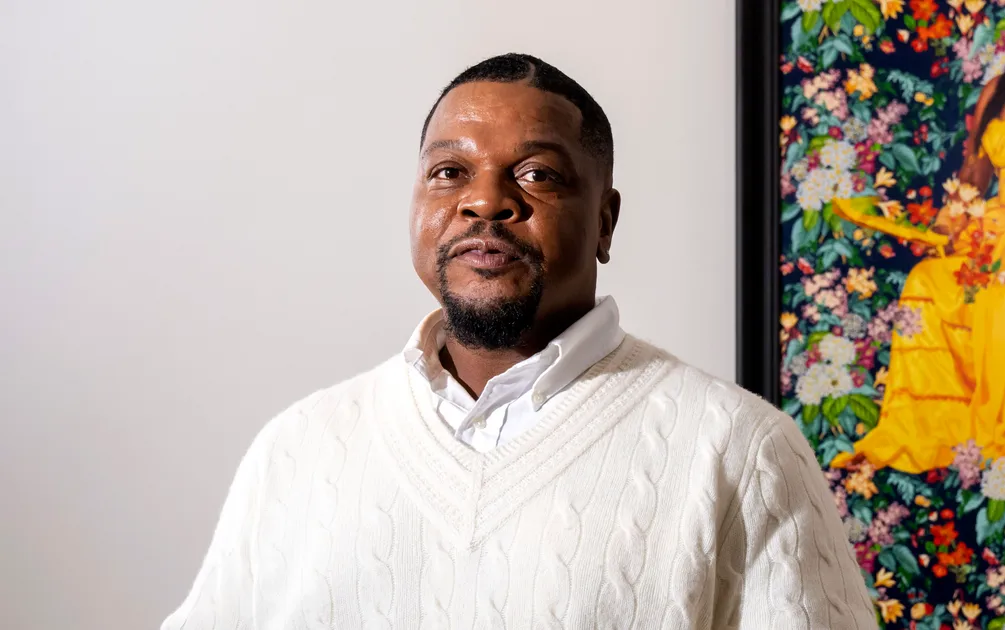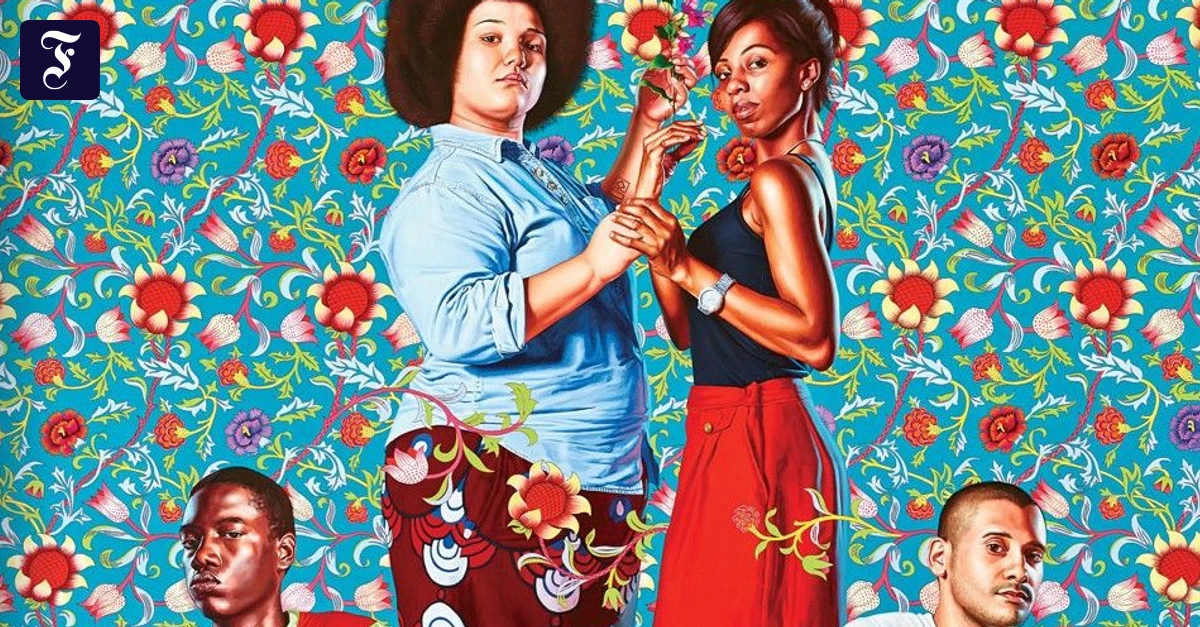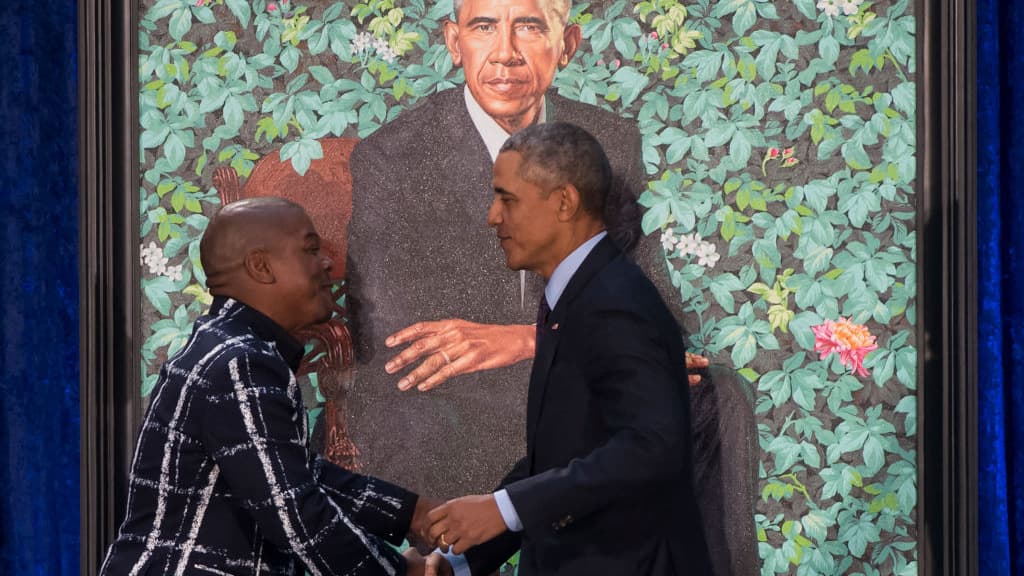
The painting was removed from the U.S. Embassy in Santo Domingo, Dominican Republic, earlier this month on ideological grounds. Commissioned by the State Department in 2013, the painting, “Young Artists After Siamesas 1960,” depicts four Dominican models against a floral backdrop in Wiley’s quintessential style.The U.S. ambassador to the Dominican Republic Leah Campos posted a video of the painting’s removal on social media to the tune of heavy metal song “We’re Not Gonna Take It.” The video shows the painting covered in a tarp emblazoned with the American flag prior to its removal.“In the Trump Administration and under my leadership we are turning away from globalist and woke ideologies and instead embracing American patriotism and the beauty of our great country!” Campos wrote.The State Department is looking into whether it can legally sell the painting, which was paid for with taxpayer dollars, a spokesperson for the department told The New York Times on Monday.TIME has reached out to Wiley for comment.Renowned artistFor “Young Artists After Siamesas 1960,” Wiley collaborated with students from the Facultad de Artes and the Altos de Chavon School of Design, both prominent art schools in the Dominican Republic. The subjects in the painting were modeled by four local art students. The work drew inspiration from two Dominican art works, Celeste Woss y Gil’s 1940 painting “Desnudo Feminine” and Gilberto Hernández Ortega’s 1960 work “Siamesas.”The painting was part of the embassy’s permanent exhibition, assembled through the State Department’s Art in Embassies program. Established in 1963, the program is aimed at fostering cross-cultural dialogue and diplomacy through art. In 2015, the State Department awarded Wiley its Medal of Arts in recognition of his contributions to the program.But in recent years, Wiley faced criticism from conservative commentators over his 2012 painting “Judith and Holofernes.” The painting portrays a Black woman holding the severed head of a white woman, which Wiley later described as a play on the “kill whitey thing.” The work, currently on view at the North Carolina Museum of Art in Raleigh, reimagines a 17th century painting by Giovanni Baglione that depicts the biblical story of Judith beheading an invading general to save her town.Wiley also faced scrutiny in 2024 for sexual assault allegations, which he denies.The State Department spokesperson told the Times that “the work of an individual with such violent and racist words and depictions has no place in the America First State Department.”In a recent interview with former White House Press Secretary Sean Spicer, Erin Scavino, director of Art in Embassies, called the painting “very woke” and “aesthetically terrifying.” Scavino became director of the program at the beginning of President Donald Trump’s second term after previously working as an attorney and appearing as a contestant on Trump’s reality show The Apprentice. She is also the wife of White House Deputy Chief of Staff Dan Scavino.Art attackAs part of the Art in Embassies program, Scavino has emphasized acquiring and displaying works with patriotic imagery. Last month, she organized an exhibition in Washington titled “Passport to Patriotism: 250 Years of Diplomacy” that featured 68 representations of the American flag across 56 works.Earlier this year, Scavino claimed her objections to so-called “satanic baby art” at the U.S. ambassador’s residence in Bucharest had forced Kathleen Kavalec from her post. The ambassador’s departure had previously been described as a planned retirement.The State Department also changed its process for selecting the 2026 U.S. pavilion at the Venice Biennale, including replacing diversity language with requirements concerning “American values.” Critics described the process as politicized and opaque, pointing to the appointment of Jenni Parido, a reported friend of Scavino with no prior professional museum experience, as the pavilion’s commissioner. Last July, Parido founded the nonprofit American Arts Conservancy, which the State Department selected as the pavilion’s commissioning institution.The Trump Administration has pursued similar changes across other federal cultural institutions especially in connection with the country’s 250th anniversary this year. In an executive order issued last March, Trump directed the Smithsonian to remove what he called “improper ideology” and “divisive narratives” and instead emphasize American greatness. The same month, his Administration sharply cut the federal staff responsible for preserving a collection of 26,000 publicly owned artworks.
Why the Trump Administration Is Purging ‘Woke’ Art From U.S. Embassies
The painting was removed from an embassy in the Dominican Republic over so-called “woke ideologies.”
693 words~3 min read