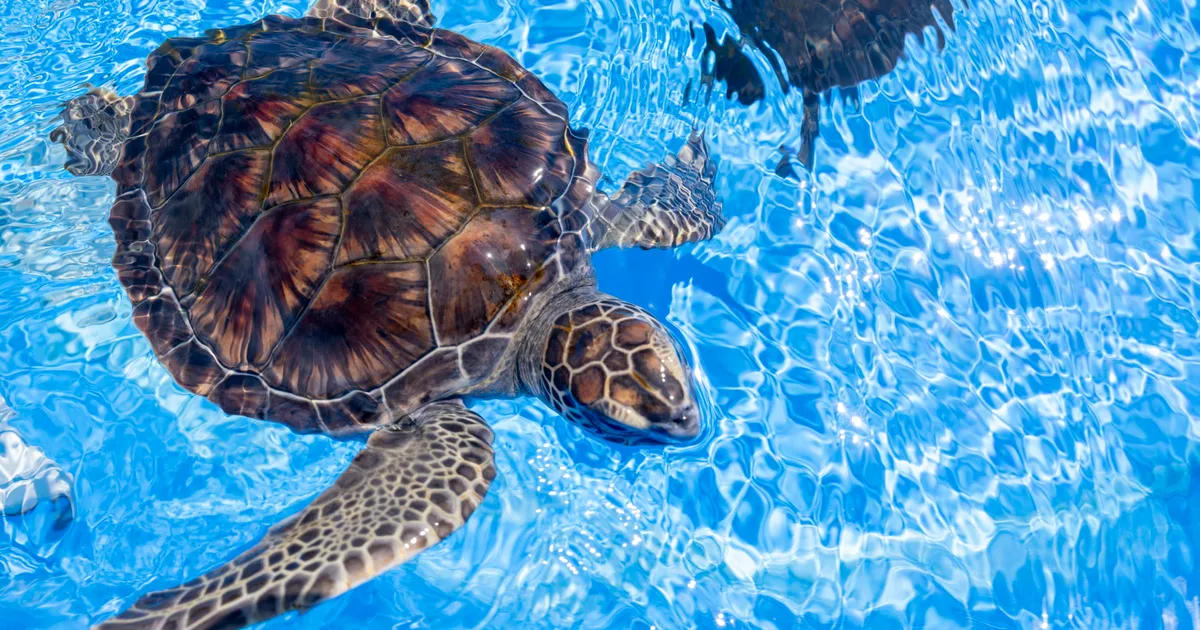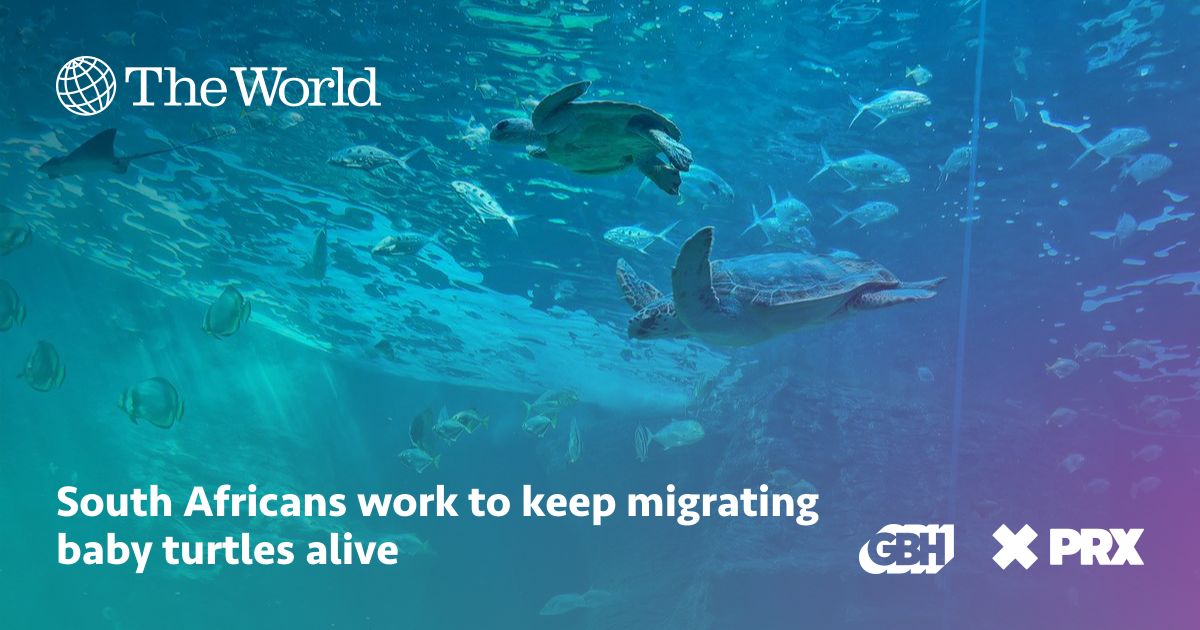
Public radio’s longest-running daily global news program.AboutContactDonateMeet the TeamPrivacyTerms of use©2026 The World from PRXPRX is a 501(c)(3) organization recognized by the IRS: #263347402.South Africans work to keep migrating baby turtles aliveEach year, hundreds of endangered baby sea turtles get stuck on the beaches of South Africa during ‘stranding season’, but thanks to a network of around 2,000 volunteers, many of them get rescued and are safely brought to an aquarium. AnimalsAugust 25, 2026Updated: August 25, 20265:12Turtles swim around at the Two Oceans Aquarium in Cape Town, South Africa, April 15, 2026.Baby loggerhead and leatherback turtles breed on South Africa’s east coast from February to July, and then take on a long trek around Cape Town to the Atlantic Ocean.Only seven species of sea turtles exist worldwide, and all five found in South Africa are currently endangered. It’s estimated that only around one in a thousand sea turtles actually make it to adulthood. But the Two Oceans Aquarium is working to actively try to change this fate.During feeding time at the aquarium’s ocean exhibit in May, schoolchildren and adults were amazed by the variety of animals on display. Particularly noticeable were two large adult turtles temporarily in the exhibit during their rehabilitation at the aquarium.More than 2,000 volunteers along South Africa’s beaches are all trained to recognize and respond to stranded turtles.Elna Schütz/The WorldBut, conservation officer Tamzyn Lewis explained during her presentation that when babies hatch in the east of the country and swim along the coastline, many end up ingesting plastic and getting sick.“For those animals that are capable of recognizing that something is wrong, they will strand on the beach, and that’s where passerbys will see them and bring them into our turtle conservation center upstairs of the aquarium,” she said.These passersby who find and keep the turtles safe are part of the Turtle Rescue Network.“It is a phenomenal network,” said Tracy Whitehead, the turtle rescue coordinator for the Two Oceans Aquarium Foundation. “It blows our mind all the time, just how efficient and enthusiastic and committed the coastal network is.”Whitehead works with over 2,000 volunteers all along South Africa’s beaches, who are all trained to recognize and respond to a stranded turtle.Conservation officer at the Two Oceans Aquarium, Tamzyn Lewis, explains the feeding session at an exhibit to visitors, in Cape Town, South Africa, April 15, 2026.Elna Schütz/The World“We coordinate step by step for each rescue using the hotline, and people phone in and are then guided by me, step by step, through each turtle rescue from the beach, safely retrieving and eventually getting them through to the turtle conservation center and into the Turtle Hospital.”The Turtle Hospital, on the roof of the aquarium, is filled with water-processing equipment and tanks of various sizes holding sick turtles.Sage, an older olive ridley turtle, washed up in a fishing net. She repeatedly knocked her flippers against the side of her rehabilitation tank because her injuries caused her a lot of stress.Sage is an older olive ridley turtle that washed up in a fishing net. Elna Schütz/The WorldConservation manager Talitha Noble-Trull said this is only one illness facing the turtles that are rescued.“We deal with a lot of bone infections, a lot of pneumonias, blood spread infections, physical wounds, emaciation and a range of both primary and secondary medical issues.In the baby turtle enclosures, two animals had made it through ICU and quarantine. They were two small loggerheads, not much bigger than the palm of a hand, despite having traveled over 1,200 miles in their first few months of life.“Over the next six months, these little guys will receive 5% of their body weight in food every day, get medicine where they need it, and hopefully grow nice and strong with a hard shell to prepare them for release later in the year,” Noble-Trull said.Conservation manager at the Two Oceans Aquarium, Talitha Noble-Trull, stands in the Turtle Hospital with a turtle in rehabilitation, in CapeTown, South Africa, April 15, 2026.Elna Schütz/The WorldThe biggest problem turtles face is the plastic bags, bottles, balloons and ribbons floating around in the world’s oceans. Almost all the turtles at the hospital suffer from eating trash because it closely resembles their own food — like plankton and jellyfish. It fills up their stomachs instead of food, until they essentially starve.Noble-Trull explained that this is why the care they give is important globally, because the animals found in South Africa are likely to have traveled to the Americas, Europe and Australia.Turtles are an important species for conservation. Unfortunately, they are also particularly vulnerable to threats, like ingesting plastic. Given that the animals tend to travel into areas of the ocean that humans may not explore, their health can reflect the health of the environment, making them excellent indicators of ocean health.Turtles tend to travel into areas in the ocean that humans may not be able to explore, so their health can reflect the health of the environment.Elna Schütz/The WorldThey are these really powerful ocean messengers that get to tell us what life is like out in the open sea, miles and miles offshore in spaces we don’t get to engage with and see,” Noble-Trull said.The Two Oceans team is taking this message seriously. They are in the process ofbuilding a bigger turtle conservation facility that will allow the public to come see theimportant work that is being done.
South Africans work to keep migrating baby turtles alive - The World from PRX
Each year, hundreds of endangered baby sea turtles get stuck on the beaches of South Africa during ‘stranding season’, but thanks to a network of around 2,000 volunteers, many of them get rescued and are safely brought to an aquarium.
892 words~4 min read