Years after the “dead internet theory” became popular to describe the apparent takeover of online spaces by AI, LinkedIn is taking steps to avoid an early grave by slopification.
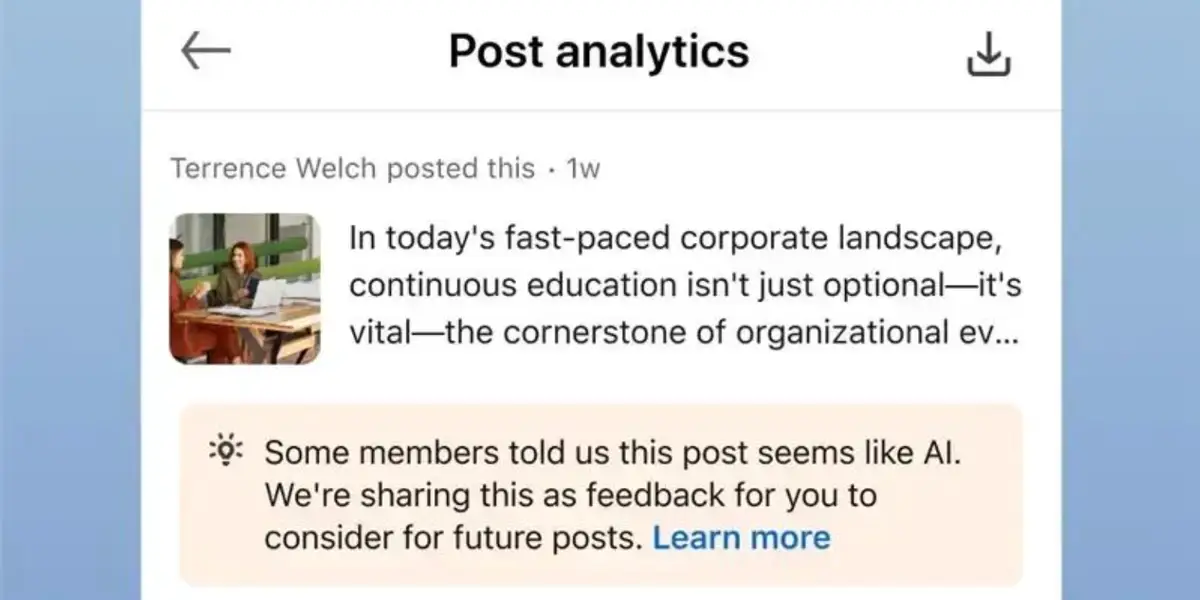
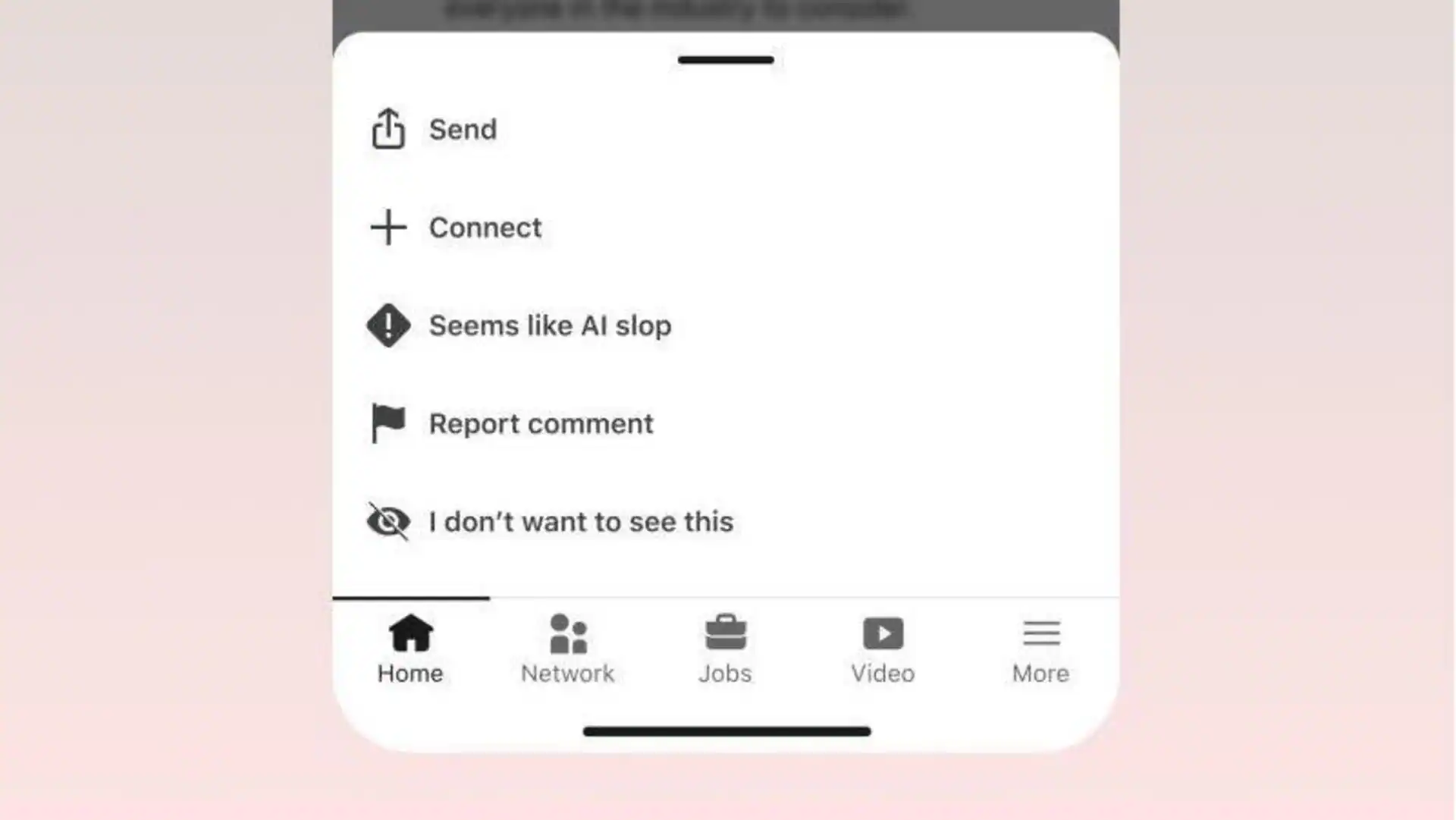
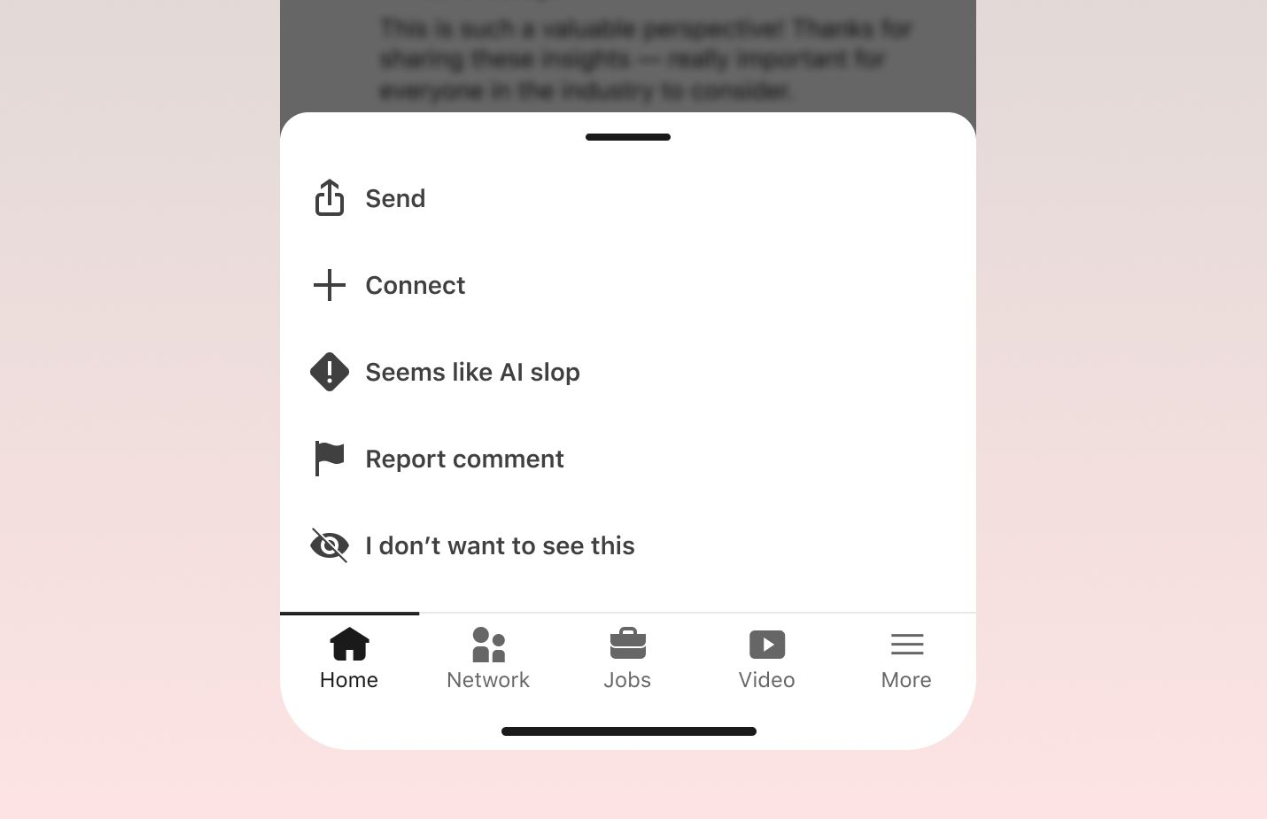
Last month, LinkedIn Chief Product Officer Hari Srinivasan announced in a post on the platform that in an effort to improve the quality of users’ experience, the company would add a new feature, a “seems like AI slop” button, to allow users to flag posts that appear to be AI-generated.
In the first two weeks of the feature’s launch, more than one million people have clicked the “seems like AI slop” button, Hari Srinivasan wrote last week. He noted that overall members are experiencing 40% fewer views on what the platform classified as AI slop compared to a few weeks prior.
“Despite the progress, we know we have more to do to ensure LinkedIn remains a place where you can find real people & real perspectives,” he said. “This all remains very top of mind.”
While the dead internet theory began in the late 2010s as a fringe belief in tech circles in response to the internet no longer appearing as genuine or lively as it once did in the age of blogs and forums, the conjecture has gone mainstream as agentic AI and bots flood online spaces—and it turns out it’s accurate.