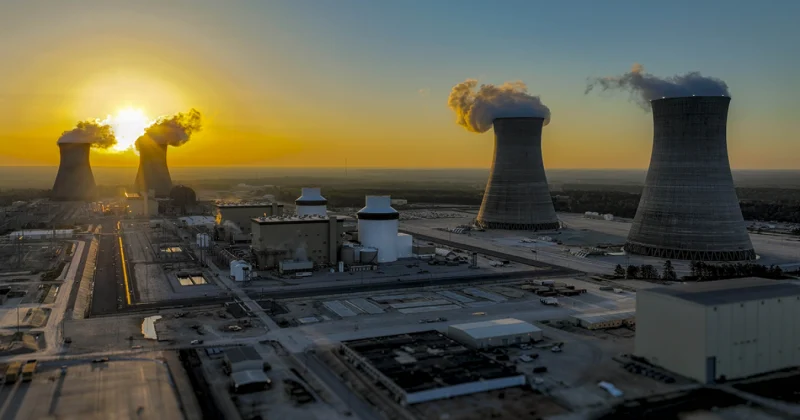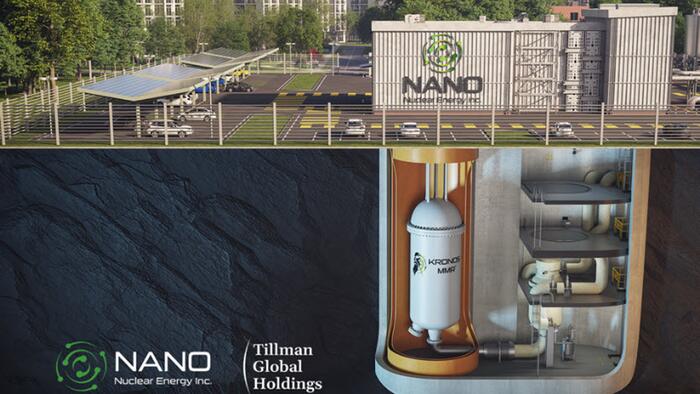
The artificial intelligence boom is supercharging the development of next-gen nuclear energy technology. Big Tech and private equity are catalyzing the research and development of cutting-edge approaches to round-the-clock clean energy production as hyperscalers add power-hungry data centers to the grid at a blistering rate. “A single hyperscale data center can consume as much electricity as 50,000 homes,” writes the MIT Energy Initiative. “U.S. data centers consumed more than 4% of the country’s total electricity in 2023, and by 2030 that fraction could rise to 9%,” MIT goes on to warn. This means that the expansion of data centers to fuel the integration of AI into everything from your email provider to your electric toothbrush is seriously changing the way we consume – and therefore the way we produce – energy in the United States and beyond. Not only do we need to expand energy production capacity at a breakneck pace, but we also need to find a way to do so without throwing climate goals out the window. As a result, venture capital funding is going gangbusters for both nuclear fusion and fission startups. According to a recent report from Axios, global investment in both fission and fusion has topped USD $4.5 billion across 81 companies in 2026 so far. At this rate, projections show that 2026 will shatter the previous annual record of $6.2 billion for 93 companies in 2025.Some of the biggest figures and deepest pockets in Silicon Valley are throwing their weight behind nuclear energy advancement as a silver bullet solution to the energy monster that AI is creating. Major investors include Microsoft’s Bill Gates and OpenAI’s Sam Altman. "There's no way to get there without a breakthrough," Altman said at the 2024 World Economic Forum in Davos, Switzerland. "It motivates us to go invest more in fusion."In addition to nuclear fusion, there is a lot of buzz around the potential for small modular reactors (SMRs) to transform the aging and ailing nuclear power sector in the United States. These smaller and cheaper reactors hold considerable promise for overcoming some of the hurdles that have been causing nuclear energy to fall out of fashion in the last several decades. Traditional nuclear power plants are enormously expensive and time-consuming to develop. The United States’ newest traditional nuclear power plant, Georgia’s Plant Vogtle, finally came online in 2024, years late and billions of dollars over budget. While this has scared a lot of policymakers and investors away from large-scale nuclear power, there is hope that SMRs could allow for a more agile energy future at a time when carbon-free energy sources are sorely needed. However, SMRs have been slow to deliver on the considerable hype behind them. While billions of dollars have gone toward developing the technology, and the Nuclear Regulatory Commission only approved NuScale’s uprated SMR design last year, there are still zero commercial SMRs operating in the country. Some experts think that the buzz has turned to bust. But others, buoyed by the new wave of investment interest driven by the AI boom, think that the timing is finally right for the SMR revolution. For example, a duo of scientists with SpaceX pedigrees is taking advantage of an abandoned SMR test facility in Virginia, with the hopes of being the team to push the SMR revolution over the finish line and into commercial reality. “We’re standing on the shoulders of giants here, right?” Applied Atomics co-founder Ben Kellie recently told the Washington Post. “We’re starting with something that had $400 million in investment put into it, and significant time and effort. That’s a leg up.”Whether this project is the one that will ultimately serve as a proof-of-concept for SMRs, it will at the very least provide more data in a nascent field where hard numbers are sorely needed. “It is not just about whether the technology is viable,” David Schlissel, a ‘longtime nuclear consultant to consumer and environmental groups,’ told the Washington Post. “It is also whether the cost is viable. … The industry is running around with all this hype trying to sell nuclear broadly. But they still have not fully tested and built any of these new reactors.”By Charles Kennedy for Oilprice.comMore Top Reads From Oilprice.comTreasury Expands Iran Sanctions Without Targeting Major Chinese BanksEurope Dodges a Rhine Crisis for the Worst Possible ReasonOil Nears $100 as Trump’s ‘Economic D-Day’ Raises the Stakes
The Race to Power AI Is Reviving America's Nuclear Ambitions | OilPrice.com
AI-driven electricity demand is unleashing a new wave of investment in nuclear fusion, fission, and small modular reactors.
728 words~3 min read