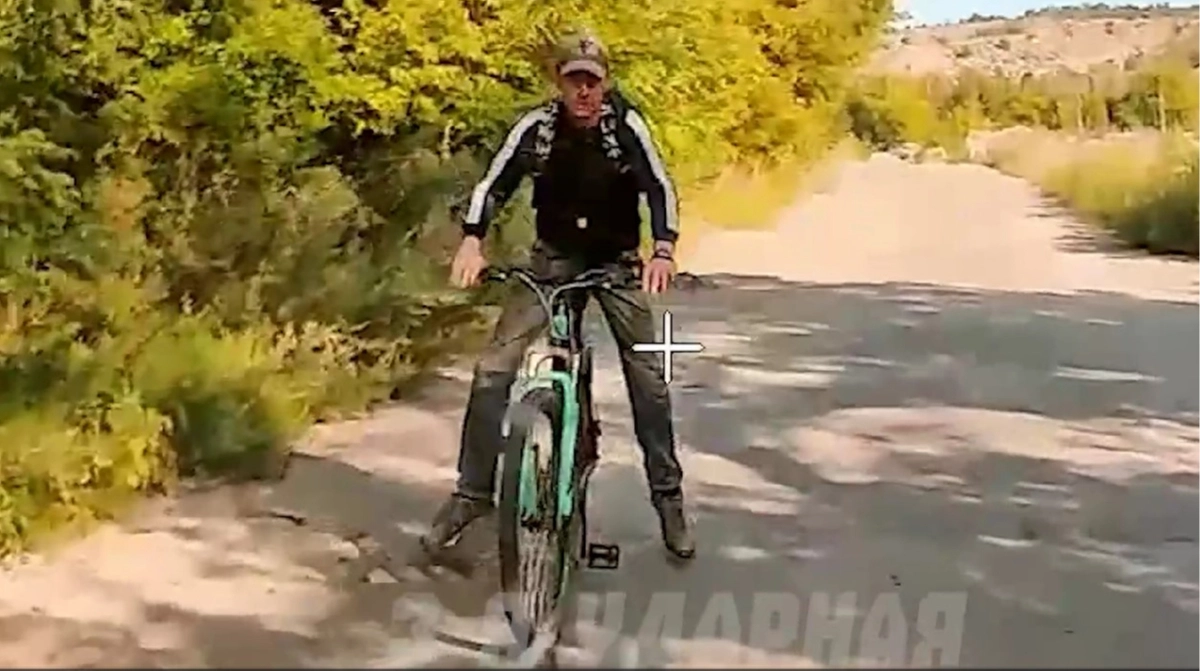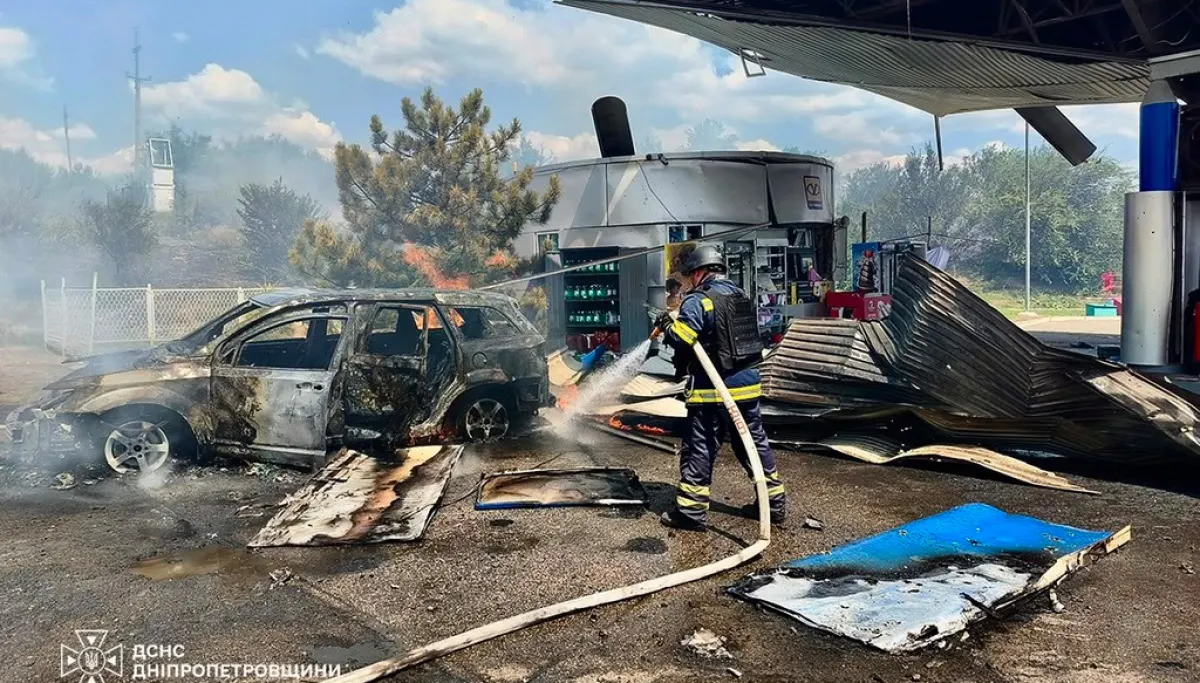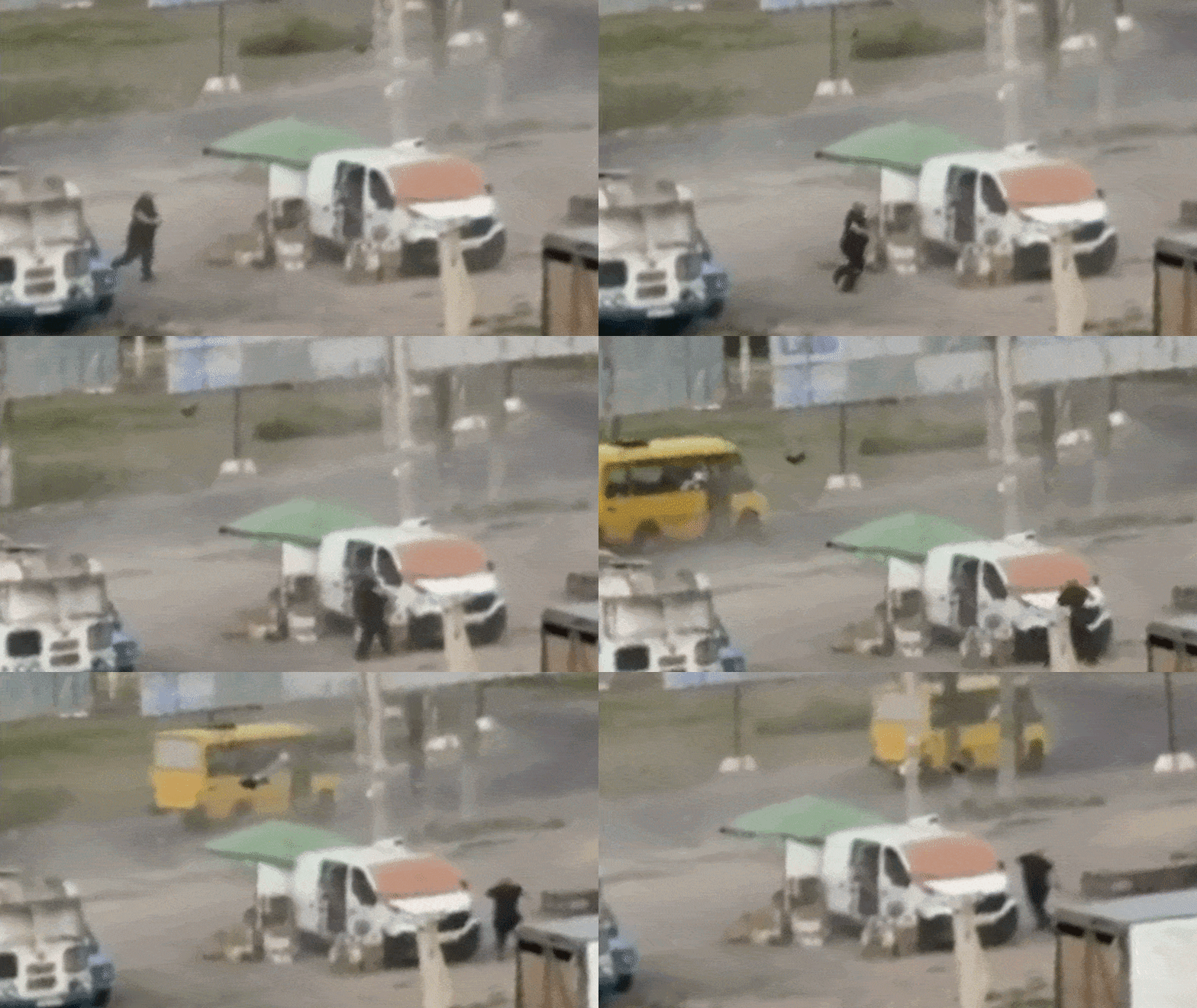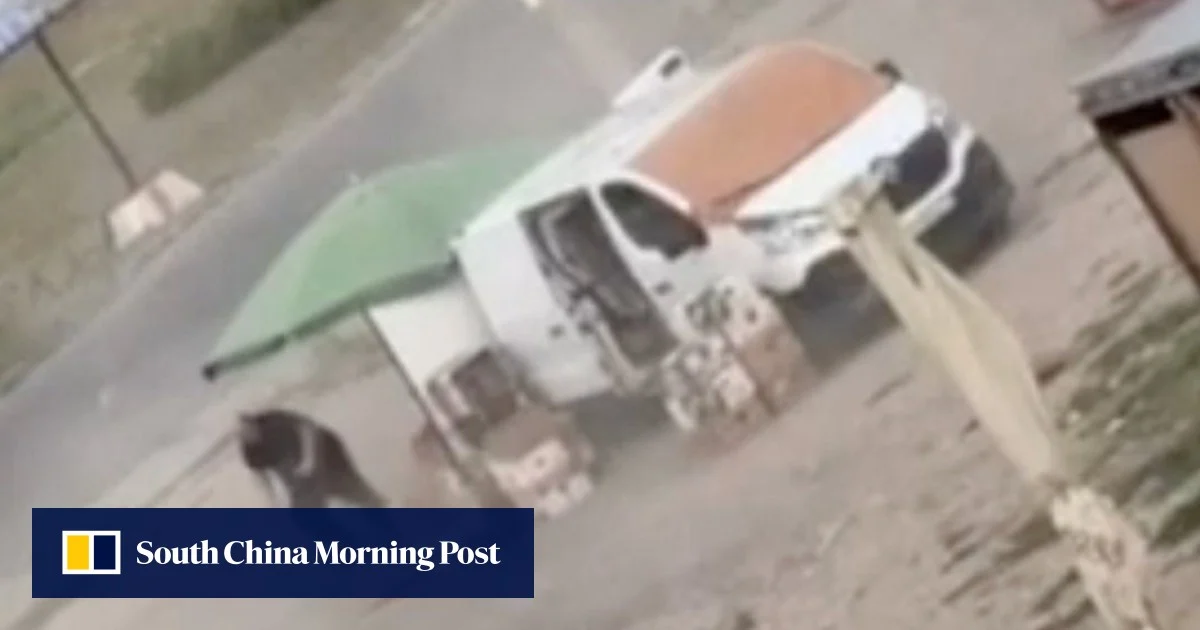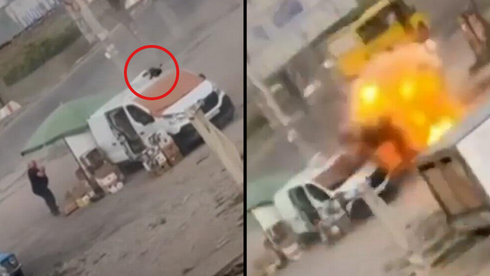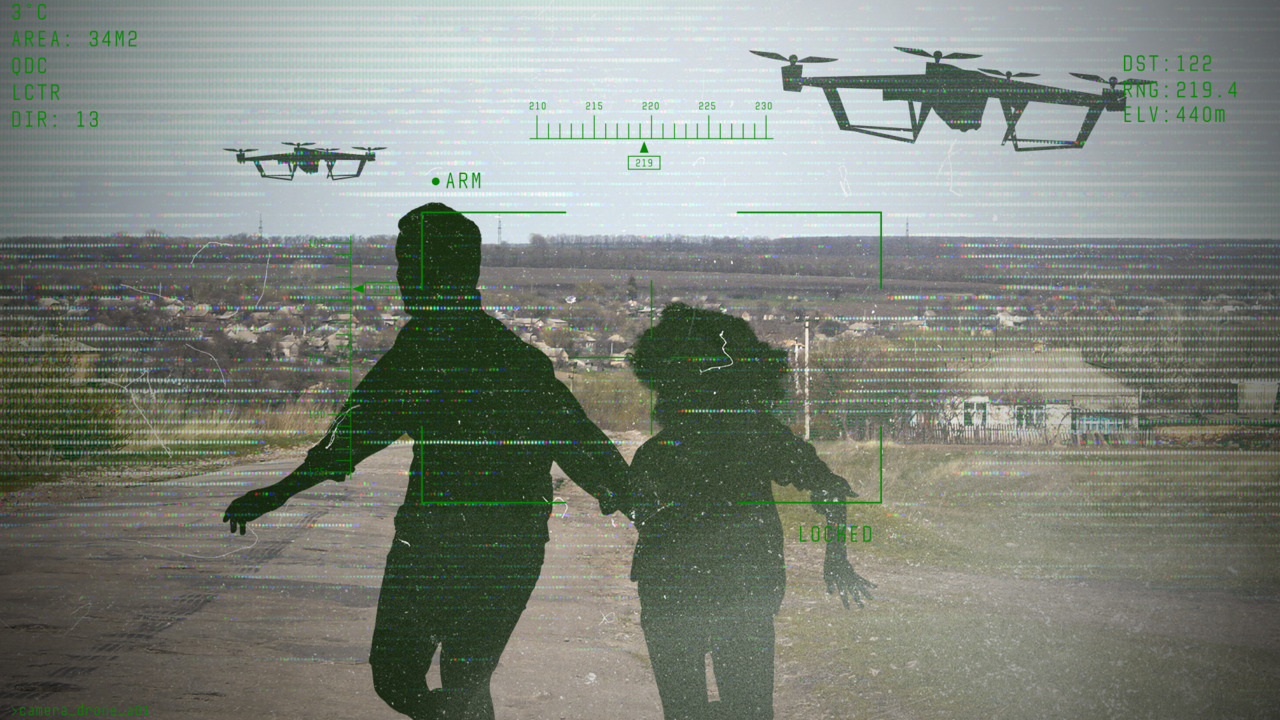
First, he freezes, caught off guard. Then the young Ukrainian cyclist begins to backpedal awkwardly, his eyes never leaving the Russian drone that hovers ahead of him. It moves closer, and he swings his leg over the bike and tries to run. He doesn’t make it. Even though the footage, posted Friday on the official Telegram account of the 3rd Army Corps of the Russian armed forces, cuts off before the moment of impact, the video’s description leaves no doubt of the outcome. The Russian soldiers congratulate themselves on having taken out an “enemy combatant” in the Ukrainian district of Kramatorsk, not far from the front line in the northern Donetsk region. Two years of ‘human safaris’ But the cyclist was visibly unarmed, wearing civilian clothes and looked like any other young man riding his bike down a country road. Independent Russian media outlet Astra quickly accused the Russian military of trying to pass off an unarmed cyclist as a Ukrainian combatant. The video spread swiftly across social media as influential accounts, including prominent Kremlin critic and former world chess champion Garry Kasparov, reposted the footage to denounce the Russian military’s apparent cruelty. Less than 48 hours and hundreds of outraged comments later, the 3rd Army Corps took the video down. It’s far from the first time that Russian drones laden with explosives and controlled from a distance have targeted civilians in Ukraine’s frontline regions. The Ukrainians have even found a term for these deadly drone hunts – “human safaris”. “On the one hand, I'm very happy that there is more attention on this,” said Olga Tokariuk, a specialist in Ukraine at the British think-tank Chatham House. “On the other hand, this is not something new. This has been happening for two years. And the impunity that Russia faces for these attacks just means it can continue.” Watch moreKherson under fire: The reality behind the Russian drone strikes The “human safari” carried out by Russian drone operators seems to have begun in July 2024 in Kherson, a city on the banks of Dnipro River in the country’s south. “Kherson in 2024 was the point at which isolated incidents developed into a sustained campaign,” said Will Kingston-Cox, a specialist in Russia and the Ukraine war at the International Team for the Study of Security in Verona. “Initially, small quadcopters followed individuals and vehicles and dropped explosives. Since then, we have seen FPV (first-person view) impact drones expanding the practice in scale, frequency and geography. Documented targets include pedestrians, cyclists, private cars, buses, ambulances and rescue workers.” In Kherson, Russian forces installed on the opposite bank of the Dnipro can easily use short-range drones to target the population who had either remained in or returned to the city following its recapture by the Ukrainian army at the end of 2022. ‘Those seconds are so precious’ Numerous eye-witness accounts, including several reported by FRANCE 24’s Observers team, describe a climate of constant fear of being targeted and killed by a Russian drone. Read moreHow Russian drones are terrorising civilians in Ukraine Tokariuk, who wrote a report on the “human safaris” in 2025, said that people she’d interviewed in Kherson had spoken of being under a state of almost permanent tension. “Something really striking that they told me was they would only go out there if the weather was bad – because drones cannot really operate in rain or snow or fog,” she said. “And they would also tell me they would drive really fast in their cars, because that maximises your chances of survival if you're hunted by a drone … People wouldn’t use their seatbelts when they're driving, because those seconds are so precious when they see a drone hovering above their car about to hit them, and they need to get out of the car really quickly.” For its part, the UN’s Independent International Commission of Inquiry on Ukraine condemned these “human safaris” as a war crime, for deliberately targeting a civilian population, and a potential crime against humanity, for its possible use as a tool to carry out forcible population transfers. “They are targeting precisely not only civilians in their day-to-day life, but also hospitals and shops and very basic things that sustain day-to-day life for people,” said Ivan Klyszcz, a specialist in Russia at the Centre of Defence and Security in Tallinn, Estonia. “So there's definitely a pressure on the civilian population, and inevitably this leads to people to relocate. I cannot say that this is part of a larger plan for population transfer – but it is working out that way.”
‘Not an isolated incident’: Russian drones stalk Ukraine’s civilians in ‘human safaris’
The video of a Ukrainian cyclist being targeted and killed by a short-range drone posted – and later deleted – by the Russian military Friday left viewers outraged and shaken. But it’s not the first…
1,471 words~7 min read