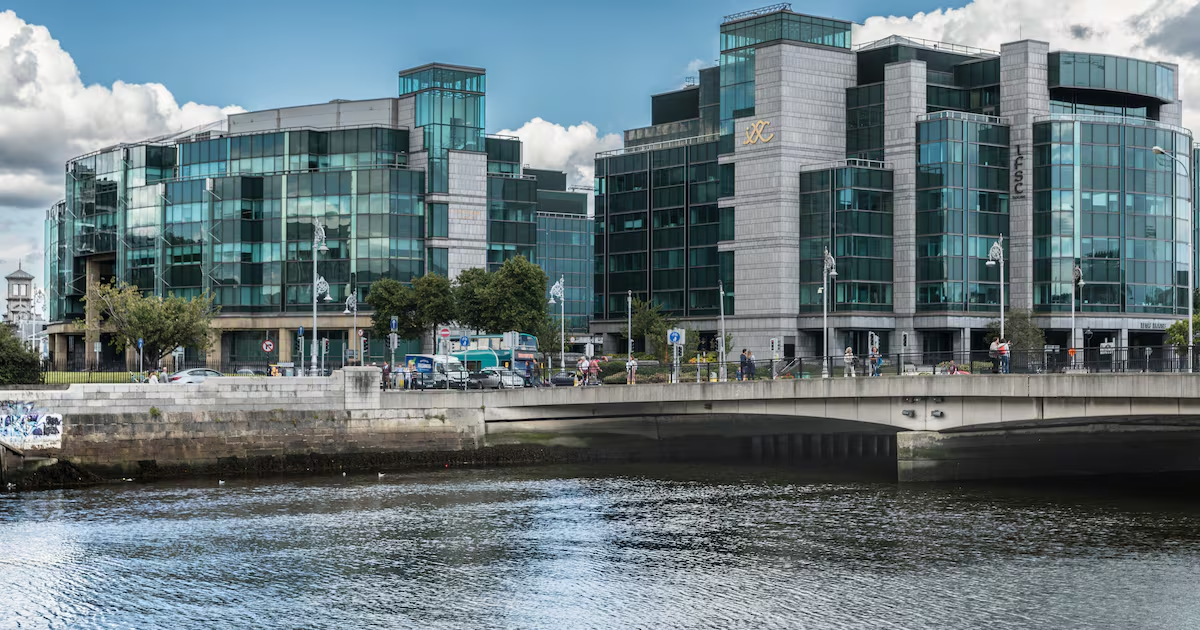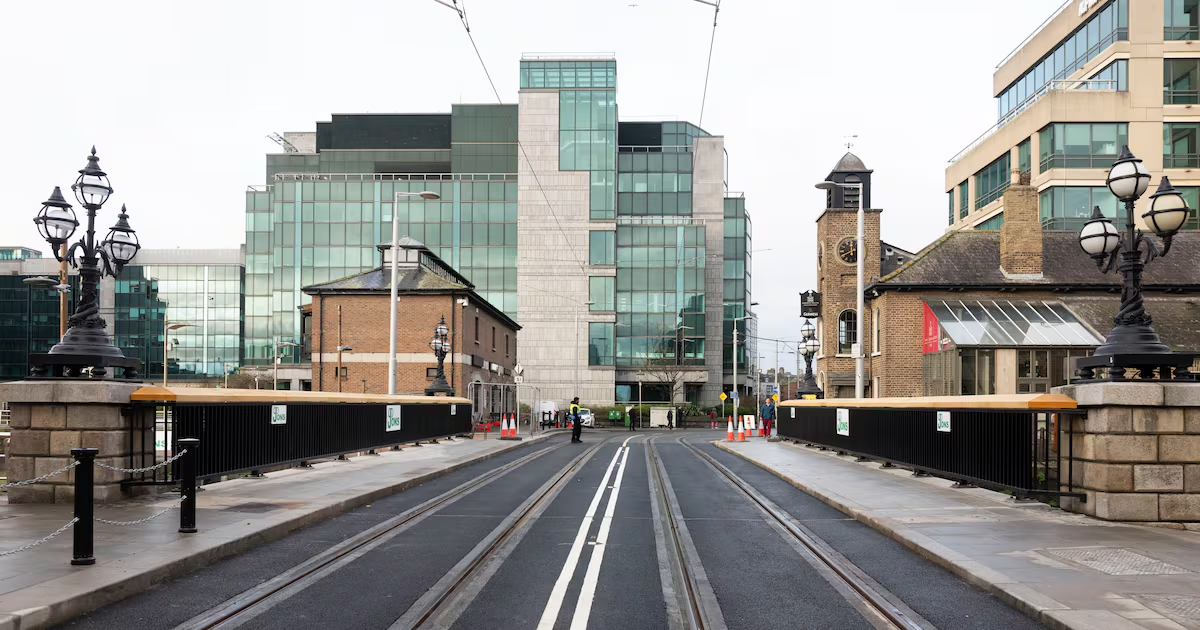
Long seen as an offshoot of London’s global financial centre, Ireland’s financial sector has grown legs. The industry here now employs more than 61,000 people and includes 22 of the top 25 players internationally.These include financial services giant Citigroup, which employs more than 3,000 staff, mainly at its Dublin base which doubles as the bank’s European headquarters.Northern Trust, one the world’s largest fund administrators, employs 1,800 staff here, mainly in Limerick, while US banking giant JP Morgan employs 1,500 people, mainly at it Dublin operation, also its European centre. At the launch yesterday of the Government’s revamped strategy for the sector, Ministers noted that next year will mark the 40th anniversary of the establishment of Dublin’s International Financial Services Centre, where a large portion of the industry is domiciled.Ministers like to play up the regional aspect of financial investment for political reasons, but most of it (75 per cent) is Dublin-based. “Almost 40 years ago, Ireland made a bold choice. We chose to build something new. We chose to compete globally. And we chose to back ourselves,” Minister for State with responsibility for financial services Robert Troy said.[ New Government strategy aims to increase financial services jobs to 70,000Opens in new window ]The industry’s employment footprint has almost doubled since 2015 on the back of some favourable headwinds, including Brexit, which led to an influx of business here as London-based firms sought to stay inside EU financial passporting rules.Much of the new business flowing in now relates to digitalisation and cybersecurity rather than traditional financial services.Boston-headquartered State Street recently chose Kilkenny for the location of its new global cybersecurity hub.How many new homes does Ireland really need? Listen | 42:23The Government’s new strategy, which aims to lift employment in financial services here to 70,000 by 2030, is difficult to weigh up as it talks in generalities about cutting red tape and boosting competitiveness, noble ambitions but hard to measure.Department of Finance officials say they want to get away from simply measuring every strategy in terms of job numbers.To this end, they have set the latest plan against 36 key performance indicators, which include metrics around the level of assets under management here and exports in financial services.Insiders say “turning the dial for the industry” will, however, require modernising legislation to support the tokenisation of investment funds under the Irish Collective Asset Management Vehicles Act and other specific changes to the Companies Act. One of the main criticisms from those in the sector, at least the one that has dominated recent public consultations, has been the Central Bank’s authorisation process, which has been perceived as onerous and excessively procedural.Insiders say the bank has taken the criticism on board and has made the process “more efficient”.Minister for Finance Simon Harris says progressing the European Union’s proposed Capital Markets Union (CMU) project would be a focus of Ireland’s EU presidency. Concern has been raised that this could shift business away from Dublin and into bigger financial centres such as Paris or Frankfurt.But advocates say progress on CMU would enlarge the pie for all, including Ireland.
Ireland’s financial services sector: no longer just an offshoot of London
Employment in the area here has almost doubled since 2015 on back of some favourable headwinds, including Brexit
512 words~2 min read