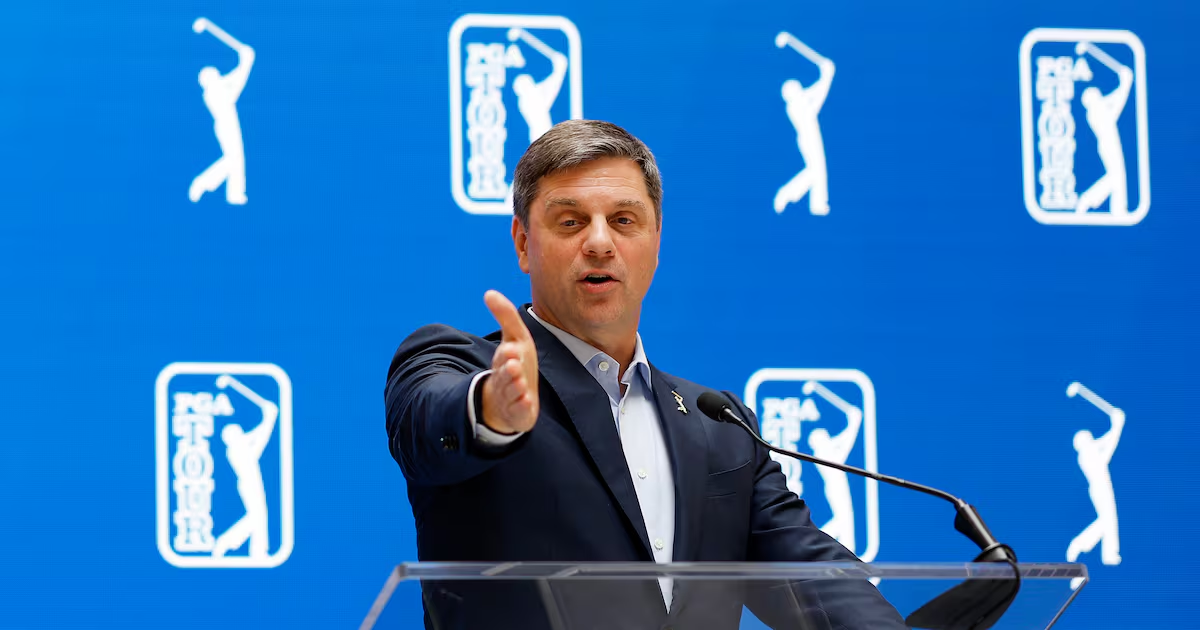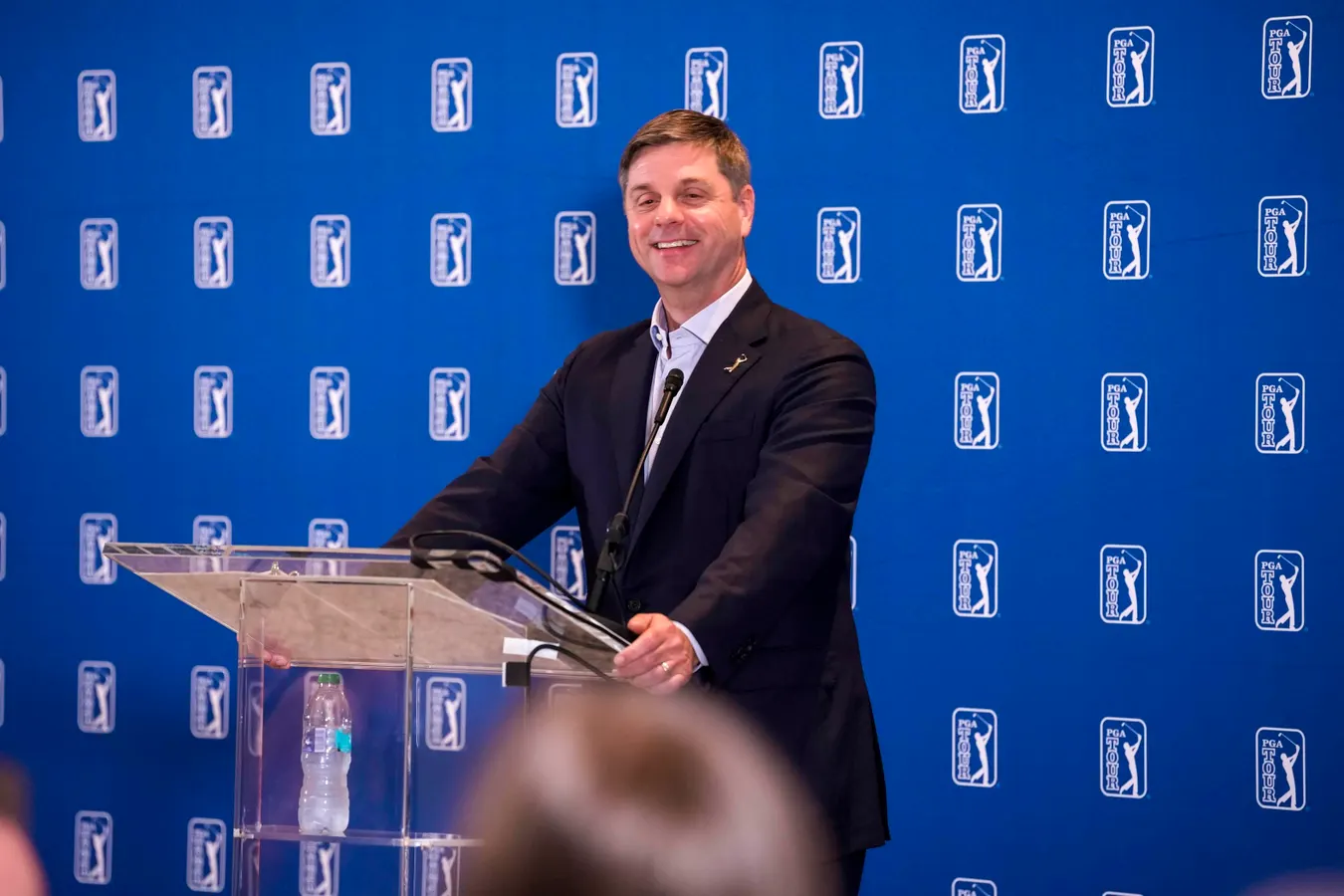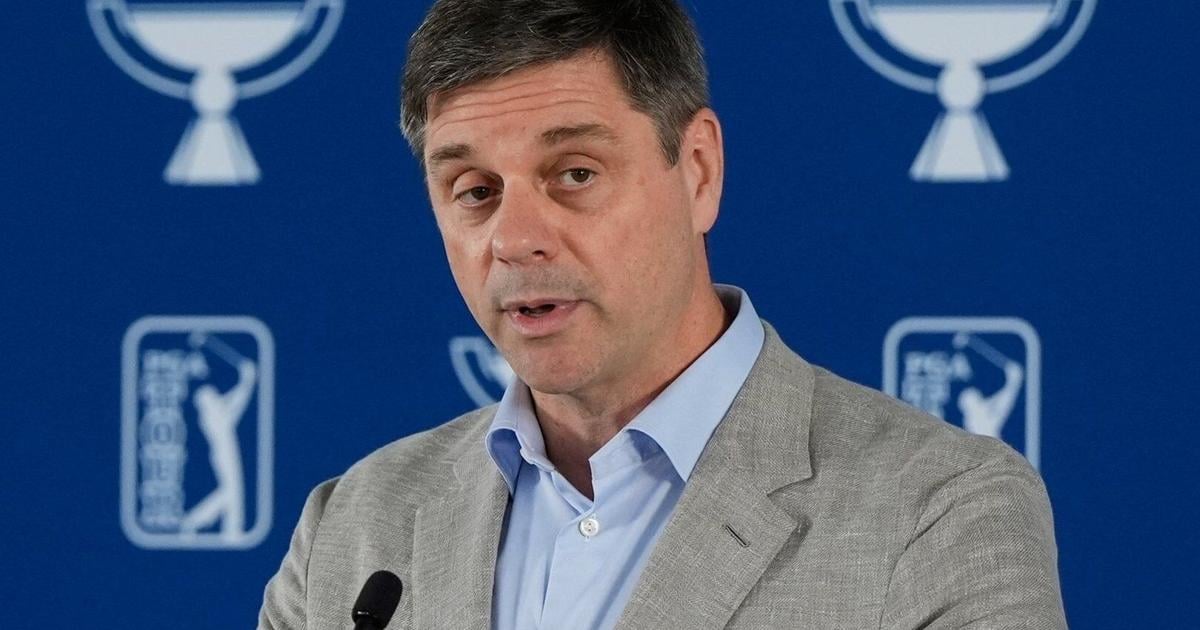
The PGA Tour’s postseason is changing, and golf fans are finally getting what they’ve asked for.In 2028, the first year the PGA Tour moves to its Championship and Challenger Series format, a 90-man stroke play event will crown the season-long points winner. After that, the top 32 players will advance to a two-week match-play competition at rotating venues for the new Tour Championship.The first week will include World Cup-style group play, with the top 32 players in the final season standings split into eight groups of four. The top two players from each group will advance to the final week, and any ties will be decided via playoff.Then, at a different venue, the Tour Championship will be decided in a four-round, 16-man single-elimination bracket ending with a final match to decide a champion.PGA Tour CEO Brian Rolapp is expected to announce the changes in a Tuesday morning press conference at the Tour Championship in Atlanta.All 16 players will continue playing all four days, even after being eliminated, to decide the final championship standings. The PGA Tour remains in conversation on ways to foster proper incentive in those losers’ bracket matches.Tour Championship venues will rotate annually, with PGA Tour officials believing it will take the series to courses “it has not traditionally been able to feature.”Wyndham Clark wins BMW Championship over Rory McIlroy, Patrick CantlayThis is a dramatic change from the PGA Tour’s FedEx Cup playoffs, which struggled to grab attention from the larger sporting world no matter where the PGA Tour placed it on the schedule and what specific rules and stakes it had that year. The three-tournament playoff, which begins with 70 players and cuts to 30 for this week’s Tour Championship, has always ended in Atlanta at East Lake, and most recently included the FedEx St. Jude Championship in Memphis and the BMW Championship (site changing yearly).Rolapp created the Futures Competition Committee when he stepped into the job a year ago, with an eye on making progressive changes to the tour structure. That committee already announced in June a new two-tier PGA Tour setup with promotion and relegation, headlined by a more exclusive Championship Series featuring 120-player fields, 36-hole-cut events and $20 million purses.Early in the process, Rolapp met with current media rights partners CBS, NBC and ESPN, as well as Netflix, Amazon and others to pick their brains about how to improve golf.“The mandate was sort of looking at a blank sheet of paper and asking: What do you think would make the sport more interesting?” Rolapp told The Athletic. “And I think almost to a partner match play always came up as an interesting format.”Yet the postseason remained on the back burner most of the year as committees focused on the overall season model. Fans and media partners clearly wanted match play — it’s part of what makes the Ryder Cup one of the most exciting events in golf — in the postseason, but many players publicly voiced reservations. Many of those concerns stemmed from match play and stroke play being entirely different competitions, which in turn meant match play felt like an improper way to crown a season champion.“If it wasn’t authentic to the players, it wasn’t going to resonate with anybody,” Rolapp said. “So the players really took ownership of it.”Two Player Advisory Council leaders, Keith Mitchell and Adam Scott, took charge in formulating a plan that properly rewarded a season-long champ while creating an enticing new opportunity for the Tour Championship.PGA Tour CEO Brian Rolapp has brought new ideas from his old job at the NFL. (Cliff Hawkins / Getty Images)Since Rolapp’s first press conference during last year’s Tour Championship, the direction of the PGA Tour has drastically changed.Seven of the 15 Championship Series events have been announced, with four more expected in the coming weeks. Long-term relationships with major sponsors like FedEx, Wells Fargo, Farmers Insurance, Rocket and American Express appear to be coming to an end. Meanwhile, the final four Championship Series events, according to a source briefed on the matter who spoke on the condition of anonymity because they were not authorized to speak publicly, will be decided shortly, with the tour in discussions with 14 potential partners.“I think we’ve been very happy with the reception we’ve received so far from current sponsors,” Rolapp said, “and quite overwhelmed with the attention we have from sponsors we don’t have. There have been a lot of inbound, unsolicited (inquiries). We didn’t go out and market any of this.”Rolapp inherited a company that accepted a $1.5 billion investment from Strategic Sports Group in 2024, with the new consortium of major sports franchise owners and private equity heads giving the PGA Tour breathing room in its then-war with the upstart LIV Golf League. That also meant private equity coming in and instilling changes in how the tour operates as it faced potentially unsustainable financial demands.In April, the PGA Tour laid off 4 percent of staff after a review conducted by FTI Consulting. The tour has since identified $70 million to $90 million in savings, according to the same source, as more than 200 roles were affected through a combination of layoffs, a voluntary retirement program and the closing of open roles.But Rolapp and company have also seen a nearly $300 million increase in revenue from 2024 to 2026, and in 2025 the tour returned to profitability for the first time since 2022. It is now filling 65 open roles, including at least 10 senior-level openings.It’s been a stretch of optimism for the tour after several years of painful challenges in its battle with LIV. Right as golf was becoming more popular than ever after the so-called “COVID-boom,” interest in the professional game seemed to wane while purses skyrocketed to compete with the Public Investment Fund of Saudi Arabia. But in 2026, ratings increased 19 percent from last year and 40 percent since 2024.The next focus for Rolapp will be ironing out details for the Challenger Series, the tier below the top Championship Series with smaller $4 million purses. The broad timeline is to have a large chunk of Challenger events finalized by the 2027 Players Championship in March, with a full schedule done by next August.
PGA Tour dramatically overhauling its playoffs, adopting match-play format
World Cup-style group play will kick off the new structure, with a four-round, 16-man single-elimination bracket to follow.
1,032 words~5 min read