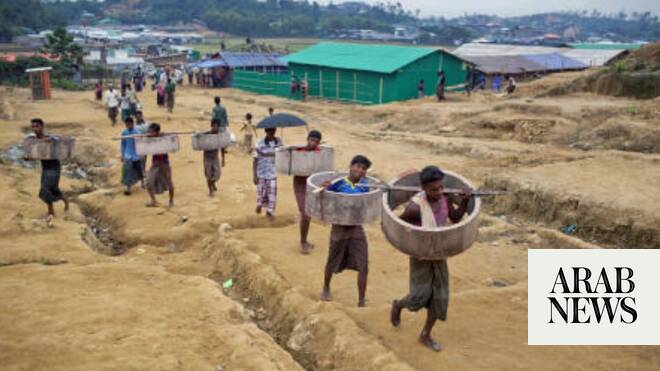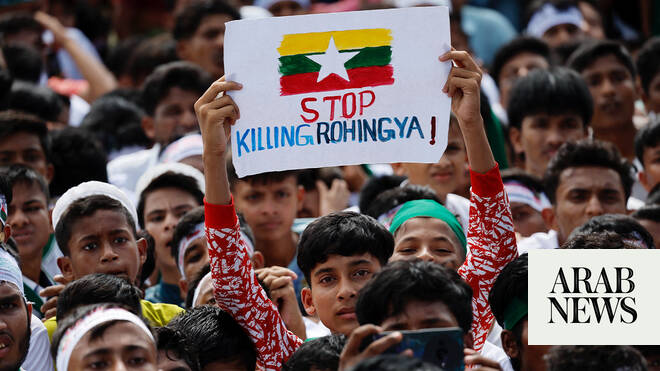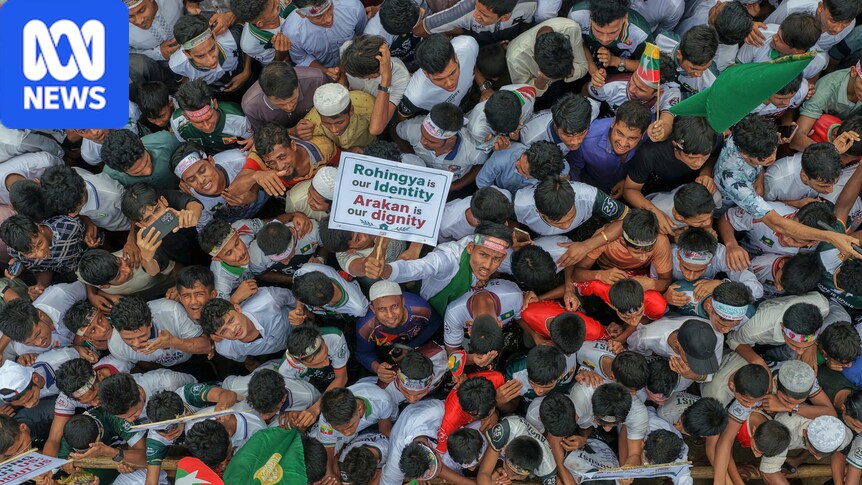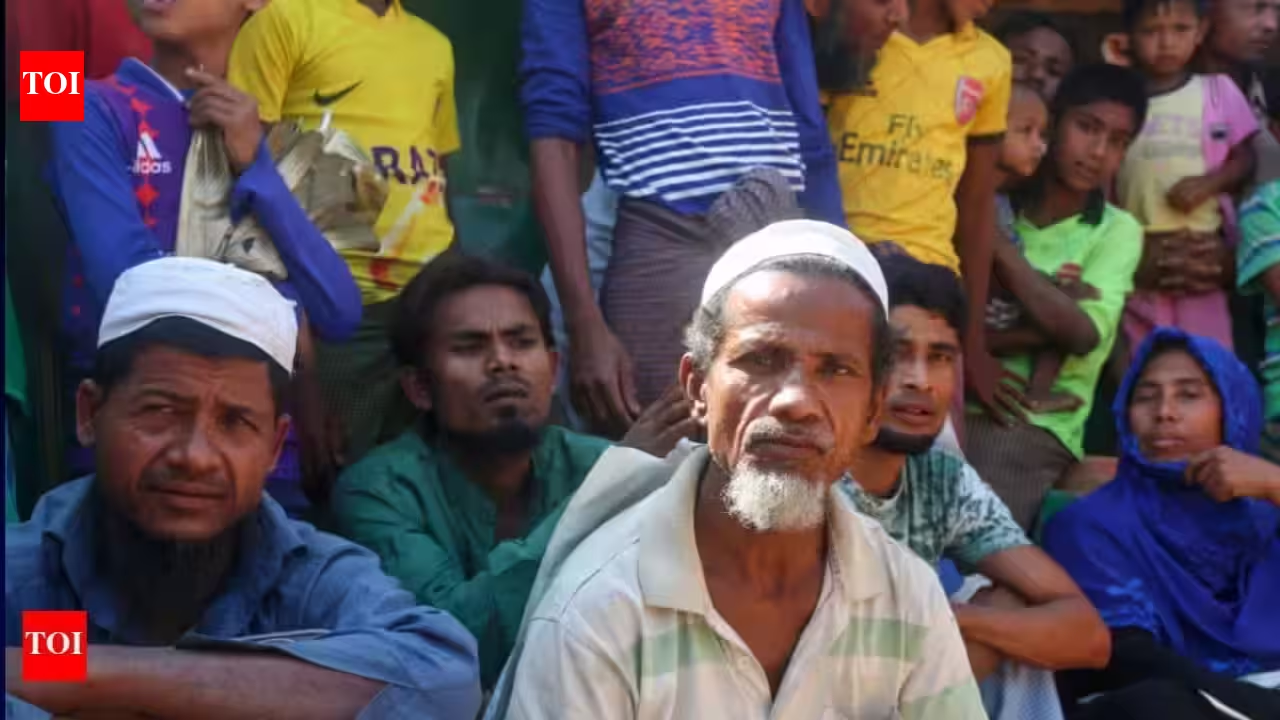
The human rights situation in Myanmar has reached a new lowThe human rights situation in Myanmar has reached a new low, with widespread atrocities against the Rohingya minority and a rapidly expanding illicit economy further deepening the suffering of civilians, the United Nations said on Tuesday.According to a report by the UN human rights office covering the period from June 2025 to May 2026, unrelenting conflict, military violence and a growing “conflict economy” have exposed millions of civilians to severe hardship.Both the Myanmar military and the Arakan Army, which controls large parts of Rakhine State, have been accused of systemic abuses against Rohingya communities. These include killings, torture, forced labour, forced recruitment, arbitrary detention, sexual violence and forced displacement.Nearly nine years after the military crackdown that triggered the mass exodus of Rohingya in 2017, the community continues to face persecution and displacement. The situation has deteriorated further since the military coup in February 2021 that ousted Aung San Suu Kyi and plunged the country into a prolonged civil war.The military-backed electoral process held earlier this year paved the way for junta leader Min Aung Hlaing to become president, while the military continued to consolidate its grip over the country.The UN said the military had continued to use airstrikes, arson and restrictions on humanitarian assistance to terrorise civilians and maintain control. At least 8,075 civilians, including 1,774 women and 1,074 children, have been killed since the 2021 coup, according to UN figures. The actual toll is believed to be significantly higher.Myanmar’s military has denied deliberately targeting civilians, saying its airstrikes were limited to military targets and were carried out in response to armed groups seizing towns and villages. It has also described several of the groups fighting it as terrorist organisations.The conflict has also triggered a massive humanitarian crisis. The number of internally displaced people has risen to about 3.6 million, while an estimated 12.4 million people are facing acute food insecurity. Among those affected are hundreds of thousands of women and children suffering from acute malnutrition.Rohingya caught between two armed forcesThe UN has accused the Arakan Army of carrying out serious abuses against Rohingya communities in northern Rakhine, including arbitrary arrests, torture, sexual abuse and forced labour.The group has also been accused of seizing Rohingya land and preventing displaced people from returning to their homes, while allowing non-Rohingya communities to settle on some confiscated properties.Satellite imagery reviewed by the UN indicates that around 2,000 acres of land have been seized. Witness accounts also describe children as young as six being subjected to forced labour.Former detainees have reported torture in custody, with some inmates allegedly dying as a result of their treatment.The abuses have left the Rohingya trapped between competing armed forces, with neither the military nor the Arakan Army providing meaningful protection from persecution and violence.Myanmar’s hidden mining economyThe conflict has also created a parallel economy that is helping finance armed groups while devastating local communities and the environment.The UN report highlights the rapid expansion of illegal rare-earth mining in Kachin and Shan states, where the collapse of the rule of law has allowed illicit industries to flourish.In Kachin, at least 302 new mining sites have emerged since the 2021 coup. In Shan State, the number of sites has increased from just 12 before the coup to 85.The rare-earth trade reached an estimated peak value of $1.4 billion in 2023, with much of the output flowing into China’s market, according to the UN.But the economic gains have come at a devastating environmental and human cost.Toxic chemicals released during mining have contaminated waterways and farmland, contributing to chronic illnesses and reported miscarriages among communities living near mining areas.The pollution is also crossing national borders. Contaminated water has reached rivers flowing into Thailand, where testing has detected elevated levels of arsenic, lead, mercury and manganese.
'Myanmar's human rights crisis has hit new low': UN flags atrocities against Rohingya
The human rights situation in Myanmar has reached a new low, with widespread atrocities against the Rohingya minority and a rapidly expanding illicit economy further deepening the suffering of civilians, the United Nations said on Tuesday.
633 words~3 min read