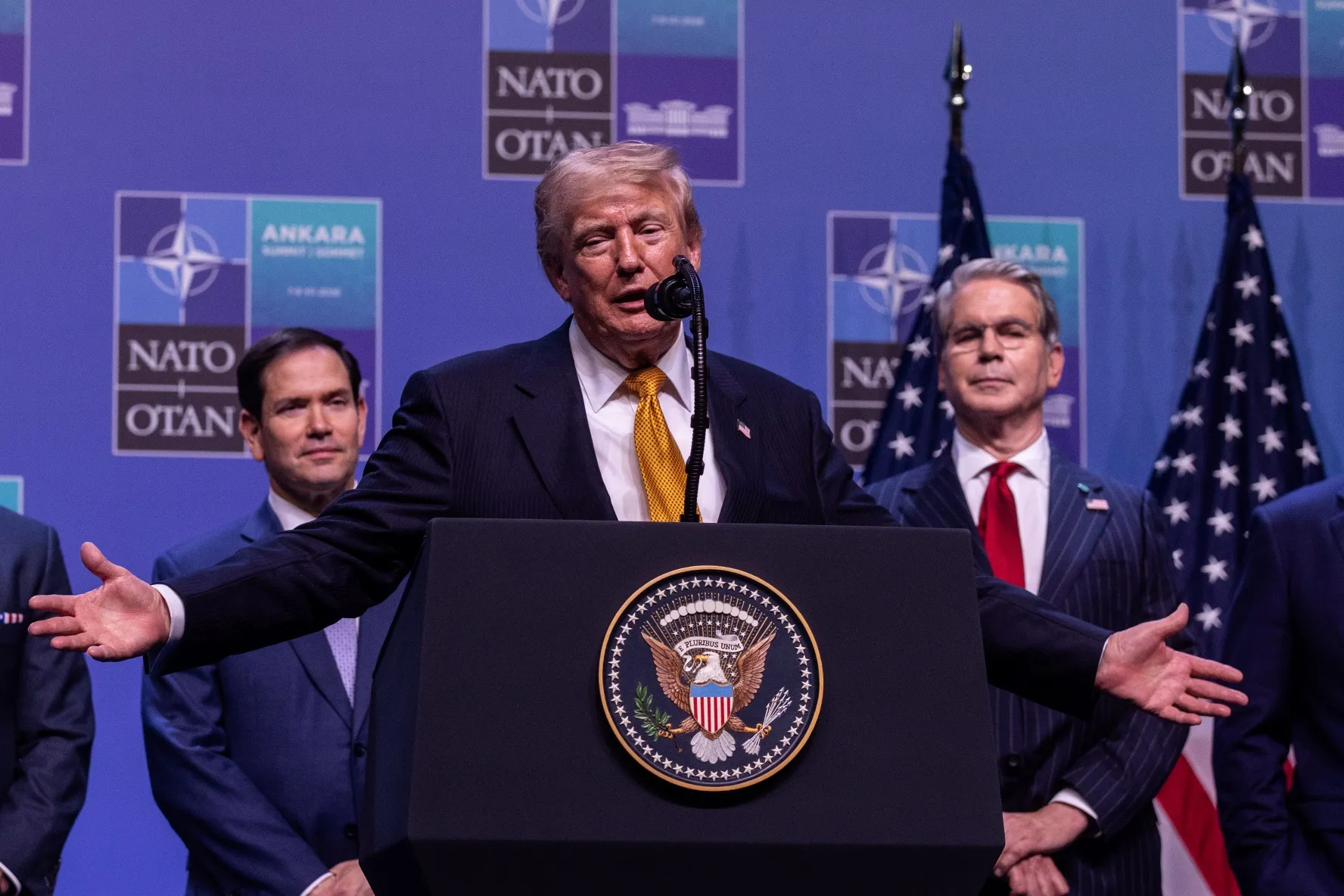
The Trump administration’s May announcement that it would withdraw some U.S. assets from the NATO Force Model and no longer serve as the primary guarantor of conventional European security in a continental conflict with Russia has tangible consequences for European NATO members. This brief will examine what reduced U.S. conventional support would mean for Europe’s ability to defend NATO territory on the continent against Russian aggression. It focuses on conventional military capabilities rather than questions of deterrence or nuclear escalation.
Assessing the ramifications of European NATO members receiving less American involvement in a conventional escalation on the continent requires us to distinguish between different timelines. After all, it makes a difference whether Europe must defend itself with less or no U.S. support tomorrow (“fight tonight”), only in a few years (“2029”), or during the transition period between these two scenarios. Europe may be able to replace much of America’s conventional military capability by the end of the decade. The more difficult challenge will be replacing the U.S. role in integrating, commanding, and employing those forces.
European progress and challenges ahead of 2029