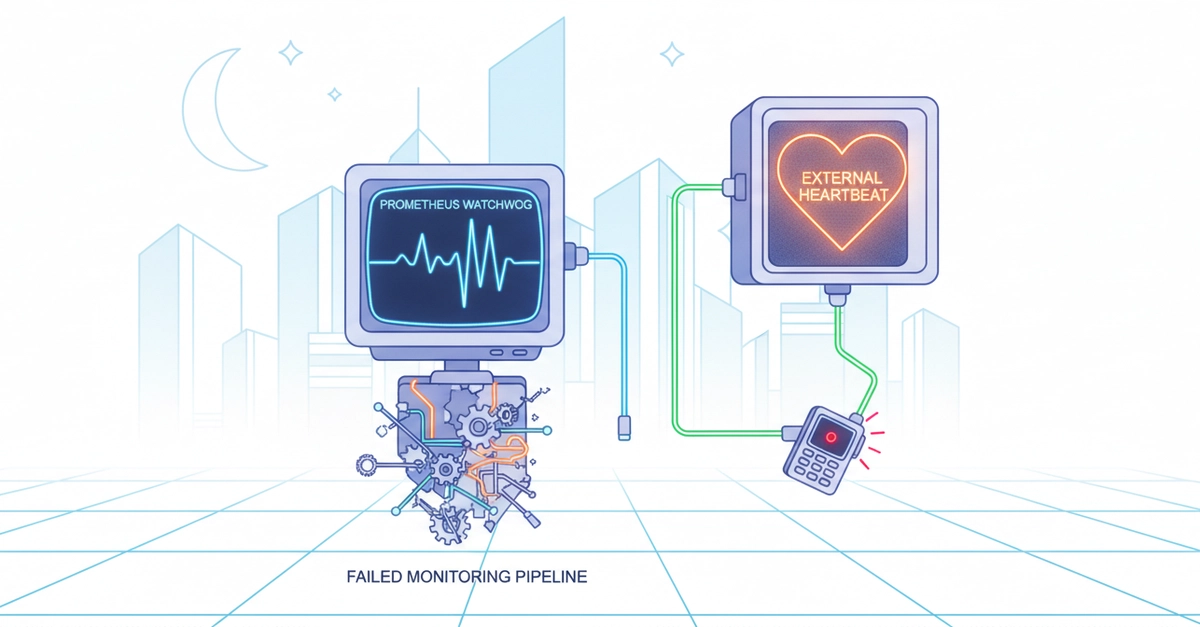
Most monitoring watches for something bad to appear: a 500, a timeout, an expired certificate, a slow response. A heartbeat monitor does the opposite. It watches for something good to stop appearing. Your cron runs, your backup completes, your embedded device phones home, your queue worker drains — and each of those pings a URL to say "I'm still alive." The monitor's job is to notice when the pings go quiet.
That inversion is the entire value. A cron that fails throws an error you can catch. A cron that stops being scheduled — the box got reimaged, the systemd timer got disabled, the container never came back after a deploy, the account got suspended for an unrelated billing issue — throws nothing at all. There is no log line, no exception, no non-zero exit. There is only the absence of the thing that used to happen. You cannot alert on an event that does not fire. You can only alert on the silence.
So heartbeat monitoring looks trivial: store a timestamp on every ping, and if now - last_seen > expected_interval, fire an alert. It is about ten lines. And it is exactly those ten lines that will let 43 days of downtime pass without a second word — because the hard part of a dead-man's switch is not detecting the death. It is staying loud after it.