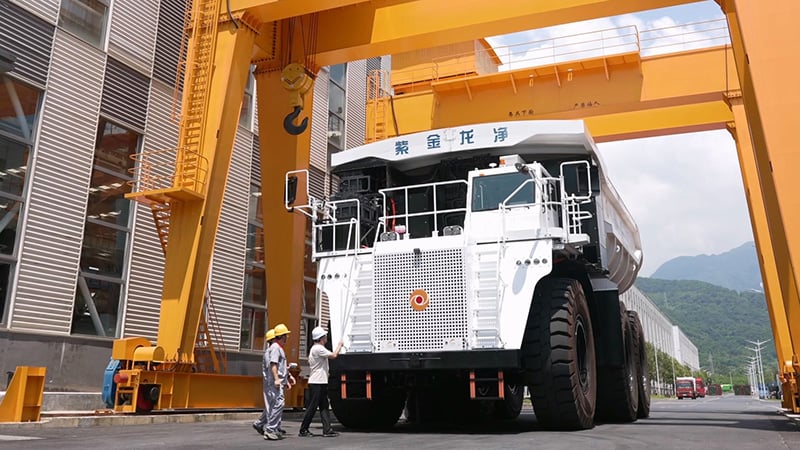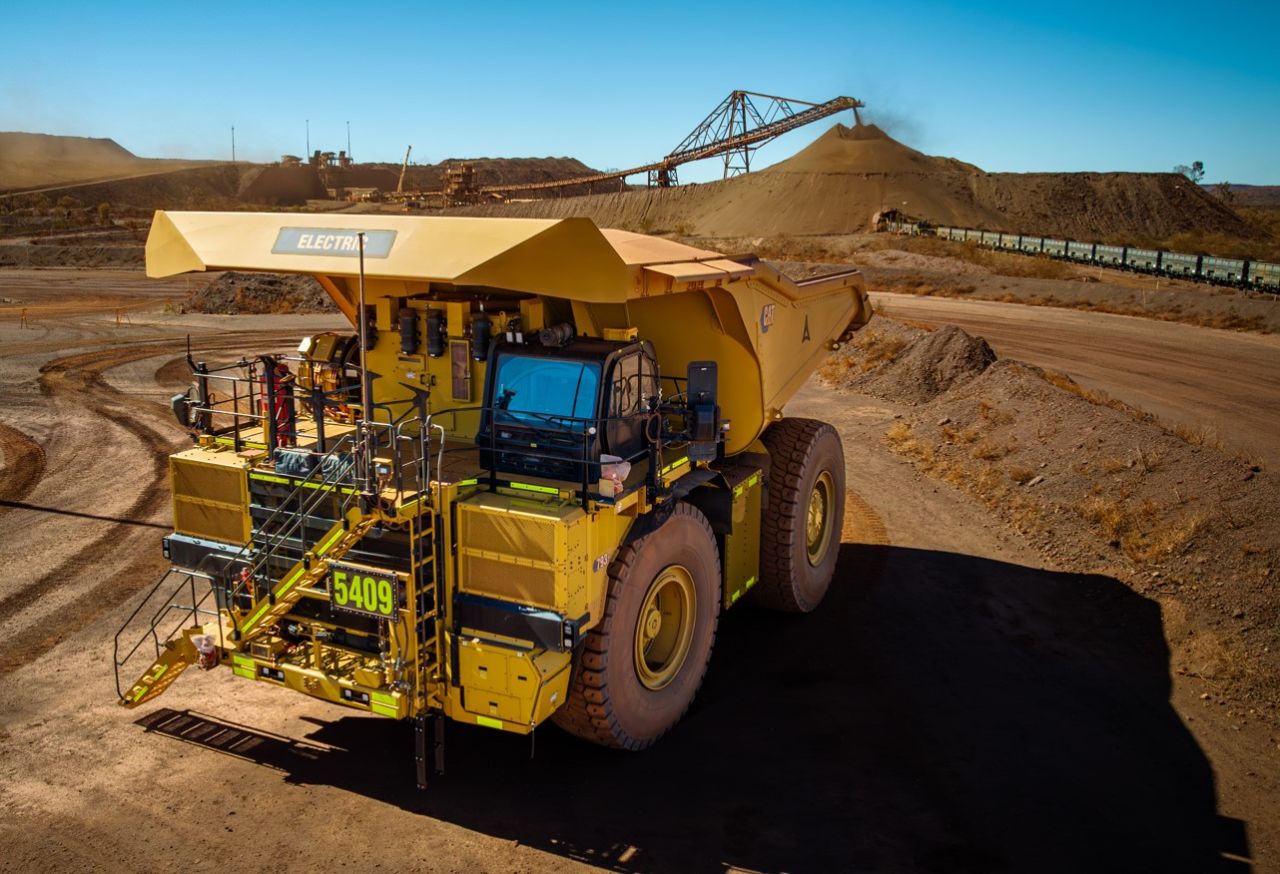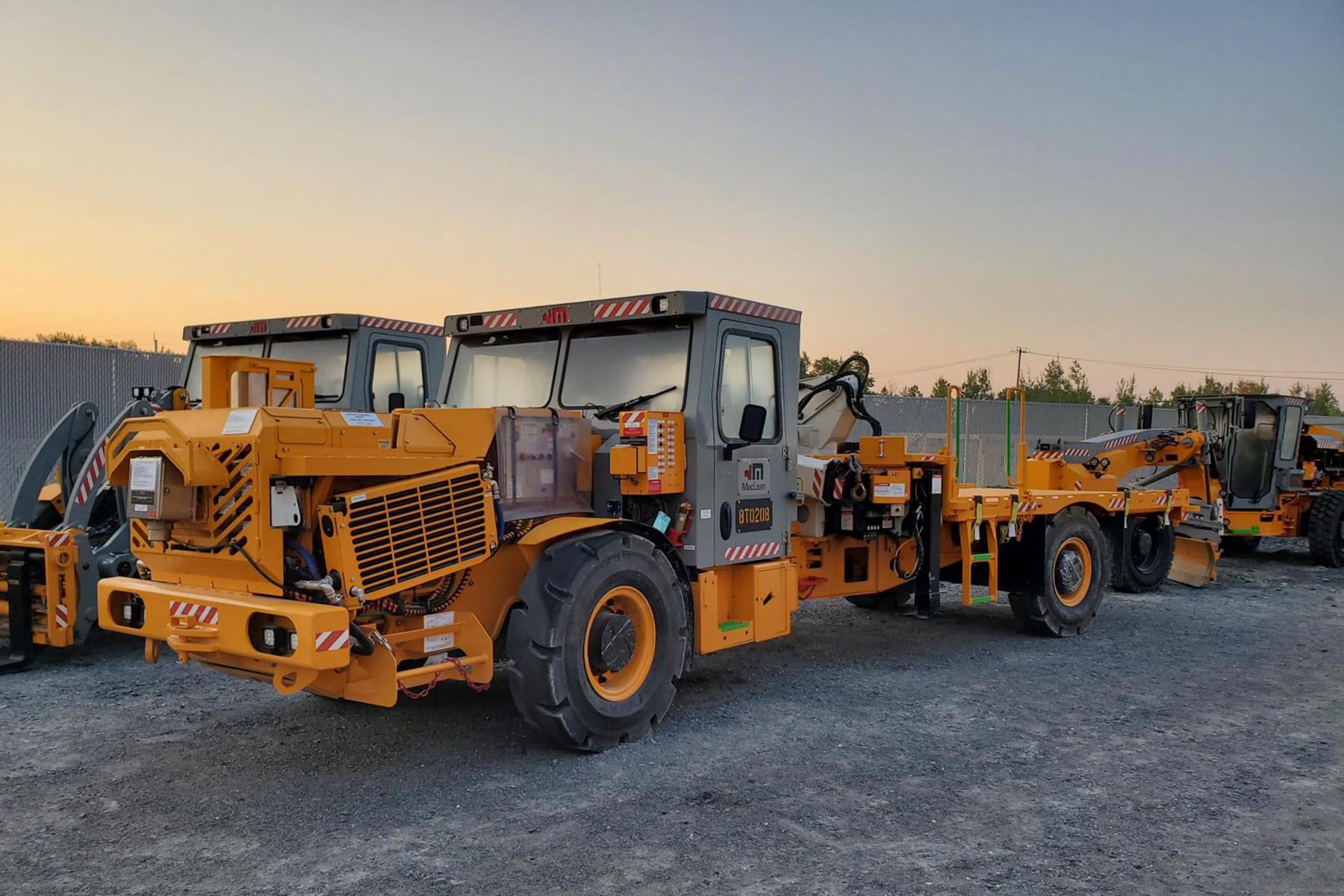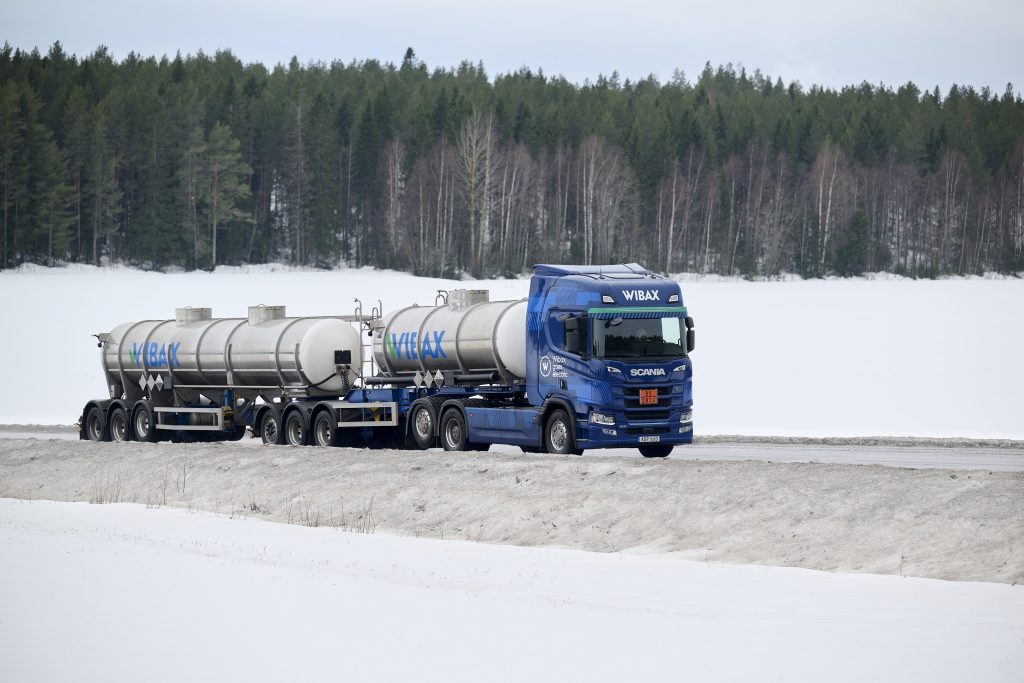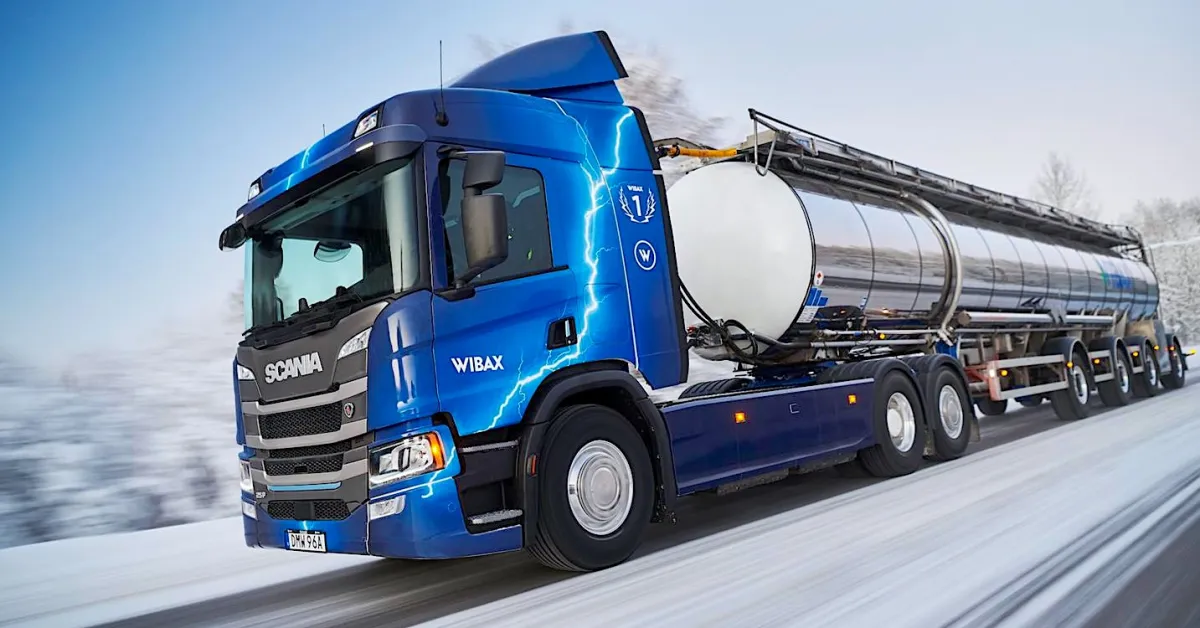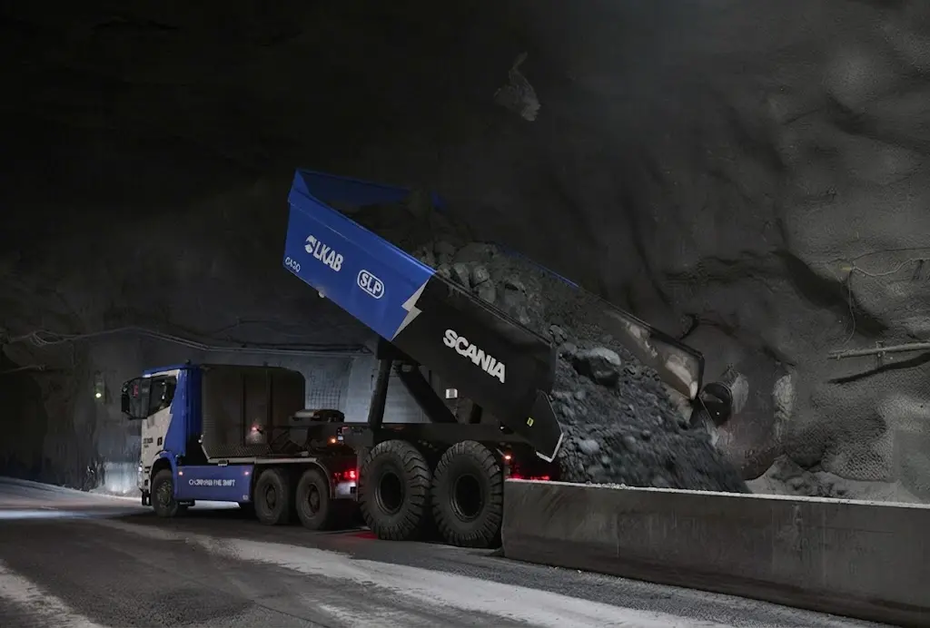
The vehicles, developed together with Scania, are battery-electric tractor units with a payload capacity of just over 70 tonnes each. According to LKAB, they are the largest and heaviest battery-electric trucks currently operating underground. The company explicitly limits that claim to underground mining, as considerably larger battery-electric dump trucks have already been developed and tested for use in open-pit mines.
The two trucks each have a 624 kWh battery. Since entering service, they have completed around 1,500 round trips and transported more than 100,000 tonnes of iron ore between underground ore shafts and crushing plants. In total, LKAB moves more than 50,000 tonnes of iron ore per day in Malmberget. On a single charge, the trucks can operate for around seven hours, completing approximately 45 cycles and transporting roughly 3,200 tonnes. They charge at up to 375 kW, with a full charge from zero to 100 per cent taking around 80 minutes, according to LKAB.
Operating at depths of up to 1,250 metres brings particular challenges for electrification. Charging schedules, maintenance and vehicle availability all have to fit into an ongoing production process, where longer periods of downtime can directly affect output. For LKAB, the question is therefore no longer whether heavy battery-electric trucks can work in mining, but whether they can consistently match diesel trucks in terms of productivity and availability.