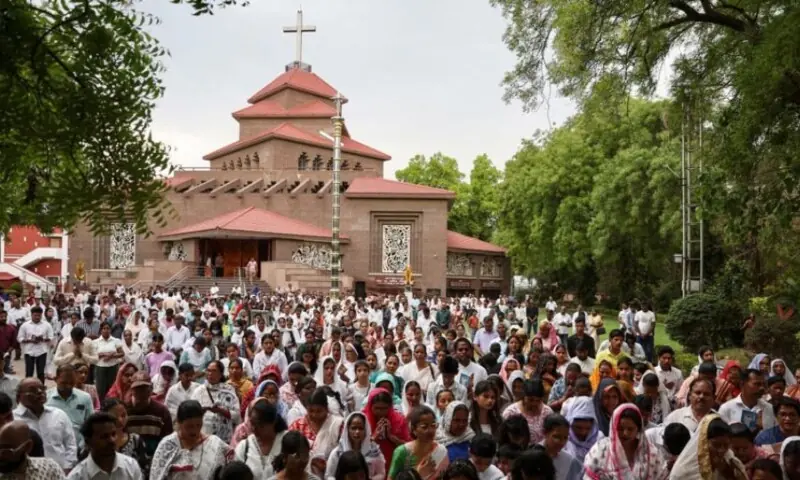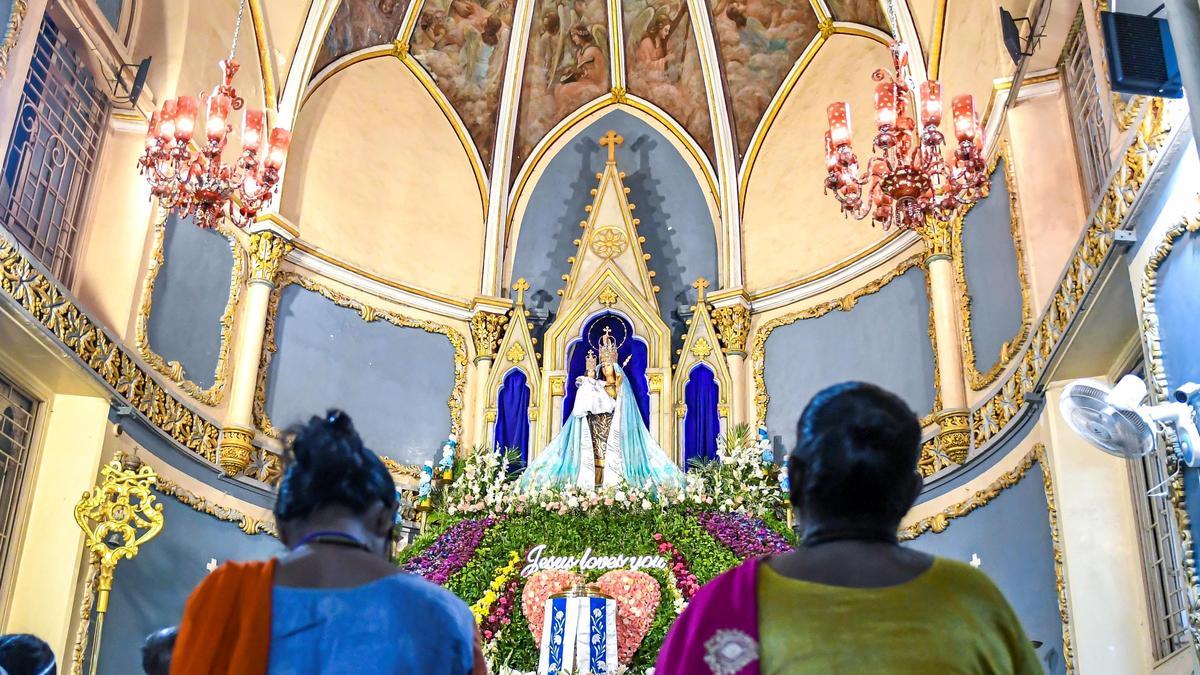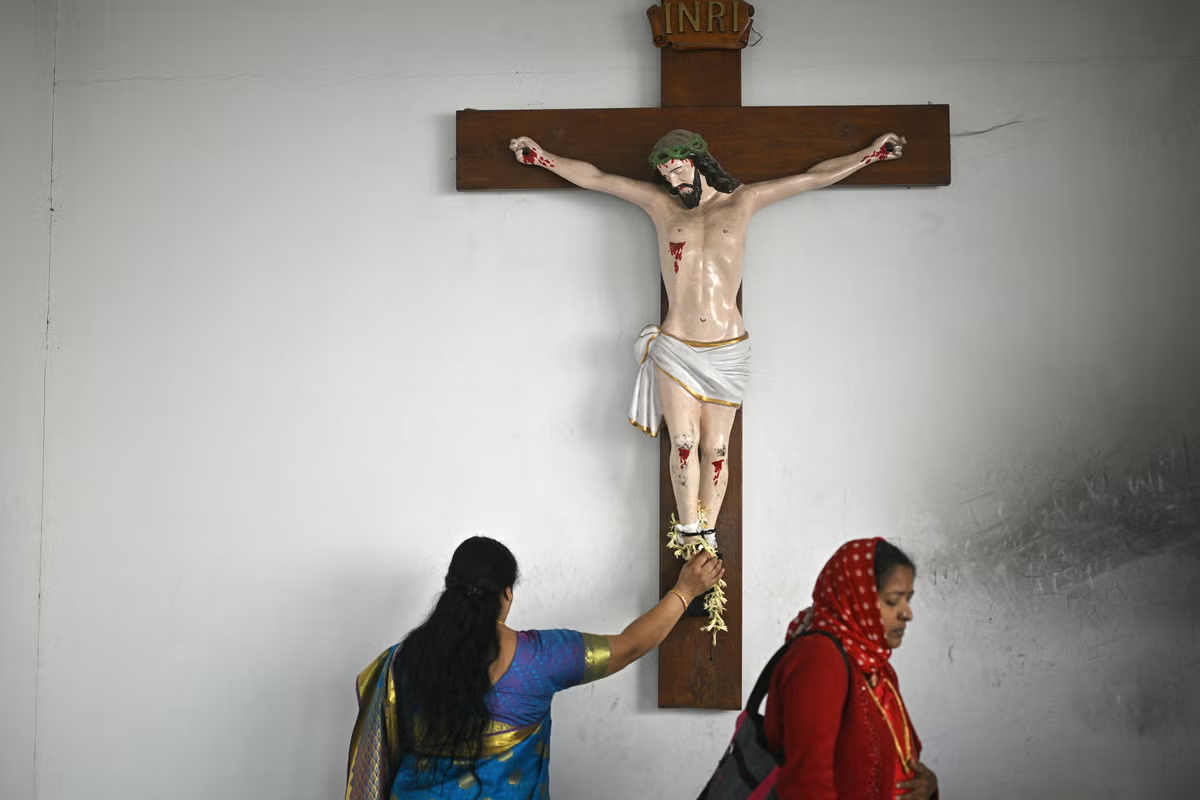
A new law against religious conversion has prompted churches in India to ask worshippers to sign “declarations” saying they are attending prayer meetings of their own free will. The legislation comes into force in the western state of Maharashtra on 28 August. It allows authorities to act against conversions that are alleged to involve coercion, fraud, inducement, or marriage. It also requires anyone planning to convert to another religion to notify their district magistrate at least two months in advance, with procedural violations carrying a prison term of up to seven years. The “self-declaration” forms prepared by churches in the state capital Mumbai and neighbouring districts ask all worshippers to affirm that they are attending voluntarily and under “no pressure, inducement, temptation, lure, or threat of any kind”. The churches now also require each congregant to submit a photograph and a government-issued identity number.Pastor Sam Mathai of Vasai in Palghar district told the PTI newswire that the completed forms, which he said were being collected for “self-safety”, would be kept at church offices and produced before authorities if requested. The collection of the “self declaration” forms, he said, had been going for two to three months. It appears to be a precautionary measure amid growing sectarian tensions around Christian prayer meetings in the region. The move also comes in the backdrop of the case against Pankaj Devnoor, a British church leader who is barred from leaving India while he faces charges under the same law. “Right-wing groups enter churches without intimation and beat up people,” Mr Mathai explained. “So pastors and community leaders came together to find a solution. We don’t force anyone to come and pray. The Indian constitution allows everyone to pray of their own will.”In the past five months, Christian prayer meetings and church services have been disrupted in several places across the Mumbai metropolitan region. In most cases, the attackers have identified themselves as members of Hindu groups such as the Bajrang Dal and the Vishwa Hindu Parishad and claimed that they were preventing illegal religious conversions. The Bajrang Dal is the youth wing of the Vishwa Hindu Parishad, which is known for running campaigns, sometimes violent, against cow slaughter, religious conversions, and what it denounces as the influence of Western culture. These groups operate within the Hindu nationalist ecosystem called the Sangh Parivar, led by the Rashtriya Swayamsevak Sangh, the ideological parent of Narendra Modi’s ruling Bharatiya Janata Party. The VHP website claims that the Bajrang Dal has campaigned against the “religious conversion of Hindus by the Christian church”.On 12 April, a Sunday prayer meeting of 100-150 people at the Dhiraj Shopping Centre in Vasai East was disrupted after a group of men, including members of the Bajrang Dal, barged into the venue. The incident led to five police complaints being filed over the following 24 hours, four against the person conducting the meetings and one against his accusers. In this backdrop, churches say the “self-declaration” forms are intended to protect both pastors and worshippers from accusations under the new law. At the New Hope Church in Virar, Pastor Steven Rozario, 49, recently told his congregation: “This is a self-declaration form. I want all of you to fill it out, attach a passport-size photograph and bring it with you next Sunday when we meet for prayer.” According to the Indian Express, he continued: “Considering the continuous disruptions and attacks during prayer meetings, we’re keeping these forms with us so that if someone questions us in the future and claims that we forced or compelled you to attend the prayer meeting, we can show this as proof.”He alleged that in most cases, “police do not even register FIRs against those who cause the violence”. “The new law has given a free pass to those who break the law.”Christians make up only about 2.3 per cent of India’s population, yet attacks and disruptions by Hindu groups targeting their religious gatherings are on the rise.
Fear of ‘anti-conversion’ law pushes churches to make worshippers sign consent forms
‘Self-declaration’ form affirms that congregant is attending prayer meetings voluntarily
657 words~3 min read