If you've shipped an AI agent, you've probably hit the moment where someone asks "so what could go wrong?" and the honest answer is a shrug. Agents don't fail like a CRUD app. They have a model that can be steered, tools they can call, memory they accumulate, and an environment they act on — and the failure can start in one place and surface in another. MAESTRO is one attempt to make that question answerable in a structured way.
What MAESTRO is
MAESTRO — "Multi-Agent Environment, Security, Threat, Risk, and Outcome" — is a threat-modeling framework for agentic AI published by the Cloud Security Alliance (CSA), authored by Ken Huang of CSA's AI Safety work. It's a method, not a control catalog: it gives you a way to walk an agent system and enumerate what an attacker (or an accident) could do, layer by layer. It builds on familiar threat-modeling traditions — STRIDE, PASTA, LINDDUN and others — and adds the AI-specific concerns those older methods never had to consider, like adversarial inputs to a model or an agent acting autonomously in ways nobody scripted.
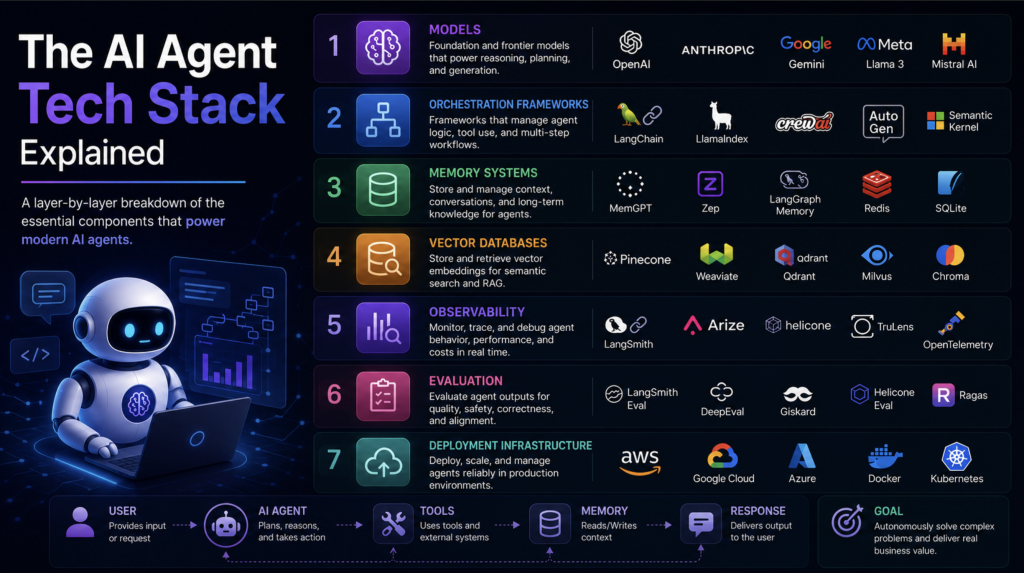
The reason a layered approach fits agents is that an agent isn't one thing. A prompt injection lives at the model boundary, a poisoned document lives in data, an over-permissioned tool lives in the framework, and a leaked credential lives in deployment. If you only threat-model "the agent" as a black box, you miss the seams between these pieces — and the seams are where agent attacks actually live.