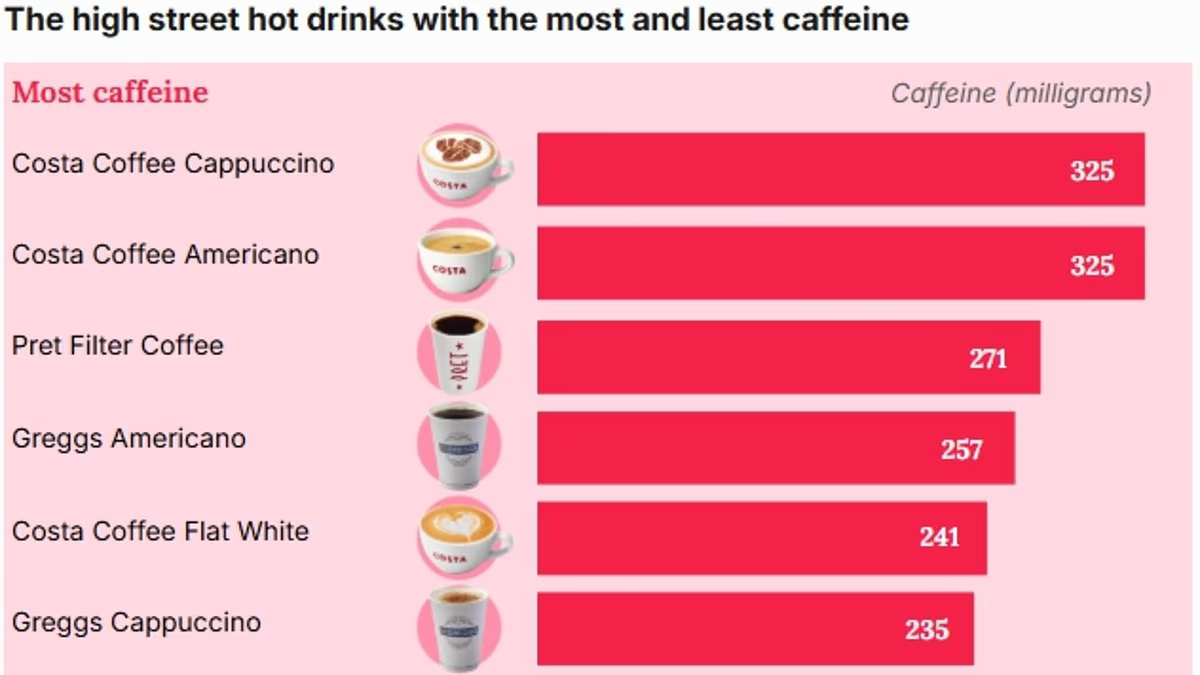
Britain is a nation fuelled by caffeine - drinking around 95 million cups of coffee every day. And, according to the latest research, we may be consuming far higher doses of the stimulant than we realise.A medium cappuccino from high street favourite Costa's, for instance, contains the equivalent of four Red Bull cans worth of caffeine, as revealed by experts at Which? this week.That's 325mg of the energiser, and almost the entirety of the safe daily limit of 400mg, or five coffee cups. Meanwhile Pret A Manger's espresso was found to be four times stronger than Starbucks' version, containing 180mg of caffeine - nearly half of your total daily recommended intake. Yet, amid the various health warnings about the harms of the stimulant, some studies suggest it may in fact bring benefits. One 2026 study found those who drink five or more cups a day were 47 per cent less likely to develop liver cancer, while other research has found coffee lovers have a lower risk of heart disease thanks to its anti-inflammatory compounds, known as polyphenols. So what exactly happens following that very first sip? Here, experts reveal the body-wide impact of caffeine throughout the day... Once you've had a morning cup of coffee, you'll find yourself wanting more throughout the day, experts say The first sip: The immediate 'buzz'Caffeine's effects depend on how much you consume – but can be felt almost instantly from the very first sip.'Caffeine consumed in coffee is a key part of daily life for millions of people,' Dr Gregory Marcus, chief of cardiology for research at the University of California said. 'For most adults, intake of up to 400mg a day - around five cups - without added sugar is safe and does not increase cardiovascular risk.'However higher doses of caffeine may have more harmful effects.'Before much caffeine has actually entered the bloodstream, the brain is already responding. Taste receptors send signals to the brain which activate parts of the nervous system associated with alertness and reward. This is why some people feel a mental 'lift' after the first sip, even though the caffeine hasn't had time to reach the brain. However some experts say the immediate shift in mood is likely a placebo rather than a biological change – especially if you drink coffee every morning. The real energy boost comes 20 minutes after After about 20 minutes is when you will start to feel caffeine's effects, Dr Duane Mellor, from the British Dietetic Association, explains. Within ten minutes of the first sip, your mental performance has already improved, making you feel more alert and ready to start the day.'After about 10 minutes the caffeine will appear in the blood,' he said.'Some can be absorbed through the mouth and stomach but only smaller amounts, most of the absorption is in the first part of the intestines.'Once the caffeine in the coffee is absorbed, that's when you feel that tell-tale energy boost.Mid-morning jitters Most people reach peak caffeine levels around 30 minutes to an hour after drinking coffee.As caffeine is released into the bloodstream, adrenaline starts to rise – triggering the 'fight or flight' response. Concentration levels improve incrementally from here, as blood flow to the brain increases, driving up blood pressure. At this stage, alertness is near maximum, dopamine activity may slightly increase – resulting in improved mood and motivation – and some people may feel more productive. But following this high we associate with the morning cup, those of us who are more sensitive to caffeine may start to experience feelings of anxiety, heart palpitations and tremors. For these people, drinking coffee with food can help delay the rate at which caffeine is absorbed into the bloodstream.
Exactly what your daily cup of coffee is doing to your body
Britain is a nation fuelled by caffeine - drinking around 95 million cups of coffee every day. According to research, we may consuming far higher doses of the stimulant than we realise.
1,213 words~6 min read