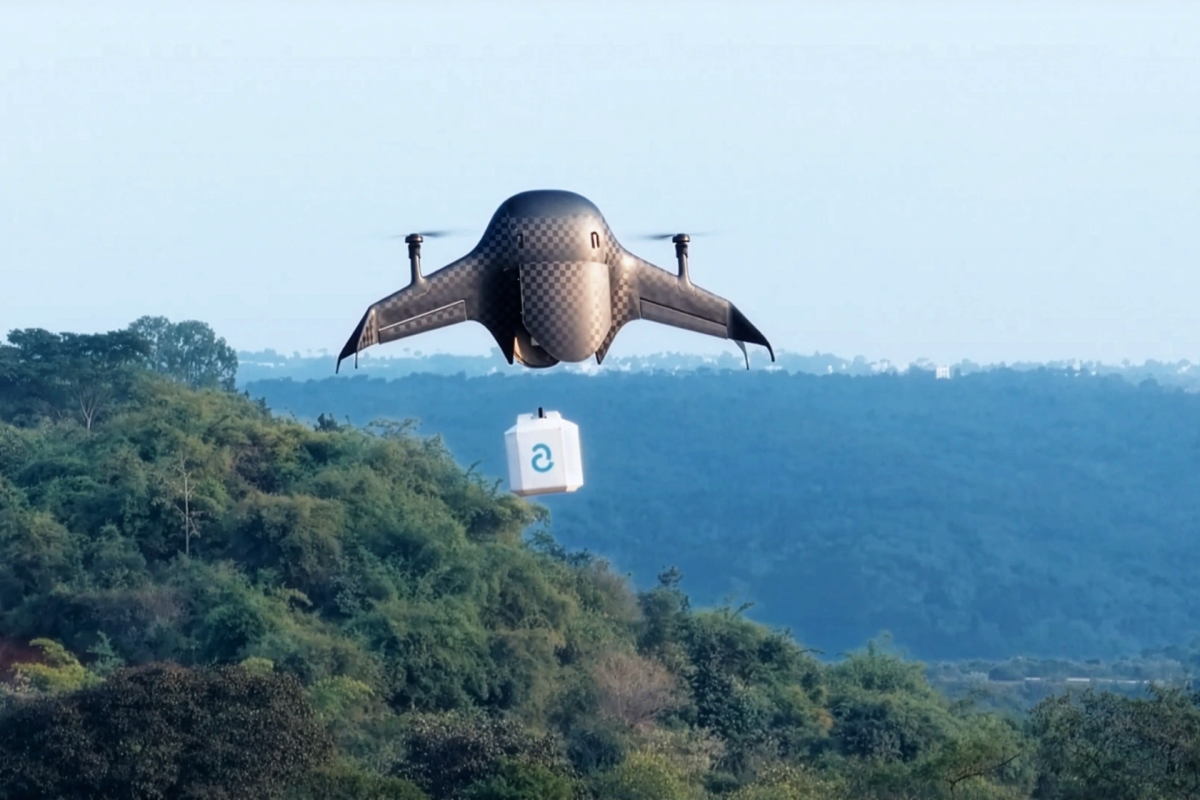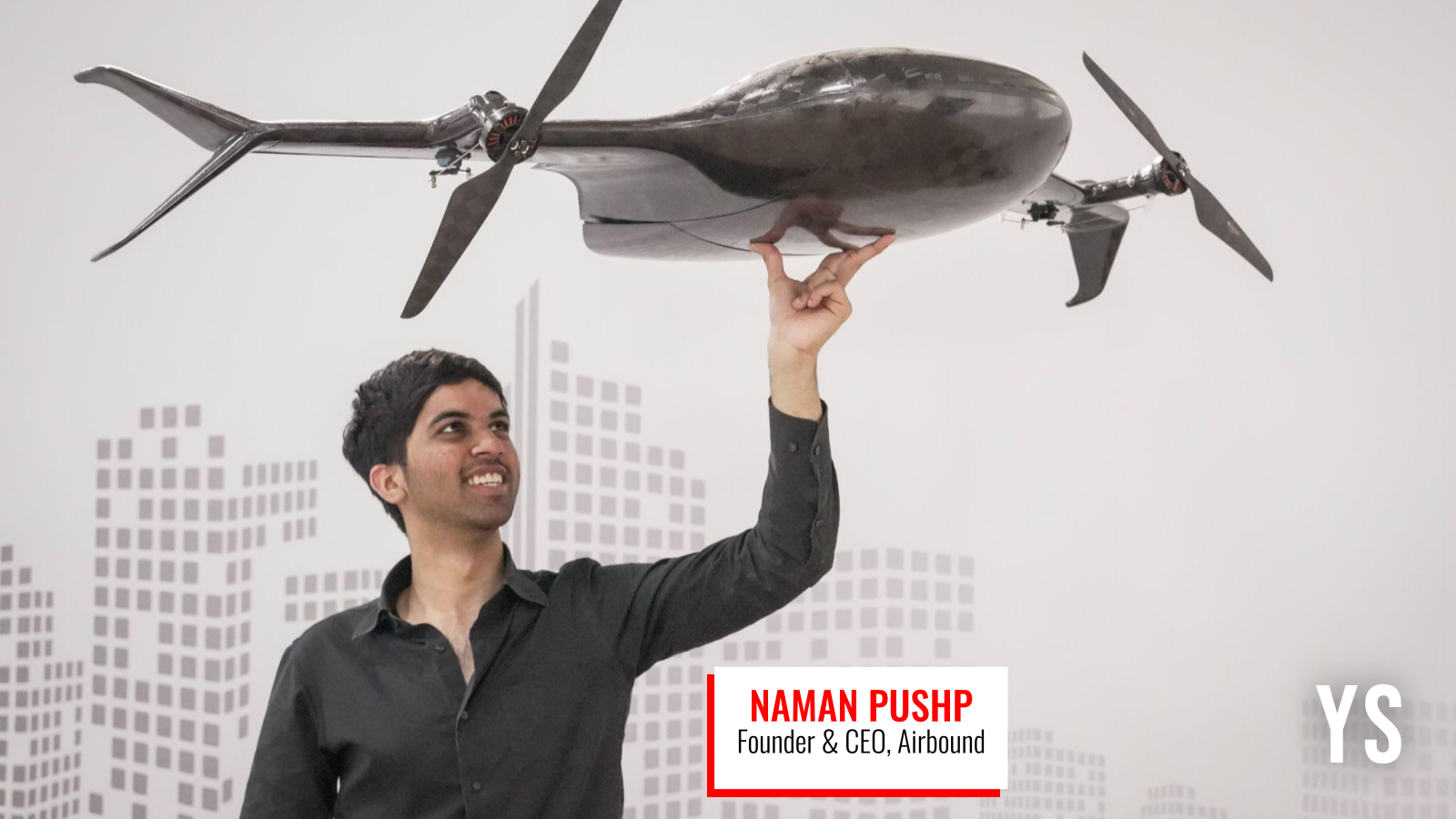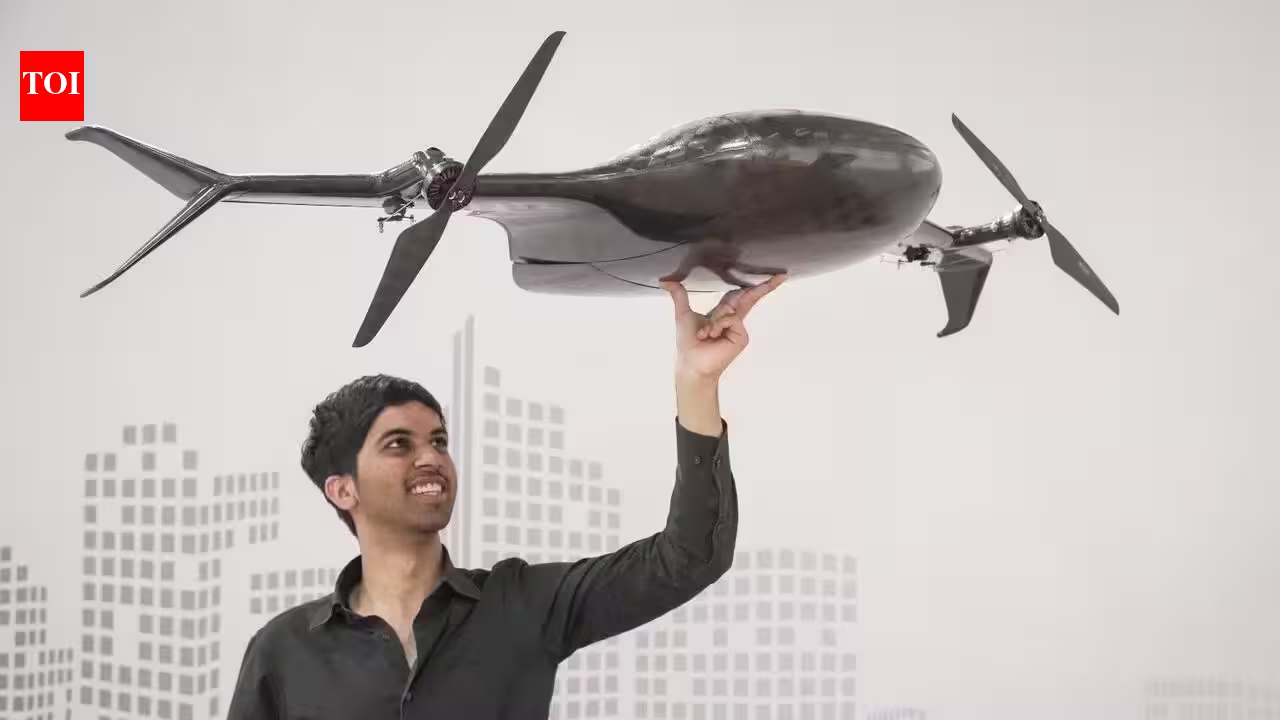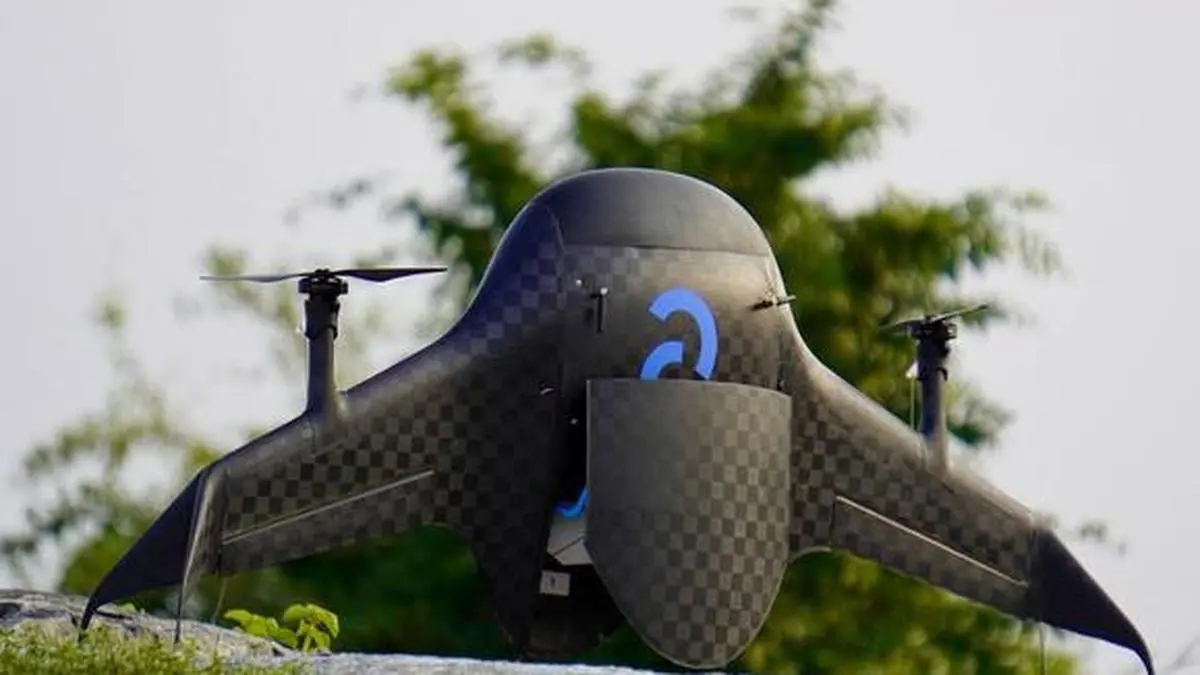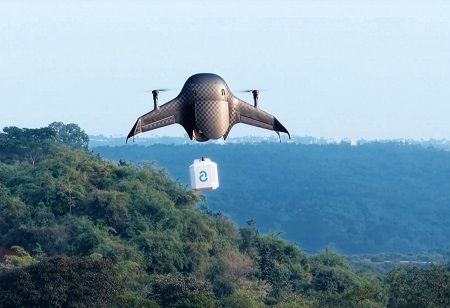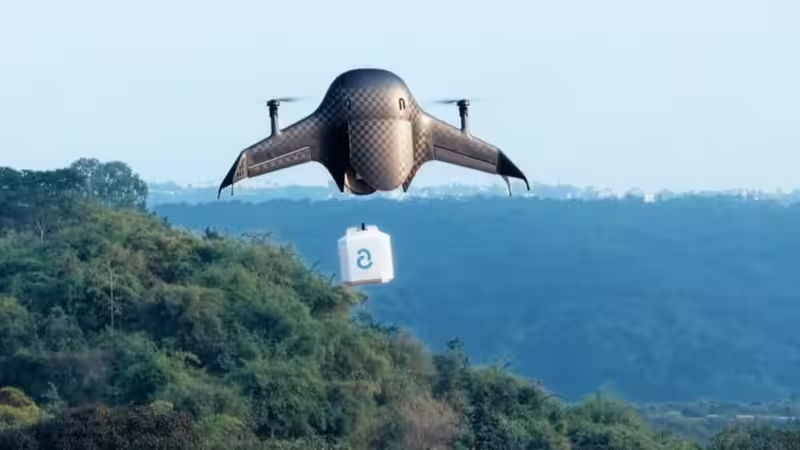
Drones are taking over the sky in India as startup Airbound has secured a $37 million funding round in a Series A venture in pursuit of an easy yet ambitious feat- to make the cost of transporting goods by drones as cheap as it is when transported by road.Airbound is a Bangalore-based drone delivery service startup incorporated in 2023. The startup makes use of autonomous drones to transport goods faster and more economically than traditional road transport vehicles. Airbound’s current investment round is led by Greenoaks and has DoorDash, Lachy Groom, Lightspeed and Humba Ventures as investors. This is just less than a year after Airbound received an $8.65 million investment in a seed funding round.About The AuthorJournalist and a writer with a strong interest in news, culture, technology, and human-interest stories. Passionate about making complex topics accessible and engaging.Delivery by drones has already proven successful in sectors such as healthcare and logistics but is nowhere close in terms of scale and flexibility compared to the truck. The solution, according to Airbound, does not lie in increasing the number of drones but in designing them in a way that suits cargo delivery.Airbound wants its drones to carry more than their own weightAs per Naman Pushp, who is also the founder and CEO of Airbound, ordinary aeroplanes expend a lot of energy just moving themselves, which makes air travel quite costly, especially when the load carried is small. This startup has adopted a new path where they manufacture vertical aircraft that are lighter than the payloads they carry.Currently, its drone called TRT is about 3.3 pounds and carries an approximate load of 2.2 pounds. The upcoming version of this aircraft is expected to weigh at least 6.6 pounds but carry a payload of 11 pounds. It is obvious that the ratio of useful load carried will be significantly higher than the total weight of the aircraft.The rocket-inspired design of Airbound allows its drones to launch vertically and take horizontal flight after that. As the drones grow bigger, the startup plans to keep vertical takeoff and landing, which means that it will not need normal runways or complex launching mechanisms.The ultimate aim is to create a scenario whereby air-based logistics will compete with road-based logistics regarding cost efficiency. “Our goal is to achieve parity with trucking costs,” Pushp.More than 13,000 autonomous flights completedAirbound has progressed past the prototype stage, having recorded over 13,000 flights autonomously in Bangalore and Guntur, both situated in the southern parts of India. Airbound's drones have been used in carrying diagnostic samples in Narayana Health, which has seen over 1,000 flights by the company.More articles by AuthorTrending StoriesAirbound's drone carries diagnostic samples over a distance of 2.5 miles in about seven minutes on one particular route. By comparison, the same journey can take three to five hours by two-wheelers when waiting time is included, particularly when samples have to be collected and bundled for road transportation.The partnership is also expanding to Narayana Health's new Banashankari hospital in Bengaluru. The facility was designed without an on-site diagnostic laboratory or blood bank and will instead rely on centralised facilities, creating another potential use case for Airbound's drones.Airbound plans a three-city drone networkThe startup's next major target is considerably larger. An agreement was signed between Airbound and the Government of Andhra Pradesh to create a drone network that connects three cities within the region, and aims at eventually conducting 10,000 flights per day.This network can be used for deliveries related to retail, e-commerce and healthcare. Airbound estimates that reaching that scale could require between 250 and 1,000 aircraft depending on the routes, although Pushp expects the actual number to be closer to 250.The agreement does not involve a government contract or subsidy. Instead, the state government is working with Airbound on the regulatory framework required to operate the network, while the startup expects companies using the service to generate the revenue.Regulation remains the biggest challengeAirbound is not alone in pursuing aerial logistics in India. Startups such as Skye Air Mobility and TSAW Drones are also developing drone delivery businesses, while companies including Garuda Aerospace have explored similar applications.However, Airbound wants to take a different position in the market. Rather than becoming a large delivery operator itself, the company wants to build aircraft that can eventually be used by logistics networks around the world. Pushp compared the strategy with Boeing's role in aviation, saying Airbound wants to build the aircraft rather than become the airline.The company manufactures its drones at a 43,000-square-foot facility in Bengaluru and keeps the airframe and other core systems in-house. Manufacturing, however, may not be the biggest challenge as the company expands.Regulation is likely to be more difficult, particularly approvals for beyond visual line of sight (BVLOS) operations. Such certification is essential for drones to operate at scale without requiring an operator to maintain direct visual contact with every aircraft.Those restrictions have also limited Airbound's ability to generate significant commercial revenue. Despite having more than 150 employees and thousands of autonomous flights under its belt, the startup remains broadly pre-revenue.For Airbound, however, the immediate focus appears to be building the technology and regulatory foundation for a much larger logistics network. As Pushp put it, the goal is to become a giant over the next few decades rather than prioritising revenue in the short term. FAQsHow much funding has Airbound raised?Airbound has raised $37 million in a Series A round led by Greenoaks, with participation from DoorDash, Lachy Groom, Lightspeed and Humba Ventures. The latest funding takes the Bengaluru-based startup’s total capital raised to nearly $50 million.What is Airbound building?The company uses a tail-sitter design that takes off and lands vertically before transitioning into horizontal flight. This allows the aircraft to operate without conventional runways while retaining the efficiency benefits of fixed-wing flight.Where are Airbound’s drones being used currently?Airbound has been working with Narayana Health to transport diagnostic samples between healthcare facilities. The company says it has completed more than 1,000 autonomous flights for the healthcare network, reducing journeys that can take hours by road to just minutes by air.What is Airbound’s plan for Andhra Pradesh?The startup plans to build a three-city drone delivery network in Andhra Pradesh covering retail, e-commerce and healthcare deliveries. The network is eventually expected to handle up to 10,000 flights a day.How do Airbound’s drones work?The company uses a tail-sitter design that takes off and lands vertically before transitioning into horizontal flight. This allows the aircraft to operate without conventional runways while retaining the efficiency benefits of fixed-wing flight.end of article
India’s Airbound raises $37 million to make drone deliveries as cheap as trucking
Indian drone startup Airbound secured significant funding for ambitious delivery cost goals. The company designs lighter drones that carry more than their own weight. Airbound has completed over thirteen thousand autonomous flights in India. They plan a three-city drone network in Andhra Pradesh connecting major urban centers. Regulation remains a key challenge for scaling beyond visual line of sight operations.
1,087 words~5 min read