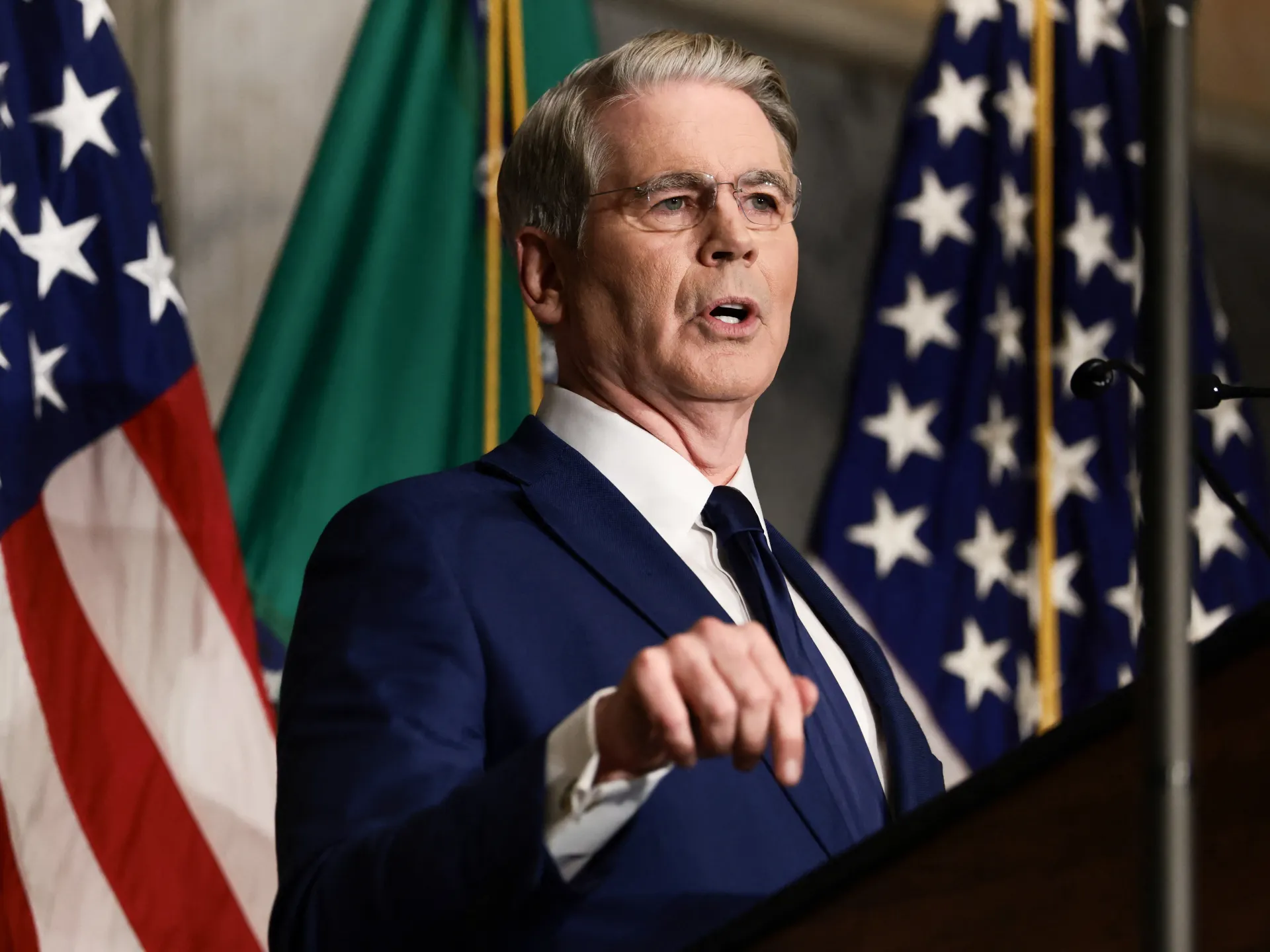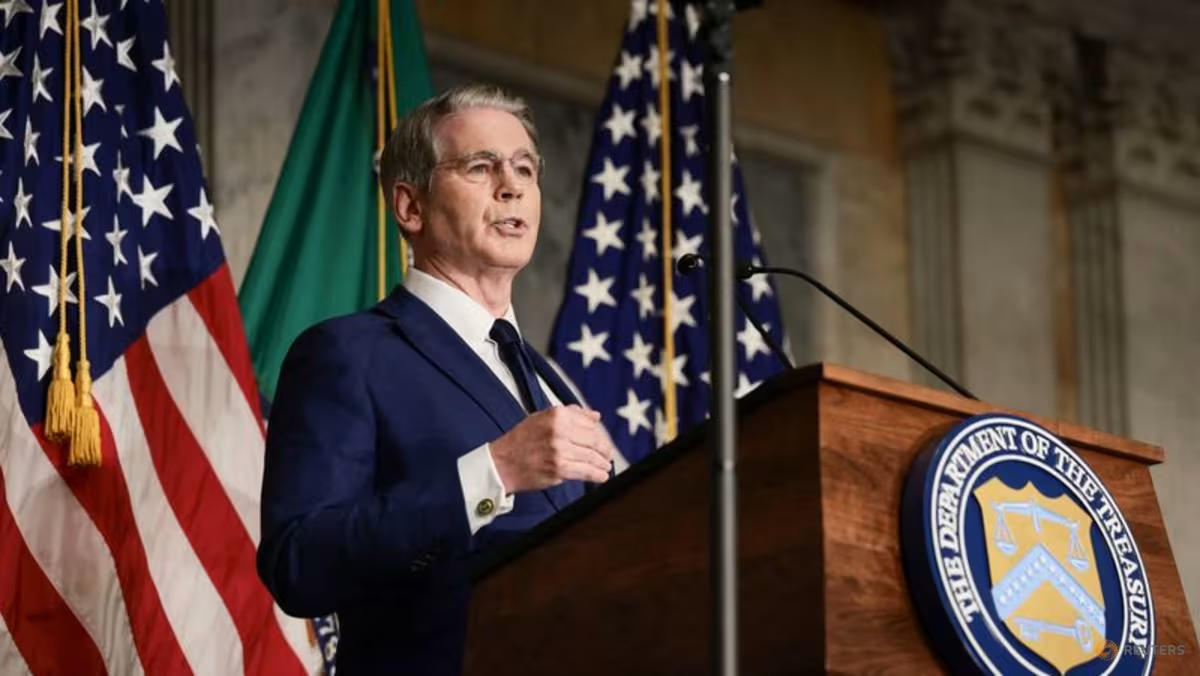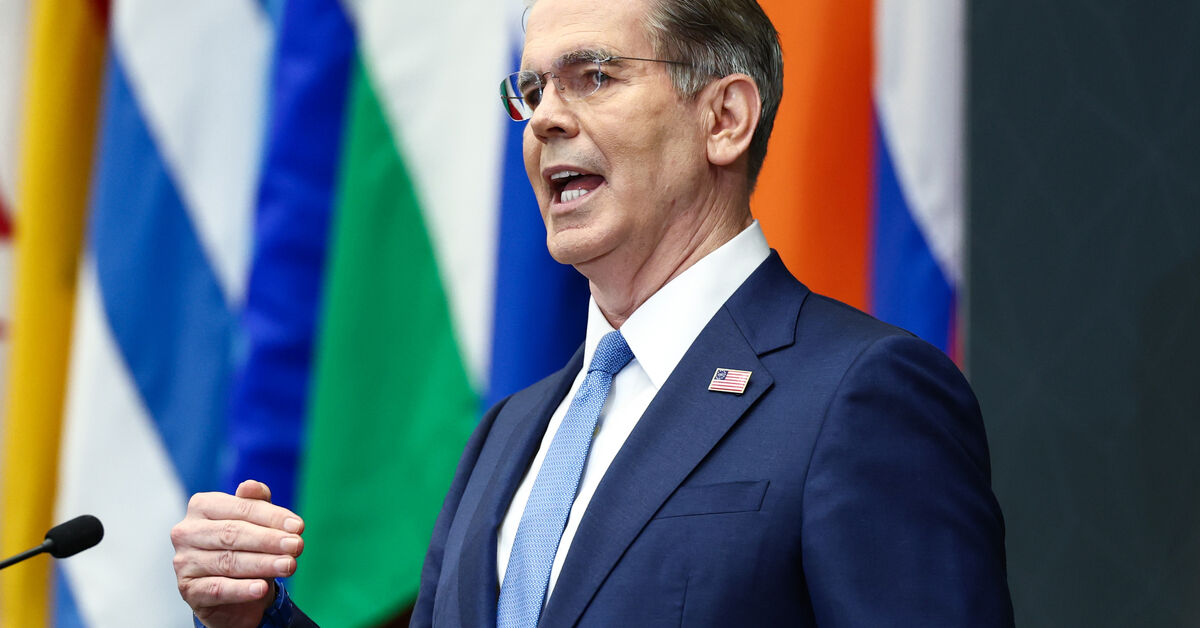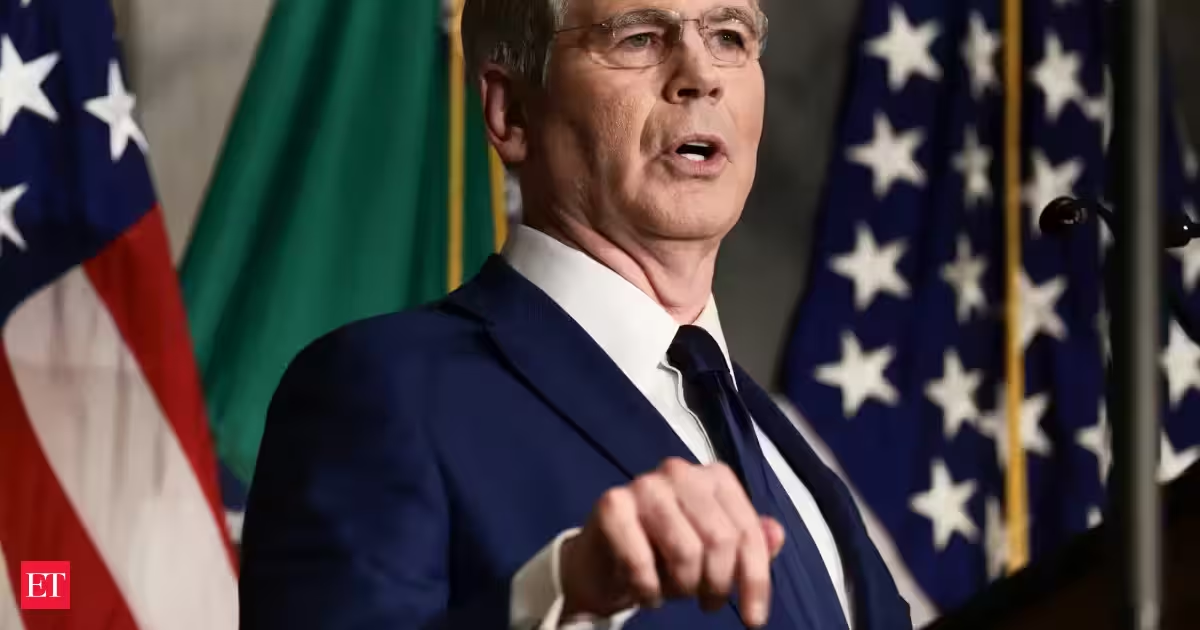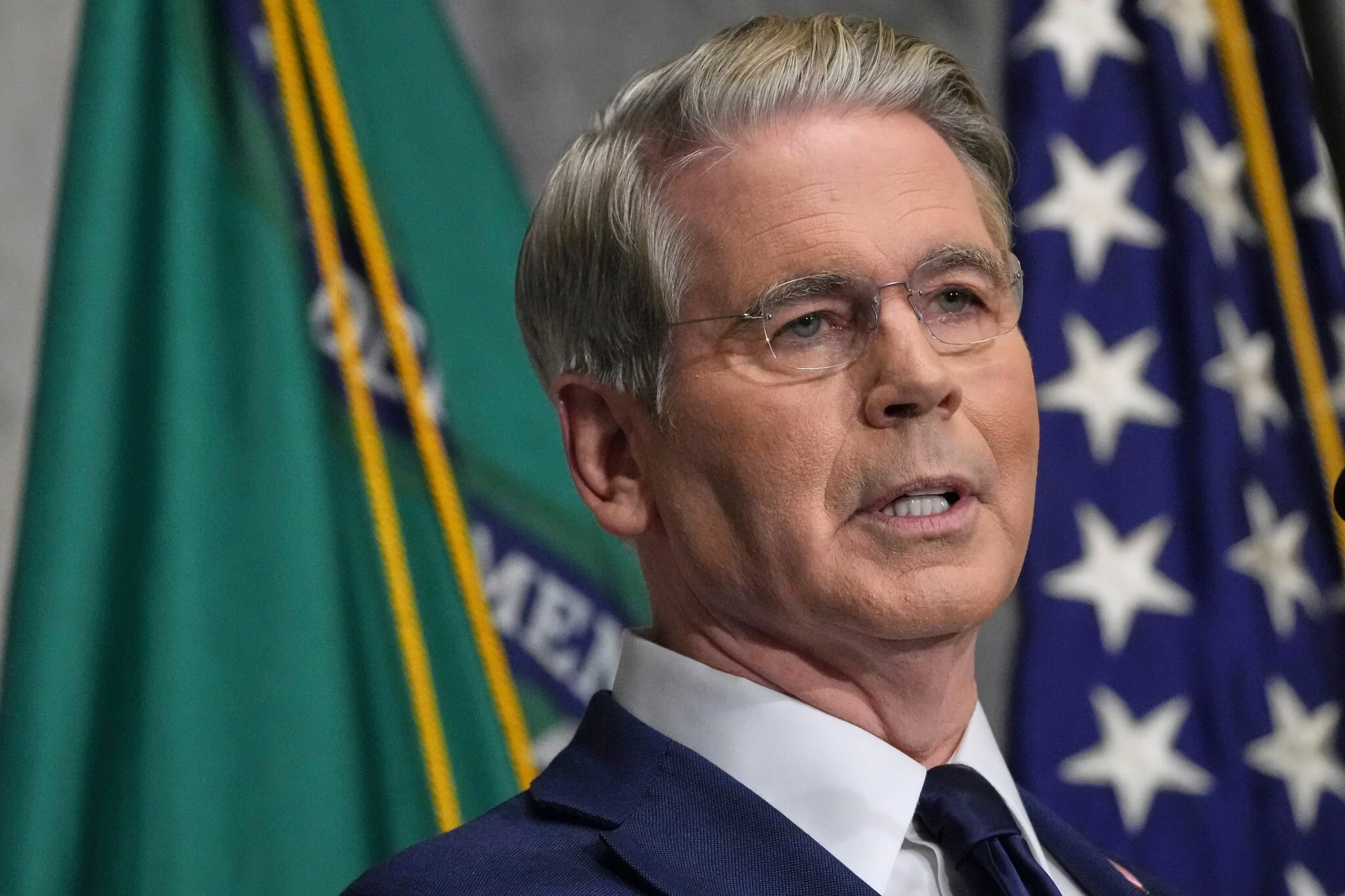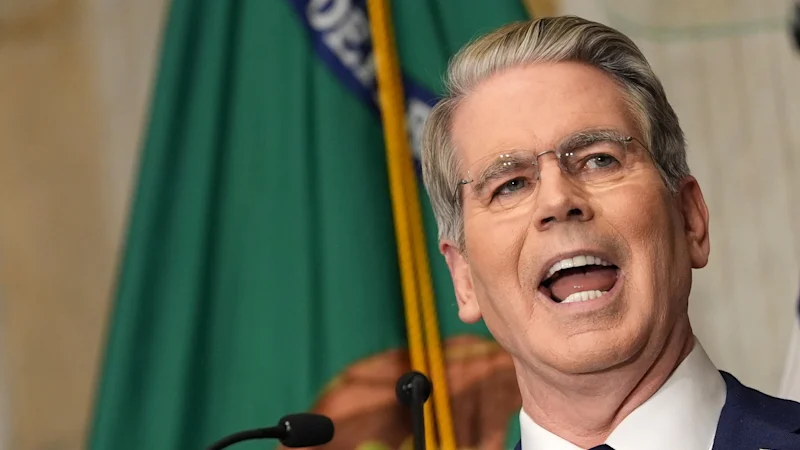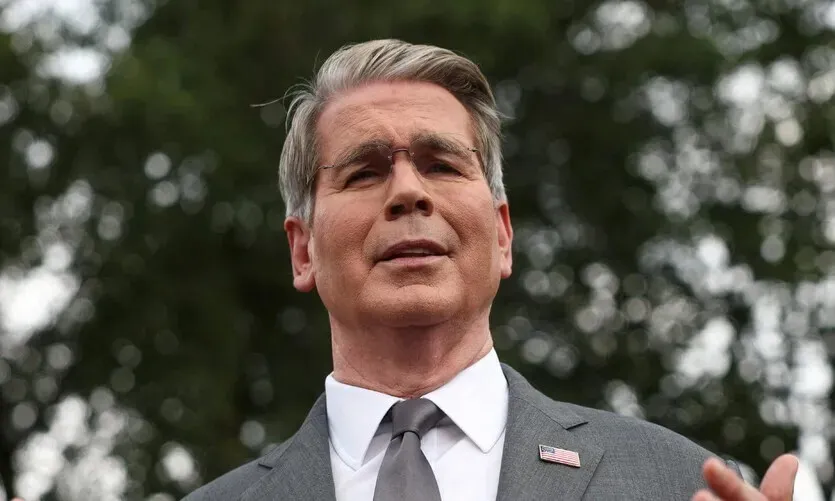
US Treasury Secretary Scott Bessent speaks to reporters at the White House on Aug. 20, 2026. (Reuters/Yonhap)
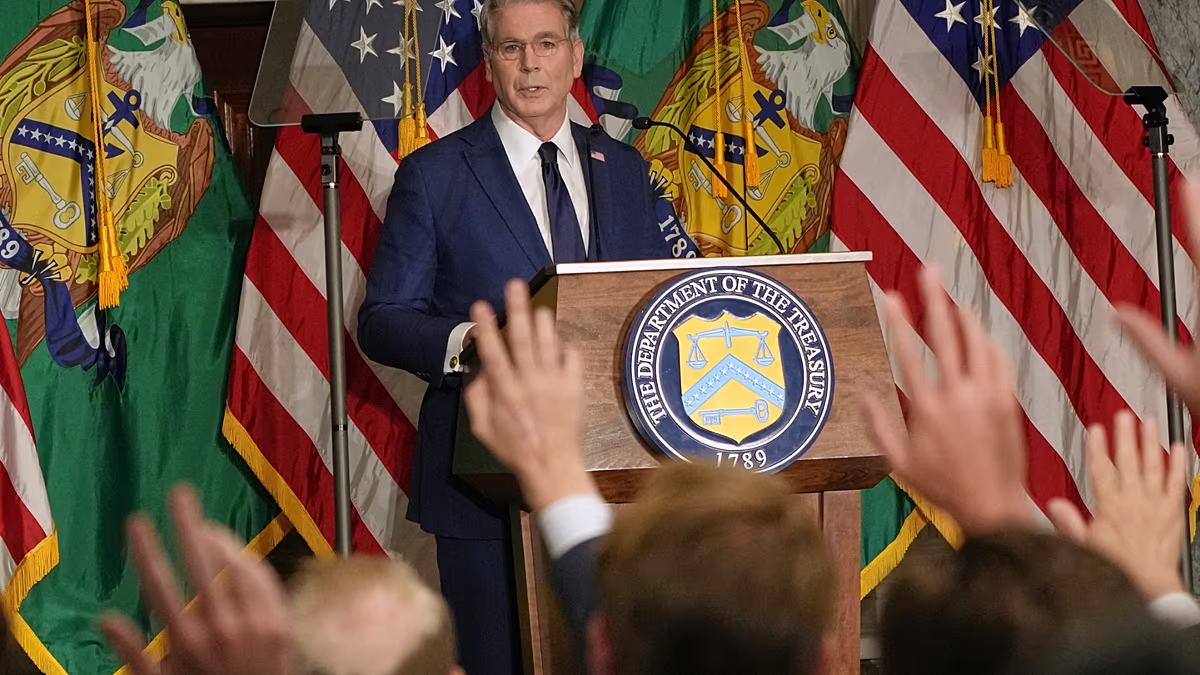
The Trump administration on Monday launched a sweeping economic pressure campaign aimed at isolating Iran from the global economy, with a particular focus on expanding secondary sanctions against companies and financial institutions around the world that do business with Tehran.The US stopped short, however, of naming major Chinese banks or companies as targets of sanctions — a potentially crucial factor in determining whether the campaign succeeds. The Iranian rial meanwhile plunged to a record low against the US dollar.Treasury Secretary Scott Bessent told reporters at the Treasury Department in Washington that the administration was launching an unprecedented “Operation Economic Outcast” against Iran and its enablers at President Donald Trump’s direction.“We are launching an economic onslaught against Iran’s financial connections around the globe,” Bessent said, calling the move an “economic asphyxiation” of the regime. The administration had been warning since last week that the measures would amount to an economic “D-Day.”The Treasury Department said it would step up secondary sanctions targeting five sectors that Iran uses to evade sanctions and generate revenue, including digital assets, technology, gold, aviation and shipping.It also sanctioned about 60 entities, individuals and vessels around the world for supporting Iran’s nuclear and missile programs, cyber operations and oil revenue generation.“Treasury has mapped every node, every facilitator, and every network that Iran has used to smuggle oil and evade sanctions,” Bessent said. “Our objective is to sever every economic lifeline that sustains this tyrannical regime until Tehran stands alone.”The US did not immediately impose blanket secondary sanctions on other countries, however. Bessent said governments and companies would be given a “cure period” to wind down their dealings with Iran, while warning that Washington wouldn’t wait forever. “We do not have infinite patience here,” he said.Bessent also said the United States would impose sanctions on a major financial institution that does business with Iran later this week. Trump, he said, has been personally calling foreign leaders to demand that they halt specific transactions with Iran.Bessent described the United Arab Emirates’ decision last week to suspend all trade and financial transactions with Iran as “not coincidental.”China represents the biggest test for the campaign. Asked whether Chinese banks would also face sanctions, Bessent offered only a broad warning: “No one is above the reach of US sanctions.”China is estimated to purchase roughly 80% to 90% of Iran’s crude oil exports. Iran has spent decades circumventing US sanctions through trading partners including China and Russia, meaning the campaign’s effectiveness will depend heavily on Washington’s ability to persuade major Iranian trading partners to cooperate.Iran responded with fury to the new measures.Foreign Ministry spokesman Esmaeil Baqaei warned that “any action that escalates the situation will come at a cost,” stressing that the country’s diplomatic approach was continuously adapting to changing conditions. Mohsen Rezaei, a hard-line member of Iran’s Supreme National Security Council, warned that countries joining the new US economic sanctions would effectively be treated as having committed “an act of war.”Iranian Central Bank Governor Abdolnaser Hemmati, meanwhile, told the semi-official Tasnim news agency that the US had already done everything it could in terms of sanctions and that the latest measures would not create additional pressure. He said Iran had been building up its foreign currency reserves since the outbreak of the war and could provide the currency needed to import essential goods and medicine.As US pressure intensified, the rial fell to a record low of 2.02 million to the dollar on the unofficial foreign-exchange market on Monday. The central bank’s official rate is around 1.5 million rials to the dollar, but the market rate is generally used for actual transactions.The currency collapse comes as Iran grapples with the effects of roughly six months of war and a US naval blockade. Rice prices have risen about 60% since the war began, while beef prices have climbed by more than 150%.The International Monetary Fund has forecast that Iran’s gross domestic product will contract by more than 5%.By Kim Won-chul, Washington correspondentPlease direct questions or comments to [english@hani.co.kr]